Can a UTI Cause Bleeding Like a Period? How to Tell Where the Blood Is Coming From
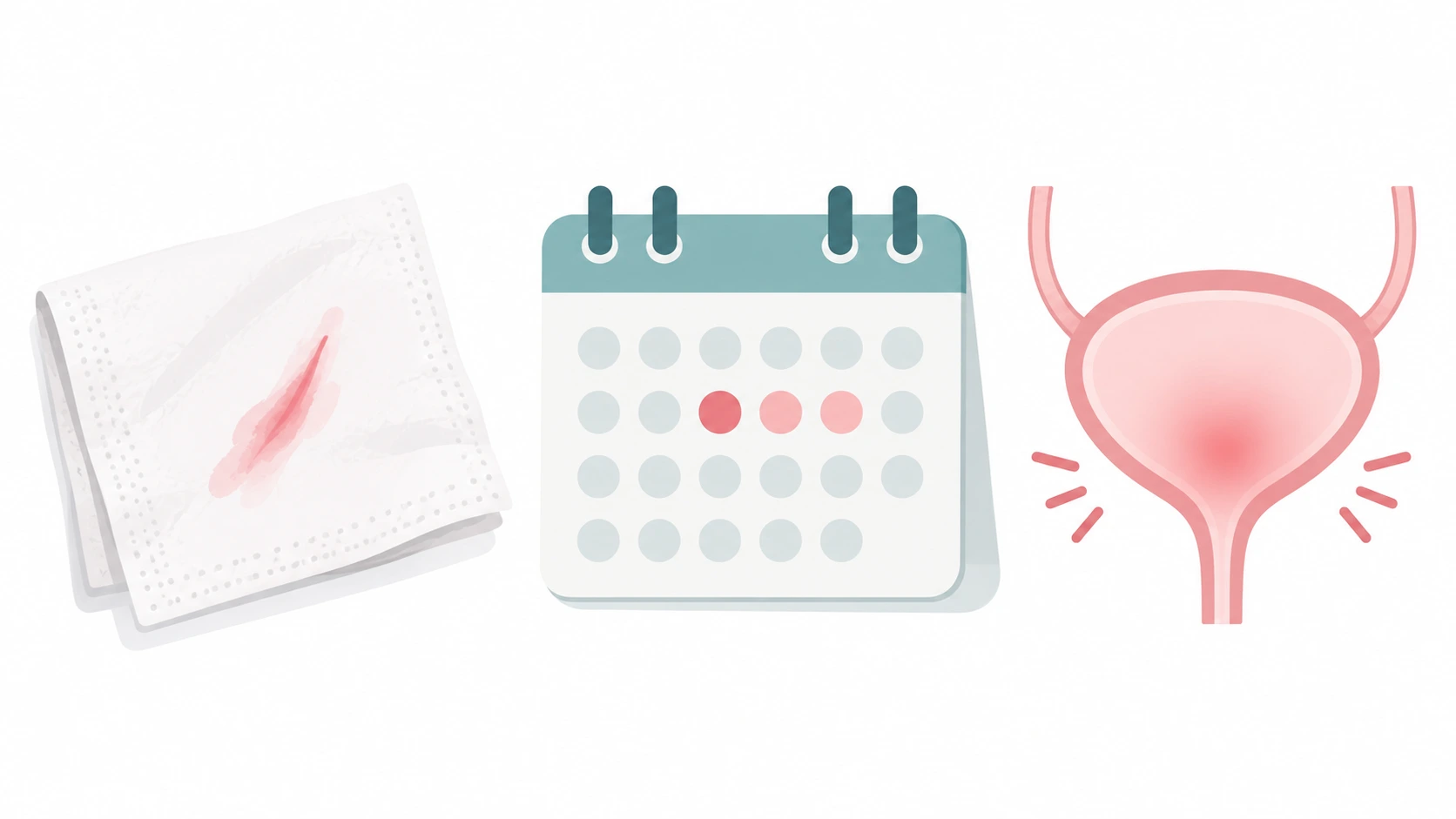
Yes, a UTI can make you bleed, and the pink or red urine or the spots on the toilet paper can look a lot like a light period. But UTI bleeding is blood in your urine (hematuria) from an inflamed bladder or urethra, not bleeding from the uterus. A UTI doesn’t cause true vaginal bleeding, so blood that keeps flowing when you aren’t peeing points to your period or another cause. A tampon test can help you tell the two apart at home.
Finding blood when you expect a normal pee is unsettling, more so if your period isn’t due, or if it is and you can’t tell which is which. This guide explains why a UTI bleeds, what UTI blood looks like next to period blood and spotting, how to check the source yourself, what else causes bleeding with UTI-like symptoms and when bleeding is an emergency.
For the full picture on symptoms, causes and antibiotics, see our guide to UTI symptoms, causes and treatment.
Why a UTI can make you bleed
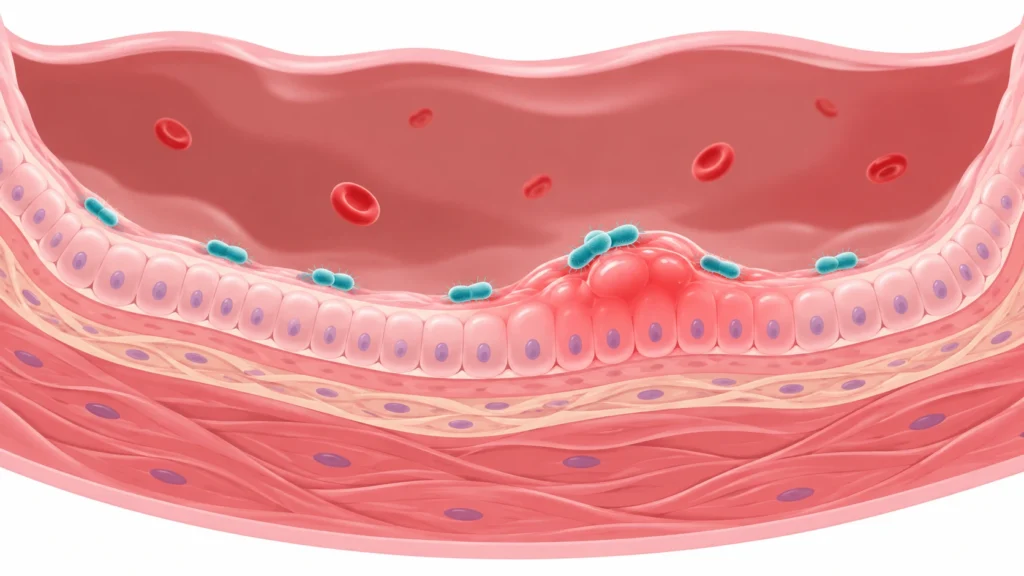
A UTI starts when bacteria, usually E. coli, get into the urethra and multiply in the bladder. The infection inflames the lining of the bladder and urethra, and inflamed tissue bleeds easily. Red blood cells leak into the urine as it passes. The National Institute of Diabetes and Digestive and Kidney Diseases (NIDDK) lists infection or inflammation of the bladder, kidney, urethra or prostate as a cause of blood in urine.
Doctors call this hematuria. When there’s enough blood to see, it’s gross hematuria. When it shows up only under a microscope, it’s microscopic hematuria. A bladder infection with visible bleeding is sometimes called hemorrhagic cystitis.
What UTI blood looks like
Only a small amount of blood is needed to change the color of urine, according to the NIDDK. That’s why a UTI can look alarming in the toilet even when the actual bleeding is light. UTI blood can show up as:
- Pink or light red urine
- Darker red, brown or cola-colored urine
- A pink or red streak on the toilet paper after you wipe
- A few drops of blood at the end of peeing, when the bladder squeezes hardest
- Rarely, small clots
Mayo Clinic lists urine that looks red, bright pink or cola-colored among the common UTI symptoms. If you see clots, our guide to small blood clots in urine explains when they need urgent care.
Is it normal to bleed with a UTI?
It’s common. Bloody urine is one of the standard UTI symptoms listed by the NIDDK and Mayo Clinic. It usually comes with the other classic signs: burning when you pee, peeing often, a strong urge that won’t go away, pressure low in the belly and cloudy or strong-smelling urine.
Common doesn’t mean you can ignore it. Any blood in your urine should be checked, and blood without other UTI symptoms needs a closer look, because infections aren’t the only cause.
Does more blood mean a worse infection?
Not necessarily. UCLA Health notes that the amount of blood in urine doesn’t show how serious the problem is. Because a little blood colors urine so strongly, even a mild bladder infection can turn the water in the toilet bright pink. Fever, chills, back pain and vomiting are better signs of a worse infection than the color of your urine.
UTI bleeding vs period vs spotting
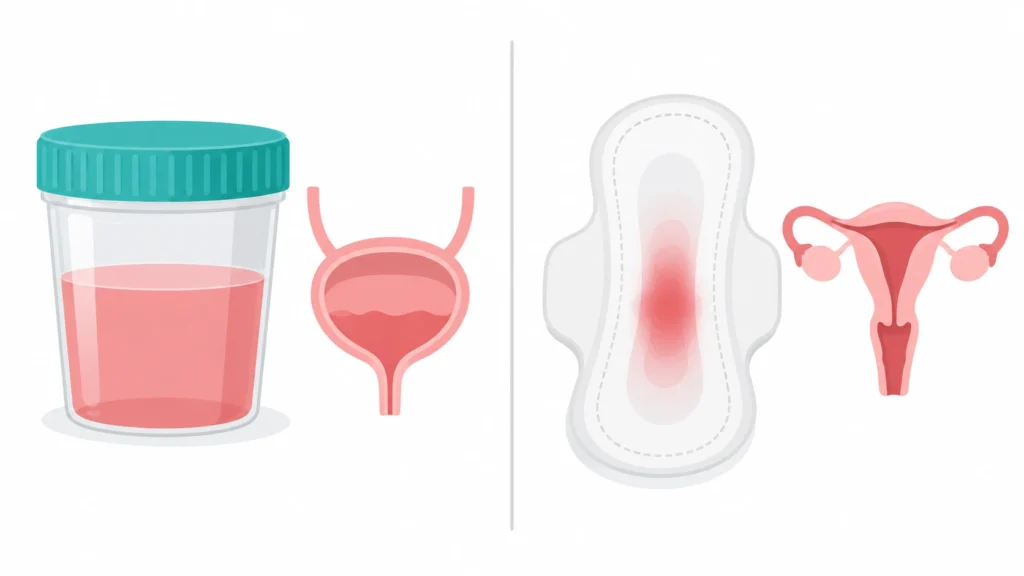
The biggest clue is where the blood comes from. UTI blood leaves your body with urine through the urethra. Period blood and spotting come from the uterus or cervix and leave through the vagina. Here’s how they usually compare:
| UTI bleeding | Period | Spotting between periods | Hemorrhoid or anal tear | |
|---|---|---|---|---|
| Where it comes from | Bladder or urethra | Uterus | Uterus, cervix or vagina | Rectum or anus |
| When you notice it | Mainly when you pee | All the time, peeing or not | On underwear or a liner, often light | After a bowel movement |
| How it looks | Pink, red or brown urine; streaks on paper | Red to dark flow, sometimes clots | A few drops, pink or brown | Bright red on paper, stool or in the bowl |
| Timing | Any time, often sudden | Fits your cycle | Between periods, after sex, with new birth control | With constipation or straining |
| Other symptoms | Burning, urgency, frequency, pelvic pressure | Cramps, bloating, breast soreness | Often none | Itching, pain when sitting, lumps |
Can a UTI cause vaginal bleeding or spotting?
No, a UTI doesn’t cause true vaginal bleeding or spotting. The infection sits in the urinary tract, which is a separate system from the uterus and vagina. What feels like spotting during a UTI is usually urine blood on the toilet paper.
If you have real vaginal bleeding along with UTI symptoms, there are likely two things going on at once. It could be your period, bleeding from a different infection such as cervicitis, thin tissue after menopause, a birth control change or a pregnancy problem. MedlinePlus lists these among the causes of bleeding between periods. A UTI diagnosis doesn’t explain vaginal bleeding, so mention both to your doctor.
Can you have a UTI and your period together?
Yes. They involve different organs, so they can overlap. When they do, it’s hard to tell which blood is which, and UTI pressure can feel a lot like period cramps. Your period doesn’t need to end before you get a UTI treated. Whether a UTI can delay your period or make it heavier is a separate question, which our guide on whether a UTI can affect your period answers.
How to tell where the blood is coming from at home
You can often work out the source before you see a doctor. These checks help, and they make your visit faster.
Try the tampon test
MedlinePlus says that putting a tampon in the vagina confirms whether the vagina, cervix or uterus is the source of the bleeding. Here’s how to use it:
- Put in a fresh tampon.
- Pee into the toilet or a clean cup.
- Look at the urine. If it’s still pink or red with the tampon in place, the blood is likely coming from your urinary tract. If the urine looks normal and the tampon is bloody, the blood is likely vaginal.
The test isn’t perfect. Faint spotting may barely show on a tampon, and blood can still smear when you wipe. But it’s a simple, useful first check. Don’t use a tampon if you’re pregnant or have just given birth, unless your provider says it’s okay.
Look at the timing
- Blood that appears only when you pee, and stops in between, points to the urinary tract.
- Blood that keeps flowing onto a pad or underwear whether or not you pee points to the uterus or vagina.
- Bleeding that matches the day your period is due is most likely your period.
- Bright red blood after a bowel movement points to the rectum or anus.
Look at the other symptoms
Burning, urgency and peeing often fit a UTI. Cramps, bloating and breast tenderness fit a period. Itching, unusual discharge or bleeding after sex point toward a vaginal or cervical problem. Itching and burning around the anus fit hemorrhoids.
Tell the clinic if you’re on your period
Menstrual blood can get into a urine sample and make the test show blood when your bladder isn’t bleeding, according to the NIDDK. The test may need repeating after your period ends. Cleveland Clinic Laboratories’ collection instructions tell women who are menstruating to insert a fresh tampon before giving a clean-catch sample. Let the staff know, and use a tampon if you can. A sample mixed with skin bacteria can also give a confusing result; our guide to mixed urogenital flora explains that report.
Why is there blood when I wipe after peeing?
Blood on the toilet paper is one of the most common reasons people search this topic, and the paper alone can’t tell you the source. The possibilities:
The urethra or bladder
A UTI is the most common urinary cause. The last drops of urine carry the most blood, so you may see a pink streak when you wipe even if the bowl looks clear. Burning and urgency make this more likely.
The vagina or cervix
The start or end of a period, ovulation spotting, spotting on new birth control, cervicitis and thin tissue after menopause can all leave blood on the paper. These usually aren’t linked to burning when you pee.
Hemorrhoids or a small anal tear
Bright red blood on toilet paper after a bowel movement is a classic sign of internal hemorrhoids, according to the NIDDK. Small tears (anal fissures) from hard stools can do the same and usually sting when you go. If you wipe front to back after peeing, a little blood from the anus can end up on the same paper. The NIDDK advises seeing a doctor about any rectal bleeding.
Irritated skin
Dry, sensitive skin around the vulva can crack and bleed a little from wiping, scented products or friction. This is more likely after menopause or with a yeast infection.
If you see blood when you wipe “with no pain” and “no period,” it’s still worth a check. Painless urine blood with no infection needs a closer look, and painless rectal bleeding should be checked too.
What else causes bleeding with UTI-like symptoms?
Burning when you pee plus bleeding doesn’t always mean a UTI. These conditions can look like one.
Cervicitis and sexually transmitted infections
Cervicitis is inflammation of the cervix. The MSD Manual lists chlamydia as the most common infectious cause, followed by gonorrhea, with herpes, trichomoniasis, bacterial vaginosis and Mycoplasma genitalium also possible. It can cause vaginal discharge and bleeding between periods or after sex, and many women have no symptoms at all. A related infection of the urethra (urethritis) causes burning when you pee. Together, they look a lot like a bleeding UTI. Our guide to UTI vs STD explains how to tell them apart.
Kidney or bladder stones
Stones scrape the lining of the urinary tract and cause blood in urine, often with sharp pain in the side, back or groin that comes in waves. Stones and UTIs can also happen together.
Vaginal dryness and thin tissue after menopause
After menopause, lower estrogen thins the tissue of the vagina and urethra. This is called genitourinary syndrome of menopause (GSM), and it affects up to 87% of postmenopausal women, according to an overview by University of North Carolina Urology of the 2025 guideline from the American Urological Association, the Society of Urodynamics and the American Urogynecologic Society. Symptoms include dryness, painful sex, burning when peeing, urgency and repeat UTIs. Fragile tissue can also bleed. The guideline recommends vaginal estrogen, which also lowers the risk of repeat UTIs. MedlinePlus says any vaginal bleeding after menopause needs a call to your provider.
Pregnancy and ectopic pregnancy
Bleeding during pregnancy always needs a call to your provider, even when a UTI seems to explain your symptoms. An ectopic pregnancy, where the pregnancy grows outside the uterus, can cause abnormal vaginal bleeding, one-sided pelvic cramping and lower belly pain, according to MedlinePlus. If the pregnancy ruptures, signs include sudden sharp pain in the lower belly, shoulder pain, intense pressure in the rectum, low blood pressure and fainting. That’s an emergency. If you could be pregnant and have bleeding with pain, take a pregnancy test and call your provider right away.
Other causes of bleeding between periods
MedlinePlus lists fibroids, polyps, hormone changes, missed birth control pills, an IUD, an underactive thyroid, blood thinners and, less often, cancer or pre-cancer of the cervix or uterus. None of these is a UTI, and all are reasons to see your provider.
Red urine that isn’t blood
Some things turn urine red or orange without any blood. Beets, rhubarb and blackberries can do it. So can phenazopyridine (AZO), the over-the-counter UTI pain reliever, which turns urine reddish-orange according to its label. If you took AZO before noticing the color, that may be the explanation.
How serious is a UTI with blood in it?
A bladder infection that causes bleeding is usually no more serious than one that doesn’t, and the blood should clear with treatment. What matters more is whether the infection is spreading and whether the bleeding has another cause.
Signs the infection is spreading
Fever, chills, nausea, vomiting, and pain in the back, side or groin can mean the infection has reached the kidneys, according to the NIDDK. A kidney infection needs care the same day. Our UTI guide covers how a UTI progresses if it isn’t treated.
Does blood with a UTI mean cancer?
Usually not, but the context matters. A 2025 study in the Scandinavian Journal of Urology looked at women checked for visible blood in their urine at two Swedish centers. Among women aged 50 to 70, about 1% of those whose bleeding came with a clear bladder infection were later found to have a urinary cancer. Among women whose bleeding had no infection behind it, the figure was about 10%. Painless blood with no other symptoms carried the highest rate (11%).
The lesson is simple: blood that fits a clear UTI and goes away with treatment is reassuring. Blood without UTI symptoms, blood that stays after treatment and blood in smokers or people over 50 needs a full evaluation. The National Kidney Foundation notes that in people over 35, even blood that goes away on its own can be a sign of cancer.
How long does UTI bleeding last?
UTI bleeding usually fades soon after you start antibiotics, as the inflamed lining heals. Iowa Urology notes that bleeding from a UTI usually goes away once antibiotics are started. If you still see blood after a few days of treatment, call your doctor. The infection may not be responding, or the blood may have another cause.
Does drinking water flush out the blood?
Drinking more water dilutes your urine, so the pink color fades, and it helps flush bacteria. But water alone doesn’t stop the bleeding or cure the infection. Antibiotics do. Our UTI guide covers what helps at home while antibiotics work.
Getting your urine rechecked
The American Urological Association (AUA) recommends a repeat urine test with microscopy after a UTI that came with blood, to make sure the blood is gone. Its 2025 guideline says to wait at least 3 weeks after the infection clears and no more than 3 months. Blood that’s still there on the recheck wasn’t caused by the UTI. Our guide on whether blood in urine can go away on its own explains what happens next, and our guide to occult blood in urine covers blood found only on the test strip.
Treating a UTI that’s causing bleeding
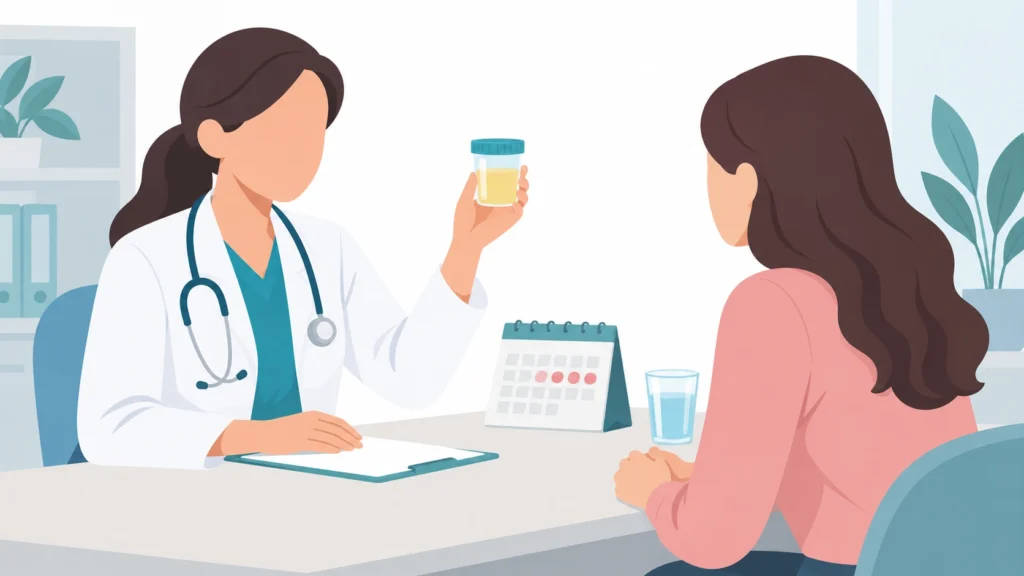
The only way to stop UTI bleeding is to treat the UTI. A doctor or telehealth provider will ask about your symptoms and often test your urine, then prescribe an antibiotic. Take every dose, even after the bleeding and burning stop. Our UTI treatment guide covers which antibiotics work best and which to avoid.
A few practical points while you’re bleeding:
- Phenazopyridine (AZO) eases burning, but it turns urine reddish-orange, which makes it harder to judge whether the bleeding is getting better. The label says not to use it for more than 2 days without a doctor.
- A panty liner or pad catches spotting from wiping and stains from AZO.
- Skip sex until you’re treated, since it can add irritation and bleeding.
- Watch the color. Pink urine that turns clearer each day is a good sign. Darker red urine, clots or bleeding that returns after it stopped is not.
When to go to the ER
Most UTI bleeding can be handled by your regular doctor, urgent care or telehealth within a day. Go to the emergency room, or call 911, if you have bleeding with any of these:
- You can’t pee, or only pass drops, with a full and painful lower belly
- Several blood clots, or urine so red you can’t see through it
- Fever, chills, vomiting, and pain in your back or side
- Heavy vaginal bleeding that soaks through pads quickly, or bleeding with dizziness or fainting
- Sudden severe belly pain, shoulder pain or fainting when you could be pregnant
- Signs of sepsis
The CDC lists these sepsis warning signs: clammy or sweaty skin, confusion, extreme pain, fever or shivering, a high heart rate or weak pulse, and shortness of breath. Sepsis is a medical emergency, and Mayo Clinic notes the risk is higher once a UTI has spread to the kidneys. There’s no fixed timeline, so don’t wait out fever and back pain.
The bottom line
A UTI can make you bleed, and pink urine or blood on the toilet paper can look like a light period. The blood comes from the inflamed bladder or urethra, not the uterus, so a UTI doesn’t cause true vaginal bleeding. A tampon test, the timing and your other symptoms help you tell which is which. UTI bleeding should fade within days of starting antibiotics. Bleeding that doesn’t fit a UTI, keeps going after treatment or comes with fever, back pain, clots, heavy flow or pregnancy needs a doctor, and some of those need the ER.
Frequently asked questions
Can BV cause blood in urine?
BV is a vaginal infection, not a bladder infection, so it isn’t known to make urine bloody. The CDC lists thin gray discharge, a fishy smell and burning when peeing. Discharge can mix into a urine sample.
Can a man bleed from a UTI?
Yes. Men can see pink or red urine with a UTI too. UTIs are less common in men, and the NIDDK says men under 50 rarely get bladder infections, so blood in a man’s urine always needs a doctor.
What is the hardest UTI bacteria to get rid of?
Antibiotic-resistant strains are the hardest. The CDC names ESBL-producing bacteria, carbapenem-resistant Enterobacteriaceae and multidrug-resistant Pseudomonas aeruginosa. A urine culture shows which antibiotic still works against them.
Is pink discharge a sign of a UTI?
Not usually. A UTI affects urine, not vaginal discharge. Pink on the paper is either urine blood or a little blood mixed with discharge, which is spotting. Spotting that doesn’t fit your cycle needs a check.
Sources
- National Institute of Diabetes and Digestive and Kidney Diseases. Hematuria (Blood in the Urine)
- National Institute of Diabetes and Digestive and Kidney Diseases. Definition & Facts of Bladder Infection in Adults
- National Institute of Diabetes and Digestive and Kidney Diseases. Symptoms & Causes of Hemorrhoids
- MedlinePlus. Vaginal bleeding between periods
- MedlinePlus. Ectopic pregnancy
- Mayo Clinic. Urinary tract infection (UTI): Symptoms and causes
- Cleveland Clinic Laboratories. Clean Catch Urine Instructions
- MSD Manual Professional Version. Cervicitis
- UNC Urology. New AUA guideline on genitourinary syndrome of menopause (AUA/SUFU/AUGS, 2025)
- Women with isolated acute cystitis and macroscopic haematuria. Is further investigation needed? Scandinavian Journal of Urology, 2025
- National Kidney Foundation. Hematuria (Blood in the Urine) in Adults
- American Urological Association and SUFU. Microhematuria: AUA/SUFU Guideline (2020, amended 2025)
- Centers for Disease Control and Prevention. About Sepsis
- Centers for Disease Control and Prevention. Clinical Overview of Urinary Tract Infections
- UCLA Health. Hematuria: The presence of blood in the urine
- Iowa Urology. Can Blood in Urine Go Away on Its Own?
- Centers for Disease Control and Prevention. About Bacterial Vaginosis
- AZO Urinary Pain Relief Maximum Strength, Drug Facts label
Disclaimer
This blog is for informational and educational purposes only, and does not intend to substitute any professional medical advice or consultation. For any health related concerns, please consult with your physician, or call 911.