Occult Blood in Urine: What Trace, 1+, 2+ and 3+ Mean and What Happens Next
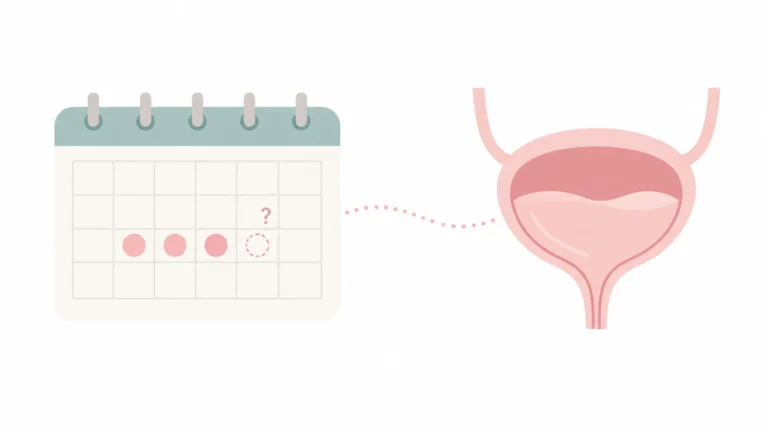
Occult blood in urine means a urine test found blood that you can’t see. It is common, and it is often temporary, from exercise, a period or an infection. The next step is a microscope check. If red blood cells are confirmed, your age, sex and smoking history decide whether you need more tests.
The line on your report might read “Occult blood: Trace,” “Blood, UA: 1+” or “Trace-intact.” Your urine looked normal, and you may feel fine. That gap between a normal-looking sample and a flagged result is what makes this one worrying. Below is what the result means, what usually causes it and what doctors do next.
For the rest of your report, our guide to urinalysis results explained walks through every line.
What does occult blood in urine mean?
“Occult” means hidden. Occult blood in urine is blood in amounts too small to change the color of your pee. Doctors call confirmed hidden blood microscopic hematuria or microhematuria.
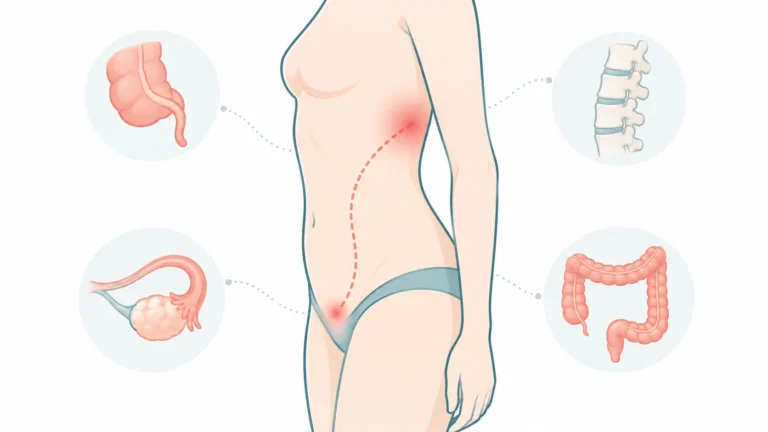
Blood can enter urine anywhere along the urinary tract: the kidneys, the tubes that carry urine down (ureters), the bladder, the prostate or the urethra. The location matters more than the amount, and finding it is the point of any follow-up.
Should I worry about occult blood in urine?
A single positive result is a reason to follow up, not a reason to panic. Many results come from temporary causes and disappear on a repeat test. The chance that confirmed microscopic blood comes from a cancer of the urinary tract is about 3%, according to a 2022 review in American Family Physician.
What you shouldn’t do is ignore a result that is confirmed under the microscope and doesn’t go away. Bladder and kidney cancers can cause bleeding long before any pain, and confirmed blood is often the only early sign.
How occult blood is found: dipstick vs microscope
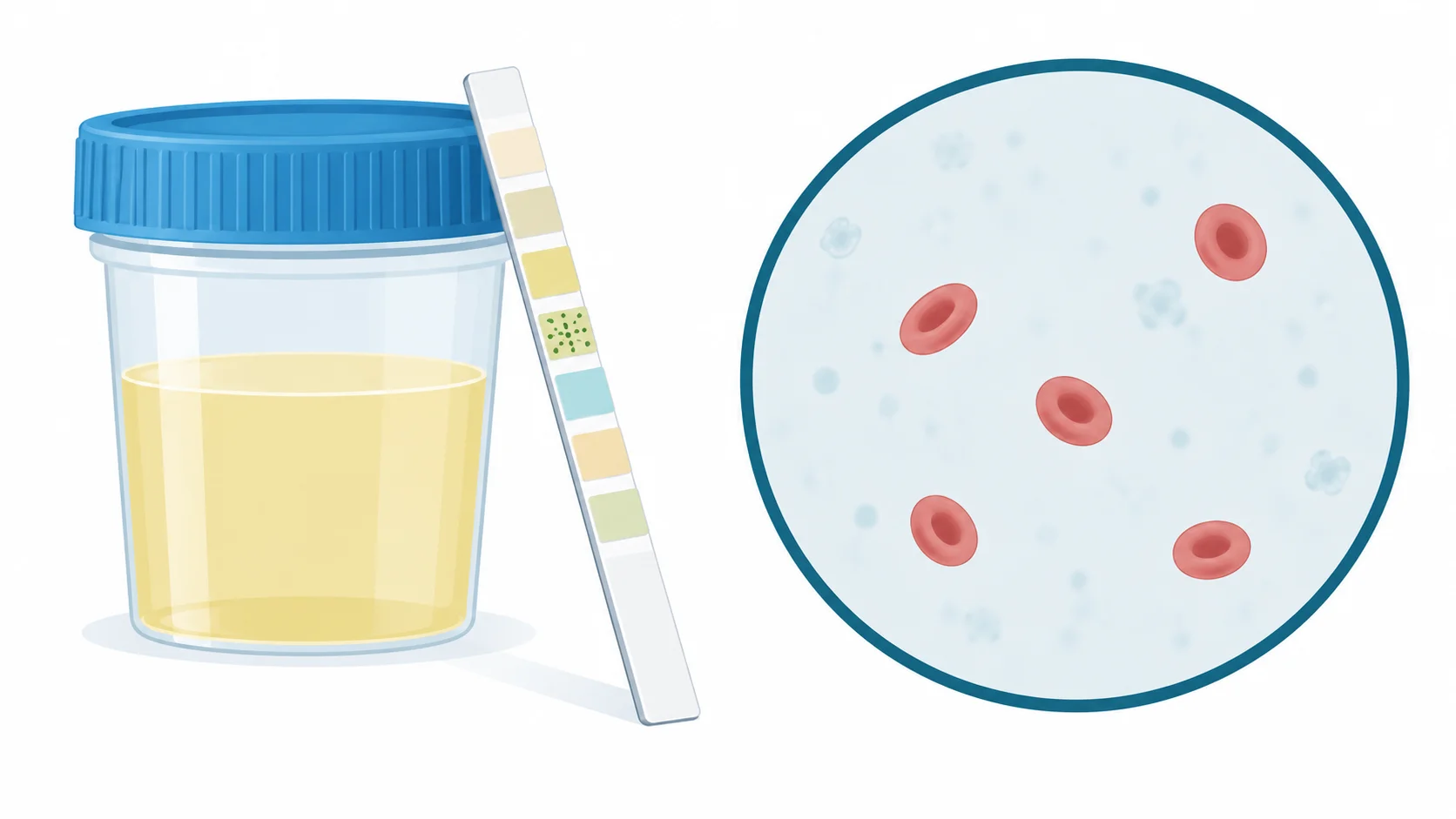
Two different tests are involved, and they don’t measure the same thing. The dipstick screens for blood; the microscope confirms it.
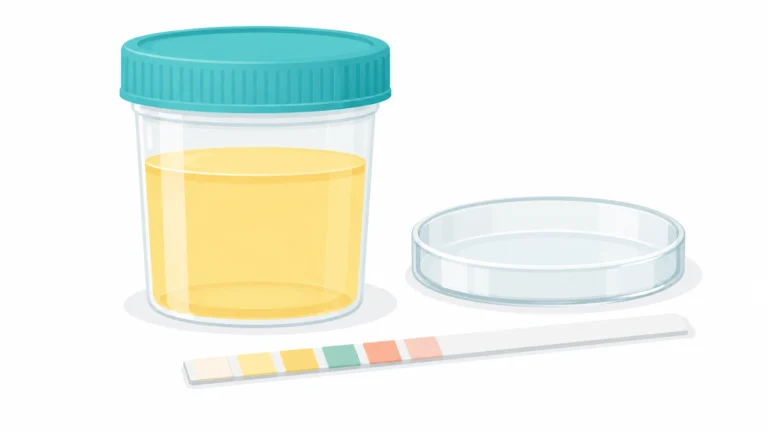
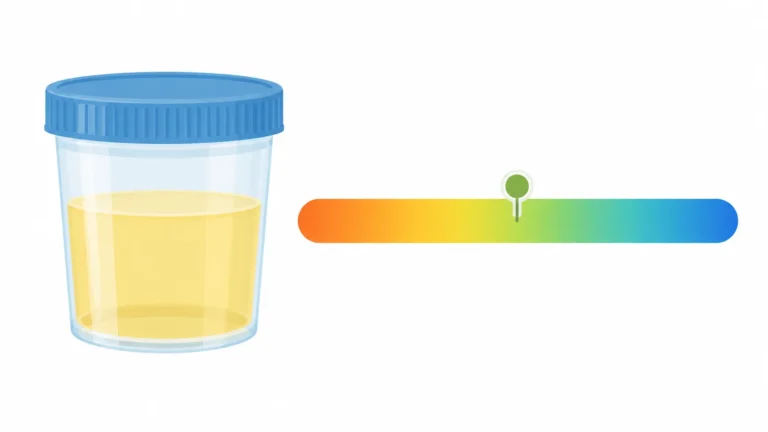
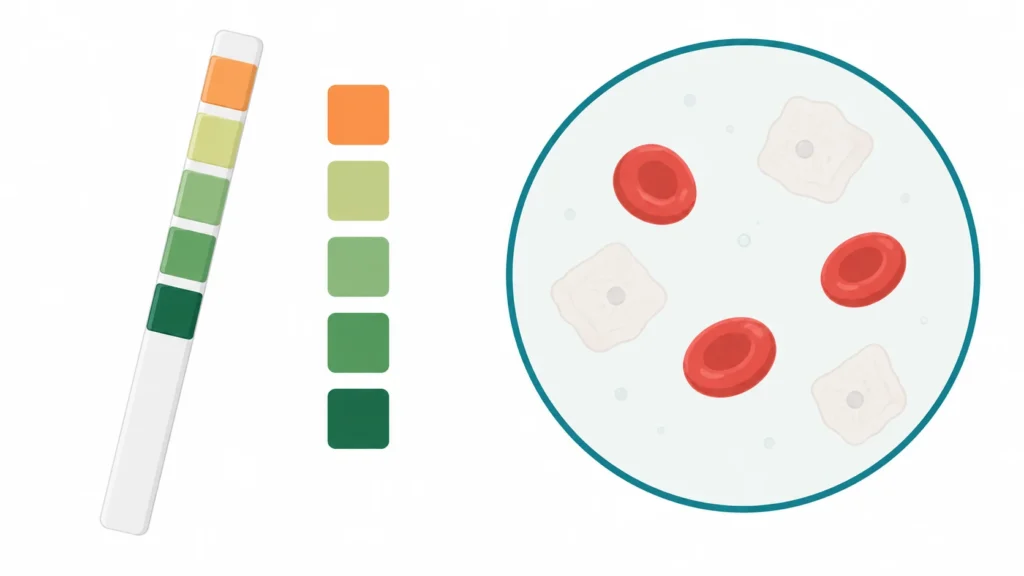
The dipstick has a pad that reacts with heme, the iron-containing part of hemoglobin. It turns from orange to green when heme is present and picks up as few as 5 to 20 intact red blood cells per microliter of urine, according to the procedure for a widely used strip (Siemens Multistix). It catches more than 90% of true blood in urine. A normal result is “Negative.”
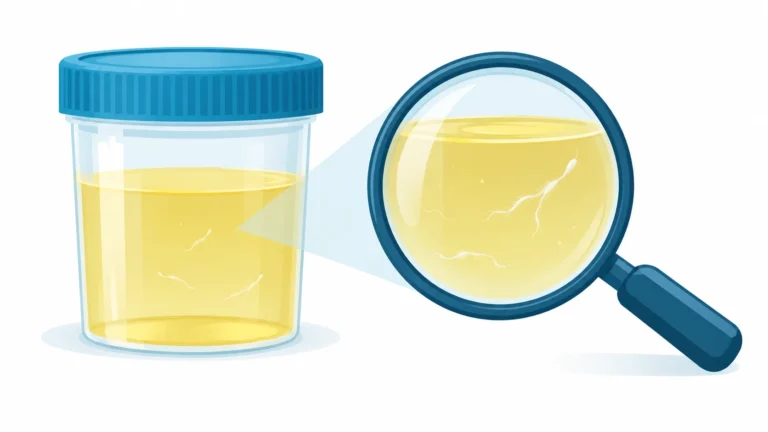
The microscope counts actual red blood cells in a spun sample. A count of 0 to 2 red cells per high-power field (RBC/HPF) is normal. The American Urological Association (AUA) defines microhematuria as 3 or more RBC/HPF on one properly collected sample.
The two can disagree. At least 20% of positive dipsticks show no red cells under the microscope, according to the AUA guideline as summarized in American Family Physician. That is why the AUA advises against starting a workup on a dipstick result alone.
What do trace, 1+, 2+ and 3+ mean?
The grade tells you roughly how much heme the pad found. It doesn’t tell you where the blood came from or how serious the cause is.
| Result | Also written as | Approximate red cells per µL | What usually happens next |
|---|---|---|---|
| Negative | None | Under 5 | Nothing |
| Trace | Trace-intact or trace-lysed | About 5 to 10 | Microscope check or repeat test |
| 1+ | Small | About 25 | Microscope check or repeat test |
| 2+ | Moderate | About 80 | Microscope check; repeat after a period or exercise |
| 3+ | Large | About 200 | Microscope check and follow-up |
These numbers are approximate and vary between strip brands. A 3+ during a period can mean less than a confirmed trace in a 65-year-old smoker.
What does trace-intact or trace-lysed mean?
Trace-intact means whole red blood cells touched the pad and left green speckles. Trace-lysed (or “hemolyzed”) means the pad turned an even green color, which happens when red cells have already burst or when free hemoglobin or myoglobin is in the urine.
Both can come from real bleeding. Lysed results can also come from a sample that sat too long, watery and dilute urine, red blood cells being destroyed in the bloodstream, or muscle injury.
What do “Trace A Negative” and “WarningAbnormal” mean on a report?
These phrases are usually several report columns printed together. On many US lab reports each test has a result column, a flag column and a reference range column. “Trace A Negative” reads as: result Trace, flag A (abnormal), normal range Negative. “Traceabnormal” and “1+ A Negative” follow the same pattern.
“WarningAbnormal” works the same way. It means the result is outside the normal range. It isn’t a separate or more serious finding than the grade itself.
Hemoglobin, myoglobin or red blood cells?
The dipstick reacts the same way to hemoglobin from red cells and to myoglobin from muscle. If the dipstick is positive but the microscope shows no red cells, the pad may be reacting to:
- Myoglobin, released when muscle is badly damaged (rhabdomyolysis), such as after extreme exercise, a crush injury or a long period lying on the floor
- Free hemoglobin, released when red blood cells are destroyed inside the bloodstream; our guide to urobilinogen in urine covers that process
- A contaminated container, such as bleach-type cleaners
- Bacterial enzymes in a heavily infected sample
Labels such as “UA HGB” or “Hemoglobin, urine” refer to this same dipstick pad.
What is the most common cause of blood in urine?
A urinary tract infection (UTI) is the most common cause, followed by kidney stones, an enlarged prostate in men and temporary causes such as exercise or a period. In some people, no cause is ever found.
Temporary causes
These usually clear within days, and a repeat test comes back negative:
- A menstrual period, which can contaminate the sample
- Hard exercise, from long-distance running to contact sports
- Sex
- A urinary catheter, cystoscopy or other recent procedure on the urinary tract
- A minor injury to the area
Infections
Bladder, kidney, prostate and urethra infections inflame the lining and make it bleed. Sexually transmitted infections can do the same. Infection usually shows up on other lines of the report too; our guides to leukocytes in urine and nitrites in urine explain those.
After a UTI is treated, the AUA suggests repeating the microscope test. If blood is still there with clean urine, it needs its own explanation. In one analysis cited by American Family Physician, about 1 in 10 women and 1 in 20 men with bladder cancer had taken more than three courses of antibiotics before the cancer was found.
Kidney and bladder stones
Stones scrape the lining as they form and move. Blood from a stone often comes with sharp pain in the side, back or groin, but small stones can bleed without pain.
Enlarged prostate (BPH)
An enlarged prostate grows extra blood vessels on its surface, and these fragile vessels can bleed into the urine. BPH is a common cause of hidden blood in men over 50, but it is diagnosed only after other causes are ruled out.
Kidney filter disease
Damage to the kidney’s filtering units (glomeruli) lets red cells leak into urine. Causes include IgA nephropathy, thin basement membrane disease, Alport syndrome and other forms of glomerulonephritis. Polycystic kidney disease can also bleed when a cyst ruptures.
Blood disorders and medicines
Sickle cell disease and sickle cell trait can cause bleeding from the kidney. So can hemophilia and other clotting disorders.
Blood thinners deserve a special note. The AUA states that taking an anticoagulant doesn’t explain blood in the urine, so people on these drugs get the same evaluation as everyone else. They are more often diagnosed with bladder cancer, possibly because the drug makes an existing tumor bleed sooner.
Which cancers cause blood in urine?
Bladder cancer is the main concern. Kidney cancer, cancer of the ureters or the kidney’s collecting system (upper tract urothelial cancer) and prostate cancer can also cause hidden bleeding.
The biggest risk factor for bladder cancer is smoking. Others include older age, male sex, workplace exposure to benzene or aromatic amines (dyes, rubber, leather and some chemical work), past radiation to the pelvis, past treatment with the chemotherapy drug cyclophosphamide and a long-term catheter.
Does occult blood in urine mean your kidneys are failing?
No, not on its own. Most hidden blood comes from the bladder, prostate or urethra, not the kidneys. Blood points toward the kidneys’ filters when it comes with:
- Protein in the urine
- Misshapen (dysmorphic) red blood cells under the microscope
- Red blood cell casts, tube-shaped clumps formed inside the kidney
- New or rising high blood pressure
- A falling eGFR, the blood test that estimates kidney function
If those appear, your doctor will likely refer you to a kidney specialist (nephrologist) rather than, or as well as, a urologist. Our guide to the early signs of kidney disease explains the eGFR and urine albumin tests used to check.
Who needs more tests? The AUA risk groups
Once microscopic blood is confirmed and a temporary cause is ruled out, the AUA sorts people into three risk groups. The group decides which tests you get. These are the groups from the 2025 update of the AUA/SUFU guideline, which raised the low-risk age for women from under 50 to under 60.
| Risk group | Who is in it (any one item places you in the higher group) | Usual next step |
|---|---|---|
| Low/negligible | Women under 60 or men under 40; 3 to 10 RBC/HPF; never smoked or under 10 pack-years; no other risk factors | Repeat urinalysis within 6 months instead of immediate cystoscopy or imaging; blood still there on the repeat moves you up a group |
| Intermediate | Women 60 or older or men 40 to 59; 11 to 25 RBC/HPF; 10 to 30 pack-years; a low-risk person whose repeat test still shows blood; other risk factors | Cystoscopy and kidney ultrasound |
| High | Men 60 or older (women are no longer placed here by age alone); more than 25 RBC/HPF; more than 30 pack-years; any past episode of visible blood in urine | Cystoscopy and CT urography |
A pack-year is one pack a day for one year, so 20 cigarettes a day for 15 years is 15 pack-years. “Other risk factors” include a family history of urinary tract cancer or Lynch syndrome, the chemical exposures listed above, pelvic radiation, cyclophosphamide, a long-term catheter, and bladder irritation symptoms without an infection.
What will a urologist do for blood in urine?
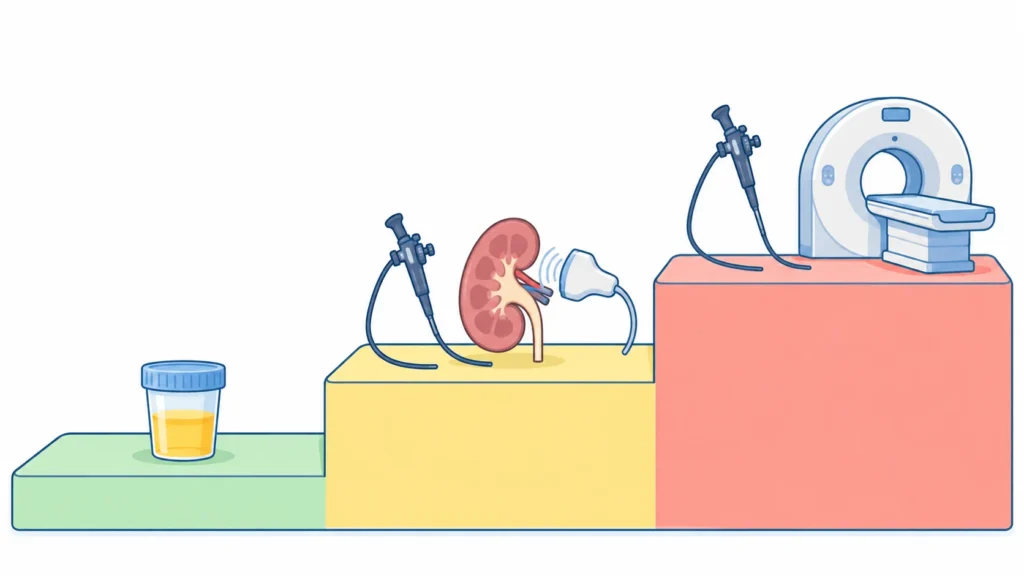
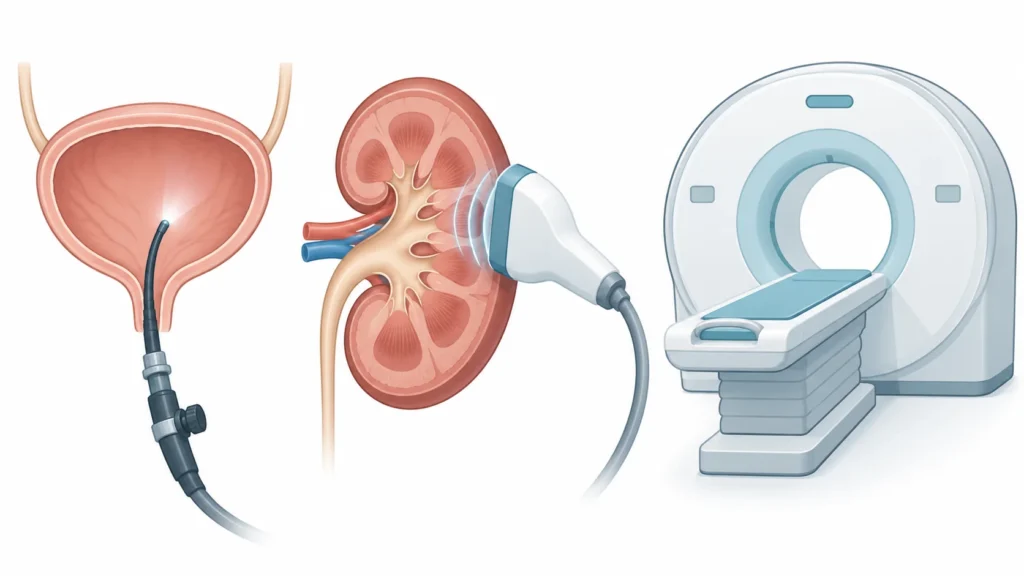
A urologist confirms the blood, looks for a simple cause and, depending on your risk group, looks inside the bladder and images the kidneys. Most of this happens in the office or an imaging center.
- Review and repeat. Your history, medicines, smoking and any recent infection, period or exercise. A repeat urinalysis with microscopy, and a urine culture if infection is possible.
- Blood tests. Creatinine and eGFR to check kidney function.
- Cystoscopy. A thin, flexible camera passed through the urethra into the bladder after numbing gel. It takes a few minutes in the office and is the best way to see the bladder lining.
- Kidney ultrasound. No radiation and no dye. It finds stones, cysts and kidney masses but is poor at spotting small cancers in the ureters.
- CT urography. A CT scan with contrast dye timed to show the kidneys, ureters and bladder. Used for high-risk patients. If you can’t have the dye, MR urography or a scope-based dye study (retrograde pyelography) can be used instead.
What a urologist usually skips at first is urine cytology, a test that looks for cancer cells in urine. The AUA advises against routine cytology and urine tumor markers in the first evaluation (the 2025 update allows them, together with a kidney ultrasound, for some intermediate-risk people who want to avoid cystoscopy), because cytology gives a false alarm about 10% of the time and rarely finds a cancer that cystoscopy missed.
If everything comes back normal, the AUA suggests repeating the urinalysis within 12 months and stopping if no blood is found. A clean evaluation is reassuring. In one long follow-up study cited in the AAFP review, only 2 of 258 people with a negative workup developed bladder cancer over 14 years.
False positives and false negatives
A dipstick can be wrong in both directions, which is the main reason doctors confirm it under a microscope.
False positives (the pad turns green without red cells in the urine):
- Myoglobin from muscle injury
- Free hemoglobin from red cells destroyed in the bloodstream
- Bleach-type cleaners left in the collection cup
- Bacterial enzymes in a heavily infected sample
False negatives (blood present but the pad stays negative):
- A sample that wasn’t mixed, so red cells settled at the bottom
- Highly concentrated urine (high specific gravity)
- Captopril, a blood pressure medicine
- High doses of vitamin C on some strips
Timing matters too. The strip should be read within an hour of collection, or the sample should be refrigerated.
Red urine with a negative blood test
Red or pink urine isn’t always blood. Beets, blackberries and some food colorings can tint urine red or pink, according to MedlinePlus, and the blood pad stays negative. Phenazopyridine, a bladder pain medicine, and rifampin, an antibiotic, turn urine orange. Our guide to neon yellow pee covers other color changes.
Urine occult blood vs stool occult blood tests
“Occult blood” also names a stool test used to screen for colon cancer, such as the fecal immunochemical test (FIT) or the older guaiac test. That test checks a stool sample for hidden blood from the bowel. It has nothing to do with the urine dipstick, and a result from one says nothing about the other.
Occult blood in urine in women and during your period
In women, a period is the most common reason for a positive blood result in an otherwise healthy person. If you’re menstruating when you give a sample, tell the clinic. The usual plan is to repeat the test a few days after your period ends.
Some causes in women don’t clear completely. The AUA lists thinning of vaginal tissue after menopause (vaginal atrophy) and pelvic organ prolapse as causes that may leave some blood behind. If blood is still present after those are treated, a full evaluation may still be needed. Repeating the microscope test after a treated UTI matters for women in the same way it does for men.
Can occult blood go away on its own? How do you get rid of it?
Yes, when the cause is temporary. Blood from exercise, sex, a period or a recent procedure clears without treatment, and a repeat test confirms it.
There is no treatment for occult blood itself. Treatment goes to the cause:
- Infection: antibiotics, then a repeat test
- Stones: fluids and pain relief while a small stone passes, or a procedure to break up or remove a larger one
- Enlarged prostate: medicines that shrink the gland can reduce bleeding from it
- Kidney filter disease: blood pressure control and treatment from a kidney specialist
- Cancer: surgery and other cancer treatment, which work best when the cancer is found early
No drink stops blood in urine. Drinking enough water keeps urine flowing and helps with stones and infections, but it won’t fix a cause that is still there. Visible blood, clots or blood that keeps coming back need a doctor; our guides to small blood clots in urine and whether blood in urine can go away cover those.
When should you see a doctor about occult blood?
See your doctor to confirm any positive dipstick under the microscope. Book a follow-up if blood is confirmed, if it shows up again on a repeat test, or if you are in the intermediate or high risk group above.
Get care the same day if you have fever with pain in your back or side, blood you can now see, clots, or trouble passing urine.
Call 911 or go to the nearest emergency room if you can’t pass urine at all with severe pain, pass a lot of blood and feel dizzy or faint, or have dark brown urine with severe muscle pain or weakness after extreme exercise or an injury.
Frequently asked questions
Can not drinking enough water cause microscopic blood in urine?
Not directly. Low fluid intake concentrates urine, which can make a tiny amount of blood easier to detect. If you were short on fluids, a repeat test after drinking normally gives a clearer answer.
Is it common to have occult blood in urine?
Yes. Blood in urine accounts for at least 1 in 5 visits to a urologist, according to the NIDDK. Most people with it do not have cancer, and many have a temporary cause.
How long after exercise should I wait before a urine test?
Waiting about two to three days after a long run, race or hard workout is a reasonable rule. Exercise-related blood clears quickly, so a test after rest gives a cleaner picture.
Can a vaginal yeast infection cause occult blood in urine?
It can. Irritated skin and discharge can carry small amounts of blood into the cup. Repeat the test after the infection clears, and tell the clinic about the yeast infection when you give the sample.
Is occult blood in urine a sign of pregnancy?
No. Pregnancy tests measure the hormone hCG, not blood. Light spotting in early pregnancy can contaminate a urine sample, so mention a possible pregnancy when you give one.
Can children have occult blood in urine?
Yes. In children, doctors use a higher microscope cutoff: more than 5 red cells instead of 3. Common causes differ from adults and include kidney inflammation after a strep infection and high calcium in urine.
What foods should I avoid before an occult blood test?
That advice applies to stool tests. The American Cancer Society says guaiac stool tests need limits on red meat, vitamin C and NSAIDs, while FIT stool tests and urine dipsticks need none.
Can coffee or alcohol cause blood in urine?
They can irritate the bladder and make you go more often, but they don’t make it bleed by themselves. If blood shows up after coffee or drinks, it still needs another explanation.
Sources
- Arnold MJ. Microscopic Hematuria in Adults: Updated Recommendations from the American Urological Association. American Family Physician, 2021
- American Urological Association / SUFU. Microhematuria Guideline (2020, amended 2025)
- Hitzeman N, et al. Office-Based Urinalysis. American Family Physician, 2022
- Siemens Multistix 10 SG. Blood in Urine, laboratory procedure
- National Institute of Diabetes and Digestive and Kidney Diseases. Hematuria (Blood in the Urine)
- National Kidney Foundation. Hematuria (Blood in the Urine) in Adults
- MedlinePlus. Urine, abnormal color
- American Cancer Society. Colorectal Cancer Screening Tests
Disclaimer
This blog is for informational and educational purposes only, and does not intend to substitute any professional medical advice or consultation. For any health related concerns, please consult with your physician, or call 911.