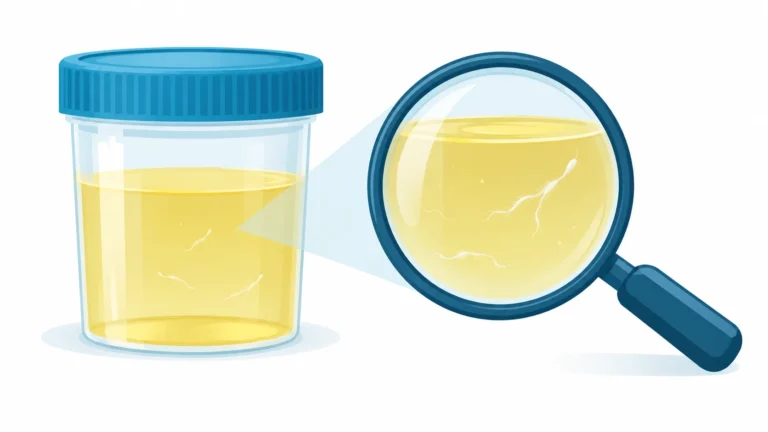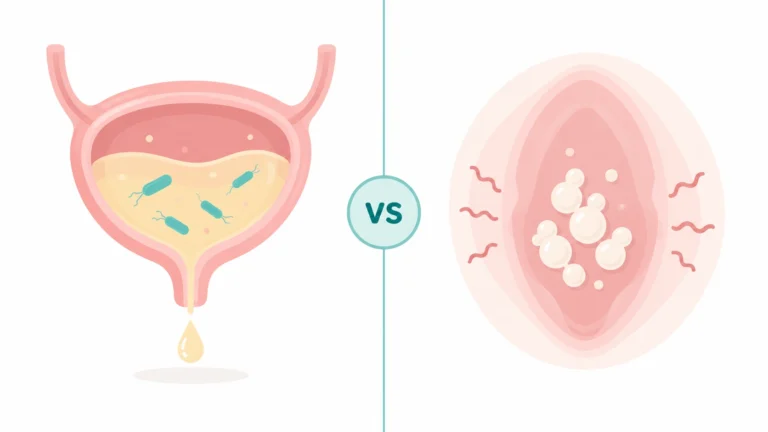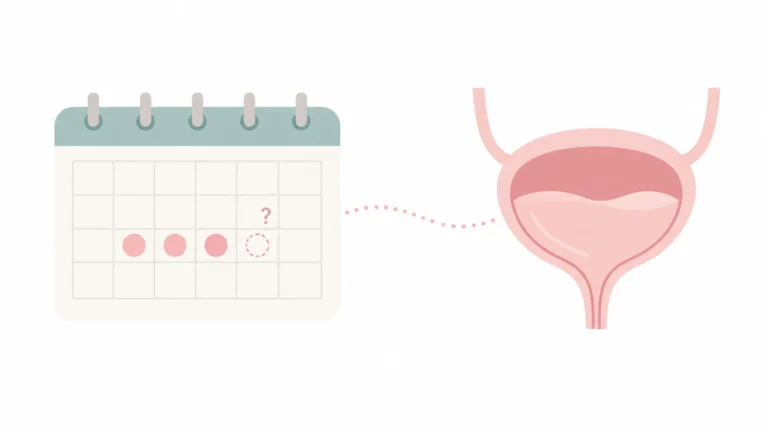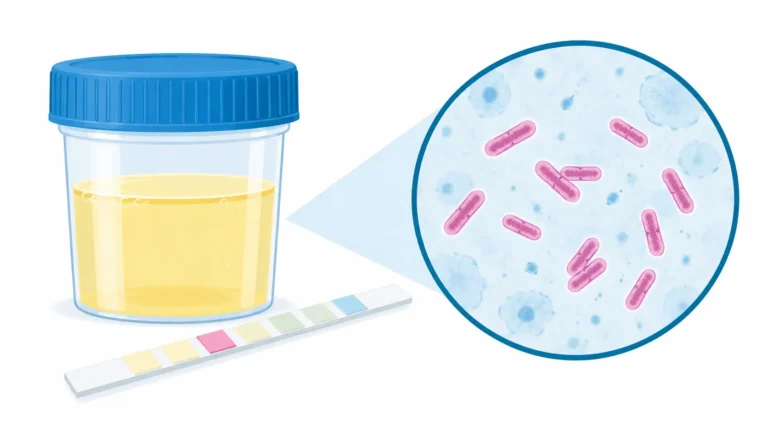
Why Does It Burn When I Pee? 14 Causes and How to Stop It
It burns when you pee because urine is passing over tissue that’s inflamed or irritated. Doctors call this dysuria. In women, the most common cause is a urinary tract infection (UTI). In men, infections of the urethra, often from an STI, and prostate problems lead the list. Vaginal infections, irritating soaps, kidney stones and bladder conditions are other common reasons.
What to do now:
- Burning with fever, chills, back or side pain, or vomiting: get care today. This can mean a kidney infection.
- Burning with urgency and peeing often: a UTI is likely. See a provider or book a telehealth visit for a urine test and antibiotics.
- Burning with discharge, sores, itching or a new partner: get tested for STIs and vaginal infections. Antibiotics for a UTI won’t fix these.
Below, we go through what the location and timing of the burn tell you, the 14 most common causes, why it can burn with a clean urine test, and what you can do at home while you wait to be seen.
What is dysuria?
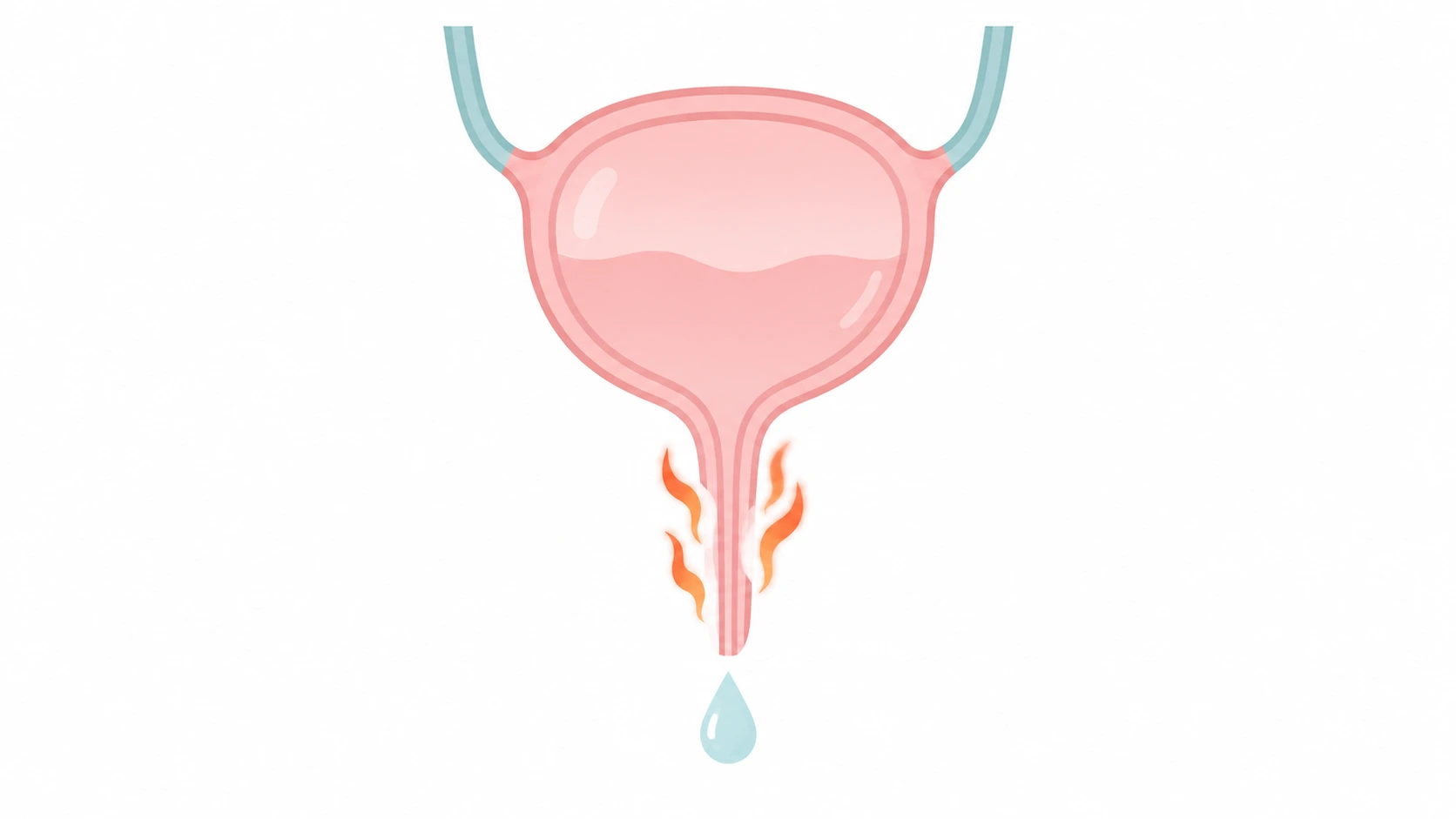
Dysuria is the medical term for pain, burning or discomfort when you pee. Mayo Clinic describes it as trouble or burning when passing urine, felt in the urethra (the tube that carries urine out) or in the area around the genitals. People describe it as burning, stinging, a hot or sharp feeling, or an ache low in the belly while they go.
Dysuria isn’t a diagnosis. It’s a symptom, and it means one of two things: the lining inside the urethra or bladder is inflamed, or the skin outside where urine comes out is raw. According to the Merck Manual, the most common causes are a bladder infection and urethritis from a sexually transmitted infection (STI).
Stinging and burning point to the same problem. Some people use “sting” for a sharp feeling on the skin and “burn” for a deeper heat, and that difference can be a useful clue.
What the burn is telling you
Inside or outside?
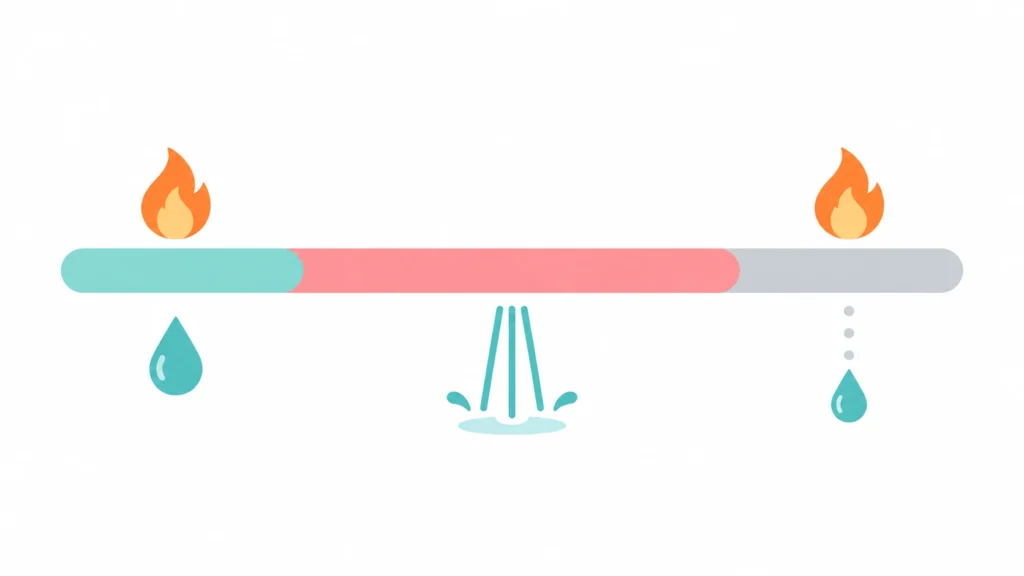
- Inside, deep in the urethra or behind the pubic bone: points to the bladder or urethra. Think UTI, STI urethritis or a bladder condition.
- Outside, on the skin, when urine touches it: points to the vulva or the skin around the opening. Think yeast infection, other vaginal infections, herpes sores, small tears or irritation from a product. The CDC calls this “external dysuria.” Our guide to does a UTI cause itching covers those outside causes in detail.
- At the tip of the penis: points to the urethra. In younger, sexually active men this is most often an STI.
- Deep in the pelvis, between the scrotum and anus, or in the testicles: points to the prostate or epididymis.
At the start, the end or after you pee?
- At the start of the stream: the urethra is the likely source. Cleveland Clinic notes that pain at the start of peeing is often a UTI, and the Merck Manual links urethral inflammation to burning and trouble starting.
- At the end, or when the last drops come out: the bladder is squeezing down on an irritated lining. This is common with a bladder infection and with bladder pain syndrome. In men, the prostate can cause it too. If you’ve wondered why it hurts at the end when you pee, this is the usual reason.
- For a few minutes after you pee: often the bladder or, in men, the prostate. Cleveland Clinic lists pain after peeing as a possible bladder or prostate sign.
- All the time, peeing or not: points away from a simple UTI and toward skin irritation, vaginal causes, the prostate or a bladder pain condition.
The other symptoms that come with it
The burn alone doesn’t tell you much. A review in JAMA found that burning on its own only modestly raises the odds of a UTI. The symptoms around it matter more.
| Burning plus… | Most likely cause |
|---|---|
| Urgency, peeing often, small amounts, pressure low in the belly | Bladder infection (UTI) |
| Fever, chills, back or side pain, nausea | Kidney infection |
| Discharge from the penis or vagina, or a new partner | STI |
| Itching, thick white discharge, sore vulva | Yeast infection |
| Thin gray discharge, fishy smell | Bacterial vaginosis (BV) |
| Blisters or open sores | Genital herpes |
| A new soap, wipe, lubricant or spermicide | Irritation |
| Sharp pain in the side or groin that comes in waves, blood in urine | Kidney stone |
| Weak stream, trouble starting, peeing at night (men) | Prostate problem |
| Pain as the bladder fills that eases after peeing, clean urine tests | Bladder pain syndrome |
| Dryness and pain with sex after menopause | Vaginal dryness (GSM) |
In the same JAMA review, burning plus peeing often, with no vaginal discharge or irritation, pushed the chance of a UTI above 90%. Discharge or vaginal irritation made a UTI less likely and a vaginal cause more likely.
14 reasons it burns when you pee
1. Bladder infection (UTI)
A bladder infection is the most common reason for burning when you pee, and women get far more of them than men. Bacteria, usually E. coli from the bowel, travel up the short female urethra into the bladder and inflame the lining.
The CDC lists five signs of a bladder infection:
- Pain or burning while peeing
- Peeing often
- Feeling you need to pee even when your bladder is empty
- Bloody urine
- Pressure or cramping in the groin or lower belly
Urine may also look cloudy or smell strong. A UTI needs prescription antibiotics, and the burning usually eases within one to three days of starting them. Our full guide to UTI symptoms, causes and treatment covers testing and every antibiotic option. Not every UTI burns, though; some show up only as urgency, pressure or a change in urine. See can you have a UTI without pain.
2. Kidney infection
If a bladder infection climbs to the kidneys, burning comes with fever, chills, pain in the back or side, and nausea or vomiting, according to the CDC. A kidney infection is more serious and needs same-day care. It’s more likely in pregnancy, in people with diabetes and in anyone whose bladder infection went untreated.
3. Sexually transmitted infections
STIs inflame the urethra, cervix or genital skin, and urine passing over that tissue burns. The CDC notes that UTI symptoms and STI symptoms can be alike, which is why many people treat a “UTI” that’s really an STI.
- Chlamydia and gonorrhea: burning when you pee and discharge from the penis or vagina. The CDC says chlamydia often has no symptoms at all, and that sexually active women under 25 should be tested every year.
- Trichomoniasis: itching, burning and a yellow-green or frothy discharge. The CDC estimates about 70% of people with it have no symptoms.
- Mycoplasma genitalium: a less-known bacterium the CDC links strongly to urethritis in men. It needs specific testing.
- Genital herpes: blisters or open sores, and urine running over them burns badly. The first outbreak can bring fever, body aches and swollen glands. Herpes can also make it hard to start peeing.
What does STI burning feel like? With chlamydia, gonorrhea and other causes of urethritis, the burn is inside the urethra, often at the tip of the penis, and it may come with itching inside the urethra or a drip of discharge, according to the CDC. You may not have the strong urge and frequent peeing of a bladder infection. With herpes, the sting is on the skin where the sores are.
A urine test for a UTI doesn’t check for STIs. STI testing uses a urine sample or swab and a separate lab test called a NAAT. Our guide to UTI vs STD explains how to tell the two apart.
4. Vaginal yeast infection
A yeast infection inflames the vulva, so urine stings the raw skin on the way out. It comes with itching, soreness and thick white discharge. The CDC estimates 75% of women will have at least one. Yeast infections often follow antibiotics, including antibiotics for a UTI. See our comparison of UTI vs yeast infection.
5. Bacterial vaginosis
BV is an overgrowth of the wrong bacteria in the vagina. The CDC lists a thin white or gray discharge, a fishy smell that’s often worse after sex, and burning when peeing. It’s treated with antibiotics such as metronidazole, but different ones from a typical UTI course.
6. Irritating soaps and products
The skin around the urethra is thin and reacts easily. Cleveland Clinic lists douches, soaps, scented toilet paper, contraceptive sponges and spermicides as causes of irritation that burns when you pee. Bubble bath, feminine sprays and wipes, scented pads, some lubricants and strong laundry detergent can do the same. The burning is mostly on the skin, there’s no fever, and it fades a few days after you stop using the product.
7. Friction, sex and small tears
Sex, shaving, tight clothing or vigorous wiping can leave tiny scrapes on the vulva or penis that sting when urine touches them. Childbirth tears do the same in the weeks after delivery. These heal on their own if kept clean, but pus, worsening redness or fever needs a check.
8. Vaginal dryness after menopause
Lower estrogen thins the tissue of the vagina and urethra. This is called genitourinary syndrome of menopause (GSM), and it causes dryness, burning, pain with sex and more frequent UTIs. Vaginal moisturizers and low-dose vaginal estrogen help, and the AUA, SUFU and AUGS recommend vaginal estrogen for these symptoms.
9. Prostate problems
The prostate wraps around the urethra just below the bladder, so when it’s inflamed or enlarged, peeing can burn.
- Prostatitis: burning, pain in the pelvis, groin, lower back or between the scrotum and anus, and pain with ejaculation. A sudden bacterial prostatitis also brings fever and chills and needs prompt treatment.
- Enlarged prostate (BPH): common in older men. It mostly causes a weak stream, trouble starting and peeing at night, and it makes UTIs more likely because the bladder doesn’t empty fully.
- Epididymitis: a tender, swollen area behind a testicle, often from an STI in younger men or bacteria from the urine in older men.
10. Kidney and bladder stones
About 11% of men and 6% of women in the US get a kidney stone at some point, according to the NIDDK. A stone moving down toward the bladder can cause burning and a strong urge to pee, along with sharp pain in the side or groin that comes in waves and blood in the urine. Bladder stones, which mostly affect older men who can’t empty the bladder fully, can cause burning and a stream that stops and starts. If you see blood with the pain, our guide to blood in urine explains what to watch for.
11. Bladder pain syndrome (interstitial cystitis)
Bladder pain syndrome, also called interstitial cystitis (IC), causes pain and pressure that build as the bladder fills and ease for a while after you pee, according to the NIDDK. People with it often have a strong, painful urge to go many times a day, and urine tests come back clean. Flares can follow stress, sex, periods, not drinking enough and certain foods and drinks. Many people find coffee, alcohol, carbonated drinks, citrus and spicy food make it worse. IC needs a specialist, not repeated rounds of antibiotics.
12. Medicines, radiation and ketamine
Some cancer drugs and radiation to the pelvis inflame the bladder lining and can cause burning, urgency and blood in the urine. Check the label of any new medicine for painful urination as a side effect. Recreational ketamine is a lesser-known cause: a 2022 review describes ketamine-related bladder damage with urgency, frequent peeing, burning, blood in urine and pain above the pubic bone. Stopping ketamine is the main treatment and usually leads to improvement.
13. Urethral narrowing and recent procedures
A urethral stricture is a narrowing from scar tissue, more common in men. It causes a slow or spraying stream, a feeling you haven’t emptied, and sometimes burning. A recent catheter, cystoscopy or other procedure using instruments in the urethra can also leave it sore for a day or two, and Merck lists recent instrumentation as a reason for a closer look.
14. Concentrated urine
When you haven’t drunk much, urine is darker and more concentrated, and some people notice a mild sting, more so if the urethra is already irritated. This shouldn’t cause real burning that lasts. If the sting doesn’t settle within a day of drinking more, look for one of the causes above.
Rare causes: reactive arthritis (urethritis with joint pain and red eyes after an infection), bladder cancer and prostate cancer can all cause burning, but they’re uncommon reasons for it. Blood in the urine, a history of smoking or burning that keeps coming back without infection are reasons to see a urologist.
Why does it burn when I pee but it’s not a UTI?
If your urine test is clean, or antibiotics didn’t help, the burning is coming from something other than bacteria in the bladder. The usual suspects are:
- An STI. Chlamydia, gonorrhea, trichomoniasis and Mycoplasma genitalium don’t show up on a standard UTI test. In the CDC guidelines on urethritis in men, about half of cases not caused by gonorrhea have no organism found at all.
- A vaginal cause: yeast, BV, herpes, small tears or vaginal dryness.
- Irritation from a product, including spermicide and scented toilet paper.
- Bladder pain syndrome, if the pain builds as the bladder fills and eases after peeing.
- The prostate in men.
- A stone near the bladder.
- Pelvic floor muscle tension, which can cause burning, urgency and pain without infection. A pelvic floor physical therapist can help.
Some people have white blood cells in their urine but no bacteria on the urine culture. That finding has its own list of causes, including STIs, stones and recent antibiotics. Our guide to leukocytes in urine covers it.
How to tell a UTI from irritation: irritation burns on the skin, comes after a new product or friction, and has no urgency, frequent peeing, fever or change in urine. A UTI burns inside and brings urgency and frequent small trips. If you can’t tell, a urine test will.
Why does it burn to pee after sex?
Burning after sex is common, and the timing is a clue:
- Within minutes to hours: usually friction, a lubricant, condom or spermicide, or tiny scrapes. It eases within a day or so.
- One to two days later, with urgency and peeing often: a UTI is likely. Sex pushes bacteria toward the urethra, which is why the CDC lists recent sexual activity as a UTI risk factor and recommends peeing after sex. A UTI isn’t an STI, though.
- Days to weeks after a new partner, with discharge or sores: get tested for STIs.
- Every time, right after unprotected sex: a rare allergy to semen is possible. It causes burning, itching or swelling that doesn’t happen when a condom is used.
If spermicide is part of your birth control and you keep getting UTIs, ask about switching.
Burning when you pee in women
In women, a bladder infection is the leading cause, followed by vaginal yeast infections, BV, STIs and irritation from products. Several things can mimic a UTI in a woman: an STI, a vaginal infection, vaginal dryness after menopause, bladder pain syndrome, a kidney stone and pelvic floor tension.
Burning with blood on the toilet paper can come from the bladder, the vagina or a period. Our guide to whether a UTI can cause bleeding like a period explains how to tell where it’s coming from.
During pregnancy, always tell your OB-GYN or midwife about burning. UTIs are more common in pregnancy and more likely to reach the kidneys, and pregnant women are screened for bacteria in the urine even without symptoms, as the US Preventive Services Task Force recommends. Some antibiotics and antifungals aren’t used in pregnancy, so don’t self-treat.
Burning when you pee in men
UTIs are less common in men, so the Merck Manual treats burning in a man as a reason for a closer look. The likely cause depends on age:
- Younger, sexually active men: an STI is the most common reason, often felt as burning at the tip of the penis with or without a discharge. The CDC recommends a NAAT on a first-catch urine sample for chlamydia and gonorrhea.
- Older men: prostate problems and UTIs linked to an enlarged prostate become more common, along with stones and, rarely, cancer.
Slight burning after urination in a man, without discharge or fever, can come from mild urethritis, the prostate or irritation. It still deserves a urine test and STI test, since chlamydia in men can be mild. See a provider the same day for fever, testicle pain or swelling, or trouble passing urine.
Burning when you pee in children and older adults
Children: bubble bath, soaps and shampoo in the bath water are a common cause of stinging in young children, mostly girls. A UTI is also possible; the CDC notes that fever is the most common sign of a UTI in babies and toddlers, and young children may not be able to describe burning. See a doctor for any burning with fever, belly pain, vomiting or wetting after being dry. Call right away if a baby younger than 3 months has a fever of 100.4°F (38°C) or higher.
Older adults: vaginal dryness after menopause, an enlarged prostate, stones and UTIs are the main causes. Older adults often have bacteria in the urine without any infection. That alone doesn’t need antibiotics, so a positive urine test matters only alongside real symptoms like new burning, urgency or fever.
How to stop the burning when you pee
The fastest way to stop the burning is to treat what’s causing it. Until you can be seen, these steps can ease it.
What helps right now
- Drink water. It dilutes urine so it stings less, and helps you pee more often. Aim for pale yellow urine.
- Take phenazopyridine (AZO, Uristat) for up to 2 days if you think it’s a UTI. It numbs the urinary tract within hours, but it turns urine orange and doesn’t cure anything. Give a urine sample before you take it, since it can throw off test strips.
- Take ibuprofen or acetaminophen for the ache, if they’re safe for you.
- Use a warm compress or heating pad on the lower belly for bladder cramping.
- For stinging on the outside, pour or squirt lukewarm water over the area while you pee, or pee in a shallow lukewarm bath. Pat dry and skip soap on the raw skin.
- Don’t hold it. Pee when you feel the urge.
- Wear loose cotton underwear and stop any new soap, wipe or lubricant.
What to avoid
- Drinking baking soda. It’s a common home remedy for burning urine, but MedlinePlus warns that baking soda can be poisonous in large amounts and can upset the body’s salt balance and heart rhythm.
- Leftover or borrowed antibiotics. They may be the wrong drug, the wrong dose or no help at all if the cause isn’t a UTI.
- Using AZO for more than 2 days without seeing a doctor.
- Coffee, alcohol and fizzy drinks while you’re sore, since they can irritate the bladder.
- Douches, sprays and scented products, which make irritation worse.
- Sex until the burning clears and you know the cause.
How long does burning pee last? Can it go away on its own?
It depends on the cause:
| Cause | How long it usually lasts |
|---|---|
| Irritation, friction or concentrated urine | A day or two once the trigger is gone |
| UTI on antibiotics | Burning often eases within 1 to 3 days |
| UTI without treatment | May clear, but often doesn’t; 26 in 100 women were symptom-free after a week on placebo vs 60 in 100 on antibiotics (IQWiG) |
| STI | Until treated; some STIs stop causing symptoms but keep causing damage |
| Yeast infection on treatment | A few days |
| Stone | Until the stone passes or is removed |
| Bladder pain syndrome, vaginal dryness, prostate | Weeks or longer without treatment |
Burning from irritation can go away on its own. Burning from an infection usually needs medicine, and waiting carries a risk of a kidney infection with a UTI or lasting damage with an STI. See a provider if burning lasts more than a day or two, keeps returning, or comes with any of the warning signs below.
How doctors find the cause
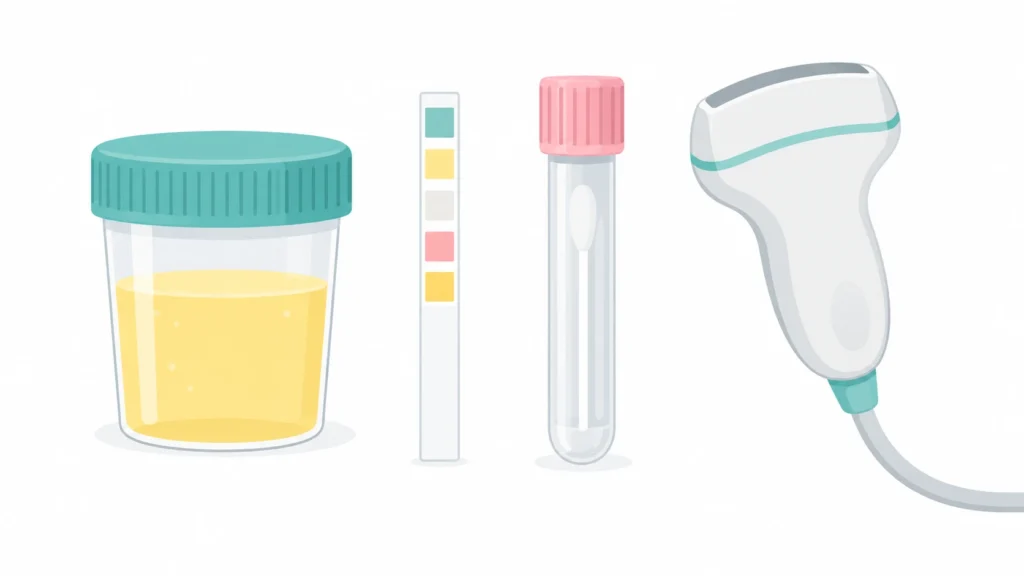
A provider will ask when it started, where you feel it, whether it’s at the start or end of peeing, about discharge, sex, new products, medicines and pregnancy. Then they’ll order some of these:
- Urinalysis: a dipstick and microscope check for white blood cells, nitrites, blood and bacteria. Our urinalysis guide explains the report, and our page on nitrites in urine explains that result.
- Urine culture: grows any bacteria and shows which antibiotics work. It’s used for men, pregnancy, recurrent infections and infections that don’t clear.
- STI tests (NAAT): on urine or a swab, for chlamydia, gonorrhea, trichomoniasis and sometimes Mycoplasma genitalium.
- Vaginal swab: checked under a microscope and for pH to find yeast, BV or trichomoniasis.
- Pregnancy test for women who could be pregnant.
- Exam: of the vulva or penis, and in men sometimes the prostate and testicles.
- Imaging or cystoscopy: an ultrasound or CT for suspected stones, and a camera look inside the bladder for recurrent burning, blood without infection, or symptoms that don’t respond to treatment, according to the Merck Manual.
Treatment depends on the cause
| Cause | Usual treatment |
|---|---|
| Bladder infection | Prescription antibiotic, often 1 to 7 days |
| Kidney infection | Longer antibiotic course; sometimes IV antibiotics in hospital |
| Chlamydia or urethritis not caused by gonorrhea | Doxycycline 100 mg twice a day for 7 days (CDC); partners tested; no sex until treatment is finished |
| Gonorrhea | An antibiotic injection, by a clinician |
| Trichomoniasis | Metronidazole |
| Herpes | Antiviral medicine |
| Yeast infection | Antifungal cream, suppository or pill |
| BV | Metronidazole or clindamycin |
| Irritation | Stop the product; plain water to wash |
| Vaginal dryness (GSM) | Moisturizers, lubricants, vaginal estrogen |
| Prostatitis | Antibiotics if bacterial; other treatments for chronic pain |
| Stones | Fluids and pain relief; procedures for large stones |
| Bladder pain syndrome | Diet changes, physical therapy, medicines, specialist care |
| Medicine or ketamine | Talk to your doctor; stop ketamine |
How to prevent burning when you pee
- Drink enough water to pee regularly through the day.
- Pee after sex and don’t hold urine for hours.
- Wipe front to back.
- Wash the genitals with plain water or a mild unscented cleanser. Skip douches, sprays, bubble baths and scented products.
- Use condoms with new partners and get regular STI tests.
- Choose birth control without spermicide if you get repeat UTIs.
- After menopause, ask about vaginal moisturizers or vaginal estrogen.
- Keep blood sugar in range if you have diabetes.
- Change out of wet swimsuits and sweaty clothes soon after.
When to see a doctor
Go to urgent care or the ER now if you have:
- Burning with fever, chills, back or side pain, nausea or vomiting
- You can’t pee at all, or only a few drops come out
- Severe pain in the side or groin, or blood clots in the urine
- Testicle pain and swelling that came on suddenly
See a provider within a day or two if:
- Burning lasts more than a day or two, or keeps coming back
- You see blood in your urine
- You have discharge, sores, blisters or a new partner
- You’re pregnant, a man, have diabetes or a weak immune system
- Symptoms haven’t improved after 2 days of antibiotics
- A child has burning, with or without fever
The bottom line
Burning when you pee means something is irritating the urethra, bladder or the skin around them. A UTI is the most common cause, but STIs, vaginal infections, products, stones, the prostate and bladder conditions can all feel the same. Where you feel it, when it starts and what comes with it are your best clues. Water and a short course of AZO can ease it, but the burning stops for good only when the cause is treated, so get a urine test, and an STI test if there’s any chance of exposure.
Frequently asked questions
What should I drink when my pee burns?
Plain water is best, because watered-down urine makes each trip less painful. Skip coffee, alcohol, energy drinks and soda until you feel better, since they can irritate an already sore bladder.
How do you heal skin burned by urine?
Urine left on the skin, from leaks or soaked pads, can cause a red, sore rash. Rinse gently with water, pat dry, change pads promptly and apply a zinc oxide barrier cream.
What’s the quickest way to flush out a UTI?
You can’t flush out a UTI with water alone. A prescription antibiotic is the quickest fix, and most people feel better soon after starting it. Extra fluids keep you going to the bathroom while the medicine works.
Does cranberry juice stop burning when you pee?
No. Cranberry products may lower the chance of repeat UTIs in some women, but they don’t treat an infection or ease burning. Sugary cranberry cocktail may even irritate a sore bladder.
Can stress or anxiety make it burn when you pee?
Stress doesn’t cause a UTI, but it can set off flares of bladder pain syndrome and tighten pelvic floor muscles, both of which can make peeing burn. Get checked for infection first.
Can holding your pee make it burn?
Holding urine for many hours can give bacteria in the bladder more time to grow, which raises UTI risk. Holding it once won’t cause burning on its own.
Why does my pee burn in the morning?
The first urine of the day is the most concentrated, so it can sting an already irritated urethra. If it burns all day, or for longer than a day, concentration isn’t the whole story.
Can sperm or semen make it burn when you pee?
Rarely. A small number of people have an allergy to semen that triggers stinging, itching or swelling after unprotected sex. It doesn’t happen with condoms, which helps tell it apart.
Is burning when you pee contagious?
The burning isn’t, but some causes are. STIs such as chlamydia, gonorrhea, trichomoniasis and herpes spread through sex. The CDC says UTIs aren’t sexually transmitted, so a partner can’t catch one from you.
Sources
- Mayo Clinic. Painful urination (dysuria): Causes
- Merck Manual Professional Version. Dysuria
- Cleveland Clinic. Dysuria (Painful Urination)
- Centers for Disease Control and Prevention. Urinary Tract Infection Basics
- Bent S, et al. Does this woman have an acute uncomplicated urinary tract infection? JAMA, 2002
- Centers for Disease Control and Prevention. Urethritis and Cervicitis, STI Treatment Guidelines, 2021
- Centers for Disease Control and Prevention. About Chlamydia
- Centers for Disease Control and Prevention. About Trichomoniasis
- Centers for Disease Control and Prevention. About Genital Herpes
- American Academy of Dermatology. Herpes simplex: Signs and symptoms
- Centers for Disease Control and Prevention. Vulvovaginal Candidiasis, STI Treatment Guidelines, 2021
- Centers for Disease Control and Prevention. About Bacterial Vaginosis
- National Institute of Diabetes and Digestive and Kidney Diseases. Symptoms and Causes of Interstitial Cystitis
- National Institute of Diabetes and Digestive and Kidney Diseases. Definition and Facts for Kidney Stones
- Anderson et al. Review of ketamine-induced cystitis. Health Psychology Research, 2022
- MedlinePlus. Baking soda overdose
- InformedHealth.org (IQWiG). How effective are antibiotics in treating acute cystitis?
- UNC Urology. New AUA guideline on genitourinary syndrome of menopause (AUA/SUFU/AUGS, 2025)
- Nicolle LE, et al. Clinical Practice Guideline for the Management of Asymptomatic Bacteriuria: 2019 Update by the Infectious Diseases Society of America
- US Preventive Services Task Force. Asymptomatic Bacteriuria in Adults: Screening, 2019
Disclaimer
This blog is for informational and educational purposes only, and does not intend to substitute any professional medical advice or consultation. For any health related concerns, please consult with your physician, or call 911.