Why Is My Pee Neon Yellow? Vitamins, Dehydration and When to Worry
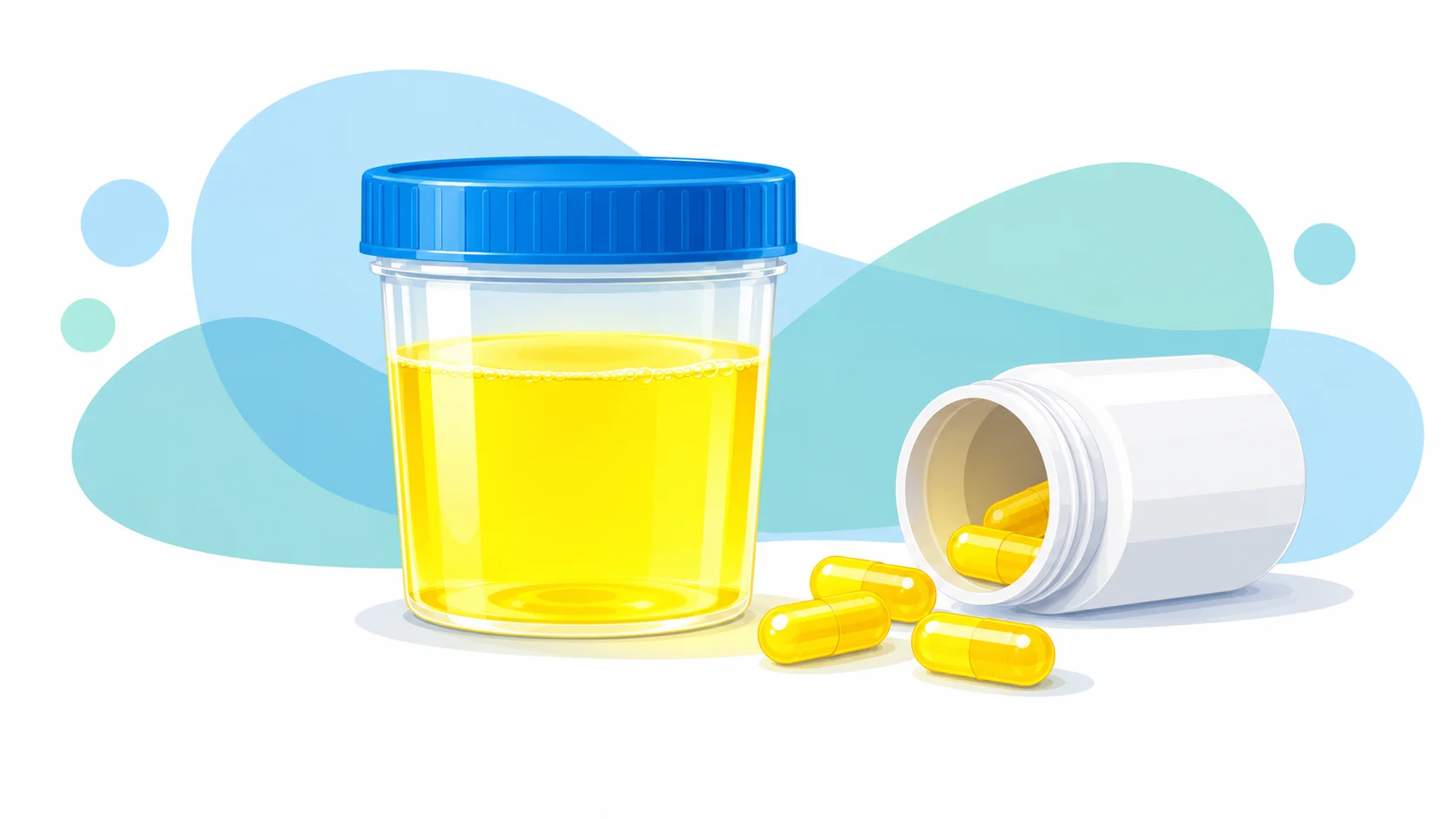
Neon yellow pee almost always comes from vitamin B2 (riboflavin) in a multivitamin, a B-complex pill or an energy drink. Your body keeps what it needs and sends the rest out in your urine, which glows like a highlighter. It’s harmless and usually fades within a day. Dark yellow, brown or foamy urine is a different story.
You glance down and the toilet looks like someone dropped a highlighter in it. If you started a new vitamin, a pre-workout drink or an energy drink in the last day or two, you have your answer. If you didn’t, or the color is darker than neon, keep reading.
Why does vitamin B2 turn pee neon yellow?
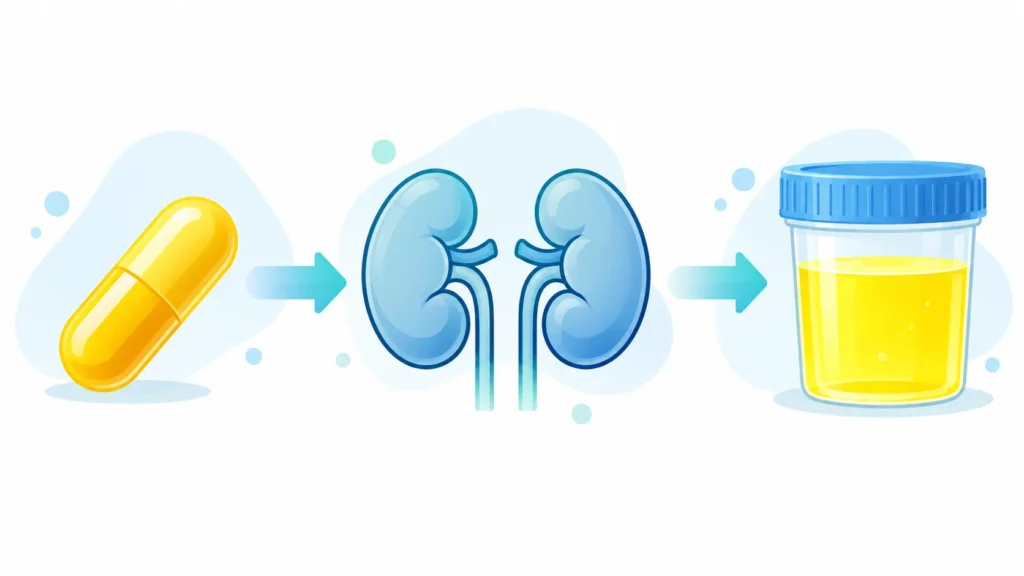
Vitamin B2, or riboflavin, is a naturally yellow compound that glows yellow-green, so when extra riboflavin leaves your body in urine, it turns the urine a bright, fluorescent yellow. No other common vitamin produces this color.
The amounts explain why it happens so often. According to the NIH Office of Dietary Supplements (ODS), adults need only 1.1 to 1.3 mg of riboflavin a day. Many B-complex pills contain 25 to 100 mg. The body absorbs little riboflavin past about 27 mg from a single dose and stores only small amounts, so the extra goes straight to the kidneys and out in the next few trips to the bathroom.
Which vitamins, drinks and foods cause it?
Supplements and fortified drinks cause neon yellow pee far more often than food. The most common sources are:
- B-complex supplements, which often hold many times the daily need for riboflavin
- Multivitamins and prenatal vitamins
- Energy drinks, pre-workout powders and some sports drinks with added B vitamins
- Fortified cereals, meal-replacement shakes and protein bars
To check a product, look for “riboflavin” or “vitamin B2” on the Supplement Facts or Nutrition Facts label. A number in the thousands of percent of the Daily Value (DV) means most of it will end up in your urine. Energy drinks are worth a second look: many add niacin, vitamin B6 and vitamin B12 but no riboflavin, and those won’t make your pee glow.
Food alone rarely causes the neon shade. Milk, eggs, meat and fortified grains contain riboflavin, but not in the doses found in supplements.
Does vitamin B12 make your pee neon yellow?
No. Vitamin B2 causes the neon color; vitamin B12 does not. B12 often shows up in the same B-complex pill, which is why people link the two.
One form of B12, hydroxocobalamin, can turn urine red at high doses. It is given as an injection, usually by a doctor, so it is not something most people taking a daily vitamin will see.
How long does neon yellow pee last?
Neon yellow pee usually lasts a few hours after each dose and fades by the next day if you stop taking the product. The color is brightest in the first urination or two after a dose, because that’s when the extra riboflavin leaves your body.
If you take the vitamin every morning, you will likely see bright yellow pee every morning. That pattern on its own is not a problem.
Is neon yellow pee bad?
No. Neon yellow pee from riboflavin is harmless, and the vitamin itself has a strong safety record. ODS reports that no side effects have been seen even at 400 mg a day for at least 3 months, and no upper limit has been set for riboflavin.
The color tells you the body has more riboflavin than it needs, nothing more. It is not a sign of kidney strain, and it doesn’t mean the kidneys are working harder than usual.
Should you stop taking vitamin B if your urine is bright yellow?
You don’t need to stop a B vitamin because of the color. If you want to cut back, a lower-dose product or a standard multivitamin gives you plenty of riboflavin with less glow.
The B vitamins that do need attention at high doses are vitamin B6 and niacin. ODS sets an upper limit of 100 mg a day for vitamin B6, and long-term use above that can cause nerve problems such as numbness and tingling. Niacin has an upper limit of 35 mg a day for adults from supplements and fortified foods. Check those two numbers on your label, and talk to your doctor or pharmacist before taking high-dose B vitamins for months.
What are the signs of too many vitamins?
Neon yellow pee is not a sign of vitamin overload; the warning signs come from other nutrients, mostly fat-soluble vitamins and minerals that the body stores. ODS describes these effects of taking too much:
- Vitamin A: headache, dizziness, nausea and, with long-term use, liver damage. High doses during pregnancy can cause birth defects.
- Vitamin D: too much calcium in the blood, with nausea, vomiting, weakness, extra thirst and urination, and kidney stones.
- Vitamin B6: numbness, tingling or trouble with balance from nerve damage, after months of high doses.
- Niacin: skin flushing, itching and upset stomach; large doses can harm the liver.
- Iron: upset stomach and constipation in adults, and dangerous poisoning in young children who swallow adult pills.
If you take several products at once, add up the amounts. The same vitamin often appears in a multivitamin, a B-complex and a fortified drink.
Is bright yellow pee a sign of dehydration?
Dehydration makes urine darker, not neon. When you drink too little, urine becomes concentrated and turns dark yellow or amber. A 2020 study that measured urine color with lab equipment confirmed that urine darkens in a measurable way as people drink less.
The difference is easy to see once you know it. Neon yellow has a bright, almost glowing look. Dark yellow from dehydration looks deep and dull, closer to apple juice or honey, and often comes with thirst, dry mouth, a strong smell or a headache.
Why is my pee still bright yellow when I drink a lot of water?
If you take a supplement with riboflavin, extra water dilutes the color but can’t erase it, because the vitamin keeps leaving your body for several hours after each dose. Pee that stays bright yellow after a few glasses of water, on a day you took your vitamin, is expected.
If you haven’t taken any vitamins, fortified drinks or medicines that change urine color, and your pee stays bright or dark yellow even though you drink plenty, mention it to your doctor. A urinalysis can check whether something else is coloring your urine.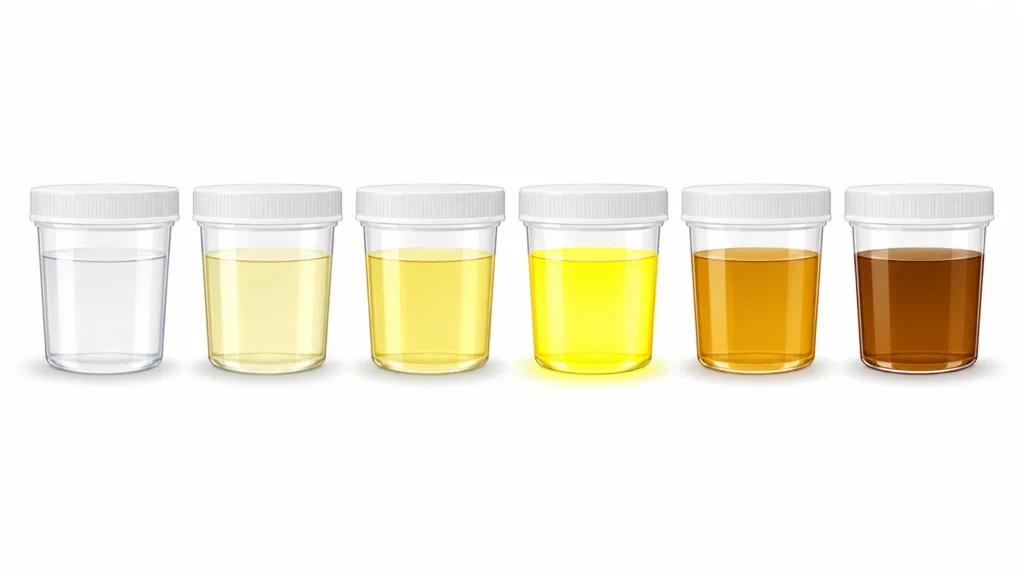
What color should urine be?
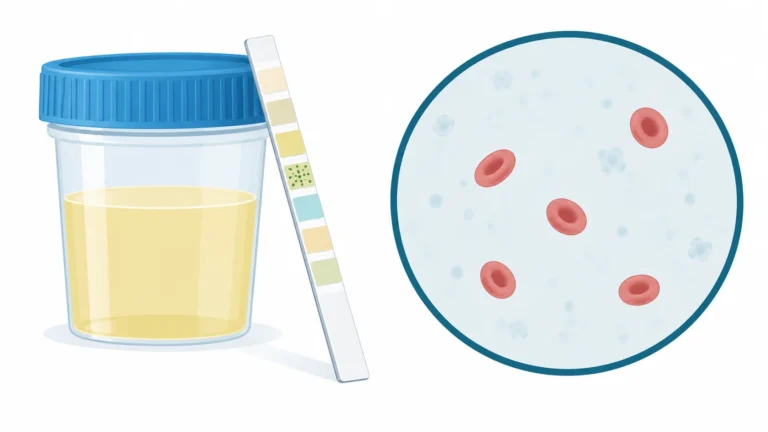
Healthy urine is pale yellow to amber. The yellow comes from urochrome, a pigment the body makes when it breaks down old red blood cells. Urine is often darker first thing in the morning and lighter later in the day as you drink.
Nearly clear urine means you are drinking a lot of fluid, which is fine for most people. A urinalysis gives a fuller picture than color alone; our guide to urinalysis results explained shows what each line on the report means.
Can neon yellow pee mean liver or kidney problems?
No. Liver and kidney problems don’t turn urine neon yellow. They cause different changes, such as dark brown urine or foamy urine, along with other symptoms.
What does pee look like with liver problems?
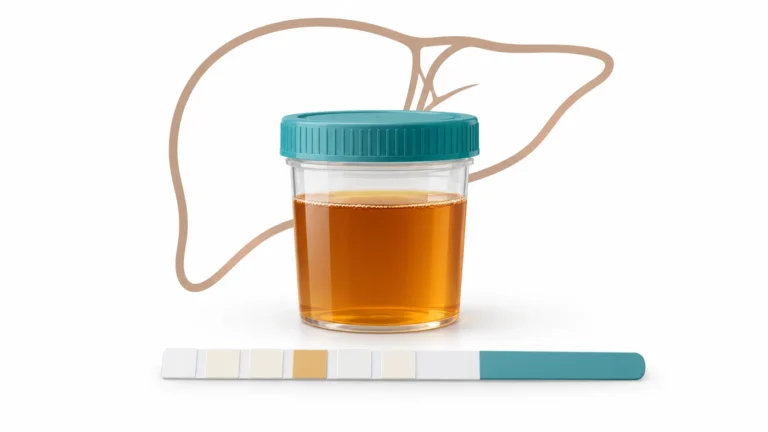
Pee from liver or bile duct problems turns dark, often the color of tea or cola, because of a yellow-brown pigment called bilirubin. MedlinePlus explains that bilirubin is not normally found in urine and shows up when the liver or bile ducts aren’t working well.
Liver-related dark urine rarely comes alone. Watch for yellow skin or eyes (jaundice), pale or clay-colored stool, itching, belly swelling and tiredness, which NIDDK lists among the signs of cirrhosis. Fatty liver disease, the most common liver condition in the US, usually causes no urine color change at all.
Bilirubin breaks down into urobilinogen, and a urinalysis measures both. Our guide to urobilinogen in urine explains what high and low results mean.
What color is pee when kidneys are failing?
Urine color usually doesn’t change much in kidney failure. Cleveland Clinic notes that urine may become foamy or frothy instead, a sign of extra protein. Johns Hopkins Medicine lists other urine changes in kidney disease: urinating more or less often, passing more or less urine than usual, urine that looks darker or paler, and blood in the urine.
Swelling in the legs, ankles or face, tiredness and itchy skin are common companions. Early kidney disease often has no symptoms, which is why blood and urine tests are the only reliable way to check.
What if I have neon yellow pee and back pain?
Neon yellow pee and back pain are almost always unrelated. The color comes from vitamins; the back pain needs its own explanation.
Back or side pain with fever, chills, nausea or burning when you urinate can point to a kidney infection. Sudden, severe pain that comes in waves, often with blood in the urine, can point to a kidney stone. Both need prompt medical care, no matter what color your urine is.
Can medicines turn pee bright yellow or orange?
Yes, several medicines change urine color, though most push it toward orange or red rather than neon yellow. The most common ones are:
- Phenazopyridine (Azo, Pyridium), a bladder pain reliever: bright orange to red-orange
- Sulfasalazine, used for ulcerative colitis and arthritis: orange-yellow
- Rifampin, an antibiotic: red-orange
- Isoniazid, a tuberculosis medicine: orange
These colors are expected side effects. Don’t stop a prescribed medicine because of urine color without talking to the prescriber.
Why is my pee neon green?
Neon green pee most often comes from yellow riboflavin mixing with a blue dye, from food coloring or from certain medicines. A 2025 review of abnormal urine colors lists methylene blue, amitriptyline, propofol and indomethacin among the medicines that can turn urine green or blue.
A rare cause is a urinary tract infection with Pseudomonas bacteria, which can turn urine blue-green, mostly in people with a urinary catheter. Green urine with fever, pain or burning needs a medical visit.
Is neon yellow pee normal during pregnancy?
Yes. Prenatal vitamins contain riboflavin, and pregnancy raises the daily need only slightly, to 1.4 mg according to ODS. The extra from the vitamin leaves in urine, just as it does outside pregnancy.
Pregnancy brings more urine testing, so tell your OB-GYN or midwife about any burning, pain, blood or unusual smell, which are signs worth checking whatever the color.
Once you know where the color comes from, the remaining questions are what to do about it and when it deserves a doctor’s attention.
How do you get your pee back to a normal color?
You don’t need to do anything. Neon yellow pee from vitamins fades on its own within a day of the last dose.
Drinking water makes the color lighter by diluting it, but it doesn’t change how much riboflavin your body passes. If the glow bothers you, switch to a lower-dose B vitamin, take your vitamin at a time of day when you won’t notice it as much, or skip energy drinks with added vitamins.
When should you see a doctor?
See a doctor if your urine is bright yellow and you haven’t taken any vitamins, fortified drinks or medicines that could explain it, or if the color lasts more than a few days after you stop them.
Get care the same day if you notice dark brown or cola-colored urine, red or pink urine that isn’t explained by food, yellow skin or eyes, foamy urine with swelling, or burning with fever, chills or back pain.
Call 911 or go to the nearest emergency room for confusion, severe belly or back pain with vomiting, little or no urine for many hours, or signs of severe dehydration such as dizziness when standing and a racing heartbeat.
Frequently asked questions
Is neon yellow pee an early sign of pregnancy?
No. Pregnancy itself doesn’t make urine glow. A home pregnancy test or a blood test confirms pregnancy, and a missed period is a far more reliable early clue than urine color.
Can coffee make your pee neon yellow?
No. Coffee doesn’t contain riboflavin in amounts that change urine color. Caffeine can make you urinate more, which usually makes urine paler, not brighter.
Is neon yellow pee normal in kids taking vitamins?
Yes. Children’s multivitamins and gummies often contain riboflavin, and the extra leaves in urine the same way it does in adults. The color is harmless; just give the dose printed on the label.
Does neon yellow pee mean I’m wasting my vitamins?
Partly. Your body keeps the riboflavin it needs and passes the rest. The other vitamins in the pill are absorbed on their own terms, so the color says nothing about them.
Sources
- NIH Office of Dietary Supplements. Riboflavin: Fact Sheet for Health Professionals
- NIH Office of Dietary Supplements. Frequently Asked Questions
- Harvard T.H. Chan School of Public Health, The Nutrition Source. Riboflavin (Vitamin B2)
- Belasco R, et al. The Effect of Hydration on Urine Color Objectively Evaluated in CIE Lab* Color Space. 2020
- Balen C, et al. Diagnostic approach to abnormal urine colors: Lessons from a case of blue-green urine. 2025
- MedlinePlus. Bilirubin in Urine
- National Institute of Diabetes and Digestive and Kidney Diseases. Symptoms & Causes of Cirrhosis
- Cleveland Clinic. Chronic Kidney Disease (CKD)
- Johns Hopkins Medicine. Chronic Kidney Disease
Disclaimer
This blog is for informational and educational purposes only, and does not intend to substitute any professional medical advice or consultation. For any health related concerns, please consult with your physician, or call 911.