UTI Test: Home Strips, Urine Culture and What Your Results Mean
A UTI test checks a urine sample for signs of infection. Home strips test for nitrite and white blood cells (leukocytes) in 1 to 2 minutes. A clinic urinalysis adds a look under the microscope. A urine culture confirms the infection and names the bacteria and the antibiotics that work, usually in 1 to 3 days. A positive strip with symptoms supports a UTI, but a negative strip doesn’t rule one out.
Whether you’re standing in the pharmacy aisle or waiting on a lab report, this guide explains what each urinary tract infection (UTI) test can and can’t tell you, how accurate home tests are, how to read the results, how to give a good sample and where to get tested.
Types of UTI tests at a glance
| Test | What it checks | Results in | Where | Typical cost |
|---|---|---|---|---|
| Home test strip | Nitrite and leukocytes; some also pH | 1 to 2 minutes | Pharmacy or online, no prescription | About $10 to $20 a box (Healthline) |
| Urinalysis | Dipstick plus microscope: white and red blood cells, bacteria, skin cells | Minutes to a day | Doctor’s office, urgent care, lab | Testing.com lists a routine urinalysis at $29 |
| Urine culture | Grows and names the bacteria, then tests which antibiotics work | 1 to 3 days | Lab, ordered by a clinician or online | About $39 to $59 from online lab services (FindLabTest) |
| PCR urine panel | Genetic material from many microbes | A few days | Some labs | Median $585 billed to Medicare in 2023 |
| Blood tests and imaging | Spread to the kidneys or blood; blockages | Varies | Clinic, ER, hospital | Varies |
Most people only ever need the first three. The rest are for infections that are severe, keep coming back or don’t respond to treatment.
Do you need a UTI test?
Not always. For a healthy woman who isn’t pregnant and has classic symptoms, burning and frequent peeing with no vaginal discharge or irritation, the chance of a UTI is about 90%, according to a review in American Family Physician. At that point a test adds little, and many doctors and telehealth services prescribe from symptoms alone.
A urine test, and often a urine culture, makes sense for:
- Men
- Pregnant women
- Children
- Older adults, above all with confusion or no clear urinary symptoms
- Fever, chills, back or side pain, or vomiting
- Repeat UTIs. The American Urological Association (AUA) asks for a urine culture with each episode. Our guide on why you keep getting UTIs explains why.
- Symptoms that came back after antibiotics, or didn’t clear
- Diabetes, kidney disease, a catheter or a weak immune system
And if you feel fine, don’t test. Bacteria in the urine without symptoms is common and usually shouldn’t be treated, except in pregnancy. For the symptoms that point to a UTI in the first place, see our guide to UTI symptoms, causes and treatment.
At-home UTI test strips
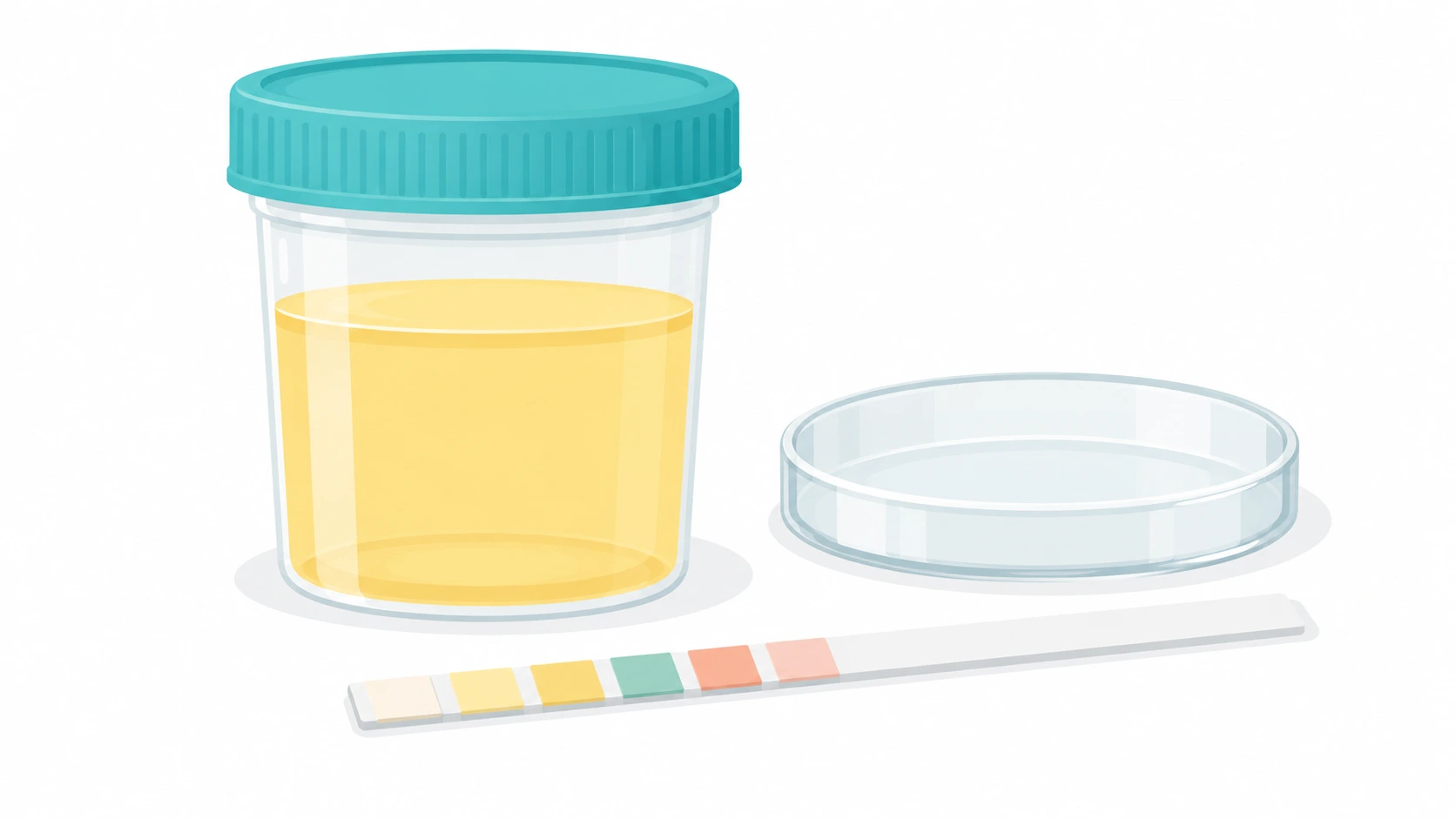
Home UTI tests are sold without a prescription at drugstores and online, under store brands and names like AZO. Kaiser Permanente explains that the strips check for nitrites and leukocytes, two signs most UTIs produce, and some also show the urine’s pH. They work like a clinic dipstick, minus the lab.
How to use a home UTI test
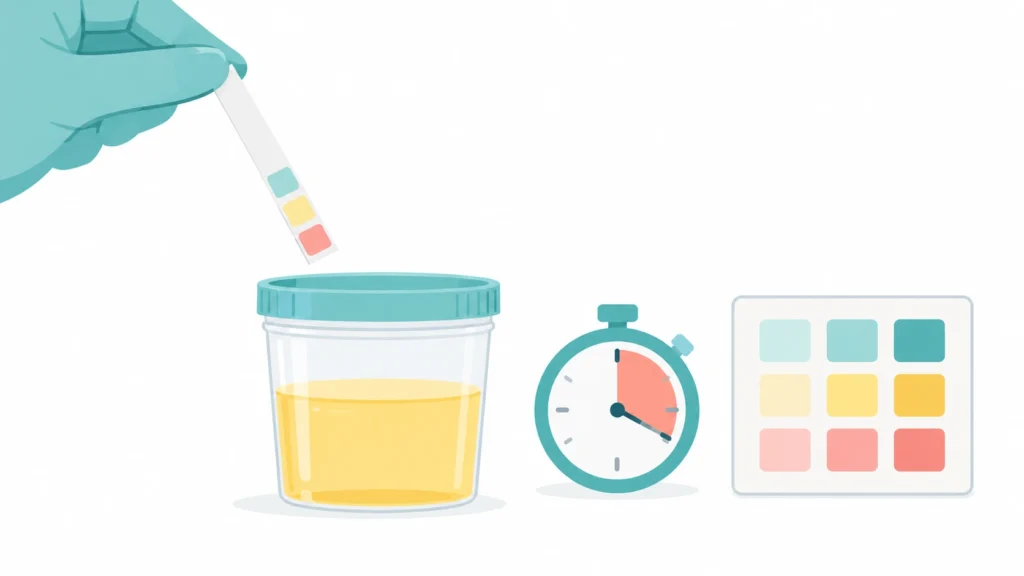
Each brand differs a little, so follow the package. The usual steps:
- Check the date on the box and keep strips sealed until you use them.
- Wash your hands and wipe the genital area front to back.
- Wet the strip. Hold it in your urine stream for a few seconds, or pee into a clean cup and dip it, as WebMD describes.
- Wait for the time printed on the package, usually 1 to 2 minutes.
- Compare each pad with the color chart in good light, within the reading window. Colors keep changing after that.
How to read the results
Each pad tells you something different, and the two together matter most:
| Your strip | With UTI symptoms | Without symptoms |
|---|---|---|
| Nitrite positive, leukocytes positive | A UTI is likely. Contact a clinician for treatment | Don’t treat on your own. Bacteria without symptoms usually don’t need antibiotics |
| Nitrite positive only | Still points to a UTI. A positive nitrite pad is a strong sign of infection (American Family Physician) | Same as above |
| Leukocytes positive only | Possible UTI from bacteria that don’t make nitrite, or other inflammation. Get a urinalysis or urine culture | Often contamination or irritation; repeat with a cleaner sample if needed |
| Both negative | Doesn’t rule out a UTI. See a clinician and ask for a urine culture | Nothing needed |
Leukocytes without nitrite are one of the most common home-strip results. Our guide to leukocytes in urine explains what causes them. Kaiser Permanente advises telling your doctor about any abnormal home result, and calling if you have symptoms even when the strip is negative.
How accurate are home UTI tests?
A home strip is good at ruling a UTI in, but poor at ruling one out. A review in American Family Physician looked at women with unclear symptoms, such as discomfort with some vaginal irritation. In that group, a positive dipstick raised the chance of a UTI from about 50% to 81%. A negative one only lowered it to 23%, so about 1 in 4 women with a negative strip still had a UTI.
A newer American Family Physician review explains why a strip can be wrong:
- Not enough time in the bladder. Bacteria need about four hours to turn nitrate into nitrite, so peeing every half hour, as a UTI makes you do, can give a false negative.
- Bacteria that don’t make nitrite. Enterococcus is one; Testing.com adds Staphylococcus saprophyticus, another common UTI germ. Our guide to nitrites in urine covers the nitrite pad in more detail.
- Vitamin C, antibiotics and highly concentrated urine can hide leukocytes or nitrite.
- Phenazopyridine (AZO) and strips left open to the air can turn the nitrite pad falsely positive.
- Contamination from the skin or vagina can make the leukocyte pad positive.
That’s why the rule is simple: trust a positive strip when you have symptoms, but don’t let a negative strip talk you out of getting care.
When to skip the home test
Go straight to a clinic, urgent care or telehealth visit, and don’t rely on a strip, if you have:
- A fever, back or side pain, or vomiting
- A pregnancy
- A urinary symptom as a man
- A child with symptoms
- Repeat UTIs, where a lab urine culture with each episode guides treatment
- Already taken AZO, which can throw off the strip colors
Urinalysis at a clinic
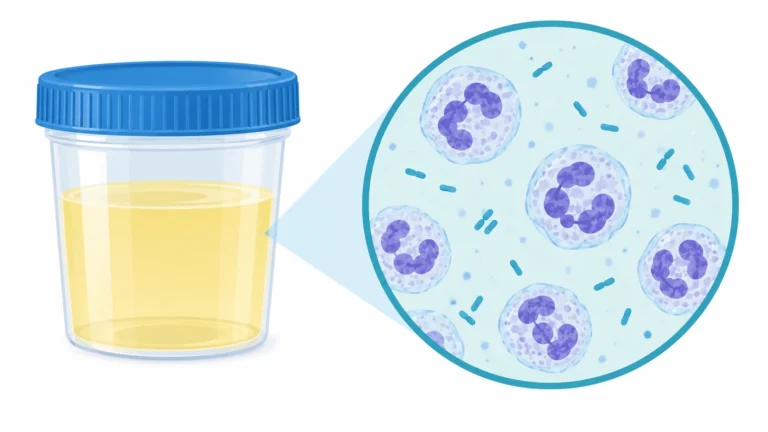
A urinalysis starts with the same dipstick pads, then a lab or clinic looks at the urine under a microscope. According to American Family Physician, more than five white blood cells per high-power field fits a UTI in someone with symptoms. More than five skin (squamous) cells suggests the sample picked up skin bacteria. CVS MinuteClinic says urinalysis results come back in about 10 minutes at its clinics.
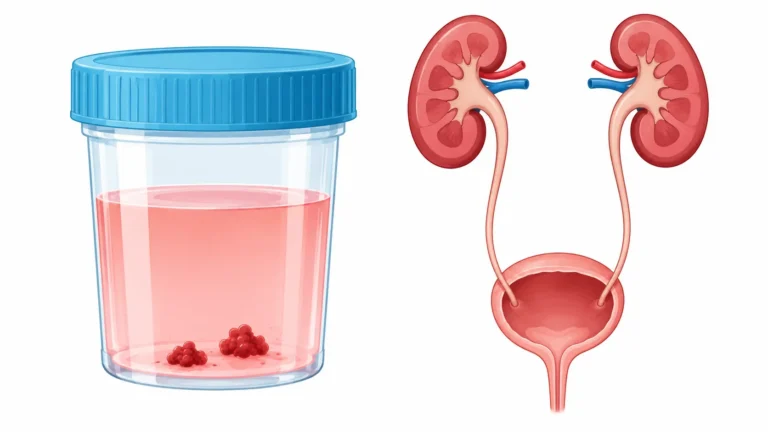
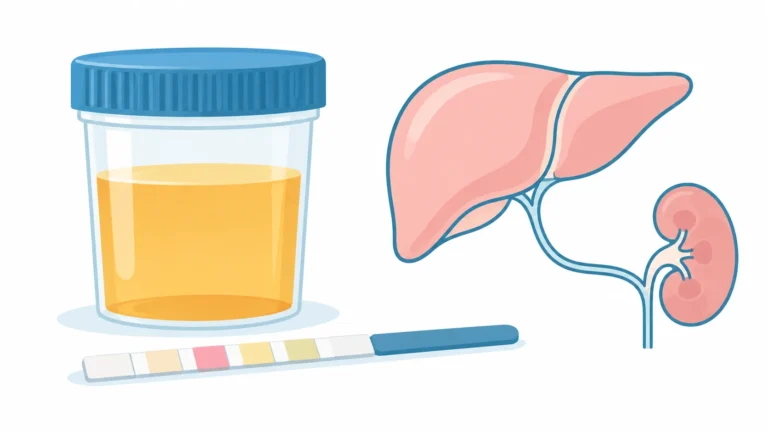
A urinalysis also checks things a home strip may not, such as blood, protein, sugar and bilirubin. Labcorp notes these can point to kidney disease, diabetes or liver problems that need their own follow-up. Our guide to urinalysis results walks through the whole report, and our guide to blood in urine explains what a positive blood result means.
Urine culture: the test that confirms a UTI
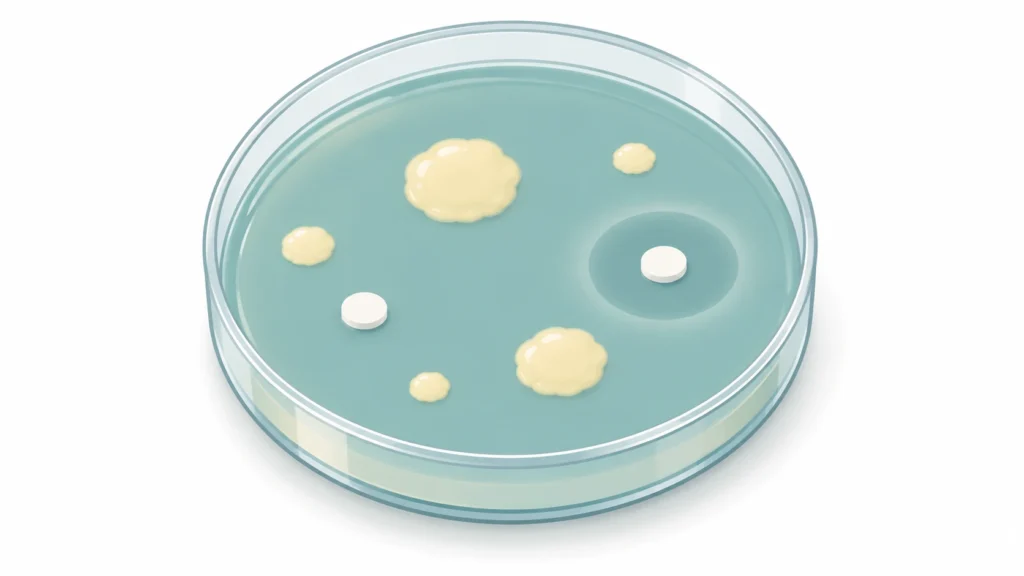
A urine culture is the gold-standard UTI test, Testing.com notes. The lab spreads a little of your urine on a plate, lets any bacteria grow, counts them and identifies them. If something grows, the lab runs susceptibility (sensitivity) testing to see which antibiotics stop it. Mayo Clinic notes that these results help your clinician choose the medicine most likely to work.
How long a urine culture takes
Bacteria usually need about a day to grow enough to read, according to the American Society for Microbiology. Testing.com says most urine culture results are ready in 1 to 3 business days; the susceptibility step can add time. Because of that wait, clinicians often start an antibiotic based on symptoms and the urinalysis, then switch if the urine culture shows the bacteria resist it. If you’ve already started antibiotics, tell the lab when you give your sample, since they can affect the result.
Reading urine culture results
| Report says | What it usually means |
|---|---|
| No growth (at 24 or 48 hours) | No bacteria grew. With ongoing symptoms, your clinician may repeat the test or look for another cause |
| 100,000 CFU/mL or more of one type | The classic cutoff for a UTI in adults with symptoms |
| 1,000 to 100,000 CFU/mL with symptoms | Can still mean a UTI, above all in men or with certain bacteria |
| Three or more types of bacteria | Usually contamination, often reported as mixed or urogenital flora |
| A named bacterium with S, I or R next to each drug | S (sensitive) should work, I (intermediate) is in between and R (resistant) won’t work well |
CFU/mL stands for colony-forming units per milliliter. Our guide to bacteria in urine explains the counts and which bacteria labs most often name. If your report says mixed flora, our guide to mixed urogenital flora explains how to give a cleaner sample, and our guide to antibiotics for a UTI covers what your clinician may choose from the susceptibility list.
A negative urine culture with a positive urinalysis isn’t rare. Testing.com notes that some bacteria don’t grow well under standard conditions, and white blood cells can come from other kinds of inflammation.
How to prepare for a UTI test
A good sample is the difference between a clear answer and a confusing one. Testing.com calls contamination the most common reason a urine culture comes back with misleading results.
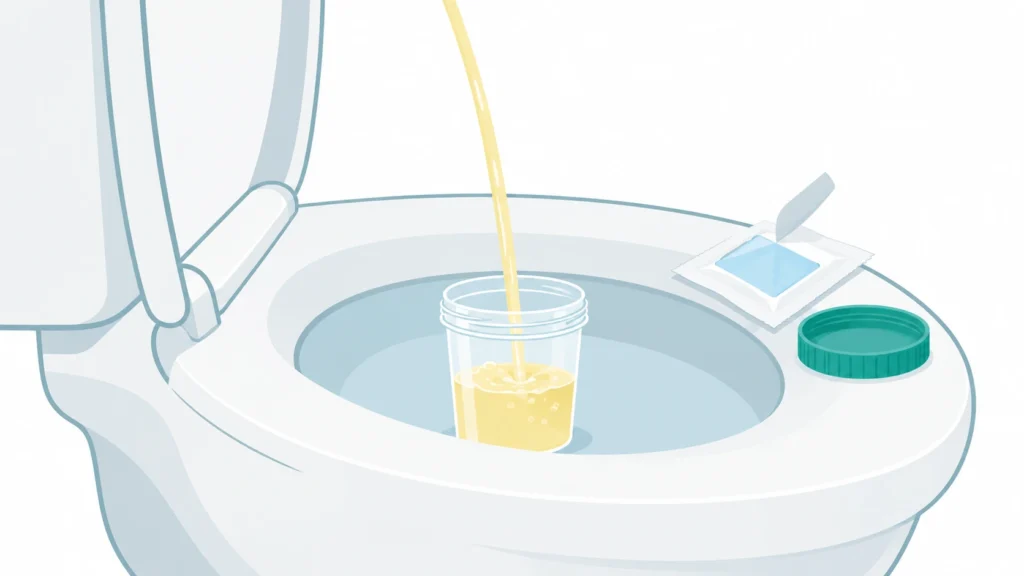
For a clean-catch sample, the method Mayo Clinic and Testing.com describe:
- Wash your hands and open the sterile cup without touching the inside.
- Clean the genital area with the wipe provided, front to back.
- Start peeing into the toilet, then catch the middle part of the stream, about 1 to 2 ounces.
- Finish in the toilet, cap the cup and hand it in. Don’t pour urine in from another container.
Before any UTI test:
- Test urine that’s been in the bladder a while. First-morning urine, or at least a few hours since you last peed, gives the nitrite pad its best chance.
- Test before taking AZO. Phenazopyridine turns urine orange and can affect strip colors. Our guide on how to get rid of a UTI fast covers pain relief to use after you’ve given your sample.
- Give the sample before your first antibiotic dose if you can.
- Mention vitamin C supplements and any medicines, since some can change the result.
- If you have your period, tell the clinic, since menstrual blood can affect the urine test.
Other UTI tests: PCR panels, blood tests and imaging
Most UTIs never need more than a urine test. These are for special situations.
PCR and NGS urine panels
Some labs and companies sell DNA-based urine tests (multiplex PCR or next-generation sequencing) that look for dozens of microbes at once. They’re often marketed to people with chronic or repeat UTIs. A study of Medicare claims by CDC researchers, published in JAMA Network Open and reported by CIDRAP, found:
- These panels are not FDA-approved for UTI diagnosis; they’re run as laboratory-developed tests.
- Claims rose about 60-fold from 2016 to 2023, mostly in older adults and nursing homes.
- The median charge was $585, compared with $8 for a urine culture.
- There’s limited evidence they help more than a standard urine culture, and because they pick up so much, they may lead to more unneeded antibiotics.
If a doctor suggests one, it’s fair to ask what it will change about your treatment and what it will cost you.
Testing for a kidney infection
A home strip can’t tell a bladder infection from a kidney infection. Fever, chills, back or side pain and vomiting point to the kidneys and need a clinic or ER visit. Testing for a kidney infection includes a urinalysis and urine culture, and for more serious cases, Testing.com lists blood tests such as a complete blood count, a blood test that checks for bacteria in the bloodstream, and kidney function tests. If the infection doesn’t respond to treatment, Cleveland Clinic says imaging such as an ultrasound or CT scan may follow, and a cystoscopy may be used to look inside the bladder.
UTI tests for men, pregnancy and children
Men. A UTI in a man is treated as more complicated, so it calls for a urinalysis and urine culture rather than a home strip. Testing.com notes that imaging is more often used in men with a suspected blockage. Your clinician may also test for sexually transmitted infections. Our guide to UTIs in men covers prostate infections and other causes.
Pregnancy. The US Preventive Services Task Force recommends screening pregnant women with a urine culture, even without symptoms, because untreated bacteria can lead to a kidney infection. Testing.com puts that screening at 12 to 16 weeks or at the first prenatal visit. Any urinary symptom in pregnancy deserves a urine culture, not a home strip.
Children. A child with fever, pain when peeing or new accidents should see a doctor, who will order a urine test. Testing.com notes that a sample can be collected by clean catch or by catheter, and the doctor decides which is right. Imaging is used more often in children than in adults.
Where to get a UTI test and what it costs
| Option | Good for | Cost |
|---|---|---|
| Home strips from a pharmacy or online | A quick check when you have symptoms | About $10 to $20 a box |
| Your primary care or gynecology office | Repeat UTIs, other health conditions, a urine culture | Depends on your insurance |
| Urgent care or retail clinics, such as CVS MinuteClinic | Same-day urinalysis and treatment | Depends on your insurance or self-pay rate |
| Telehealth | Simple UTIs in women diagnosed from symptoms | Varies by service |
| Online lab services, such as Testing.com or Labcorp OnDemand | Ordering a urinalysis or urine culture yourself, then visiting a lab | Urinalysis from about $29; urine culture about $39 to $59 |
| Planned Parenthood and community health centers | Testing and treatment, including STI tests | Varies |
| Emergency room | Fever with back pain, vomiting, confusion | Highest |
With an online lab service, Testing.com notes, a licensed physician reviews and approves the order, and you visit a local lab to give the sample. A test alone doesn’t cure anything: in the US, the antibiotics that treat a UTI need a prescription.
The bottom line
A UTI test can be a 2-minute home strip, a clinic urinalysis or a lab urine culture. A positive strip with symptoms supports a UTI, but about 1 in 4 women with unclear symptoms and a negative strip still has one, so symptoms count more than the strip. A urine culture confirms the infection, names the bacteria and shows which antibiotics work, usually in 1 to 3 days. Men, pregnant women, children, anyone with fever or back pain and anyone with repeat UTIs should skip home testing and get a lab test. Give a clean-catch sample before AZO or antibiotics for the most reliable result.
Frequently asked questions
Can I treat a UTI without seeing a doctor?
Not fully. Home strips and pain relievers don’t cure an infection, and in the US UTI antibiotics need a prescription. A telehealth visit can often prescribe from your symptoms the same day.
Do UTI test strips check for STDs?
No. Strips only look for signs of a urinary infection. Chlamydia, gonorrhea and trichomoniasis need their own tests, so ask for one if you have a new partner or unusual discharge.
Can a UTI affect a pregnancy test?
No. A pregnancy test detects the hormone hCG, which has nothing to do with the markers a UTI test reads. The two measure different things, so a UTI won’t change your pregnancy result.
What does a silent UTI feel like?
It may cause urgency, pressure, cloudy or smelly urine, or tiredness without burning. In older adults it can show up as confusion. These quieter signs still deserve a urine test.
What mimics a UTI but isn’t one?
Sexually transmitted infections, vaginal yeast infections, overactive bladder, bladder pain syndrome and kidney stones can all feel similar. If your urine tests keep coming back clean while symptoms go on, ask about these.
Sources
- Kaiser Permanente. Home Test for Urinary Tract Infections, 2026
- WebMD. Can I Take a Home Test for a UTI?, 2024
- American Family Physician. FPIN’s Clinical Inquiries: urine dipstick accuracy for UTI, 2006
- Hitzeman N, et al. Office-Based Urinalysis. American Family Physician, 2022
- Testing.com. UTI Test (Urine Culture and Sensitivity), 2026
- Testing.com. UTI Testing, 2021
- Mayo Clinic. Urinary tract infection (UTI): Diagnosis and treatment, 2025
- Cleveland Clinic. Urinary Tract Infections
- American Society for Microbiology. Urine Good Hands: Diagnosing UTIs With Urine Cultures, 2021
- CIDRAP. Study finds widespread use of unregulated molecular urine tests in older adults (CDC researchers, JAMA Network Open)
- American Urological Association. Recurrent Uncomplicated Urinary Tract Infections in Women: AUA/CUA/SUFU Guideline
- US Preventive Services Task Force. Asymptomatic Bacteriuria in Adults: Screening, 2019
- CVS MinuteClinic. Urinary tract and bladder infection treatment
- Labcorp OnDemand. Painful or frequent urination? 7 signs a UTI test may be helpful, 2023
- Planned Parenthood. How do I treat and prevent UTIs?
- Healthline. The Best Affordable At-Home UTI Tests
- FindLabTest. Urine Culture, Routine (Labcorp 008847) price listing
Disclaimer
This blog is for informational and educational purposes only, and does not intend to substitute any professional medical advice or consultation. For any health related concerns, please consult with your physician, or call 911.