Antibiotics for UTI: Which Ones Work, Doses, Side Effects and How Fast They Work
The best antibiotics for a simple bladder infection are nitrofurantoin (Macrobid) for 5 days, trimethoprim-sulfamethoxazole (Bactrim DS) for 3 days, a single dose of fosfomycin (Monurol), or pivmecillinam (Pivya). Kidney infections need different drugs, often ciprofloxacin or levofloxacin. In the US, every UTI antibiotic needs a prescription. Most people feel better within 1 to 3 days of the first dose.
Which antibiotic you get depends on where the infection is, your allergies, your kidney function, whether you’re pregnant and which bacteria are common where you live. This guide covers each first-choice drug, the ones doctors avoid, whether the antibiotic you already have will work, how long to take it and what to do if it isn’t helping. For symptoms and causes, see our main guide to UTI symptoms, causes and treatment.
The best antibiotics for a bladder infection
A bladder infection (cystitis) in a healthy, non-pregnant woman is called an uncomplicated UTI. The Infectious Diseases Society of America (IDSA) guideline names four first-choice antibiotics for it:
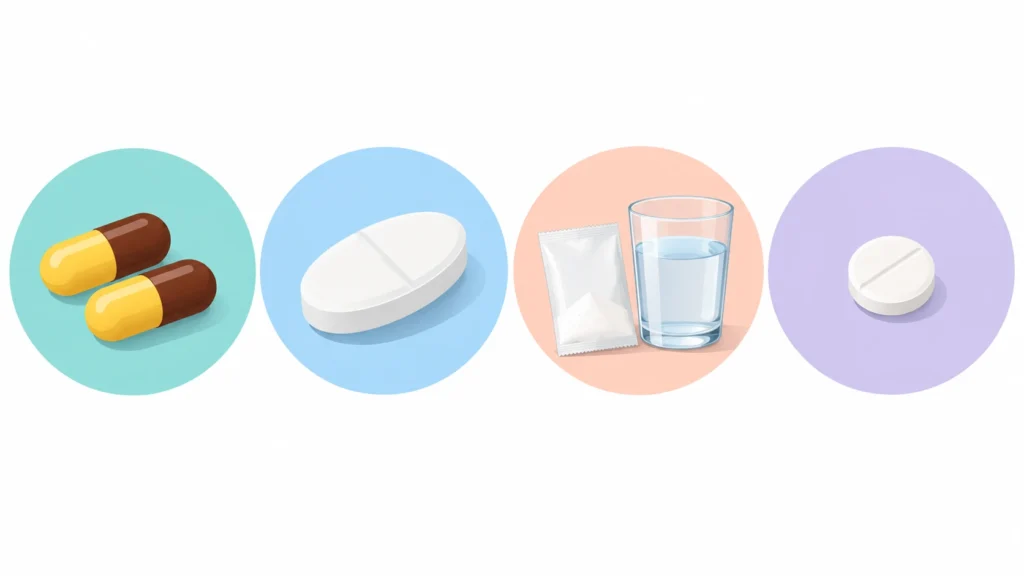
| Antibiotic (brand) | Usual adult dose | How long | Best for | Avoid if |
|---|---|---|---|---|
| Nitrofurantoin (Macrobid) | 100 mg twice a day with food | 5 days (the label says 7) | Most simple bladder infections | Kidney infection, poor kidney function, late pregnancy |
| Trimethoprim-sulfamethoxazole, TMP-SMX (Bactrim DS) | One 160/800 mg tablet twice a day | 3 days | Areas where resistance is 20% or lower, or a urine culture shows it works | Sulfa allergy, recent use, warfarin, some blood pressure medicines |
| Fosfomycin (Monurol) | One 3 g packet mixed in water | One dose | People who can’t take the others, or want a single dose | Kidney infection |
| Pivmecillinam (Pivya) | 185 mg three times a day | 3 to 7 days | Women who can’t take the others | Penicillin allergy |
Stanford Medicine, using national prescribing data, reported that nitrofurantoin was used in 32% of uncomplicated UTIs in the US and TMP-SMX in 26%, which makes nitrofurantoin the most common choice among the recommended drugs.
Nitrofurantoin (Macrobid, Macrodantin)
Nitrofurantoin builds up in urine and works almost only in the bladder, so it does little harm to the rest of your body’s bacteria. That’s also why it can’t treat a kidney infection: the Macrobid label states it is “not indicated for the treatment of pyelonephritis.”
Nitrofurantoin dosage for UTI, and how many days: Macrobid (nitrofurantoin monohydrate/macrocrystals, often written “mono/mac 100 mg caps”) is one 100 mg capsule every 12 hours. The IDSA recommends 5 days, and the label says 7, so your prescription may say either. Macrodantin is an older form taken four times a day at 50 to 100 mg. Take either one with food, which helps your body absorb it.
Good to know before you take it:
- It can turn urine dark yellow or brown. That’s harmless.
- Magnesium trisilicate antacids lower how much nitrofurantoin you absorb, so the label advises against taking them together.
- The label lists rare lung, liver and nerve problems, mostly with long-term use. Call your doctor for a new cough, shortness of breath, yellow skin or eyes, or numbness and tingling.
- It isn’t used if your kidney function is low. The label sets the line at a creatinine clearance under 60, and the 2023 American Geriatrics Society Beers Criteria say to avoid it under 30.
- It isn’t given at term (38 to 42 weeks of pregnancy) or to babies under 1 month, because it can damage red blood cells in newborns. People with G6PD deficiency face the same risk.
Trimethoprim-sulfamethoxazole (Bactrim DS, Septra)
TMP-SMX combines two drugs that block bacteria from making folate, which they need to grow. A 3-day course is short and low-cost. The catch is resistance. The IDSA recommends it only where fewer than about 1 in 5 local bladder infections resist it, or when a urine culture shows your bacteria are sensitive. If you’ve taken it in the last few months, your bacteria are more likely to resist it.
Who needs extra care:
- Sulfa allergy. Sulfamethoxazole is a sulfa drug, so it’s ruled out.
- Warfarin users. It can raise the INR and the risk of bleeding. The Bactrim label says to monitor INR, and the Beers Criteria advise avoiding the pair or checking closely.
- ACE inhibitors, ARBs and spironolactone. Trimethoprim can raise potassium, and the label advises against taking it with ACE inhibitors.
- Methotrexate. The combination raises methotrexate levels, and the label says to avoid it.
- Babies under 2 months and people with anemia from low folate shouldn’t take it.
MedlinePlus advises drinking plenty of fluids and protecting your skin from the sun, since TMP-SMX can make you burn easily. You may notice the bottle’s label says 10 to 14 days; that’s the older dosing in the package insert. For a simple bladder infection, guidelines use 3 days.
Fosfomycin (Monurol)
Fosfomycin is a single 3-gram packet of powder that you stir into water and drink. One dose is convenient, and it often still works against bacteria that resist other drugs. The IDSA notes it appears a little less effective than the standard short courses. It also costs more: GoodRx listed its lowest coupon price at about $33, compared with about $9 for generic TMP-SMX and $17 for nitrofurantoin.
Pivmecillinam (Pivya)
Pivmecillinam has a long track record in Europe and was approved by the FDA in 2024 for adult women with uncomplicated UTIs. It’s a penicillin-type drug taken three times a day for 3 to 7 days. GoodRx notes it’s mostly kept for people who can’t take the other first-choice drugs. Anyone with a penicillin allergy should avoid it.
How doctors choose between them
Several things decide which first-line drug you get:
- Local resistance. Clinics track which antibiotics still work against bacteria in their area.
- Your recent antibiotics and past urine cultures. A drug you took in the last few months is less likely to work.
- Allergies. Sulfa and penicillin allergies remove some options.
- Kidney function, pregnancy and other medicines.
- Cost and convenience. Insurance coverage and whether you’d rather take one dose or several.
Second-line antibiotics and the ones doctors avoid
When the first-line drugs can’t be used, the IDSA lists beta-lactam antibiotics for 3 to 7 days: amoxicillin-clavulanate (Augmentin), cefdinir (Omnicef), cefaclor and cefpodoxime. It adds that cephalexin (Keflex) is less studied but may be appropriate in some settings. These drugs tend to work a little less well than the first-line options.
Fluoroquinolones, such as ciprofloxacin (Cipro) and levofloxacin (Levaquin), clear bladder infections in 3 days, but they’re kept in reserve. In 2016, the FDA advised that they be used for uncomplicated UTIs only when no other options exist, because of disabling side effects involving tendons, muscles, joints, nerves and the brain. In 2018, the FDA added warnings about tears in the aorta, sudden drops in blood sugar and mental health effects. People with high blood pressure, aneurysms, Marfan syndrome or Ehlers-Danlos syndrome are at higher risk.
Old habits linger. Stanford Medicine reported that ciprofloxacin was prescribed for 35% of uncomplicated UTIs in national data, more than any first-line drug. If you’re handed Cipro for a simple bladder infection, it’s fair to ask whether a first-line drug would work.
Three newer antibiotics, pivmecillinam, sulopenem (Orlynvah) and gepotidacin (Blujepa), were approved in 2024 and 2025. The last two are mainly for resistant infections. Our UTI guide explains who they’re for.
Will this antibiotic treat a UTI?
Many people have a leftover prescription or get handed a drug they’ve used for something else. Here is how the common ones stack up against a bladder infection.
| Antibiotic | Will it treat a UTI? | Why |
|---|---|---|
| Amoxicillin (Amoxil) | Rarely | The IDSA says amoxicillin and ampicillin should not be used without a urine culture, because many UTI bacteria resist them |
| Amoxicillin-clavulanate (Augmentin) | Sometimes | An IDSA second-line choice for 3 to 7 days; less effective than first-line drugs |
| Cephalexin (Keflex) | Sometimes | Less studied for UTIs, but used, and common in pregnancy |
| Cefdinir (Omnicef) | Sometimes | An IDSA second-line choice; GoodRx lists 300 mg twice a day for 5 to 7 days |
| Ciprofloxacin, levofloxacin | Yes, but reserved | Effective, but the FDA says to save them for when other options don’t fit |
| Doxycycline | Rarely | Not in UTI guidelines; its label covers some UTIs only when testing shows the bacteria are sensitive, because many strains resist it |
| Clindamycin | No | It works on gram-positive bacteria and misses E. coli, the cause of most UTIs |
| Azithromycin (Z-Pak) | No | Not recommended for bladder infections in any major UTI guideline; used for some STIs |
| Metronidazole (Flagyl) | No | Used for bacterial vaginosis and trichomoniasis, not for UTI bacteria |
Doxycycline and azithromycin come up because chlamydia can cause burning that feels like a UTI, and those drugs do treat chlamydia. If your symptoms might be an STI, our guide to UTI vs STD explains how to tell.
How long to take antibiotics for a UTI
Shorter courses are now the rule for simple infections. Mayo Clinic notes that an otherwise healthy person with a simple UTI may need only 1 to 3 days of some antibiotics, and the American Urological Association (AUA) asks doctors to use the shortest effective course, usually no more than 7 days.
| Situation | Usual length |
|---|---|
| Bladder infection in a non-pregnant woman | 1 dose (fosfomycin), 3 days (TMP-SMX), 5 days (nitrofurantoin), 3 to 7 days (beta-lactams) |
| Bladder infection in a man without fever | 7 days |
| Bladder infection in pregnancy | 3 to 7 days |
| Kidney infection or complicated UTI | 5 to 7 days of a fluoroquinolone, or about 7 days of another antibiotic |
| Fever with a suspected prostate infection | 10 to 14 days or longer |
Package inserts for older drugs often list longer courses than current guidelines. If your prescription is shorter than the label, that’s usually intentional. Take exactly what your prescriber wrote.
How fast do UTI antibiotics work?
Most people feel better within 1 to 2 days of starting an effective antibiotic, according to GoodRx, and Stanford Medicine puts relief at 2 to 3 days. The burning often eases first, and the urge to pee and the pressure take a bit longer.
- First few hours: The antibiotic starts working, but you probably won’t feel much yet.
- Day 1 to 2: Burning and urgency start to ease.
- Day 3: Most symptoms are gone or mild. If you’re not clearly better by about 48 hours, call your prescriber.
- End of the course: Keep going even if you feel fine.
Our guide to how long a UTI lasts gives the day-by-day picture, including kidney infections.
Is there a fastest antibiotic for a UTI? Not in any way that matters. All the first-line drugs work on a similar timeline, and fosfomycin’s single dose is about convenience, not faster relief. Fluoroquinolones aren’t worth their side-effect risk for a simple infection just to feel better a little sooner. The real time-saver is starting sooner, by getting a prescription the same day and filling it at a nearby pharmacy.
Taking them the right way
- Take every dose, on schedule. Stopping early can let the infection come back, and it can be harder to clear the second time, according to the CDC.
- If you miss a dose, take it as soon as you remember, unless your next dose is nearly due. The NHS advises skipping the missed dose in that case and never taking two at once.
- Take nitrofurantoin with food. The others can be taken with or without food unless your label says otherwise.
- Don’t share antibiotics or take someone else’s prescription.
Antibiotics for kidney infections and complicated UTIs
Fever, chills, back or side pain, nausea or vomiting with UTI symptoms can mean a kidney infection (pyelonephritis). That changes the choice of antibiotic, because bladder-only drugs like nitrofurantoin and fosfomycin don’t reach high enough levels in the kidneys or blood.
For kidney infection medication, the IDSA lists:
- Ciprofloxacin 500 mg twice a day for 7 days, or levofloxacin 750 mg once a day for 5 days, when local resistance is low
- TMP-SMX only if a urine culture shows the bacteria are sensitive
- Oral beta-lactams, such as cephalosporins, after a first IV dose of a long-acting drug like ceftriaxone, since they work less well alone
A urine culture should be sent every time, so the drug can be switched if the bacteria resist it. The 2025 IDSA guideline on complicated UTIs supports shorter courses and switching from IV to pills once you’re improving. People who are seriously ill, vomiting or can’t keep fluids down may need IV antibiotics in the hospital, according to Mayo Clinic.
A complicated UTI also includes infections in people with a catheter, a kidney stone, a blockage, a weak immune system or recent urinary surgery. These infections need a urine culture and a drug chosen to match it.
Antibiotics for UTI in women, men, pregnancy and older adults
Women
The best antibiotic for a UTI in females is one of the four first-line drugs above, picked by the factors your prescriber weighs. Women who get UTIs often may be offered a standing prescription to start at the first sign of symptoms, a single dose after sex, or a low dose taken for months, per Mayo Clinic. Each plan should start with a urine culture.
Men
UTIs are less common in men and were once always treated for two weeks. The 2025 IDSA guideline treats a bladder infection in a man without fever like an uncomplicated one, and a 2021 trial in JAMA found 7 days worked as well as 14. Men with fever or a possible prostate infection need a longer course and a urine culture.
Pregnancy
Pregnant people get treated even when bacteria are found without symptoms, because untreated bacteria in the urine are linked to kidney infection, preterm birth and low birth weight. A bladder infection in pregnancy is handled as a complicated UTI, with a urine culture and 3 to 7 days of an antibiotic that is safe for the stage of pregnancy.
- Common choices: cephalexin, cefpodoxime, cefdinir and amoxicillin-clavulanate
- Nitrofurantoin: The American College of Obstetricians and Gynecologists (ACOG) says it’s acceptable in the first trimester when no other suitable antibiotic is available, and it’s a first-line choice in the second and third trimesters. The label rules it out at term.
- TMP-SMX: Trimethoprim is avoided in the first trimester because it blocks folate.
- Fluoroquinolones: Avoided in pregnancy.
Older adults and people with kidney problems
Kidney function falls with age, and it changes which antibiotics are safe. The Beers Criteria, a list of medicines to use with care in older adults, say to avoid nitrofurantoin when creatinine clearance is under 30 and to avoid it for long-term prevention. They also say to lower the TMP-SMX dose under 30, to use it with care alongside ACE inhibitors or ARBs, and to check INR closely in anyone on warfarin. Ask your prescriber to check your kidney numbers if you’re over 65 or have kidney disease.
Children
Children’s UTI antibiotics are dosed by weight, and GoodRx notes cephalosporins are often used. A child with a fever and no clear cause should see a doctor the same day. Never give a child an adult’s leftover antibiotic.
Side effects and drug interactions
Most UTI antibiotics cause mild side effects, if any: nausea, diarrhea, headache or a rash. The CDC also lists severe allergic reactions, drug-resistant infections and C. diff, a gut infection that causes watery diarrhea. GoodRx advises telling your care team about diarrhea that is severe or lasts more than 2 days.
Antibiotics also kill helpful bacteria in the vagina, so some women get a vaginal yeast infection during or after treatment. Our guides to yeast in urine and UTI vs yeast infection explain how to tell the two apart.
Get emergency care for trouble breathing, swelling of the lips, tongue or throat, or a blistering or peeling rash.
| Antibiotic | Interacts with | What can happen |
|---|---|---|
| TMP-SMX (Bactrim) | Warfarin | Higher INR and bleeding risk |
| TMP-SMX (Bactrim) | ACE inhibitors, ARBs, spironolactone | High potassium |
| TMP-SMX (Bactrim) | Methotrexate | Higher methotrexate levels |
| Nitrofurantoin | Magnesium trisilicate antacids | Less nitrofurantoin absorbed |
| Ciprofloxacin | Antacids, calcium, iron, zinc | Less antibiotic absorbed; the label says to take it 2 hours before or 6 hours after |
| Ciprofloxacin | Warfarin | Higher INR and bleeding risk |
| Ciprofloxacin, levofloxacin | Steroids such as prednisone | Higher risk of tendon damage, above all after 60 |
Give your prescriber and pharmacist a full list of your medicines and supplements before you start.
What if your UTI antibiotic isn’t working?
If you’re not clearly better 48 hours after starting the antibiotic, or you get worse at any point, call your prescriber. Common reasons:
- The bacteria resist the drug. A urine culture shows which antibiotics will work, so ask for one if you didn’t have it.
- It’s not a UTI. Chlamydia, gonorrhea, trichomoniasis, a yeast infection, irritated skin or a bladder pain condition can all cause burning. Our guides to UTI vs STD and why it burns when you pee cover the lookalikes.
- The infection has reached the kidneys. Fever, back pain or vomiting need same-day care.
- Something is blocking urine, like a kidney stone or an enlarged prostate.
- The wrong drug for the location. Nitrofurantoin or fosfomycin for an infection that’s in the kidneys.
GoodRx notes that symptoms usually start improving within 1 to 3 days. If they come back soon after you finish, your provider may retest your urine before picking a different drug. If you see blood in your urine that doesn’t clear after the infection, our guide to blood in urine explains why it needs a recheck.
How to get antibiotics for a UTI
There are no over-the-counter antibiotics for UTIs in the US. Products sold for UTI pain, like phenazopyridine (AZO), ease burning for a day or two but don’t kill bacteria. To get an antibiotic quickly:
- Telehealth. Many services can prescribe for a typical bladder infection in a healthy woman after a symptom questionnaire or video visit, often the same day.
- Urgent care or a retail clinic, which can usually run a urine test on the spot.
- Your primary care office, which has your history, past urine cultures and allergy list.
Expect questions about your symptoms, fever or back pain, pregnancy, allergies, recent antibiotics and other medicines. A urine test isn’t always needed for a simple infection, but it is for men, pregnancy, kidney symptoms, repeat UTIs and treatment that didn’t work. Our guide to urinalysis results explains what nitrites and leukocytes on your report mean.
You don’t need antibiotics for bacteria found in a urine test when you have no symptoms, except in pregnancy and before some urologic procedures. Our guide to bacteria in urine explains why.
The bottom line
For a simple bladder infection, nitrofurantoin, TMP-SMX, fosfomycin and pivmecillinam are the first-choice antibiotics, and courses are short: one dose to 5 days for most. Kidney infections need drugs that reach the kidneys, such as ciprofloxacin or levofloxacin, and a urine culture. Amoxicillin, doxycycline, clindamycin and azithromycin aren’t good choices for a UTI without a urine culture that supports them. Tell your prescriber about pregnancy, kidney problems, allergies and medicines like warfarin, take every dose, and call if you’re not better in 48 hours.
Frequently asked questions
Can I drink alcohol while taking UTI antibiotics?
The NHS says you can eat and drink normally while taking nitrofurantoin, and alcohol doesn’t stop it from working. Mayo Clinic still advises skipping alcohol until the infection clears, because it irritates the bladder.
Do UTI antibiotics make birth control less effective?
No. The CDC’s contraception guidance finds that common antibiotics don’t lower hormone levels from the pill, patch or ring. The exceptions are rifampin and rifabutin, which aren’t used for routine UTIs.
Can I use leftover antibiotics from a past UTI?
It’s not a good idea. A leftover supply is rarely a full course, it may not match the bacteria this time, and taking it first can make a later urine culture harder to read. Get a new prescription.
Is Macrobid a penicillin?
No. Macrobid is nitrofurantoin, from a separate antibiotic family called nitrofurans. People with a penicillin allergy can usually take it, but tell your prescriber about every drug allergy you have.
Can I take AZO with my UTI antibiotic?
Yes, phenazopyridine can be taken alongside an antibiotic for up to 2 days to ease burning. It turns urine bright orange and can affect a urine dipstick, so give your sample before your first dose.
Can I take UTI antibiotics while breastfeeding?
Often, yes. The NHS says nitrofurantoin can usually be taken while breastfeeding, after checking with a doctor or pharmacist. Tell your prescriber your baby’s age and any health problems, since some choices depend on that.
Sources
- Gupta K, et al. International clinical practice guidelines for the treatment of acute uncomplicated cystitis and pyelonephritis in women: a 2010 update by the IDSA and ESCMID. Clinical Infectious Diseases, 2011
- Long B. Guideline Update: 2025 IDSA Management of Complicated UTI. emDocs, 2025
- Mayo Clinic. Urinary tract infection (UTI): Diagnosis and treatment
- GoodRx. Urinary Tract Infection Medication: What Are the Best Antibiotics for a UTI?
- Stanford Medicine. Treatment options for urinary tract infections (Understanding UTIs, Part 5), 2020
- Centers for Disease Control and Prevention. Urinary Tract Infection Basics
- NHS. Nitrofurantoin
- Macrobid (nitrofurantoin monohydrate/macrocrystals) prescribing information
- Macrodantin (nitrofurantoin macrocrystals) prescribing information
- Bactrim (sulfamethoxazole and trimethoprim) prescribing information
- MedlinePlus. Co-trimoxazole
- Vibramycin (doxycycline) prescribing information
- SingleCare. Can clindamycin treat a UTI?
- MedlinePlus. Metronidazole
- Cipro (ciprofloxacin) prescribing information
- HealthDay. FDA Approves New Antibiotic Against UTIs (pivmecillinam), 2024
- U.S. Food and Drug Administration. FDA Drug Safety Communication: FDA advises restricting fluoroquinolone antibiotic use for certain uncomplicated infections, 2016
- Harvard Health Publishing. FDA: Certain antibiotics may bring serious risks
- Missouri Department of Health and Senior Services. 2023 AGS Beers Criteria: antibiotics
- ACP Internist Weekly. MKSAP quiz: urinary tract infection in pregnancy, 2023
- American College of Obstetricians and Gynecologists. Committee Opinion No. 717: Sulfonamides, Nitrofurantoin, and Risk of Birth Defects
- CIDRAP. Trial supports shorter antibiotics for UTIs in men (Drekonja DM, et al. JAMA, 2021)
- American Urological Association. Recurrent Uncomplicated Urinary Tract Infections in Women: AUA/CUA/SUFU Guideline
- UNC Campus Health. Will this antibiotic interfere with my birth control?
Disclaimer
This blog is for informational and educational purposes only, and does not intend to substitute any professional medical advice or consultation. For any health related concerns, please consult with your physician, or call 911.