Why Do I Keep Getting UTIs? Causes, Prevention and When to Get Checked
Repeat UTIs are common, and they’re rarely a sign of poor hygiene. Most are new infections from your own gut bacteria. The usual causes are sex, spermicide, menopause, a bladder that doesn’t empty fully, family history and conditions like diabetes or stones. Two UTIs in 6 months or three in a year deserve a urine culture and a prevention plan, not just another antibiotic.
If you’ve barely finished one course of antibiotics before the burning starts again, you’re far from alone. This guide explains why urinary tract infections (UTIs) come back, which causes are worth checking, what a good doctor’s visit looks like and which prevention steps have real evidence behind them. For the basics on symptoms and treatment, see our guide to UTI symptoms, causes and treatment.
How often is too often for a UTI?
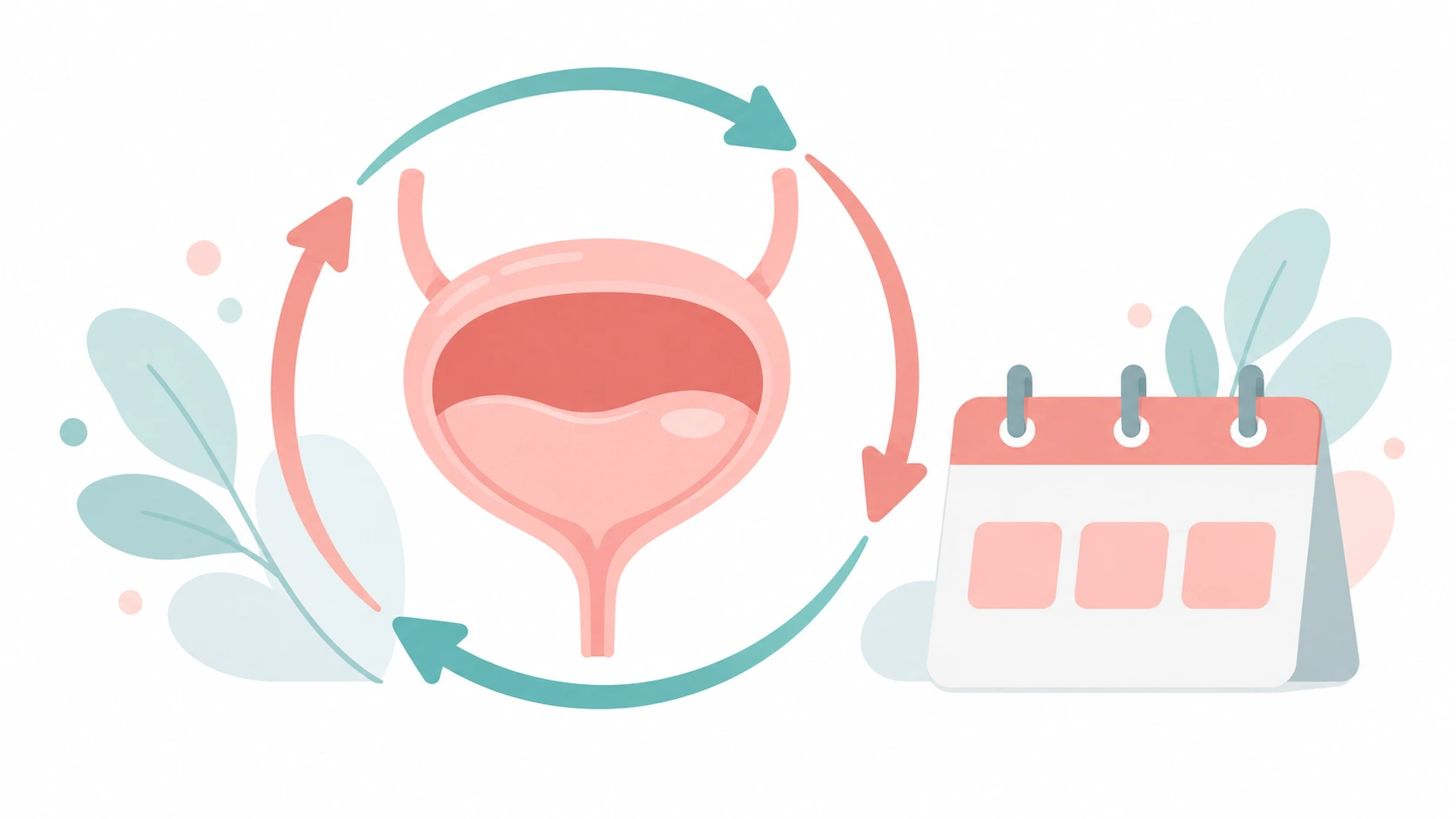
Doctors call it a recurrent UTI when you have two or more infections in six months, or three or more in a year, according to Cleveland Clinic and the American Urological Association (AUA). You may also hear it called a frequent, persistent or chronic UTI. If you’ve had 3 UTIs in 4 months, you already meet that definition.
It happens a lot. Harvard Health reports that 25% to 30% of women who have a UTI get another within six months, and the Urology Care Foundation, the AUA’s patient arm, puts the share of women who have a second UTI at 20% to 40%. Cleveland Clinic says a recurrent UTI usually comes back about a month after treatment.
Repeat infections also aren’t your fault. “Recurrent UTIs aren’t due to poor hygiene or something else that women have brought on themselves. Some women are just prone to UTIs,” infectious diseases specialist Dr. Kalpana Gupta told Harvard Health.
Reinfection or relapse?
A UTI that comes back can be one of two things, and the difference matters:
| Reinfection | Relapse | |
|---|---|---|
| What it is | A new infection, often from the same type of gut bacteria | The first infection was never fully cleared |
| When it shows up | Weeks or months later | Within about two weeks of finishing antibiotics |
| How common | About 80% of repeat UTIs, according to a 2013 review in the Sultan Qaboos University Medical Journal | Less common |
| What usually helps | Finding the trigger and preventing the next one | A urine culture, a different antibiotic or a longer course, and a check for a hidden cause |
If your UTI comes back right after antibiotics, the bacteria may resist the drug you took, or the symptoms may not be from a UTI at all. Our guide on how long a UTI lasts explains what’s normal after treatment and when a UTI that won’t go away needs a second look.
Why do UTIs keep coming back?
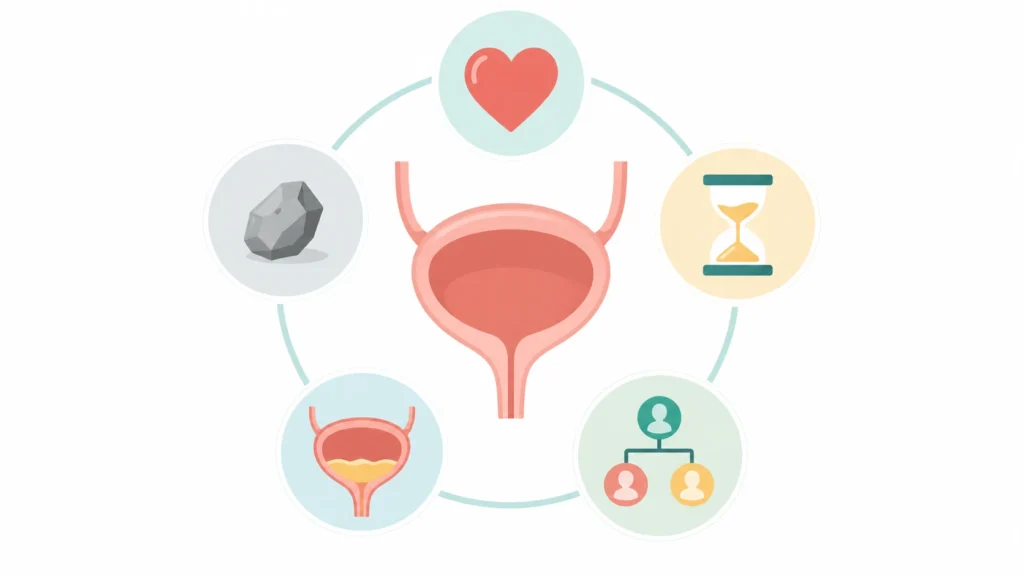
Most UTIs start the same way. E. coli and other bacteria that live in the bowel reach the skin around the urethra, travel up into the bladder and multiply. Women get more UTIs because the urethra is shorter and closer to the rectum, the CDC notes. When infections keep returning, one or more of the factors below is usually helping the bacteria along.
Sex, a new partner and spermicide
Before menopause, sex and spermicide are the most common risk factors, according to Harvard Health. Sex pushes bacteria from the skin toward the urethra and is thought to raise the number of bacteria in the bladder. Spermicide may kill lactobacilli, the protective bacteria in the vagina, which makes it easier for E. coli to move in. The 2013 review adds frequent sex, a new partner and symptoms that start soon after sex to the list.
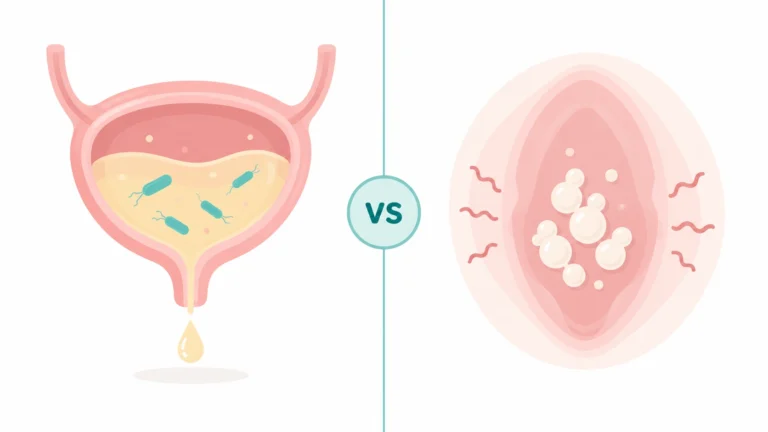
So if you feel like your boyfriend or girlfriend keeps giving you UTIs, it’s usually your own bacteria being moved around, not a germ passed from them. The CDC is clear that a UTI is not a sexually transmitted infection (STI). An STI can feel like a UTI, though, so it’s worth testing if you have a new partner. Our guide to UTI vs STD covers how to tell them apart.
Other birth control choices count too. Cleveland Clinic lists the diaphragm as a risk factor, and Premier Women’s Health notes that spermicide-coated condoms carry the same risk as other spermicides. If you get a UTI almost every time you have sex, a single antibiotic dose after sex is one of the prevention options covered below.
Menopause and low estrogen
After menopause, the vagina loses some of its acidity and its lactobacilli, according to Cleveland Clinic, so bacteria have an easier time reaching the bladder. The bladder also squeezes less strongly with age, Harvard Health notes, which leaves more urine behind. For some women, repeat UTIs are part of genitourinary syndrome of menopause (GSM), which can also bring vaginal dryness, burning, urgency and pain with sex. This is one cause with a strong fix: vaginal estrogen, covered in the prevention section.
Your genes and family history
Some women are simply more prone. Harvard Health says genes play a role before and after menopause, and having a mother or sister with frequent UTIs is a risk factor. The 2013 review also links an early first UTI and a mother’s history of UTIs to more repeat infections. You can’t change your genes, but knowing this can save you from blaming yourself and point you toward prevention sooner.
A bladder that doesn’t empty fully
Urine left in the bladder gives bacteria time to grow. Cleveland Clinic lists vaginal prolapse, diabetes, stroke, multiple sclerosis and Parkinson’s disease among the causes of incomplete emptying. Premier Women’s Health adds constipation, certain medicines and changes in bladder function. Holding urine for long stretches has a similar effect, and Memorial Sloan Kettering (MSK) advises not holding it for more than 3 to 4 hours. A simple bladder scan after you pee can show whether urine is being left behind.
Diabetes, stones and other conditions
- Diabetes. People with diabetes are more likely to get UTIs, according to the National Institute of Diabetes and Digestive and Kidney Diseases (NIDDK). Diabetes can damage the nerves to the bladder, so you may not feel when it’s full, and urine that stays too long can lead to infections. NIDDK says managing blood glucose can help prevent bladder infections.
- Some diabetes medicines. SGLT2 inhibitors make the kidneys pass sugar into the urine. In a meta-analysis of 52 trials, dapagliflozin 10 mg was the one drug in this group linked to more UTIs, mostly in the first 6 months of use. Don’t stop a diabetes medicine on your own; ask your prescriber if UTIs started after a new prescription.
- Kidney or bladder stones. Stones can hold bacteria and restart an infection, MSK notes.
- Pouches and structural problems. Cleveland Clinic lists small pouches in the urethra or bladder (diverticula) that trap urine, and urinary tract differences present from birth, such as vesicoureteral reflux, where urine flows back toward the kidneys.
- A weaker immune system. Immune-suppressing drugs for conditions like lupus or rheumatoid arthritis, and long-term steroids, are linked to more infections, including UTIs, according to Cleveland Clinic.
- A urinary catheter, which gives bacteria a direct route into the bladder.
When antibiotics set up the next infection
The medicine that cures a UTI can make the next one more likely. The CDC explains that antibiotics also kill helpful germs in your microbiome, and when that balance is disrupted, harmful germs can take over. Cleveland Clinic lists long-term antibiotic use as a risk factor for recurrent UTIs. Some women also get a vaginal yeast infection after each UTI course, and our guide to UTI vs yeast infection explains why the two so often come together.
Repeated courses also give bacteria more chances to become resistant. That’s a big reason guidelines now push urine cultures, short courses and non-antibiotic prevention first.
Chronic UTI: when it never seems to clear
Some people don’t get separate infections. They feel like they have one UTI that never fully goes away. The NHS describes long-term (chronic) UTIs in which short courses of antibiotics may not work and urine tests may not show an infection, possibly because bacteria get into the lining of the bladder. If that sounds like you, ask for a referral to a specialist rather than another short course.
The AUA’s 2025 update to its guideline now defines treatment success as your symptoms going away, not just a clean urine test. If your symptoms continue after a test shows the infection is gone, the next step is looking for another cause, which leads to the next section.
When it isn’t a UTI at all
Not every bout of burning or urgency is an infection. If your “UTIs” keep coming back but the urine cultures are often negative, one of these may be the real cause:
| Condition | Clues |
|---|---|
| Vaginal yeast infection or bacterial vaginosis | Itching, discharge, odor, soreness of the skin |
| Sexually transmitted infection | New partner, discharge, sores, pain with sex |
| Overactive bladder | Urgency and frequent peeing with no burning and clean tests |
| Bladder pain syndrome (interstitial cystitis) | Pelvic pain and urgency that flare and settle, with negative urine cultures |
| Genitourinary syndrome of menopause | Dryness, burning and urgency after menopause |
| Irritation from products | Burning after new soaps, body washes, scented pads, detergents or a wet swimsuit, according to Premier Women’s Health |
| Kidney stones | Sharp pain in the side or back, sometimes blood in the urine |
Our guide on why it burns when you pee goes through these lookalikes in more detail.
Rarely, repeat UTI symptoms can hide something more serious. A 2019 analysis of 24 studies covering more than 100,000 people, presented at a Cancer Research UK conference, found that recurrent UTIs can mask the symptoms of bladder or kidney cancer, mostly in older women, and delay the diagnosis. Up to two-thirds of people with blood in their urine had no follow-up check within six months. If you see blood in your urine, or blood shows up on tests after a UTI has been treated, ask for it to be checked. Our guide to blood in urine explains what that workup involves.
What your doctor should check
When UTIs keep returning, the goal is to find the pattern, not to treat one episode at a time. A good visit for recurrent UTIs usually includes:
- A urine culture with each episode. The AUA asks doctors to confirm each infection with a urine culture before treatment, so the diagnosis is on record and the antibiotic matches the bacteria. MSK advises asking for a urine culture at urgent care, not just a quick dipstick test.
- A look at your history. How often the UTIs happen, whether they follow sex, menopause or a new product, your previous urine culture results and which antibiotics you’ve had, per Premier Women’s Health.
- A pelvic exam, when it makes sense, to look for prolapse or menopause changes.
- A check of bladder emptying, such as a quick ultrasound scan after you pee.
- No routine scans or scopes. The AUA says most women with typical recurrent UTIs don’t need a CT scan or cystoscopy. Cleveland Clinic says imaging is used when blood stays in the urine after treatment or kidney stones keep forming.
- No treatment for bacteria without symptoms. The AUA advises against treating bacteria found on a test when you feel well. Our guide to bacteria in urine explains why.
If a urine culture comes back as several kinds of bacteria, the sample was probably contaminated. Our guide to mixed urogenital flora explains how to give a cleaner sample. Mayo Clinic notes that people with frequent UTIs may be sent to a urologist, a urogynecologist or a nephrologist, depending on the cause.
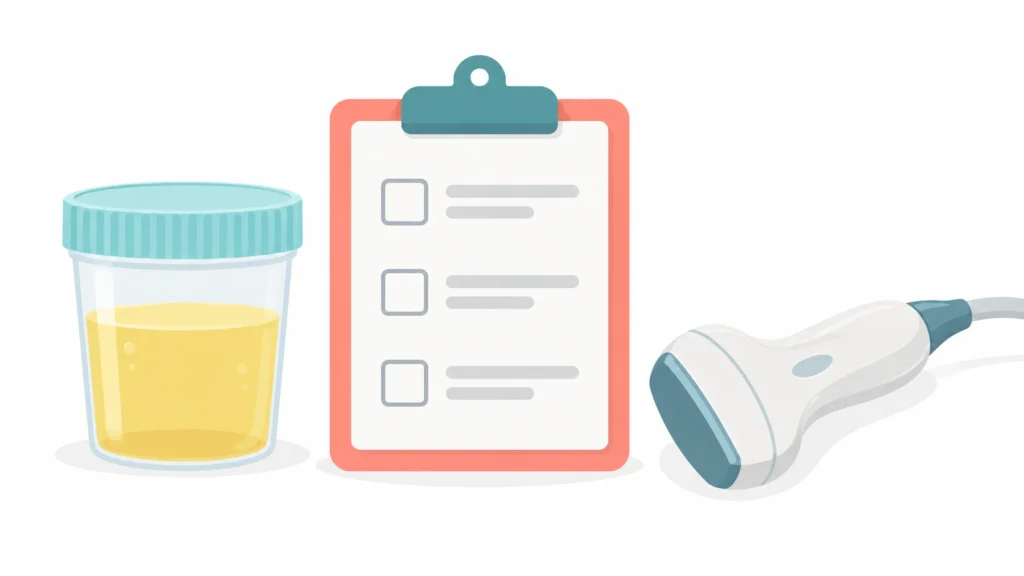
Questions worth bringing to the appointment, many of them suggested by Cleveland Clinic:
- Is the same bacteria causing each of my UTIs?
- Were my urine cultures positive every time?
- Is my bladder emptying fully?
- Could menopause, my birth control or a medicine be playing a part?
- Which prevention step should I try first, and for how long?
- Can I have a standby prescription for the next time?
How to prevent recurrent UTIs
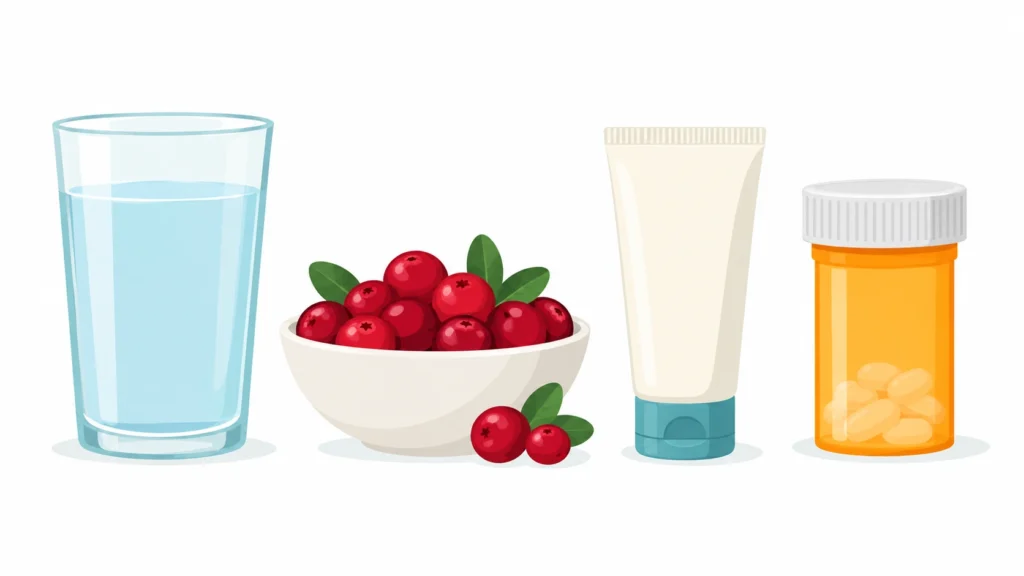
The evidence behind UTI prevention tips varies a lot. Here’s how the main options compare, from strongest to weakest:
| Option | Who it helps | Evidence |
|---|---|---|
| Drink more water | Women with repeat UTIs who drink less than 1.5 liters (50 ounces) a day | Strong. Cut UTIs from 3.2 to 1.7 a year in a 2018 trial; an AUA option since 2025 |
| Vaginal estrogen | Women in perimenopause or after menopause | Strong. Recommended by the AUA |
| Antibiotic prevention | Women with frequent UTIs after other steps fail | Strong while you take it, with side effects and resistance as trade-offs |
| Cranberry products | Women with repeat UTIs | Moderate. About 26% lower risk in a 2023 Cochrane review; an AUA option since 2025 |
| Methenamine hippurate | Women with repeat UTIs | Moderate. As good as daily antibiotics in a 2022 trial; an AUA option since 2025 |
| Stopping spermicide or a diaphragm | Women who use them | Reasonable. Known risk factors |
| Peeing after sex, wiping front to back, cotton underwear | Most women | Low proof, low harm |
| D-mannose alone | Women with repeat UTIs | Not supported. The AUA says it may not be effective |
Habits worth keeping
Most everyday advice hasn’t been proven in trials, but Dr. Gupta told Harvard Health these habits can’t hurt and might help. These are the ones the sources agree on:
- Pee soon after sex.
- Wipe from front to back.
- Don’t hold urine for hours; go when you feel the urge.
- Skip douching, and the CDC advises keeping sprays and powders away from the genital area.
- Use plain water or a mild, fragrance-free soap on the outside only, and consider fragrance-free laundry detergent, per Premier Women’s Health.
- Change out of wet swimsuits and sweaty workout clothes, and wear cotton underwear.
- Treat constipation, which can keep the bladder from emptying.
Non-antibiotic options
Water. In a 2018 trial in JAMA Internal Medicine, 140 women with repeat UTIs who drank less than 1.5 liters a day added about 1.5 liters of water daily. Their UTIs dropped from 3.2 to 1.7 a year. The AUA added extra water as an option in 2025 for women in that group. If you have heart or kidney disease, ask how much is safe for you.
Vaginal estrogen. For women in perimenopause or after menopause, the AUA recommends offering vaginal estrogen. It comes as a cream, tablet or ring, restores the vagina’s acidity and protective bacteria, and only a tiny amount reaches the bloodstream, according to Cleveland Clinic. It’s different from hormone pills or patches, so it’s worth asking about even if you don’t use hormone therapy. If you’ve had an estrogen-sensitive cancer, talk it through with your doctor first.
Cranberry. A 2023 Cochrane review of 50 trials found cranberry products cut the risk of repeat UTIs by about 26% in women who get them often. The AUA now lists cranberry as an option. Juice drinks can be high in sugar, so capsules or unsweetened products are a better pick, and cranberry won’t cure a UTI you already have.
Methenamine hippurate. This prescription tablet turns into formaldehyde in acidic urine, which keeps bacteria from growing. In the 2022 ALTAR trial in the BMJ, 240 women took it or a daily antibiotic for a year, and methenamine did nearly as well (1.38 vs 0.89 UTIs a year, within the trial’s set margin). It isn’t suitable for some people with kidney or liver disease.
D-mannose. It’s a popular supplement, but a 2024 trial found no benefit, and the AUA now tells doctors to counsel women that D-mannose alone may not prevent UTIs.
Antibiotic prevention
When other steps aren’t enough, doctors use antibiotics in three ways:
- A single dose after sex, for women whose UTIs follow intercourse. The 2013 review notes this uses about a third of the antibiotic of a daily plan.
- A low daily dose, for three months up to a year or longer, according to Cleveland Clinic. Common choices are nitrofurantoin, TMP-SMX, trimethoprim and cephalexin.
- Self-start therapy, where you keep a prescription at home and start it at the first sign of a UTI, ideally after giving a urine sample, then check in with your doctor.
A review in American Family Physician found that daily prevention cut repeat UTIs sharply while women took it, and that a dose after sex worked about as well as a daily dose. The trade-offs are side effects such as yeast infections, rash and nausea, plus the risk of resistance. Our guide to antibiotics for a UTI covers each drug’s side effects.
Recurrent UTIs in pregnancy, men, children and older adults
Pregnancy. UTIs are the most common medical complication of pregnancy, according to the 2013 review. Pregnancy widens the ureters, relaxes their muscle tone and can raise urine pH and sugar, all of which help bacteria. Every UTI in pregnancy is treated, and after repeat infections a doctor may suggest preventive antibiotics for the rest of the pregnancy. Call your prenatal provider at the first symptom.
Men. Recurrent UTIs are more common in women, but men, above all older men, get them too, the CDC notes. In men, repeat infections usually point to a cause such as the prostate, an enlarged prostate leaving urine behind or stones. Our guide to UTIs in men covers prostate infections and the tests a urologist uses.
Children. A child with repeat UTIs should see a doctor, since urinary tract differences present from birth, such as vesicoureteral reflux, are one cause, according to Cleveland Clinic. A child with a fever and a suspected UTI needs to be seen the same day.
Older adults. Bacteria in the urine without symptoms are common at older ages and don’t need antibiotics. New confusion or a fall on its own doesn’t prove a UTI. Our guide to UTIs without pain explains the quieter signs that do. For older women, Cleveland Clinic calls vaginal estrogen the best way to prevent repeat UTIs.
If your UTIs seem to cluster around your period, our guide to UTIs and your period explains the link.
The bottom line
If you keep getting UTIs, you’re not doing anything wrong. Most repeat UTIs are new infections from your own gut bacteria, and the usual drivers are sex, spermicide, menopause, genes, a bladder that doesn’t empty fully and conditions like diabetes or stones. Two UTIs in 6 months or three in a year is the point to get a urine culture with each episode and a prevention plan. Extra water, vaginal estrogen after menopause, cranberry, methenamine and antibiotic prevention all have evidence behind them. Blood in the urine or symptoms with negative tests deserve a closer look.
Frequently asked questions
Can dehydration cause UTIs?
Not on its own, but drinking little means you pee less, which gives bacteria more time in the bladder. In the 2018 water trial, low drinkers had fewer UTIs once they added water.
What vitamin deficiency causes UTIs?
No vitamin deficiency has been proven to cause UTIs. One 2013 study found lower vitamin D levels in women with repeat UTIs, but that shows a link, not a cause. Ask before taking high doses.
What drinks help prevent UTIs?
Water helps most. Unsweetened cranberry juice or capsules may lower repeat UTIs in some women, but sugary juice drinks add little. If you take warfarin, ask before using cranberry products.
Do probiotics prevent UTIs?
Not reliably yet. Probiotics with lactobacillus strains may support healthy vaginal bacteria, but research hasn’t shown they prevent repeat UTIs, the OB-GYNs at Premier Women’s Health say. Ask your doctor before adding one.
Do UTIs come back after stopping preventive antibiotics?
Often, yes. In the studies behind the AFP review, infections returned at about the old rate once women stopped preventive antibiotics, one reason doctors try non-antibiotic steps first.
Sources
- Cleveland Clinic. Recurrent UTI, 2025
- Harvard Health Publishing. When urinary tract infections keep coming back, 2022
- Al-Badr A, Al-Shaikh G. Recurrent Urinary Tract Infections Management in Women: A review. Sultan Qaboos University Medical Journal, 2013
- American Urological Association. Recurrent Uncomplicated Urinary Tract Infections in Women: AUA/CUA/SUFU Guideline
- Urology Times. AUA releases amendment to recurrent uncomplicated UTIs in women guideline, 2025
- Urology Care Foundation. Urinary Tract Infections in Adults, 2025
- Centers for Disease Control and Prevention. Urinary Tract Infection Basics, 2026
- Memorial Sloan Kettering Cancer Center. About Recurrent Urinary Tract Infections (UTIs), 2025
- Premier Women’s Health of Minnesota. Why Do I Keep Getting UTIs? Causes, Treatment and Prevention, 2026
- National Institute of Diabetes and Digestive and Kidney Diseases. Diabetes, Sexual, & Bladder Problems
- HCPLive. UTI Risk Varies by Type of SGLT2 Inhibitor (Tang H, et al. Diabetes, Obesity and Metabolism)
- Nseir W, et al. The association between serum levels of vitamin D and recurrent urinary tract infections in premenopausal women. International Journal of Infectious Diseases, 2013, via UroToday
- Cancer Research UK. Recurring infections could lead to delayed bladder or kidney cancer diagnosis, 2019
- NHS. Urinary tract infections (UTIs)
- Mayo Clinic. Urinary tract infection (UTI): Symptoms and causes
- Hooton TM, et al. Effect of increased daily water intake in premenopausal women with recurrent urinary tract infections: a randomized clinical trial. JAMA Internal Medicine, 2018
- Williams G, et al. Cranberries for preventing urinary tract infections. Cochrane Database of Systematic Reviews, 2023
- The Pharmaceutical Journal. Antiseptic as effective as antibiotics in preventing recurrent UTIs (ALTAR trial, BMJ, 2022)
- NIHR Evidence. D-mannose does not prevent urinary tract infections (Hayward G, et al. JAMA Internal Medicine, 2024)
- American Family Physician. Antibiotics for Recurrent Urinary Tract Infections (Cochrane for Clinicians), 2005
Disclaimer
This blog is for informational and educational purposes only, and does not intend to substitute any professional medical advice or consultation. For any health related concerns, please consult with your physician, or call 911.