High Bilirubin: Normal Levels, Causes and What Level Is Dangerous
Total bilirubin is usually about 0.2 to 1.3 mg/dL in adults, and yellow eyes start to show around 2 to 3 mg/dL. High bilirubin comes from red blood cells breaking down too fast, a liver that can’t keep up or a blocked bile duct. Gilbert syndrome, a common harmless trait, is a frequent cause. In adults, no single number is dangerous on its own; the cause is what matters. Newborns are different, because sharply raised levels can harm the brain.
A bilirubin result flagged “high” on a blood test raises the same questions for almost everyone: is my liver OK, is this number dangerous and how do I get it down? This guide explains what bilirubin is, what the normal ranges are, what direct and indirect bilirubin mean, the most common causes, which symptoms need care right away and what doctors check next.
What is bilirubin?
Bilirubin is a yellow pigment your body makes when it recycles old red blood cells. Red blood cells live about 120 days, according to Harvard Health. When they wear out, the hemoglobin inside them is turned into unconjugated (indirect) bilirubin, which travels in the blood to the liver. The liver changes it into conjugated (direct) bilirubin and sends it into bile. Bile flows through the bile ducts into the intestine, where gut bacteria turn bilirubin into urobilinogen and the pigments that color stool brown.
High bilirubin (hyperbilirubinemia) means that somewhere along this path, bilirubin is being made faster than the body can clear it, or it’s getting stuck. Only the conjugated form can pass into urine, so a positive urine test points to the liver or bile ducts. Our guide to bilirubin in urine explains that result.
Bilirubin levels: what’s normal and what’s high
Your report usually shows total bilirubin and direct bilirubin. Indirect bilirubin is the difference between them. Ranges vary a little from lab to lab, so always compare your result with the range printed on your report.
| Measure | Typical range | Source |
|---|---|---|
| Total bilirubin, adults and children | About 0.2 to 1.3 mg/dL | Cleveland Clinic; Mayo Clinic lists about 1.2 mg/dL |
| Direct (conjugated) bilirubin | About 0.3 mg/dL or less | Mayo Clinic |
| Hyperbilirubinemia | 2.0 mg/dL or higher | Harvard Health |
| Yellow eyes and skin (jaundice) visible | About 2 to 3 mg/dL and up | MSD Manual |
| Newborns in the first days | About 1.0 to 12.0 mg/dL can be normal | Cleveland Clinic |
Is 1.3, 1.5 or 1.7 bilirubin too high?
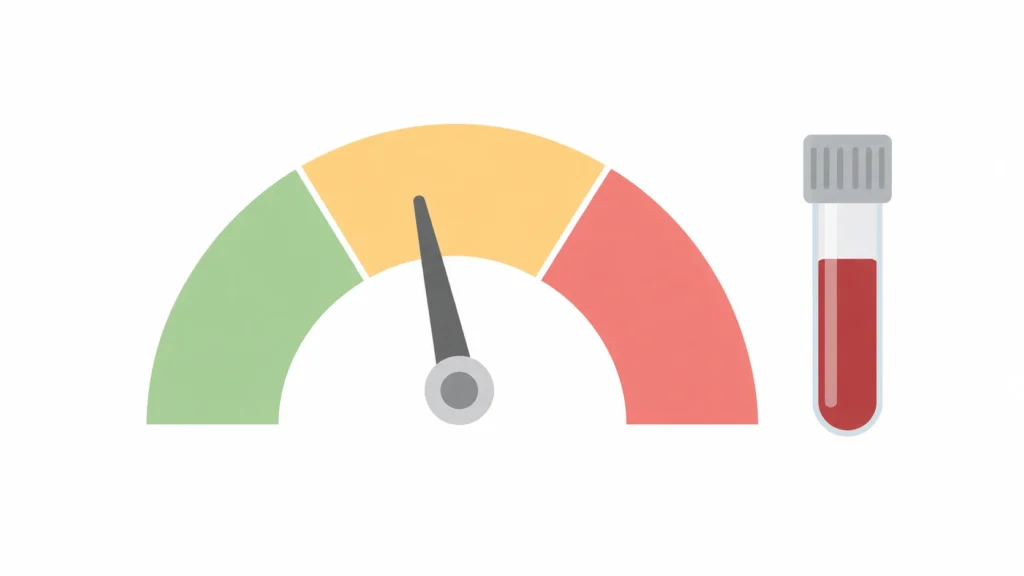
A result just above the range is common and often means little. Harvard Health notes that most labs call anything under 1.3 mg/dL normal, but some healthy people run as high as 1.9 mg/dL. A level of 2.0 or more is considered hyperbilirubinemia.
A mildly high total bilirubin is most often Gilbert syndrome when three things are true: the rest of the liver panel is normal, the extra bilirubin is mostly indirect, and the number rises after fasting, illness or a poor night’s sleep. Gilbert syndrome affects an estimated 3% to 7% of Americans, according to MedlinePlus Genetics. Mayo Clinic notes that bilirubin can also rise for a short time with dehydration, fasting and exercise.
If your number is borderline, your clinician will usually look at the direct fraction and your liver enzymes, and may repeat the test after a normal meal and a good night’s sleep.
Direct vs indirect bilirubin
The split between the two types tells your doctor where to look:
| Result pattern | What it usually points to |
|---|---|
| High total, mostly indirect | Too much bilirubin being made (red blood cells breaking down) or slow processing (Gilbert syndrome) |
| High total, high direct | Liver disease or a blocked bile duct |
| Both types high | Liver cell damage, such as hepatitis or cirrhosis |
Harvard Health explains that a high total with a normal or only slightly raised direct level means most of the bilirubin hasn’t been processed by the liver yet, which points to Gilbert syndrome or red blood cell destruction. A high direct level points to a gallstone or another bile duct blockage, or to liver disease.
What causes high bilirubin?
Doctors sort the causes by where the problem sits: before the liver, inside the liver or after the liver in the bile ducts.

High indirect bilirubin
These causes raise the unprocessed form:
- Hemolytic anemia, when red blood cells are destroyed faster than normal and the liver can’t handle the load, as Harvard Health describes
- Sickle cell disease and a reaction to a blood transfusion, listed by Cleveland Clinic
- Gilbert syndrome, a harmless inherited trait that slows the liver’s processing of bilirubin
- Crigler-Najjar syndrome, a rare and more serious inherited condition
- A large bruise or internal bleed being reabsorbed
- Newborn jaundice, because a baby’s liver is still maturing
High direct bilirubin
These causes raise the processed form, or both forms, because the liver is damaged or bile can’t drain. The StatPearls review on jaundice and Cleveland Clinic list:
- Viral hepatitis, including hepatitis A, B and C, and infections such as mononucleosis
- Alcohol-related liver disease, from alcoholic hepatitis to cirrhosis
- Fatty liver disease that has progressed to inflammation (metabolic dysfunction-associated steatohepatitis, MASH)
- Autoimmune hepatitis, primary biliary cholangitis and primary sclerosing cholangitis
- Wilson disease and other inherited liver conditions
- Drug- or toxin-induced liver injury
- Sepsis and low blood flow to the liver
- Pregnancy, including cholestasis of pregnancy, a liver condition that causes intense itching on the palms and soles in the third trimester, according to Mayo Clinic
- Gallstones stuck in the common bile duct, cholecystitis and cholangitis
- Tumors of the bile ducts or the head of the pancreas, and pancreatitis
- Narrowed bile ducts (strictures)
- Dubin-Johnson and Rotor syndromes, rare inherited conditions that are usually harmless
Medicines, fasting and other short-term rises
Not every high result means disease. MedlinePlus notes that some medicines, certain foods and hard exercise can raise bilirubin. Mayo Clinic adds dehydration and fasting. Cleveland Clinic mentions anything that temporarily stresses the liver, such as a new medicine or a heavy bout of drinking.
The StatPearls review lists medicines and products that can raise bilirubin, including:
- Birth control pills and other estrogens
- Steroids
- Rifampin, an antibiotic for tuberculosis
- Probenecid, a gout medicine
- Chlorpromazine, an antipsychotic
- Herbal products such as kava
Don’t stop a prescribed medicine because of one result. Ask the prescriber whether it could be the cause.
High bilirubin symptoms
Mildly high bilirubin often causes no symptoms at all. As levels climb, or when the cause is a liver or bile duct problem, you may notice:
- Yellow eyes and skin (jaundice). The whites of the eyes usually show it first. The StatPearls review notes yellow eyes are easiest to see above about 3 mg/dL.
- Dark urine, brown or tea-colored. Dark urine has other causes too, including dehydration and blood in urine.
- Pale, gray or clay-colored stool, when bile can’t reach the intestine
- Itching, often worse with bile duct problems
- Tiredness, nausea, loss of appetite and pain under the right ribs
Healthgrades lists other signs that point to the liver itself struggling: swelling of the belly, legs or ankles, easy bruising and bleeding that takes longer to stop.
One look-alike is worth knowing. Yellow-orange skin with white eyes is usually carotenemia, from eating a lot of carrots, sweet potatoes or other carotene-rich foods. The StatPearls review notes this yellowing spares the whites of the eyes, while bilirubin doesn’t, and it’s harmless.
Call 911 or go to the ER for jaundice with any of these, which Healthgrades and the MSD Manual flag:
- Confusion, unusual sleepiness or disorientation
- Fever above 101°F with chills and pain under the right ribs
- Black, tarry stools or vomiting blood
- Symptoms that came on suddenly and are getting worse
What level of bilirubin is dangerous?
The answer depends on age. For adults, the level itself rarely decides the danger. For newborns, it does.
In adults
Cleveland Clinic puts it plainly: in adults, high bilirubin may signal a dangerous condition, but the bilirubin itself isn’t dangerous. An adult with Gilbert syndrome can live with a level of 2 or 3 mg/dL for decades without harm, while someone with a bilirubin of 2.5 and a failing liver can be seriously ill.
What makes high bilirubin dangerous in adults is what comes with it:
- Acute liver failure is defined by confusion from liver failure (hepatic encephalopathy) and an INR, a blood clotting test, of 1.5 or higher, in someone without prior liver disease, according to a StatPearls review. Bilirubin is often high in liver failure but isn’t part of the definition. Acetaminophen overdose is the most common cause in North America, behind about 46% of cases.
- Advanced liver disease is scored with MELD, which combines bilirubin with INR, creatinine (a kidney test) and sodium to estimate severity and survival for people waiting for a liver transplant, according to the Merck Manual’s calculator.
- Cholangitis, an infected, blocked bile duct, is an emergency whatever the exact number.
A rising bilirubin, or one paired with confusion, bleeding, fever or a high INR, needs urgent care. A stable, mildly high level with normal liver enzymes usually doesn’t.
In newborns
In babies, sharply raised unconjugated bilirubin can cross into the developing brain and cause permanent damage called kernicterus. Cleveland Clinic gives a rough guide of treatment above 15 mg/dL in the first 48 hours or 20 mg/dL after 72 hours.
Doctors now use more precise cutoffs. Under the American Academy of Pediatrics (AAP) 2022 guideline, the level for starting light therapy depends on the baby’s gestational age, age in hours and risk factors such as G6PD deficiency or infection. Every newborn should have bilirubin checked between 24 and 48 hours of age, or before going home if that’s sooner. The guideline also notes that feeding 8 to 12 times a day can lower the need for light therapy.
Mayo Clinic says most newborns born after 35 weeks need no treatment, and mild jaundice often clears in 2 to 3 weeks. Mayo Clinic advises calling your baby’s doctor if the yellow spreads to the belly, arms or legs, the whites of the eyes turn yellow, or your baby is hard to wake, feeding poorly or making high-pitched cries.

How doctors find the cause
A high bilirubin is a starting point. MedlinePlus, Healthgrades and the MSD Manual describe the usual next steps:
- A history and exam: how long you’ve had symptoms, alcohol use, every medicine and supplement, travel, hepatitis risks and family history.
- A liver panel: ALT and AST (liver cell enzymes), alkaline phosphatase (ALP), GGT, albumin and the direct and indirect bilirubin split.
- A complete blood count and other tests to check whether red blood cells are breaking down too fast, if indirect bilirubin is high.
- Hepatitis, autoimmune and inherited-disease blood tests, such as tests for Wilson disease.
- A urine test. Our guide to urinalysis results covers the bilirubin and urobilinogen lines.
- An abdominal ultrasound, usually the first imaging test, followed by CT, MRI, MRCP (an MRI of the bile ducts) or ERCP (a scope test that can also remove stones) if a blockage is suspected.
- A liver biopsy, only when other tests don’t give an answer.
The MSD Manual describes how the enzyme pattern narrows things down:
| Liver enzyme pattern | What it suggests |
|---|---|
| ALT and AST above 500 U/L, ALP less than 3 times normal | Liver cell damage, such as hepatitis |
| ALT and AST below 200 U/L, ALP more than 3 times normal | Bile backup or a blocked duct |
| Normal enzymes, high indirect bilirubin | Gilbert syndrome or red blood cells breaking down too fast |
How to lower high bilirubin
There’s no pill that lowers bilirubin directly in adults. Mayo Clinic and Cleveland Clinic both say treatment depends on the cause, and levels fall once that cause is under control:
- Gallstones or a blocked duct: removing the stone, often by ERCP, or opening the duct with a stent or surgery
- Hepatitis: rest for hepatitis A, which usually clears by itself, or antiviral medicine for hepatitis B or C
- Autoimmune hepatitis: medicines that calm the immune system, such as corticosteroids
- Medicine-related rises: switching or stopping the drug with your prescriber’s help
- Alcohol-related liver disease: stopping alcohol, which Mayo Clinic notes can bring bilirubin down
- Severe liver failure: a liver transplant in some cases
- Gilbert syndrome: no treatment; eating regularly and sleeping well keep levels lower
Cleveland Clinic advises easing the load on your liver while the cause is found: skip alcohol, avoid drugs you don’t need, including over-the-counter ones where possible, and eat a healthy diet. Be wary of “liver detox” teas and supplements. The StatPearls review lists some herbal products, such as kava, among the causes of liver injury.
If itching is the worst symptom, the StatPearls review describes relief from warm or oatmeal baths and antihistamines for mild itching, and bile acid binders such as cholestyramine for stronger itching.
What does low bilirubin mean?
A low bilirubin result is not usually a cause for concern, according to MedlinePlus, and it needs no treatment. It can follow some medicines, including certain antibiotics, birth control pills, sleeping pills and seizure medicines. Mayo Clinic notes that lower bilirubin levels usually aren’t a concern.
So when people ask which is worse, high or low bilirubin, the answer is high. A high level can be the first clue to liver disease, a blocked bile duct or red blood cells breaking down too fast, while a low level on its own has no known harm.
When to see a doctor about high bilirubin
Book a visit soon, within days rather than weeks, if:
- Your total bilirubin is above your lab’s range on more than one test
- Your direct bilirubin is high, even if the total is close to normal
- Your liver enzymes (ALT, AST or ALP) are also abnormal
- You notice yellow eyes, dark urine, pale stools or itching that won’t go away
- You drink alcohol heavily, take medicines that can affect the liver, or have hepatitis risk factors
- You’re pregnant and develop itching on your palms or soles
A single mildly high result in someone who feels well, with normal enzymes, usually just needs a repeat test. Go to the ER for jaundice with confusion, fever and pain under the right ribs, bleeding or vomiting blood, as listed in the symptoms section. For a baby, call the doctor the same day if jaundice spreads or the baby isn’t feeding well.
Outlook
How high bilirubin turns out depends almost entirely on the cause. The StatPearls review on jaundice notes an excellent outlook for Gilbert syndrome, newborn and breast milk jaundice, a resolving bruise and bile duct stones that are removed. Cancer blocking the bile ducts and cirrhosis carry a poorer outlook, which is why an unexplained or rising level deserves a full workup.
The bottom line
Total bilirubin is normally about 0.2 to 1.3 mg/dL, and some healthy people run up to 1.9. A mild rise with normal liver enzymes and mostly indirect bilirubin is usually Gilbert syndrome or a short-term effect of fasting or dehydration. A high direct bilirubin points to the liver or bile ducts and needs testing. In adults, the danger lies in the cause and in signs like confusion, bleeding or fever, not in one number. In newborns, doctors treat by age-specific thresholds to protect the brain. Bilirubin falls once its cause is treated.
Frequently asked questions
Can stress cause high bilirubin?
Not directly. In people with Gilbert syndrome, illness, fasting, poor sleep and hard exercise can push bilirubin up for a few days. Stress alone doesn’t damage the liver or cause a lasting rise.
Can bilirubin go back to normal?
Yes, in most cases. Once a stone is removed, a medicine is stopped or hepatitis settles, bilirubin usually returns to the normal range. The speed varies with how much the liver was affected.
How long can someone live with high bilirubin?
People with Gilbert syndrome live a normal lifespan. For other causes, life expectancy depends on the underlying disease and how early it’s found, not on the bilirubin number itself.
What should you not eat or drink if bilirubin is high?
Avoid alcohol first and foremost. Skip herbal detox teas and supplements unless your doctor approves them. With Gilbert syndrome, don’t skip meals or fast for long, since fasting raises levels.
Do you need to fast before a bilirubin blood test?
Sometimes. Your clinician may ask you not to eat or drink for a few hours, and to list every medicine you take, because some medicines and foods can change the result.
Sources
- Cleveland Clinic. Bilirubin Test
- LeWine HE. What does a high bilirubin level in my blood test actually mean? Harvard Health Publishing, 2026
- Mayo Clinic. Bilirubin test
- MedlinePlus. Bilirubin Blood Test
- Joseph A, Samant H. Jaundice. StatPearls, National Library of Medicine, 2023
- MSD Manual Professional Version. Jaundice
- Girish V, Royer A, John S. Acute Liver Failure. StatPearls, National Library of Medicine, 2025
- Merck Manual. MELDNa Score for End-Stage Liver Disease (calculator)
- The Hospitalist. What’s new in the new jaundice guidelines (AAP 2022 hyperbilirubinemia guideline)
- MedlinePlus Genetics. Gilbert syndrome
- Mayo Clinic. Infant jaundice
- Mayo Clinic. Cholestasis of pregnancy
- Healthgrades. High Bilirubin, 2022
Disclaimer
This blog is for informational and educational purposes only, and does not intend to substitute any professional medical advice or consultation. For any health related concerns, please consult with your physician, or call 911.