Yeast in Urine: What It Means, What Causes It and When It Needs Treatment
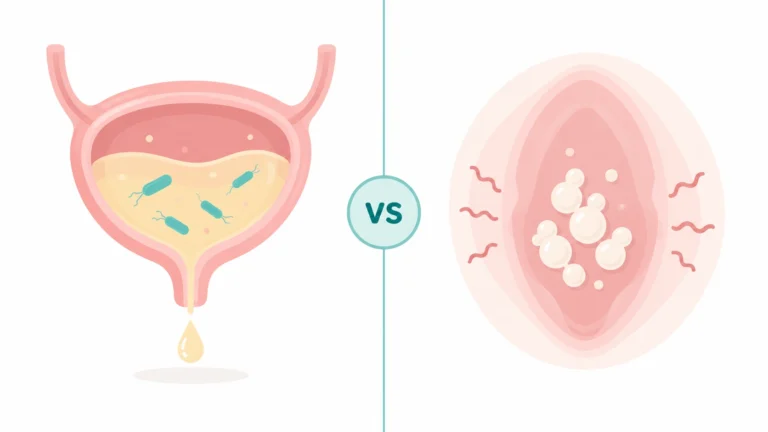
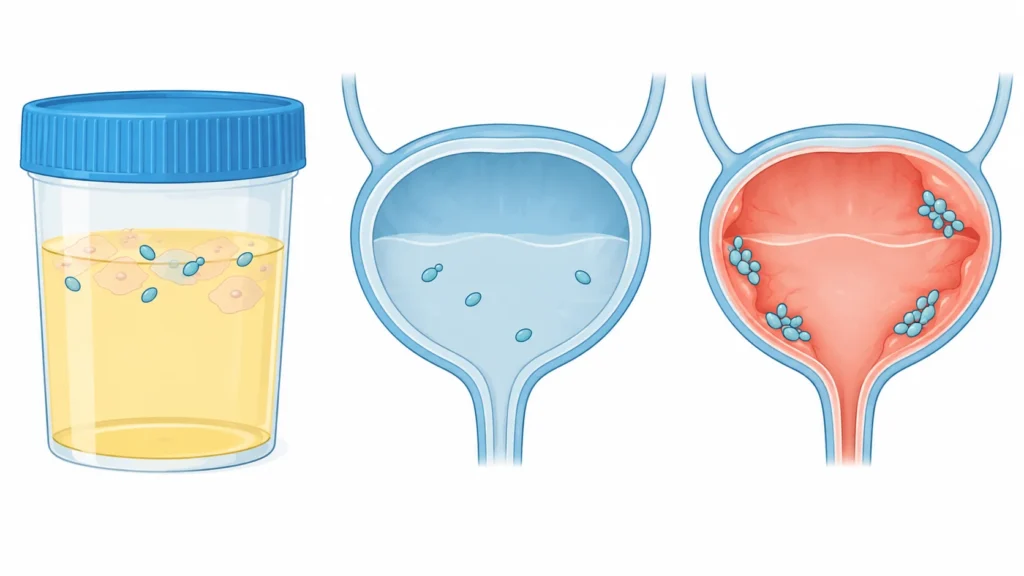
Yeast in urine, called candiduria, means the lab found Candida yeast in your urine sample. Most of the time the yeast came from the skin or vagina during collection, or it is sitting in the bladder without doing harm. It needs treatment only when it causes symptoms or you belong to a small high-risk group.
Your report might say “Yeast: Present,” “Budding yeast: Few” or “Candida albicans isolated.” It’s easy to read that as a yeast infection in your bladder. Usually it isn’t. Below is how doctors decide what the yeast means, when it matters and when the right move is to do nothing at all.
If you are reading a full report line by line, our guide to urinalysis results explained walks through every result on the page.
What does yeast in urine mean?
Yeast in urine means a lab saw yeast cells under the microscope or grew them from your sample. Almost all of it is Candida, a fungus that lives harmlessly on the skin, in the mouth, in the gut and in the vagina of most healthy people.
Because Candida lives so close to the opening of the urethra, it slips into urine samples easily. A healthy bladder flushes it out with every trip to the bathroom. The finding becomes important only when yeast is growing inside the urinary tract and causing damage, which is the less common situation.
Is it normal to have yeast in your urine?
Urine isn’t expected to carry yeast, so most labs print “None seen” as the normal result. Still, a small amount of yeast is a common and often meaningless finding, above all in women. There is no lab number that defines a “normal” amount, and the count by itself does not tell infection apart from harmless yeast.
Contamination, colonization or infection: which one is it?
Yeast in urine falls into one of three groups, and the group decides what happens next. Doctors sort it by how the sample was collected, what else is on the report and whether you have symptoms.
| Contamination | Colonization | Infection | |
|---|---|---|---|
| What it means | Yeast from skin or vaginal discharge got into the cup | Yeast is living in the bladder or on a catheter without harming tissue | Yeast is invading the bladder or kidney and causing inflammation |
| Who gets it | Women most often, during a vaginal yeast infection or with a rushed sample | People with catheters, recent antibiotics or diabetes | People with catheters, diabetes, a weak immune system or a blocked urinary tract |
| Clues on the report | Many squamous (skin) cells, few white cells, mixed organisms | Yeast with few or no white blood cells | Yeast plus white blood cells (pyuria), sometimes blood |
| Symptoms | None from the bladder | None | Burning, urgency, frequency, pelvic pain; fever or back pain if the kidney is involved |
| Usual next step | Repeat a clean sample | Remove the cause; no antifungal | Antifungal medicine |
The Merck Manual describes most yeast in urine as harmless colonization, and says doctors look for signs of tissue reaction, such as white blood cells in urine, before calling it an infection. A review in Future Microbiology (Dias, 2020) adds that the first step is often a second, carefully collected sample. If the yeast is gone on the repeat test, the first one was most likely contamination.
When a lab grows several kinds of organisms at once, the sample likely picked up skin and vaginal flora. Our guide to mixed urogenital flora explains that result.
How to read yeast on your urinalysis report
Yeast shows up on a report in two places: the microscope section of a urinalysis and the result of a urine culture. Labs word it in different ways, but the table below covers what you are most likely to see.
| What your report says | What it means |
|---|---|
| Yeast: None seen | No yeast found; the normal result |
| Yeast: Present, Rare, Few | Some yeast seen; often contamination or colonization |
| Yeast: Moderate, Many | More yeast seen; worth reading with white cells, symptoms and how the sample was taken |
| Budding yeast | Yeast cells caught while reproducing; tells you the cells are alive |
| Hyphae or pseudohyphae | Yeast growing in long branching chains |
| Yeast-like cells | The lab saw cells that look like yeast but hasn’t confirmed it |
| Candida albicans, 10,000 to 100,000+ CFU/mL | A urine culture grew this species at this count |
| Candida (non-albicans) or Candida glabrata | A different species that may resist the usual medicine |
Colony counts (CFU/mL) help with bacterial infections but much less with yeast. In people with catheters, the yeast count can swing widely from one sample to the next, and no agreed cutoff separates infection from colonization. Doctors put more weight on symptoms and white blood cells than on the number.
What is budding yeast in urine?
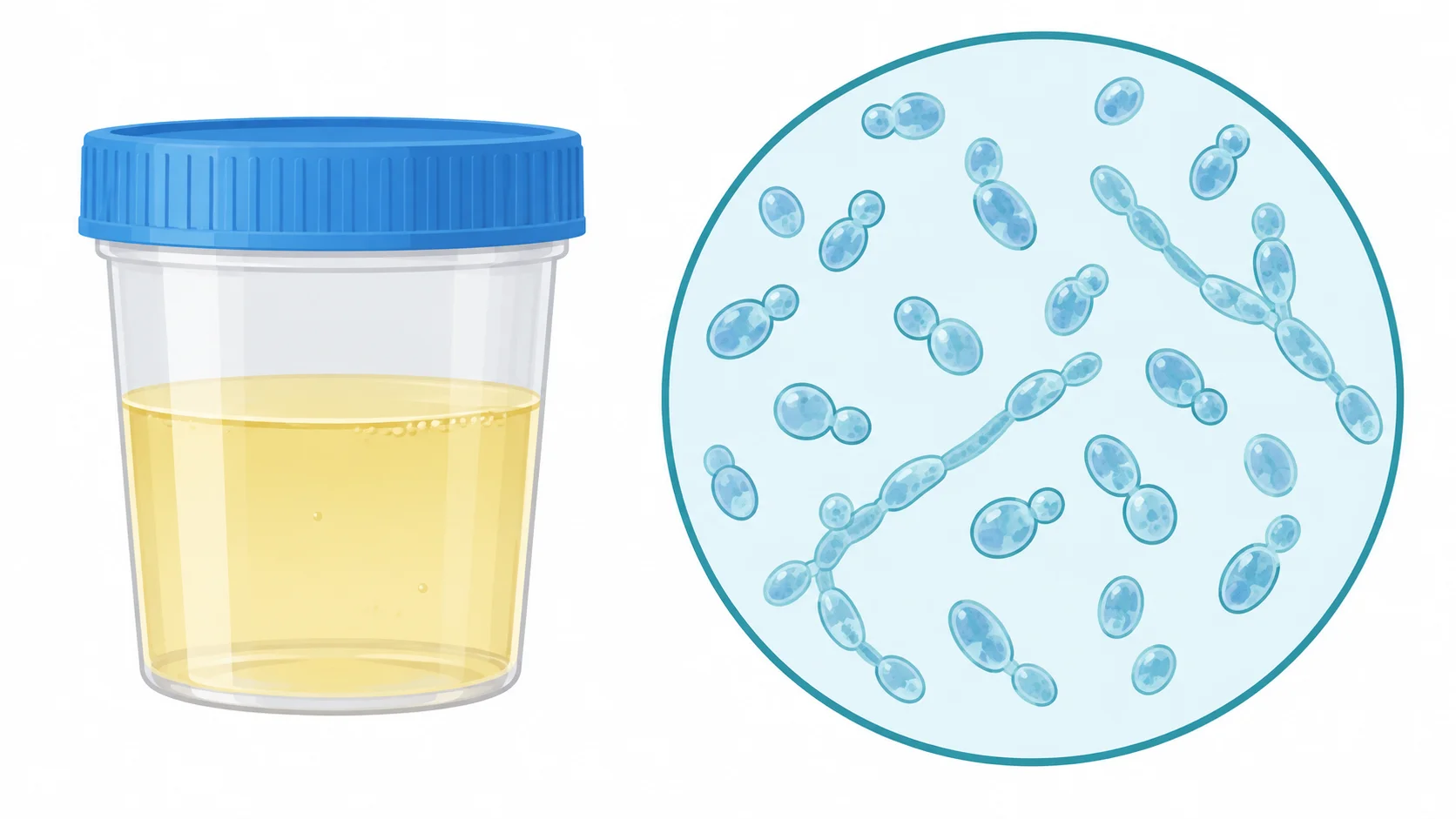
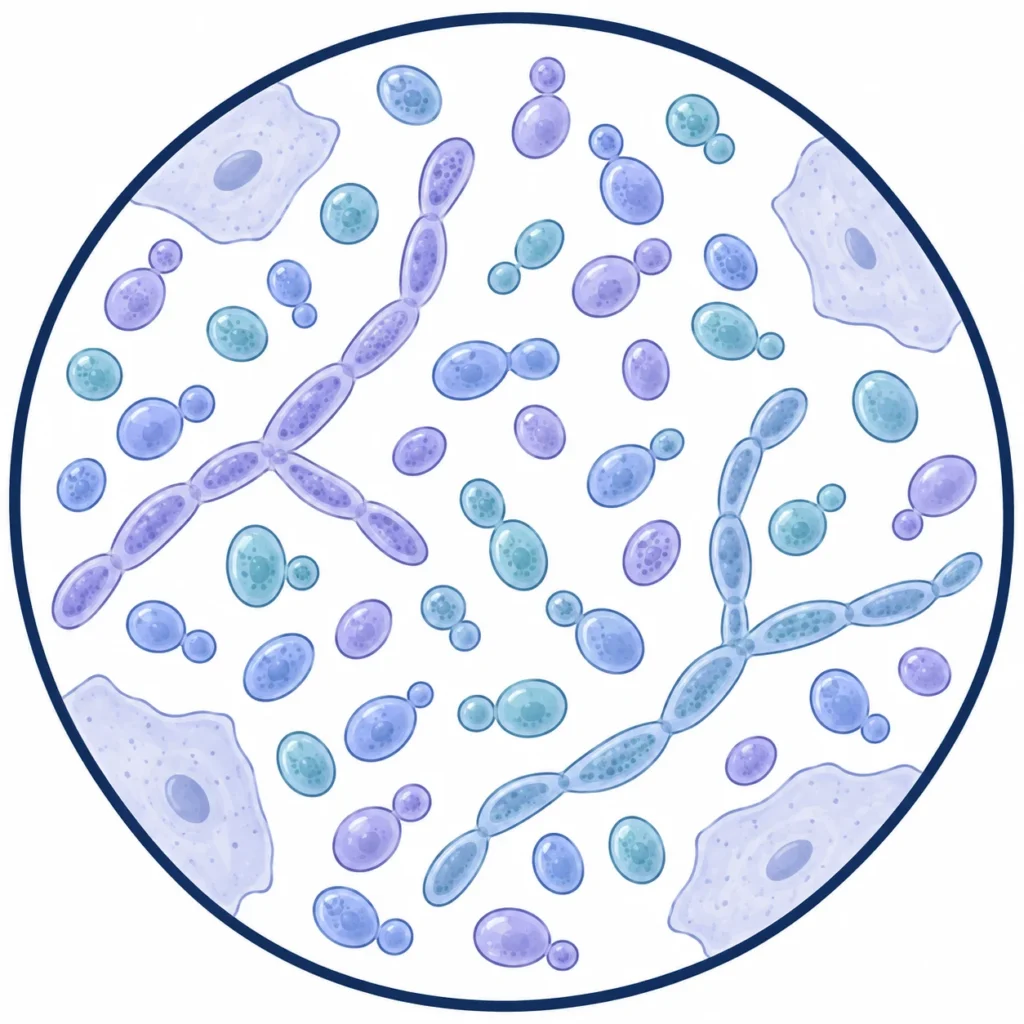
Budding yeast means the lab saw yeast cells with a small bulge growing off one side. That bulge is a daughter cell forming, which is how yeast multiplies. It confirms the cells are yeast and alive, but it doesn’t mean you have an infection.
Under the microscope, single yeast cells are small and oval and can look a lot like red blood cells. The bud is one of the features lab staff use to tell them apart.
What do hyphae or pseudohyphae mean?
Hyphae and pseudohyphae are yeast cells stretched into long, branching chains. Candida switches into this form when it is actively growing, and it is the form that can push into tissue. Finding it suggests the yeast is more than a passing visitor, but it is still not proof of infection on its own.
The reverse is also true. Candida glabrata, the second most common species in urine, never forms hyphae, so a report with only round budding cells doesn’t rule out a yeast that can be hard to clear.
What does yeast in urine look like?
You can’t see yeast in urine with the naked eye. The cells are a few thousandths of a millimeter across, so they show up only under a microscope, as small oval cells, some with buds and some in chains.
Can a yeast infection cause a UTI?
No. A vaginal yeast infection does not turn into a urinary tract infection (UTI). Most UTIs are caused by bacteria, usually E. coli, and a yeast infection is an overgrowth of Candida in the vagina. One organism doesn’t change into the other.
The two get tangled together for four real reasons:
- The UTI medicine causes the yeast infection. Antibiotics clear out the protective bacteria in the vagina and let Candida grow. In a trial published in the BMJ in 2004, 23% of women (55 of 235) developed vaginal yeast symptoms after a short course of antibiotics.
- Yeast makes peeing burn. An inflamed vulva stings when urine runs over it. The CDC calls this “external dysuria,” and it feels a lot like a UTI.
- A contaminated sample looks like a UTI. Vaginal discharge carries yeast and white blood cells into the cup. A report with both can be mistaken for a bladder infection, and the antibiotics that follow can make the yeast worse.
- Fungal UTIs do exist. Candida can infect the bladder or kidneys, but this happens mostly in people with catheters, diabetes, recent hospital stays or weak immune systems, not in healthy women with a vaginal yeast infection.
| Vaginal yeast infection | Bacterial UTI | Fungal UTI | |
|---|---|---|---|
| Cause | Candida in the vagina | Bacteria, most often E. coli | Candida in the bladder or kidney |
| Main symptoms | Itching, thick white discharge, burning on the skin when you pee | Urgency, frequent peeing, burning inside, pelvic pressure, cloudy or bloody urine | Same as a bacterial UTI; may have no symptoms |
| Who gets it | Common in women | Common, more in women | Uncommon; catheters, diabetes, hospital patients |
| Medicine | Vaginal antifungal or oral fluconazole | Antibiotics | Oral fluconazole or other antifungals; antibiotics don’t work |
Can a UTI or its antibiotics cause a yeast infection?
Yes, and this is the most common way the two are linked. It is the antibiotic, not the UTI, that sets off the yeast. If you get yeast infections after most courses of antibiotics, tell the prescriber; some doctors give an antifungal alongside the antibiotic for women with that pattern.
Why does it burn when I pee but there’s no UTI?
Burning without a UTI means something else is irritating the urethra or the skin around it. A vaginal yeast infection is one of the most common reasons, but it isn’t the only one.
| Cause | Clues |
|---|---|
| Vaginal yeast infection | Itching, thick white discharge, burning on the outside |
| Bacterial vaginosis | Thin gray discharge, fishy smell |
| Sexually transmitted infections (chlamydia, gonorrhea, trichomoniasis, herpes) | New partner, discharge, sores; urine may show white cells with no bacteria |
| Irritants | New soap, bubble bath, spermicide, douching, scented pads |
| Vaginal dryness after menopause | Burning, dryness, pain with sex |
| Kidney stone near the bladder | Sharp pain in the side or groin, blood in urine |
| Prostate inflammation (men) | Pain between the scrotum and anus, trouble starting the stream |
| Bladder pain syndrome (interstitial cystitis) | Long-lasting bladder pain and urgency with clean urine cultures |
White blood cells in urine with no bacteria is its own finding with its own list of causes. Our guide to leukocytes in urine covers it.
How do I tell a yeast infection from a UTI?
Itching and thick discharge point to yeast. Urgency, frequent small trips and pressure low in the belly point to a UTI. Burning can happen with both, but yeast burning is on the outside and UTI burning feels deeper inside.
Symptoms overlap enough that only testing settles it. A urine culture shows whether bacteria are growing, and your clinician may examine you as well. Don’t use leftover antibiotics or antifungals to guess, because the wrong medicine can make the other problem worse.
What the rest of your urine test tells you
The yeast line means more when you read it with the lines around it. These combinations come up most often.
- Yeast plus white blood cells (leukocytes). This raises the chance of a real infection, because white cells mean the tissue is reacting. The same pair also shows up when vaginal discharge gets into the cup, so the squamous cell count and your symptoms matter.
- Yeast plus blood. Blood in urine is common with Candida bladder infections, according to Merck. It also appears with menstrual contamination, stones and other causes. Our guide to occult blood in urine explains a blood result you can’t see.
- Yeast plus positive nitrite. Candida doesn’t make nitrite, so a positive nitrite points to bacteria in the sample as well. Our guide to nitrites in urine explains what that line means.
- Yeast plus glucose. Sugar in urine feeds yeast. It is a reason to check your blood sugar if you haven’t been tested for diabetes.
- Yeast plus many squamous epithelial cells. Lots of skin cells mean the sample picked up material from the skin or vagina. The yeast is likely contamination.
- Yeast plus mucus. Mucus often travels with discharge or irritation. Our guide to mucus in urine covers when it matters.
What causes yeast in urine?
Antibiotics, urinary catheters and sugar in the urine cause most cases of yeast in urine. Anything that wipes out competing bacteria, gives yeast a surface to cling to or weakens the body’s defenses makes it more likely.
Antibiotics
Antibiotics kill the bacteria that normally keep Candida in check, on the skin, in the vagina and in the bladder. Broad-spectrum antibiotics and long courses carry the most risk. Yeast in urine often appears during or right after treatment for a bacterial UTI.
Urinary catheters, stents and hospital stays
A catheter gives yeast a surface to grow on and a direct path into the bladder. About a quarter of infections tied to Foley catheters involve Candida, according to a clinical infectious disease textbook. Stents in the ureter and nephrostomy tubes in the kidney carry the same risk.
Hospital patients often have several risk factors at once: a catheter, antibiotics, surgery and time in intensive care. In a study of 861 hospital patients with yeast in their urine (Kauffman, 2000), 39% had diabetes.
Diabetes and sugar in urine
When blood sugar rises above roughly 180 mg/dL, the kidneys can no longer hold it back, and sugar spills into urine. Sugary urine feeds yeast in the bladder and around the genitals. People with uncontrolled diabetes get yeast in urine and vaginal yeast infections more often, and in rare cases a gas-forming bladder infection.
A newer group of diabetes and heart failure drugs, the SGLT2 inhibitors, works by pushing sugar out through the urine on purpose. These include empagliflozin (Jardiance), dapagliflozin (Farxiga) and canagliflozin (Invokana). Genital yeast infections are a listed side effect. If you take one of these drugs and keep seeing yeast on your reports, mention it to your prescriber rather than stopping the drug on your own.
A weakened immune system or steroids
Steroids, chemotherapy, drugs taken after an organ transplant and advanced HIV all lower the body’s defenses against yeast. Merck names kidney transplant recipients as a group at higher risk, because they combine catheters, stents, antibiotics and immune-suppressing drugs.
A blocked or abnormal urinary tract
Anything that slows the flow of urine gives yeast time to settle in. That includes an enlarged prostate, kidney stones, narrowing of the urethra and a bladder that doesn’t empty fully. Merck advises looking at the structure of the urinary tract when yeast in urine has no clear cause.
Yeast in urine in women, men and during pregnancy
Who you are changes how much weight the result carries. The same line on a report can mean contamination in one person and something worth a closer look in another.
Yeast in urine in females
In women, yeast in urine is most often contamination from the vagina. About 75% of women have at least one vaginal yeast infection, according to the CDC, and 40% to 45% have two or more. A urine sample collected during one of those episodes will often pick up yeast.
If you have no bladder symptoms, the usual step is a repeat clean-catch sample, not medicine. If you have vaginal itching or discharge, the vaginal infection is the thing to address.
Yeast in urine in males
In men, a urine sample is less likely to be contaminated by yeast, so the finding deserves a closer look. Doctors will check for:
- Diabetes or high blood sugar
- A yeast infection of the head of the penis (balanitis), more common in uncircumcised men and men with diabetes
- An enlarged prostate or anything else blocking urine flow
- A catheter or recent urinary procedure
- Recent antibiotics or a weakened immune system
Yeast in urine during pregnancy
Pregnancy hormones make vaginal yeast infections more common, so yeast can turn up in prenatal urine tests. Pregnancy is not on the IDSA list of reasons to give antifungals for yeast in urine without symptoms. Your prenatal team will still want to hear about burning, itching, discharge or bladder symptoms.
If a vaginal yeast infection is treated during pregnancy, the CDC recommends a 7-day vaginal azole cream or suppository. It advises against the single 150 mg fluconazole pill, which has been linked to miscarriage and birth defects.
Which type of Candida is it?
The species matters because not every Candida responds to the standard medicine. A urine culture can name the species and, if needed, test which drugs work against it.
| Species | How common | Responds to fluconazole? |
|---|---|---|
| Candida albicans | Most common | Usually yes |
| Candida glabrata | 25% to 35% of urine isolates | Often less sensitive or resistant |
| Candida krusei | Uncommon | Naturally resistant |
| Candida tropicalis, Candida parapsilosis | Less common | Usually yes |
| Candida auris | Rare; hospital and nursing home outbreaks | Often resistant to several drugs |
Candida auris deserves a word of its own. The CDC describes it as a yeast that is often resistant to antifungal medicines and spreads in hospitals and long-term care homes. People can carry it on the skin and other body sites without infection, and the CDC advises treating only clinical infections. If your lab reports C. auris, your care team will follow infection control steps and test which drugs work.
Does yeast in urine need treatment?
Most people with yeast in urine don’t need antifungal medicine. The 2016 guideline from the Infectious Diseases Society of America (IDSA) advises treating yeast in urine without symptoms only in a few high-risk groups, and putting the effort into removing the cause instead.
| Usually no antifungal | Antifungal advised |
|---|---|
| Healthy adults with no bladder or kidney symptoms | Symptoms of a bladder or kidney infection with yeast confirmed |
| Yeast that disappears on a repeat clean sample | Neutropenia (a low count of infection-fighting white cells, such as during chemotherapy) |
| People with a catheter and no symptoms (change or remove the catheter instead) | Premature babies who weighed under 1,500 g (3.3 lb) at birth |
| Older adults in nursing homes with no symptoms | Before a planned procedure on the urinary tract |
| Pregnancy without bladder symptoms | Kidney transplant recipients (Merck; decided case by case) |
| Signs that yeast has spread to the blood |
Treating yeast that isn’t causing harm doesn’t help, and it exposes you to side effects and drug interactions. It also gives the yeast a chance to become resistant. Fisher’s review in 2000 put it plainly: for a stable patient without symptoms, management should focus on removing the predisposing factors.
How is a fungal UTI treated?
Fluconazole is the first choice, because the kidneys concentrate it in urine. The doses below are the ones doctors use, listed here so you know what to expect, not to guide self-treatment.
- Bladder infection (cystitis): fluconazole 200 mg by mouth once a day for 2 weeks.
- Kidney infection (pyelonephritis): fluconazole 200 to 400 mg once a day for 2 weeks.
- Before a urinary procedure: fluconazole 400 mg a day for several days before and after.
- Fluconazole-resistant yeast: amphotericin B, given by vein, sometimes with flucytosine added for kidney infection.
Removing or replacing a catheter, stent or nephrostomy tube matters as much as the medicine. Merck notes that yeast often comes back after treatment, and the risk is higher when a catheter stays in. Rinsing the bladder with amphotericin B clears yeast only for a short time and isn’t used for bladder or kidney infections.
Some antifungals don’t work well here. Echinocandins, such as caspofungin and micafungin, reach low levels in urine, and Merck does not recommend voriconazole for urinary yeast. Fluconazole also interacts with several common drugs, including the blood thinner warfarin, so your doctor needs your full medicine list.
Why vaginal creams don’t clear yeast in the bladder
Vaginal creams and suppositories act on the lining of the vagina and vulva. They don’t reach the bladder or kidneys. They are the right choice for a vaginal yeast infection but not for yeast that is growing in the urinary tract.
Will yeast in urine go away on its own?
Often, yes. When the yeast came from contamination or a short-term trigger, it clears once the trigger is gone: the antibiotic course ends, the catheter comes out or blood sugar comes down. A repeat test confirms it. If it keeps coming back, your doctor will look for a cause that is still there.
What doesn’t work: flushing, diets and natural remedies
Online advice about yeast in urine leans heavily on home fixes. Here is what the evidence says.
- Flushing yeast out with water. Drinking enough fluid keeps urine flowing, which is good for the bladder. No study shows that extra water clears yeast from the urinary tract, and it won’t fix the cause.
- Diets that “starve” yeast. Sugar in your food reaches the urine only when blood sugar runs high enough to spill over, which happens with diabetes or SGLT2 drugs. For people without diabetes, no trial shows that cutting sugar, bread or alcohol clears yeast in urine. Controlling blood sugar does help people who have diabetes.
- Probiotics. The BMJ trial mentioned above tested oral and vaginal lactobacillus in women taking antibiotics. Neither lowered the rate of yeast infections, and there is no evidence for yeast in urine.
- Apple cider vinegar, garlic and boric acid. None has been tested for yeast in urine. Boric acid is used as a vaginal suppository for some stubborn yeast infections, but it is poisonous if swallowed.
When yeast in urine is serious
Yeast in urine turns serious when Candida grows into a mass, reaches the kidneys or gets into the bloodstream. These problems are rare outside hospitals and people with major risk factors.
- Fungus balls. Clumps of yeast can form in the kidney, ureter or bladder and block the flow of urine. Doctors find them with an ultrasound, CT scan or a camera look into the bladder (cystoscopy).
- Kidney infection and abscess. Candida can infect the kidney and, rarely, form pockets of pus in or around it.
- Gas-forming infection. In people with poorly controlled diabetes, Candida can cause emphysematous cystitis, a bladder infection that produces gas. Some people notice bubbles or air when they pee.
- Bloodstream infection (candidemia). In seriously ill hospital patients, yeast in urine can be the first sign that Candida is in the blood. Dias (2020) reports that 46% to 68% of people with candidemia also have yeast in their urine, and the kidney is involved in about 80% of cases. Most people with yeast in urine never develop a bloodstream infection.
What happens next: tests your doctor may order
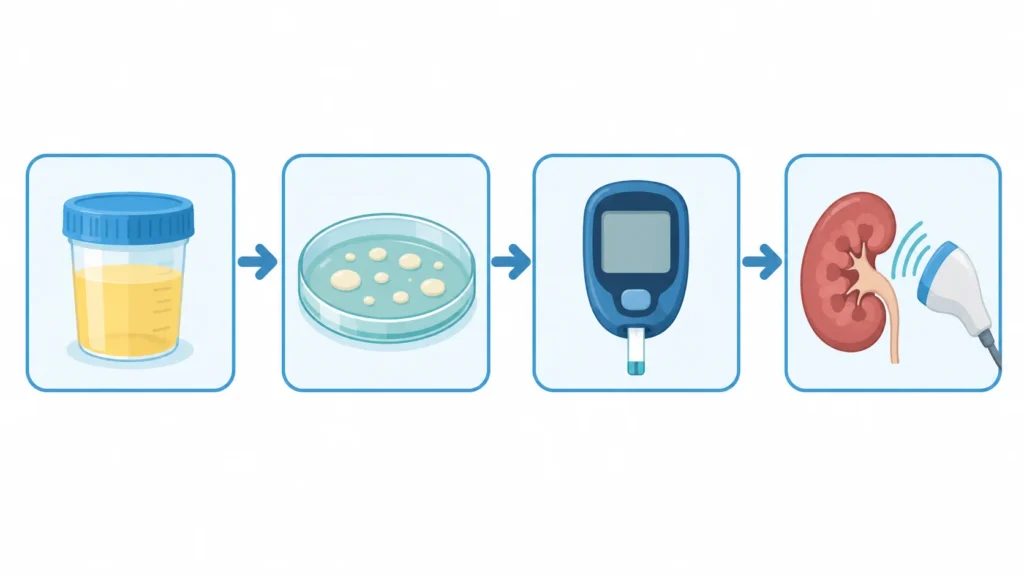
The next step depends on whether you have symptoms and risk factors. For most people it is a single repeat test.
- A repeat clean-catch sample. Wash your hands, clean the genital area front to back, spread the labia or pull back the foreskin, let the first part of the stream go into the toilet and catch the middle part in the cup.
- A fresh sample from a new catheter, if you have a long-term catheter.
- A urine culture that names the species and, when needed, tests which antifungals work.
- A blood sugar test or A1C to check for diabetes or poor control.
- Kidney function tests, such as creatinine.
- An ultrasound or CT scan of the kidneys and bladder if the yeast keeps returning, has no clear cause, shows up in a man, or comes with fever or back pain.
- Blood tests for yeast in the bloodstream if you are seriously ill or in a hospital.
When should you see a doctor?
See your doctor if yeast showed up and you have bladder symptoms, diabetes, a catheter, a weakened immune system, or if you are a man. You should also go if yeast keeps showing up on repeat tests.
Get care the same day for fever of 100.4°F (38°C) or higher, chills, pain in your back or side, nausea or vomiting, visible blood in your urine, fever while you have a catheter, or any urinary symptoms during pregnancy.
Call 911 or go to the nearest emergency room if you feel confused, have a racing heartbeat or trouble breathing, or can’t pass urine at all.
Frequently asked questions
Can a urine test detect a vaginal yeast infection?
Not reliably. Yeast in urine can come from many places, and many women who have one show no yeast in urine at all. Clinicians diagnose it with a vaginal swab checked under a microscope, plus vaginal pH.
What color is pee when you have a yeast infection?
Yeast doesn’t change the color of urine. Your pee should look normal. Cloudy, dark, pink or red urine points to something else, such as a bacterial infection, blood or dehydration, and is worth testing.
Can you have yeast and a bacterial UTI together?
Yes, but it’s uncommon. One review found yeast and bacteria together in about 4% of community urine samples and 8% of hospital samples. Each needs its own medicine, since antibiotics don’t kill yeast.
Is yeast in urine contagious or sexually transmitted?
Usually not. The CDC says vaginal yeast infections are not usually passed through sex, and partners don’t need routine treatment. A male partner with redness or itching on the penis should still get checked.
Can a yeast infection make you pee more often?
A vaginal yeast infection doesn’t usually change how often you pee. Frequent urination points more to a bladder infection, high blood sugar or an irritated bladder, so a urine test is the right next step.
Does cranberry juice help with yeast in urine?
There’s no evidence that it does. Cranberry research looks at preventing repeat bacterial UTIs in women. It hasn’t been tested against Candida, and sweetened cranberry juice adds sugar.
What autoimmune disease causes Candida?
No common autoimmune disease causes it directly. A rare inherited condition called APECED leads to repeated Candida infections, and type 1 diabetes raises risk through high blood sugar. Drugs that suppress the immune system also raise risk.
How long does yeast stay in urine after antibiotics?
There’s no fixed timeline. In many people it clears once the antibiotics are finished and the vaginal flora recovers. If symptoms persist or a repeat test still shows yeast, ask your doctor about other causes.
Sources
- Merck Manual Professional Version. Fungal Urinary Tract Infections
- Pappas PG, et al. Clinical Practice Guideline for the Management of Candidiasis: 2016 Update by the Infectious Diseases Society of America. Clinical Infectious Diseases, 2016;62(4):e1-e50
- Dias V. Candida Species in the Urinary Tract: Is it a Fungal Infection or Not? Future Microbiology, 2020
- Fisher JF. Candiduria: When and How to Treat It. Current Infectious Disease Reports, 2000
- Kauffman CA, et al. Prospective Multicenter Surveillance Study of Funguria in Hospitalized Patients. Clinical Infectious Diseases, 2000;30:14-18
- Centers for Disease Control and Prevention. Vulvovaginal Candidiasis, STI Treatment Guidelines, 2021
- Centers for Disease Control and Prevention. Clinical Overview of Candida auris
- Pirotta M, et al. Effect of lactobacillus in preventing post-antibiotic vulvovaginal candidiasis: a randomised controlled trial. BMJ, 2004;329:548
- NHS Highland. Candida species in Urine (Antimicrobial guidance)
- Clinical Infectious Disease (Cambridge University Press). Candiduria
- Jardiance (empagliflozin) prescribing information, DailyMed, U.S. National Library of Medicine
Disclaimer
This blog is for informational and educational purposes only, and does not intend to substitute any professional medical advice or consultation. For any health related concerns, please consult with your physician, or call 911.