Can a UTI Affect Your Period? Delays, Timing and What’s Really Going On
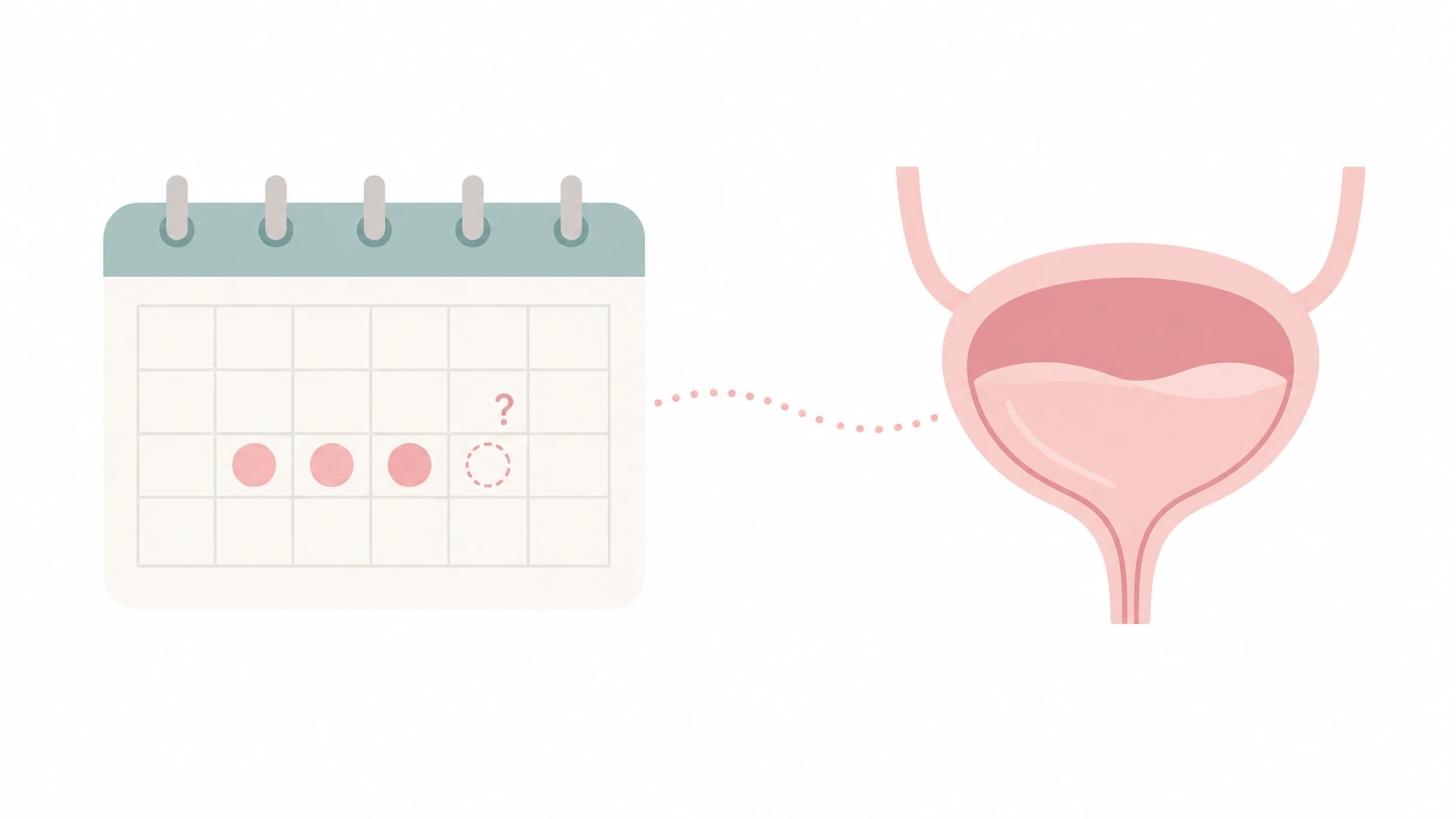
A urinary tract infection (UTI) doesn’t directly affect your period. It’s an infection of the bladder or urethra, and it doesn’t reach the ovaries or uterus that control your cycle. But being sick, in pain and stressed can delay ovulation, and a later ovulation means a later period, usually by a few days. If your period is late and you’ve had sex, take a pregnancy test before blaming the UTI.
If your period is late right now:
- Take a home pregnancy test if there’s any chance you could be pregnant. Pregnancy can also cause frequent peeing that feels like a UTI.
- Get the UTI treated. Don’t wait for your period to come or to end. Antibiotics for a UTI won’t delay it.
- Give it time. A period that’s a few days late after an illness usually turns up. If it’s more than a week late, test again; if no period comes for three months, see a doctor.
For everything about the infection itself, see our guide to UTI symptoms, causes and treatment.
Can a UTI delay your period?
Not on its own. The bacteria behind most UTIs stay in the urinary tract, and they don’t change the hormones that run your cycle. What can change the timing is the strain of being ill.
How being sick can push a period back
Your period arrives about two weeks after you ovulate. That second half of the cycle stays fairly steady, so when a period is late, it’s usually because ovulation came late.
Ovulation is controlled by the hypothalamus, a part of the brain that also reacts to stress. Mayo Clinic notes that mental stress can, for a limited time, change how the hypothalamus works, and periods come back as the stress eases. A painful infection, poor sleep, fever or worry can act the same way. This means:
- A UTI in the first half of your cycle, before you ovulate, is the kind that could push your period back a few days.
- A UTI after you’ve ovulated is unlikely to change when your period starts, since the countdown has already begun.
- A mild bladder infection that clears in a couple of days is less likely to matter than a kidney infection with fever, vomiting and days in bed.
How late is “late”?
Cycles aren’t clockwork. The Office on Women’s Health (OWH) says a normal cycle lasts anywhere from 24 to 38 days, and the length can change from month to month. A period that arrives three or four days later than you expected may be within your normal range, with or without a UTI.
Cycles are often longer and less regular in the first few years after periods start and in the years before menopause.
Can a UTI stop your period or make you miss one?
A UTI won’t stop a period that has already started, and it won’t make you skip a whole month. A missed period points to something else, most often pregnancy. The OWH advises seeing a doctor if you haven’t had a period for 90 days and you’re not pregnant or breastfeeding, and Mayo Clinic gives the same advice after three missed periods in a row.
Can UTI antibiotics delay your period?
No. The antibiotics used for UTIs, such as nitrofurantoin, trimethoprim-sulfamethoxazole, fosfomycin and cephalexin, kill bacteria. They don’t act on the hormones that control ovulation or bleeding, and they’re not a known cause of a late period.
The one antibiotic often mentioned in this context is rifampin. It speeds up how the liver breaks down hormones, but it’s used mainly for tuberculosis and almost never for a UTI.
Antibiotics can set off a vaginal yeast infection, which brings itching and discharge but doesn’t change your cycle. See UTI vs yeast infection if that happens.
Do antibiotics affect birth control?
The usual UTI antibiotics don’t weaken birth control pills, patches or rings. In the CDC’s guidance on medicines and contraception, broad-spectrum antibiotics and the antifungals fluconazole and miconazole carry no restriction, and no backup method is needed. The exceptions are rifampin and rifabutin, which lower hormone levels enough that the CDC advises against relying on the pill, patch or ring while taking them.
Being sick can still affect the pill in another way. Severe vomiting or diarrhea, which can happen with a kidney infection, may keep a pill from being absorbed. Check your pill pack leaflet or ask a pharmacist whether you need backup protection.
Spotting on the pill, which is common in the first few months or after a missed pill, isn’t caused by the UTI either.
Late period and UTI symptoms: could you be pregnant?
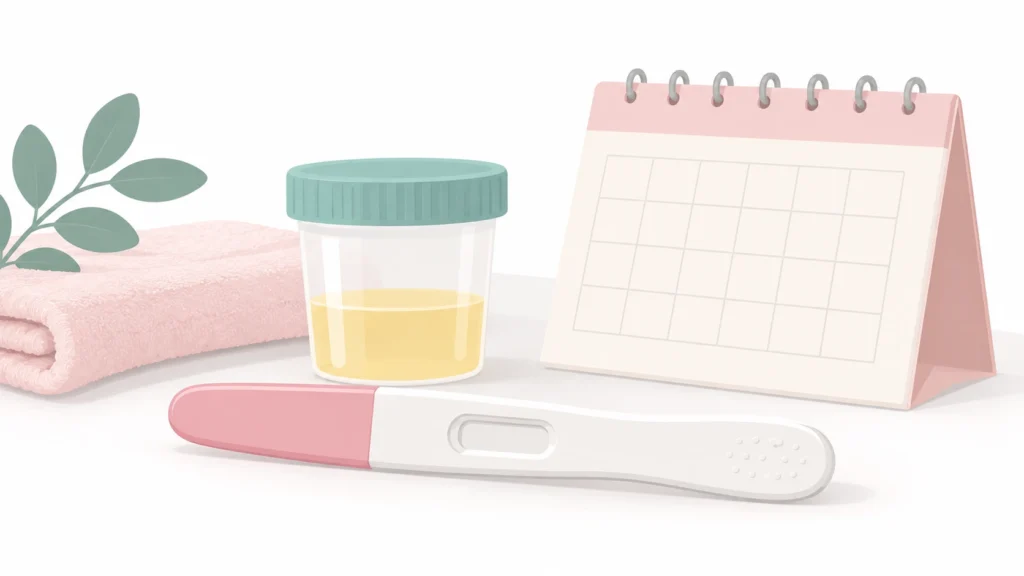
Pregnancy is the most common reason for a missed period, and early pregnancy can feel a lot like a UTI. Pregnancy makes you pee more often, and it also makes UTIs more common. You can have both.
UTI or early pregnancy?
| UTI | Early pregnancy | |
|---|---|---|
| Peeing often | Yes, with urgency and small amounts | Yes, but no burning |
| Burning when you pee | Common | Not a pregnancy symptom |
| Cloudy, strong-smelling or pink urine | Possible | No |
| Pressure low in the belly | Over the bladder | Mild cramping is possible |
| Missed period | Not caused by the UTI | Often the first sign |
| Sore breasts, nausea, tiredness | Tiredness only | Common |
| Fever, back or side pain | Kidney infection warning sign | Not normal; call your provider |
When to take a pregnancy test
The OWH says home pregnancy tests are most accurate from the first day of a missed period. The test looks for hCG, a hormone made after a fertilized egg implants in the uterus, usually about 10 days after conception. Levels roughly double every two days, so a test taken too early can be negative even if you’re pregnant.
Negative pregnancy test and a late period
If the test is negative and your period still hasn’t come, the OWH suggests testing again in a few days. If your cycles are irregular, wait until 36 days after your last period started, or four weeks after sex, before testing. If tests stay negative and you still think you might be pregnant, a doctor can order a blood test.
Tell the person treating your UTI if you could be pregnant. Some antibiotics are avoided in pregnancy, and a UTI in pregnancy needs prompt treatment because it’s more likely to reach the kidneys.
Other reasons your period is late
If you’re not pregnant, a UTI is still rarely the reason. These are far more common:
| Cause | What else you might notice |
|---|---|
| Stress, illness, travel, poor sleep | A few days late, then back to normal |
| Big weight loss or gain, eating too little | Periods lighter, farther apart or gone |
| Heavy exercise | Periods stop or come less often |
| Polycystic ovary syndrome (PCOS) | Irregular periods, acne, extra hair growth |
| Thyroid disease | Tiredness, weight change, feeling hot or cold |
| Perimenopause | 40s; irregular cycles, hot flashes |
| Breastfeeding | Periods delayed after birth |
| Starting, stopping or changing hormonal birth control | Spotting or skipped bleeds |
| Some medicines | Certain antipsychotics, chemotherapy, blood pressure drugs and opioids, per Mayo Clinic |
| Uncontrolled diabetes | Thirst, peeing often, tiredness |
Can your period cause a UTI?
Your period doesn’t cause a UTI. A UTI starts when bacteria, usually from the bowel, get into the urethra. But many women notice that their UTIs cluster around their periods, and there are reasons that could happen.
What the research says
The evidence is thin. A 2013 systematic review in PLoS One looked at the health effects of how people manage their periods and found little good-quality research on menstruation and UTIs. A small 2020 study in mBio followed 8 women with daily urine samples for about three months and found that the bacteria living in the urinary tract shifted more during menstruation and after vaginal sex.
That fits what many women report, but it’s not proof that periods raise UTI risk. If you see a pattern, it’s real for you, and it’s worth telling your doctor.
Why some women get UTIs before or after their period
The most likely reasons:
- Hormone changes. Estrogen helps keep protective lactobacilli in the vagina. Estrogen is low around your period, and the CDC lists changes to the vaginal bacteria as a UTI risk factor.
- Blood changes the vaginal pH. Blood is less acidic than the vagina, which may let other bacteria grow for a few days.
- Products. Pads and tampons left in too long hold warmth and moisture.
- Sex. Some couples have more sex around a period, and sex is one of the strongest UTI triggers.
- Drinking less. Some people cut back on fluids to avoid bathroom trips while bleeding.
A UTI that shows up right after a period may also have been brewing before it and simply been hidden by cramps.
Can sex on your period cause a UTI?
Sex at any time of the month can push bacteria toward the urethra, and the CDC lists recent sex as a UTI risk factor. There’s no good evidence that sex during a period is riskier than at other times. Peeing after sex and washing the area with water are reasonable steps. A UTI isn’t a sexually transmitted infection, so a partner can’t catch it from you.
UTI or period cramps? How to tell
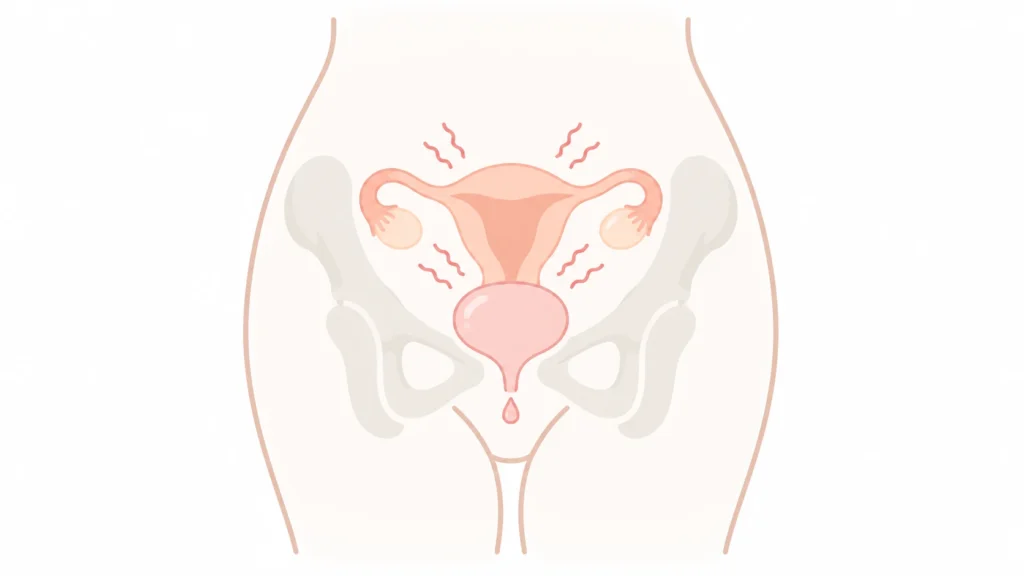
The bladder sits right in front of the uterus, so pain from either one can feel similar. These clues help:
| UTI | Period | |
|---|---|---|
| Burning when you pee | Yes | No |
| Urgency, peeing often, small amounts | Yes | Mild at most |
| Where it hurts | Pressure right above the pubic bone | Cramping across the lower belly, often the lower back or thighs |
| Timing | Starts suddenly, any time of the month | Follows your cycle |
| Urine | Cloudy, strong-smelling, sometimes pink | Normal, though blood can mix in |
| Fever or back pain | Warning sign of a kidney infection | Not part of a normal period |
Why it can feel like a UTI on your period
Bloating, pelvic heaviness and cramps put pressure on the bladder, so you may feel you need to pee more often during your period. Pads and wet skin can make the area sore, and urine may sting raw skin. Neither is a UTI. If you have true burning inside, urgency or a fever, get a urine test. Other things that can feel like a UTI include vaginal infections, STIs and irritating products; our guide to why it burns when you pee covers them.
Can a UTI cause bleeding like a period?
A UTI can cause blood in the urine, which can look pink or red in the toilet or on the toilet paper and be mistaken for spotting or an early period. That blood comes from the inflamed bladder or urethra, not the uterus. Our guide to whether a UTI can cause bleeding like a period explains how to tell where the blood is coming from, including the tampon test.
Having a UTI during your period
Getting tested while you’re bleeding
You don’t need to wait for your period to end. Tell the clinic you’re on your period when you give a sample. Menstrual blood can make the urine test positive for blood, and it can add white blood cells, which may look like an infection on a home test strip. Cleveland Clinic Laboratories tells women who are menstruating to put in a fresh tampon before collecting a clean-catch sample. Our guides to leukocytes in urine and occult blood in urine explain what those results mean.
Treatment doesn’t change
A UTI is treated the same way whether or not you’re on your period. Burning usually eases within one to three days of starting antibiotics. Phenazopyridine (AZO) can ease burning for up to 2 days, but it turns urine orange, which makes it harder to judge whether you’re seeing blood.
Will your period flush out a UTI?
No. Period blood leaves through the vagina, and a UTI is inside the bladder. Bleeding doesn’t wash bacteria out of the urinary tract.
Tampons, pads and cups with a UTI
Can tampons cause a UTI?
There’s no good evidence that tampons cause UTIs. A tampon sits in the vagina, not the urethra. What matters is how you use it: a tampon or pad left in place too long keeps the area warm and damp. Change tampons regularly and use the lowest absorbency you need, which also lowers the risk of toxic shock syndrome. Change pads and period underwear when they’re full or damp.
Can you use a tampon when you have a UTI?
Yes. A tampon won’t make the infection worse. Some women find that a tampon or cup adds pressure or discomfort when the bladder is already sore. If that’s you, switch to pads or period underwear until the burning settles.
How to lower your UTI risk around your period
- Change tampons, pads and cups on schedule, and choose unscented products.
- Keep drinking water during your period. In a trial of women who drank little and got repeat UTIs, adding 1.5 liters a day cut infections roughly in half.
- Pee when you feel the urge and after sex.
- Wipe front to back, and rinse the vulva with plain water.
- Skip douches, sprays and scented wipes.
- If you get UTIs every month around your period, tell your doctor. Prevention options for recurrent UTIs, from cranberry to a dose of antibiotic after sex, are covered in our UTI guide.
When to see a doctor
For the UTI, get care the same day if you have:
- Fever, chills, back or side pain, nausea or vomiting, which can mean a kidney infection
- Symptoms that aren’t better after 2 days of antibiotics, or that get worse
- Burning or urgency while pregnant
For your period, see a doctor if:
- You haven’t had a period for 90 days and aren’t pregnant or breastfeeding
- Your cycles are shorter than 24 days or longer than 38 days
- Bleeding is heavy enough to soak a pad or tampon every hour
- You have a positive pregnancy test with pain or bleeding, which needs urgent care
- You bleed between periods, after sex or after menopause
The bottom line
A UTI doesn’t directly affect your period, and UTI antibiotics don’t delay it or weaken your birth control. Being sick and stressed can push ovulation back, so a period may come a few days late. A late period with UTI symptoms is a reason to take a pregnancy test, not to wait. UTIs that keep showing up around your period are worth raising with your doctor, and the infection should be treated whenever it starts, period or not.
Frequently asked questions
Can a UTI make your period heavier or more painful?
There’s no evidence a UTI changes your flow. An inflamed bladder adds its own pressure and ache low in the belly, so cramps can feel worse while both happen together.
Can a UTI stop you from getting pregnant?
No. A bladder infection doesn’t affect the ovaries, tubes or uterus. Untreated STIs such as chlamydia can harm fertility, which is one reason to test for them when symptoms aren’t clearly a UTI.
Does urine look different in early pregnancy?
No. Pregnancy doesn’t change the color, smell or clarity of urine in a way you can see. Only a pregnancy test, which detects the hormone hCG, can tell you.
What causes most UTIs?
E. coli, a bacterium that lives in the bowel, causes the large majority of bladder infections. It reaches the urethra from the skin around the anus, which is why wiping front to back helps.
Can I clear a UTI by drinking lots of water?
Some mild UTIs do clear on their own, but water alone isn’t reliable. Drinking more helps you pee often while antibiotics work. See a provider if symptoms last more than a day or two.
What should you not do when you have a UTI?
Don’t hold your urine, take leftover antibiotics, use AZO for more than two days, or douche. Skip alcohol and coffee if they make burning worse, and avoid sex until symptoms clear.
Can a man get a UTI from sex with a woman on her period?
No. A UTI isn’t passed between partners, and period blood doesn’t cause infections in men. STIs can spread through any sex, though, so condoms still matter with new partners.
Can period underwear cause a UTI?
There’s no evidence it does. Like pads, period underwear should be changed when it feels full or damp, and washed as the label directs, to keep the skin dry and comfortable.
Sources
- Office on Women’s Health. Your menstrual cycle
- Office on Women’s Health. Pregnancy tests
- Mayo Clinic. Amenorrhea: Symptoms and causes
- Eunice Kennedy Shriver National Institute of Child Health and Human Development. What causes menstrual irregularities?
- UNC Student Wellness. Will this antibiotic interfere with my birth control? (citing CDC US Medical Eligibility Criteria for Contraceptive Use)
- Centers for Disease Control and Prevention. Urinary Tract Infection Basics
- Sumpter C, Torondel B. A systematic review of the health and social effects of menstrual hygiene management. PLoS One, 2013
- Price TK, et al. Daily study of the adult female lower urinary tract microbiota. mBio, 2020
- Cleveland Clinic Laboratories. Clean Catch Urine Instructions
- InformedHealth.org (IQWiG). How effective are antibiotics in treating acute cystitis?
- Hooton TM, et al. Effect of increased daily water intake in premenopausal women with recurrent urinary tract infections: a randomized clinical trial. JAMA Internal Medicine, 2018
- Gupta K, et al. International clinical practice guidelines for the treatment of acute uncomplicated cystitis and pyelonephritis in women. Clinical Infectious Diseases, 2011 (IDSA)
Disclaimer
This blog is for informational and educational purposes only, and does not intend to substitute any professional medical advice or consultation. For any health related concerns, please consult with your physician, or call 911.