Nitrites in Urine: What a Positive or Negative Result Means
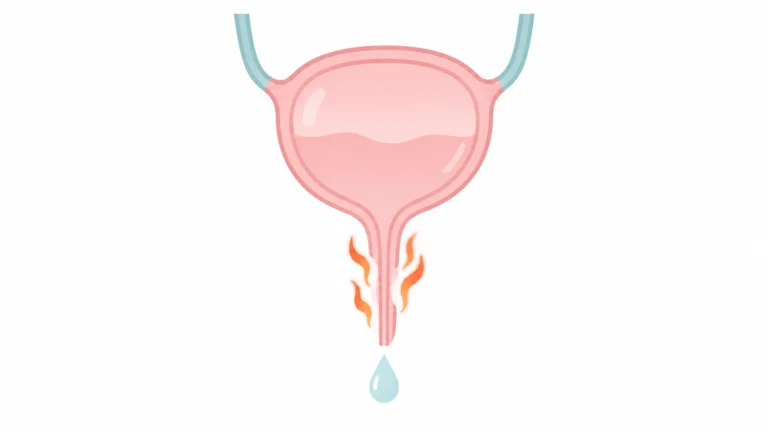
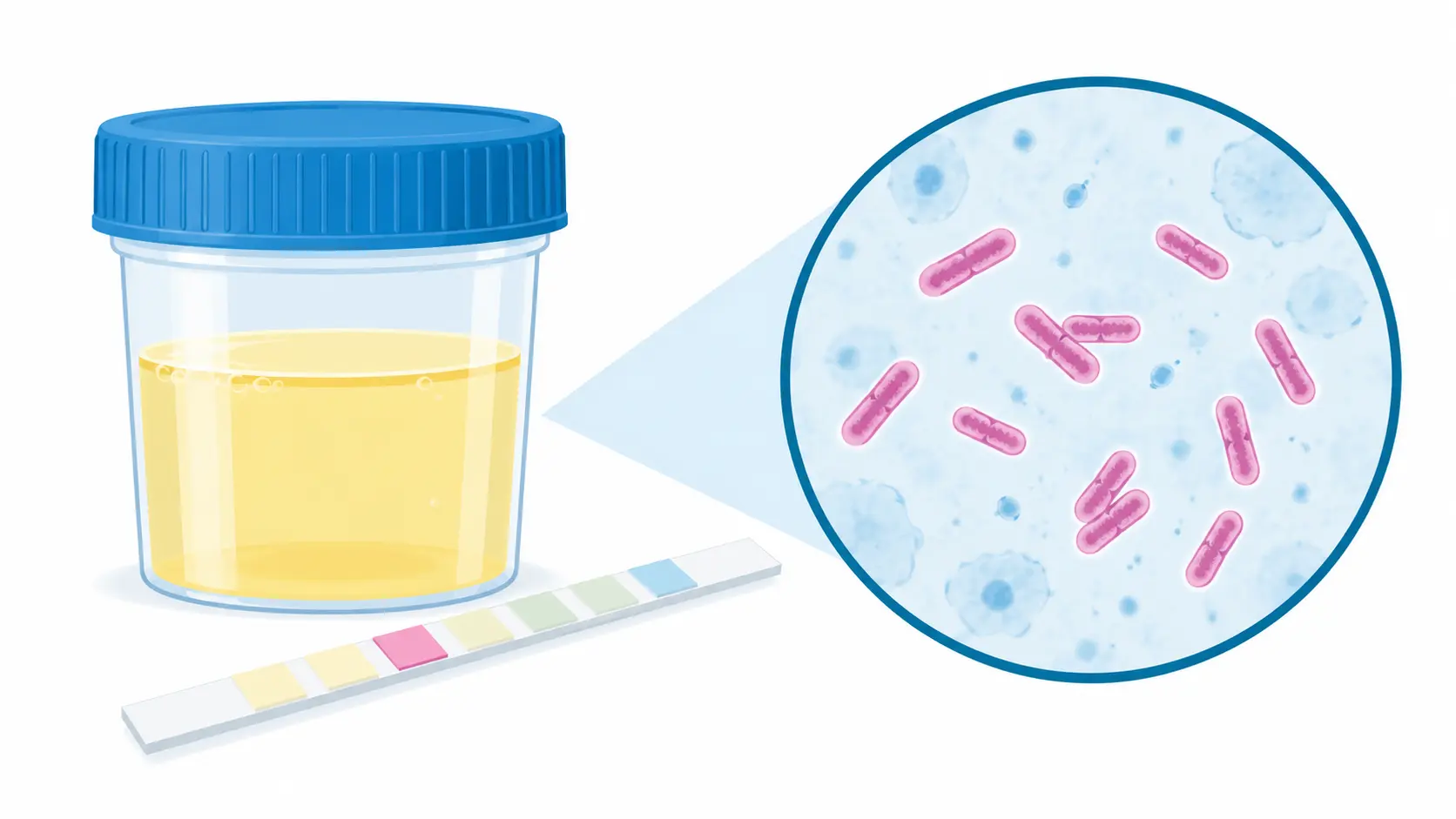
Nitrites in urine mean bacteria that can turn nitrate into nitrite are present, most often from a urinary tract infection (UTI). A positive result is usually right, but it doesn’t confirm an infection on its own. A negative result misses about half of UTIs, so symptoms and other test results matter just as much.
Maybe a home UTI strip turned pink, or your urinalysis came back “Nitrite: Positive.” Or the opposite: you have every UTI symptom and the nitrite pad stayed blank. Below is what each result means, how sure the test is and what usually happens next.
For the rest of your report, our guide to urinalysis results explained walks through every line.
What do nitrites in urine mean?
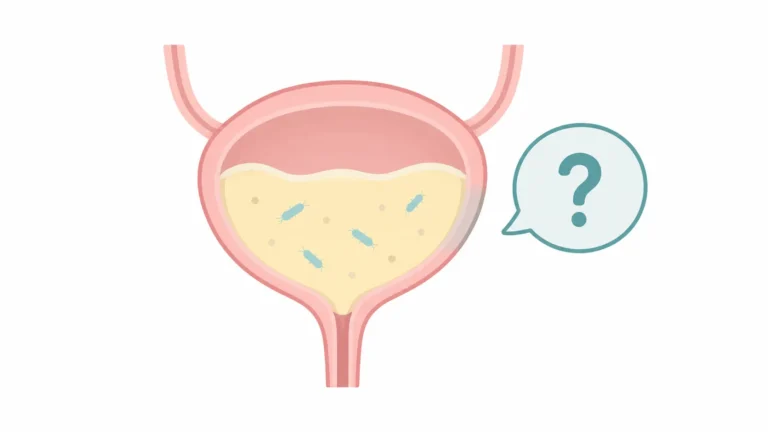
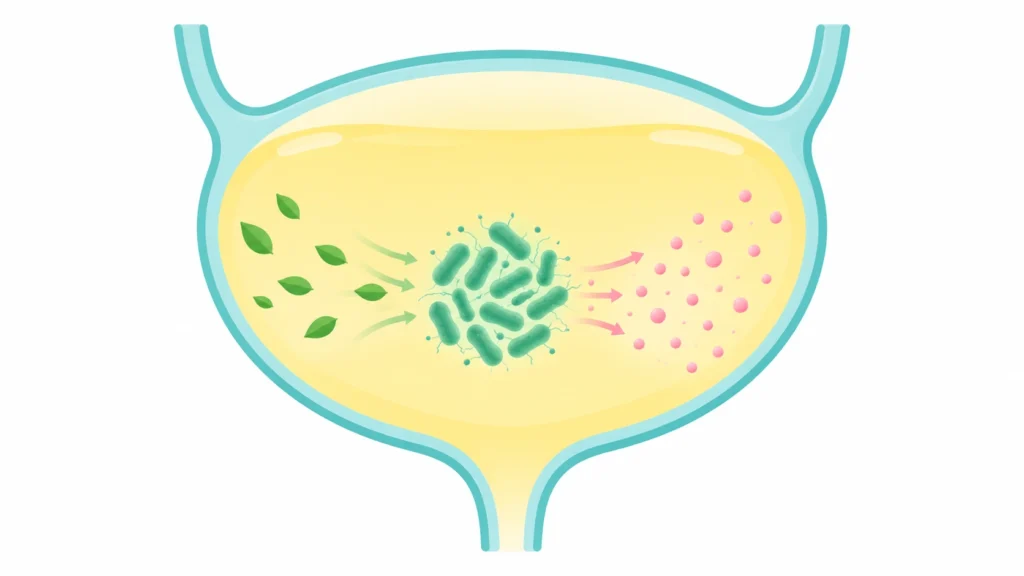
Nitrites in urine mean bacteria in your urinary tract are changing a normal substance in urine, nitrate, into nitrite. Healthy urine has nitrate but no nitrite. Doctors call a positive result nitrituria.
The nitrite itself is harmless. It’s a marker: it shows that bacteria with a particular enzyme, nitrate reductase, have been sitting in the bladder long enough to do their work. Most of the bacteria that cause bladder infections, led by E. coli, have this enzyme.
Nitrates vs nitrites: what’s the difference?
Nitrate and nitrite are both small compounds of nitrogen and oxygen. Nitrate has three oxygen atoms and nitrite has two. Your body gets nitrate from food and water, and your kidneys pass the extra into urine every day.
So “nitrates in urine” is normal and expected. It’s the nitrite that the test looks for. When a report or a home strip says “nitrite positive,” it isn’t measuring the nitrate from your salad; it’s showing that bacteria converted some of it.
Do foods with nitrates cause nitrites in urine?
No. Leafy greens, beets, celery and cured meats are rich in nitrate or nitrite, but eating them doesn’t turn a urine nitrite test positive. The urine test only turns positive when bacteria in the bladder make nitrite from the nitrate already there. A diet low in vegetables can do the opposite: with little nitrate in urine, even infecting bacteria may not make enough nitrite to show up.
How the nitrite test works
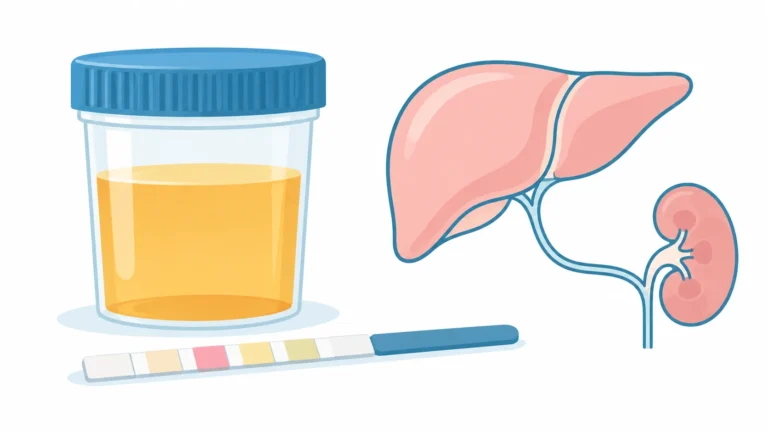
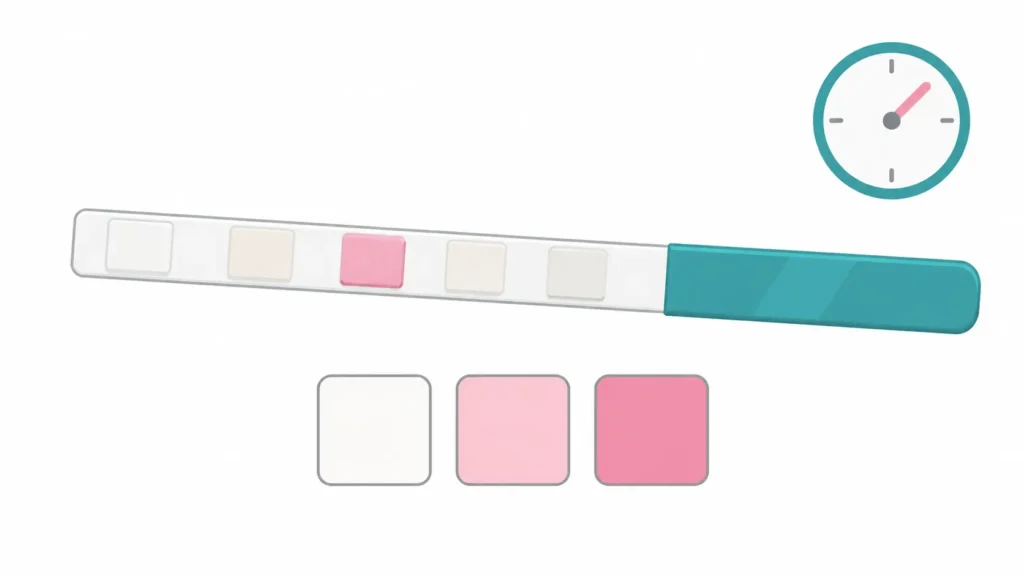
The nitrite pad on a urine dipstick contains chemicals that react with nitrite and turn pink. Any pink at all counts as positive. Unlike some other pads, the shade of pink doesn’t tell you how bad an infection is.
Why first-morning urine matters
Bacteria need about 4 hours in the bladder to turn enough nitrate into nitrite for the test to pick up, according to a 2022 review in American Family Physician (AAFP). That’s why first-morning urine, which has sat in the bladder overnight, gives the most reliable result.
This creates a catch. A UTI makes you pee often, so the urine may not stay in the bladder long enough. Someone with a raging infection can get a negative nitrite simply because they emptied their bladder 40 minutes ago. Babies and toddlers, who pee every hour or two, have the same problem.
How accurate is a nitrite test?
A nitrite test is good at ruling a UTI in and poor at ruling it out. A 2004 meta-analysis of 46 studies in BMC Urology found that the nitrite pad caught about half of urine infections in the general population (sensitivity 50%), but when it was positive, it was usually right (specificity 82%, and 92% to 98% in several groups).
| Group | How often a UTI shows a positive nitrite | How often a negative nitrite is correct when there’s no UTI |
|---|---|---|
| General population | 50% | 82% |
| Children | 50% | 92% |
| Pregnant women | 46% | 98% |
| Older adults | 71% | 96% |
In the AAFP review, a positive nitrite was the strongest single dipstick sign of a UTI. Reading it together with leukocyte esterase, the white blood cell pad, catches more infections: in the same meta-analysis, a positive result on either pad picked up 68% to 88% of UTIs.
Home UTI test strips
Home UTI strips, such as AZO test strips, use the same two pads as a clinic dipstick: nitrite and leukocytes. MedlinePlus notes that they’re quick and easy but can say you don’t have a UTI when you do.
To get the most out of a home strip:
- Test first-morning urine, or urine that has been in your bladder at least 4 hours
- Read it at the exact time printed on the box
- Test before taking any phenazopyridine (AZO Urinary Pain Relief), because its orange dye colors the pads
- Use strips from a sealed container that isn’t expired
A positive home strip with symptoms is a good reason to contact a clinician. A negative strip with symptoms doesn’t clear you. Our guide to at-home UTI tests explains how to read every result.
Who is more likely to have nitrites in urine?
Anyone can get a nitrite-positive UTI, but some people get them far more often. Women get UTIs up to 30 times more often than men, according to Cleveland Clinic, because the urethra is shorter and opens closer to the anus, where E. coli lives.
The risk also goes up with:
- Sex, which can push bacteria toward the urethra
- Spermicides and diaphragms
- Menopause, as lower estrogen changes the bacteria around the urethra
- Pregnancy
- Diabetes
- A urinary catheter
- Kidney stones, an enlarged prostate or anything else that keeps the bladder from emptying fully
What does a positive nitrite test mean?
A positive nitrite test means nitrite-making bacteria are in your urine. If you have UTI symptoms such as burning, urgency or frequent peeing, a positive result makes a UTI likely. It doesn’t tell you how severe the infection is or which antibiotic will work.
Can you have positive nitrites but no UTI?
Yes. A positive nitrite shows bacteria, not illness. Three situations give a positive result without an active infection that needs treatment:
- Asymptomatic bacteriuria. Some people carry bacteria in their bladder without any symptoms, most often older adults and people with catheters. The AAFP review advises screening and treating this only in pregnancy and before procedures that go inside the urinary tract. In everyone else, antibiotics don’t help and can cause harm.
- A contaminated or old sample. Bacteria from the skin can get into the cup. If the sample then sits at room temperature, they keep making nitrite. Our guide to mixed urogenital flora explains contamination on a urine culture.
- A false positive. Phenazopyridine and strips left open to the air can turn the pad pink without any bacteria.
What does a negative nitrite test mean?
A negative nitrite test means the pad didn’t find nitrite. If you have no symptoms, that’s reassuring. If you do have symptoms, a negative result doesn’t rule out a UTI, because the test misses about half of them.
Which bacteria don’t make nitrite?
Some common UTI bacteria lack the enzyme that turns nitrate into nitrite, or make too little of it to detect. These include:
- Enterococcus
- Staphylococcus saprophyticus, a common cause of UTIs in young women
- Pseudomonas aeruginosa
- Acinetobacter
- Yeast, which can show up in urine but never makes nitrite
The bacteria that do make nitrite include E. coli, Klebsiella and Proteus. If your urine has yeast instead of bacteria, our guide to yeast in urine explains that result.
Leukocytes and nitrites together: what each pattern means
Doctors almost never read the nitrite pad alone. They read it with leukocyte esterase, which shows white blood cells, and with your symptoms. Here are the four combinations.
| Leukocytes | Nitrite | What it usually means | Common next step |
|---|---|---|---|
| Positive | Positive | A UTI is likely | Treatment if you have symptoms; urine culture in some cases |
| Positive | Negative | A UTI with bacteria that don’t make nitrite, a short bladder time, or inflammation from another cause | Symptoms decide; a urine culture helps |
| Negative | Positive | Early infection, bacteria without symptoms, an old or contaminated sample, or a strip error | Repeat test or urine culture if you have symptoms |
| Negative | Negative | A UTI is unlikely | A urine culture if symptoms continue |
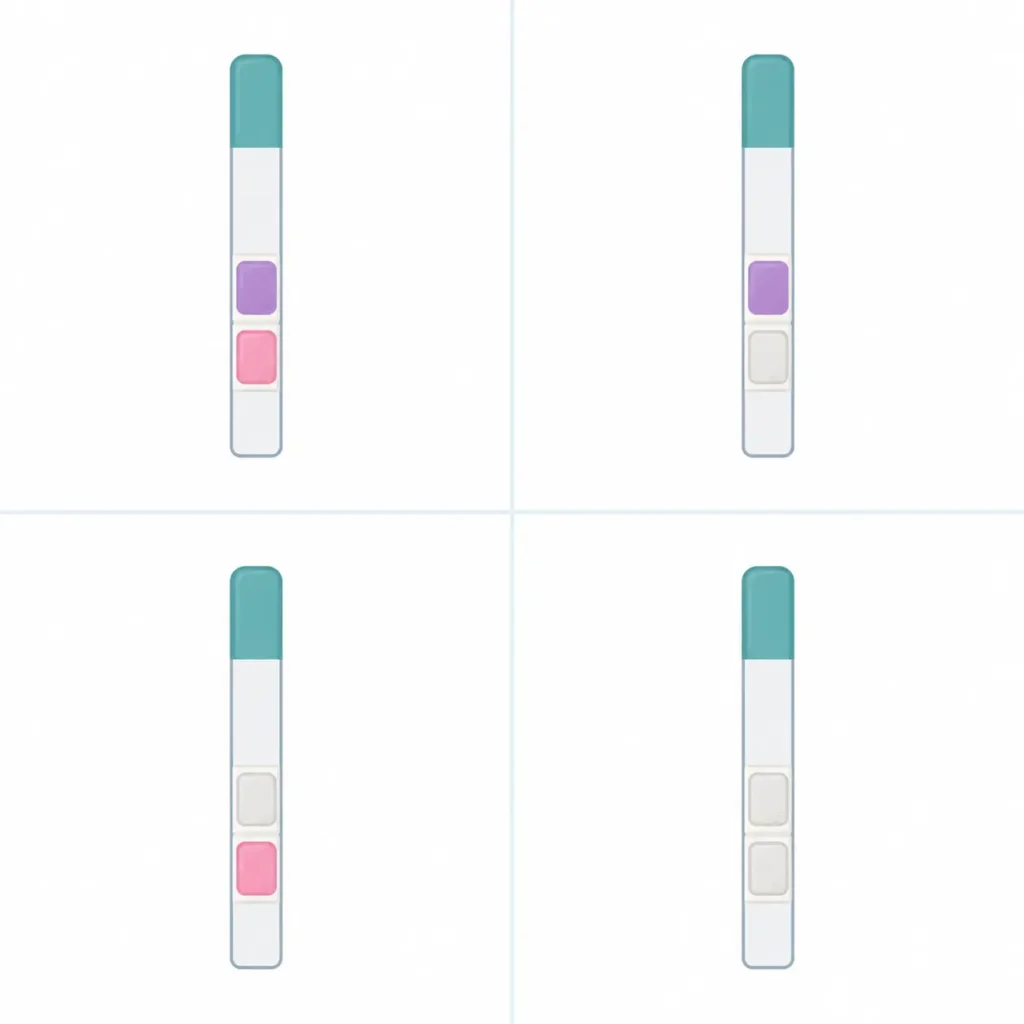
Positive leukocytes, negative nitrites
This is one of the most common results on home strips. White blood cells show that something is inflaming the urinary tract, but no nitrite was made. Most often it’s still a UTI, either from bacteria that don’t make nitrite or from urine that didn’t sit in the bladder long enough.
Other causes are a sexually transmitted infection, vaginal discharge in the sample, a kidney stone or recent antibiotics. Our guide to leukocytes in urine covers white blood cells without infection. If you have burning and urgency, contact a clinician even though the nitrite pad is negative.
Positive nitrites, negative leukocytes
This is less common. It can mean an infection caught early, before many white blood cells arrive, or bacteria living in the bladder without causing inflammation. It also shows up with a sample that sat out too long, a strip exposed to air, or a weakened immune system that doesn’t send many white cells. Without symptoms, it often needs nothing more than a repeat test or a urine culture.
False positives and false negatives
The nitrite pad can be wrong in both directions. False negatives are much more common than false positives.
False positives (pink pad without a real infection):
- Phenazopyridine, the bladder pain medicine sold as AZO and Pyridium
- Test strips exposed to air or past their expiry date
- A contaminated sample left at room temperature
False negatives (blank pad despite an infection):
- Bacteria that don’t make nitrite
- Urine that sat in the bladder less than about 4 hours
- Dilute urine from drinking a lot of fluid
- Highly concentrated urine (high specific gravity)
- High doses of vitamin C
- A diet low in vegetables, so there’s little nitrate to convert
- Acidic urine, below a pH of about 6; our guide to normal urine pH explains the number
Nitrites in urine during pregnancy
Pregnancy is the one time doctors look for bacteria in urine even without symptoms. Untreated bacteria in the bladder during pregnancy can spread to the kidneys and raise the risk of complications, so the U.S. Preventive Services Task Force (USPSTF) recommends screening pregnant people with a urine culture.
The nitrite dipstick isn’t good enough for this job. In the BMC Urology meta-analysis, it caught only 46% of urine infections in pregnant women, the lowest of any group. A positive nitrite in pregnancy still matters, but a negative one doesn’t replace the urine culture. If bacteria are found, your clinician will choose an antibiotic that is safe in pregnancy.
What is the next step after a positive nitrite test?
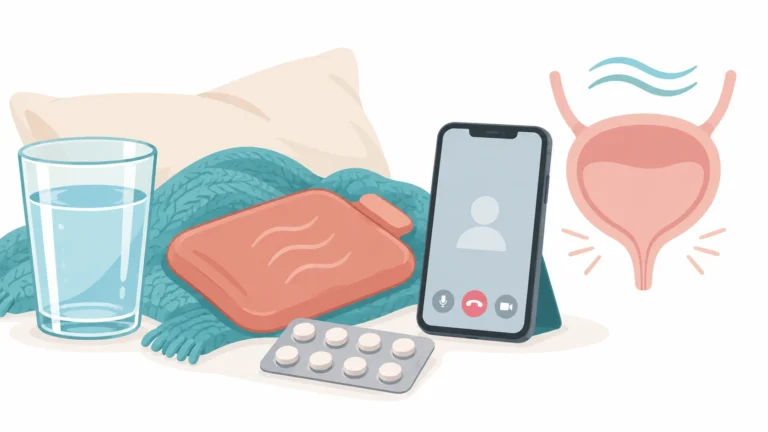
If you have UTI symptoms, the next step is to contact a clinician, who may prescribe antibiotics based on your symptoms and test results. If you have no symptoms, the next step is usually a repeat test or a urine culture, not antibiotics.
A urine culture grows the bacteria in a lab to name them and test which antibiotics work. Results take 1 to 3 days. Doctors are more likely to order one if you are pregnant, male, have repeat infections, have symptoms of a kidney infection, recently took antibiotics or didn’t get better on the first treatment.
Which antibiotics treat a nitrite-positive UTI?
For a simple bladder infection in a healthy woman who isn’t pregnant, the Infectious Diseases Society of America (IDSA) lists three first-choice antibiotics:
- Nitrofurantoin, taken twice a day for 5 days
- Trimethoprim-sulfamethoxazole (TMP-SMX), twice a day for 3 days, where local resistance is low
- Fosfomycin, a single dose
The IDSA advises against amoxicillin and ampicillin for bladder infections, because many bacteria now resist them, and recommends saving fluoroquinolones such as ciprofloxacin for other uses. Kidney infections, infections in men and infections in pregnancy follow different rules. Only take an antibiotic prescribed for you, and finish the course.
How long until nitrites go away?
Once the right antibiotic kills the bacteria, nothing is left to make nitrite, so the test turns negative. Most people feel better within a day or two of starting treatment. A repeat test isn’t usually needed if your symptoms clear. If they don’t improve within 2 to 3 days, the bacteria may resist the antibiotic, and your clinician may order a urine culture.
Why won’t my nitrites go down?
If a nitrite test stays positive or symptoms come back after treatment, the usual reasons are:
- The bacteria resist the antibiotic you took, which a urine culture can show
- The infection has reached the kidneys or, in men, the prostate, which needs a longer course
- A new infection started after the first one cleared
- A kidney stone, catheter or blockage is giving bacteria a place to hide
- The test is picking up bacteria that live in the bladder without causing an infection
Repeat infections, three or more in a year, are a reason to see a urologist.
Can you get rid of nitrites naturally?
There’s no natural way to remove nitrites, because nitrite is only a sign of bacteria. Clearing the bacteria is what clears the nitrite. Drinking water helps you pee more and can ease burning, but it doesn’t reliably cure an infection. Cranberry products may lower the chance of repeat UTIs in some women, according to a 2023 Cochrane review, but they don’t treat an active infection.
Some mild bladder infections do clear on their own. The problem is that there’s no way to know in advance which ones will, and an untreated infection can climb to the kidneys. If you have symptoms, talk to a clinician before deciding to wait.
When to see a doctor about nitrites in urine
See a clinician if you have a positive nitrite with UTI symptoms, if you’re pregnant, if you’re a man with a positive result, or if your symptoms don’t improve within 2 to 3 days of treatment.
Get care the same day for fever, chills, pain in your back or side, nausea or vomiting. These can mean the infection has reached the kidneys.
Call 911 or go to the nearest emergency room if you feel confused, have a racing heartbeat, are breathing fast, feel faint or have cold, clammy or blotchy skin. These can be signs of sepsis, a life-threatening reaction to infection.
Frequently asked questions
Can men have nitrites in urine?
Yes. UTIs are much less common in men, so a positive result in a man usually leads to a urine culture and a check for a prostate infection or something blocking urine flow.
Can nitrites in urine harm the kidneys?
Not directly. What can hurt the kidneys is the infection behind the result. Bacteria left untreated can travel up from the bladder to the kidneys and cause a more serious infection.
Do nitrites in urine smell?
Not in a way you would notice. A strong or foul smell during a UTI comes from the bacteria and from concentrated urine, not from the nitrite the test detects.
Can a child have nitrites in urine?
Yes, but babies and toddlers pee so often that the nitrite pad is frequently negative even with an infection. Doctors rely on a properly collected urine culture to diagnose UTIs in young children.
Are nitrites in urine contagious?
No. A UTI isn’t passed from person to person like a cold. Sex can push bacteria from the skin toward the urethra, which is why peeing after sex is often suggested.
Does a positive nitrite mean a kidney infection?
Not by itself. The test can’t tell whether bacteria are in the bladder or the kidneys. Fever, back or side pain and vomiting are what point to a kidney infection.
Sources
- Devillé WL, et al. The urine dipstick test useful to rule out infections. A meta-analysis of the accuracy. BMC Urology, 2004
- Hitzeman N, et al. Office-Based Urinalysis. American Family Physician, 2022
- Nair A, Seelam S. Nitrites positive in urine (letter on pre-operative testing), 2021
- ACP Internist. IDSA updates guidelines for uncomplicated urinary tract infections
- MedlinePlus. Nitrites in Urine
- Cleveland Clinic. Nitrite-Positive Urine
- U.S. Preventive Services Task Force. Asymptomatic Bacteriuria in Adults: Screening
- Williams G, et al. Cranberries for preventing urinary tract infections. Cochrane Database of Systematic Reviews, 2023
Disclaimer
This blog is for informational and educational purposes only, and does not intend to substitute any professional medical advice or consultation. For any health related concerns, please consult with your physician, or call 911.