UTI in Men: Symptoms, Causes, Treatment and When It’s Really the Prostate
Yes, men get UTIs, though far less often than women, and mostly after age 50. Symptoms include burning when you pee, urgency, peeing often and at night, and cloudy or bloody urine. An enlarged prostate, kidney stones and catheters are common causes; in younger men, an STI is often behind the burning. A bladder infection without fever is usually treated with about 7 days of antibiotics after a urine culture. Fever, chills or back pain need same-day care.
Men are often surprised to get a UTI, and doctors take one more seriously in a man because it can point to a problem in the prostate, bladder or kidneys. This guide covers the symptoms, why men get UTIs, how to tell a UTI from prostatitis or an STI, which tests and antibiotics make sense and what to do if infections keep coming back. For UTIs in both sexes, see our main guide to UTI symptoms, causes and treatment.
Can men get UTIs? How common they are
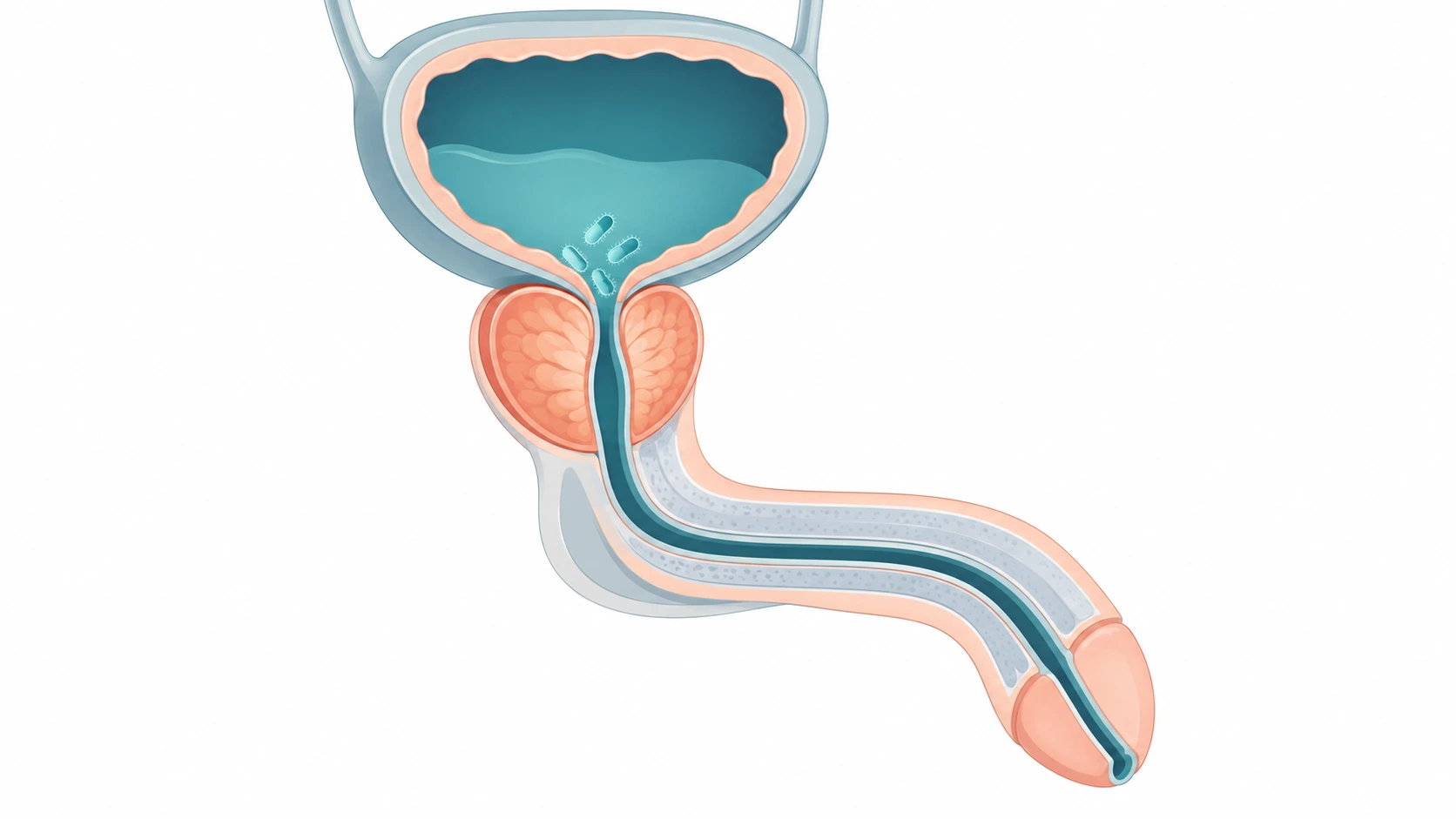
Men can get UTIs at any age, but the risk is low until later in life. The male urethra, the tube that carries urine out through the penis, is about 8 inches long, compared with about 1.5 inches in women. Bacteria have much farther to travel to reach the bladder. The National Institute of Diabetes and Digestive and Kidney Diseases (NIDDK) says men under 50 rarely get bladder infections.
Age changes that. A large Dutch primary care study of 6,903 men found about 11 UTIs per 1,000 men each year under age 65, rising to about 174 per 1,000 in men 85 and older. The main reason is the prostate, which grows with age and can stop the bladder from emptying fully.
Types of UTI in men
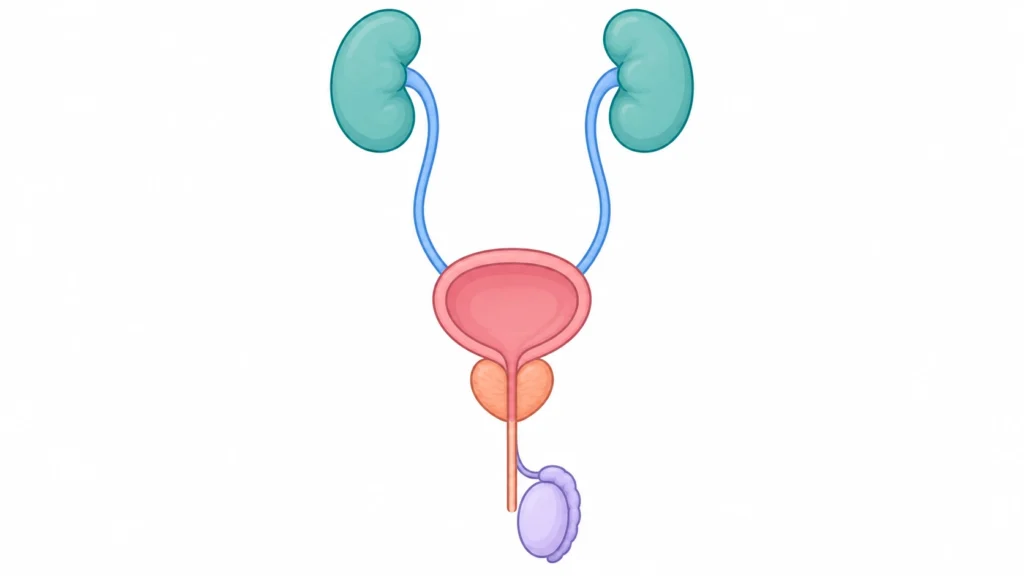
“UTI” covers infections in several places, and in men the location changes the treatment.
| Type | Where it is | Key sign |
|---|---|---|
| Urethritis | Urethra | Burning at the tip of the penis, often with discharge; in men it’s almost always an STI, per Harvard Health |
| Cystitis (bladder infection) | Bladder | Burning, urgency, frequent peeing, pressure low in the belly |
| Prostatitis | Prostate | Fever, chills, pain between the legs or in the rectum, trouble peeing |
| Epididymitis | Tube behind the testicle | Pain and swelling in one testicle |
| Pyelonephritis (kidney infection) | Kidney | Fever, back or side pain, nausea, vomiting |
Are UTIs in men always complicated?
For years, doctors called every UTI in a man “complicated,” which usually meant longer antibiotic courses and more tests. Many websites still say this. The 2025 Infectious Diseases Society of America (IDSA) guideline on complicated UTIs changed it. It states that uncomplicated UTI can happen in men as well as women.
Under the new guideline, a UTI is complicated when it comes with fever, chills, back or side pain, a blockage, a catheter or a stent. A man with a simple bladder infection and none of those features can be treated much like a woman, though doctors still send a urine culture and look harder for a cause.
UTI symptoms in men
UTI symptoms in men are mostly the same as in women. You may have one or several of these:
- Burning, stinging or pain while peeing or just after
- Peeing more often than usual, or feeling you have to go right away
- Waking up at night to pee
- Feeling your bladder isn’t empty after you go
- Cloudy, dark or strong-smelling urine
- Blood in your urine
- Pain or pressure low in the belly, above the pubic bone
- Bedwetting in a man who’s usually dry at night
What does a UTI feel like for a man? Many describe a constant urge with only a little urine coming out, plus burning along the penis and a dull ache above the pubic bone. The CDC’s list of five warning signs, covered in our UTI guide, applies to men too.
Older men may not have the usual symptoms. Harvard Health notes that in older men the only sign may be fever or confusion. The reverse also happens: bacteria often show up in the urine of older men who feel fine, and that usually doesn’t need antibiotics. Our guide to UTIs without pain explains the difference.
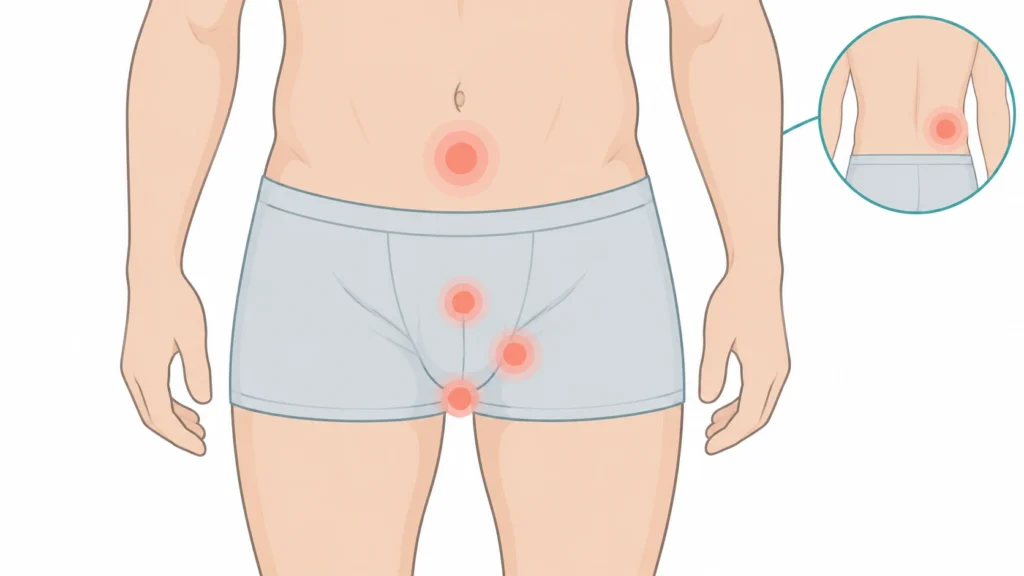
| Where you feel it | What it can point to |
|---|---|
| Tip of the penis, with discharge | Urethritis, usually an STI |
| Low belly, above the pubic bone | Bladder infection |
| Between the scrotum and anus, or in the rectum | Prostatitis |
| One testicle, swollen and sore | Epididymitis, or torsion if sudden and severe |
| Back or side, under the ribs | Kidney infection or a kidney stone |
Signs it has spread to the prostate or kidneys
Get care the same day if burning or urgency comes with any of these:
- Fever or chills
- Pain in your back or side, just under the ribs
- Nausea or vomiting
- Pain between your legs, in your rectum or deep in the pelvis
- Trouble starting your stream, or a weak, stop-and-start stream that’s new
- Feeling sick all over, fast heartbeat or dizziness
These can mean acute prostatitis or a kidney infection, both of which can spread to the blood and cause sepsis.
What causes a UTI in men?
Most UTIs start when bacteria from the bowel, most often E. coli, get into the urethra and travel up to the bladder. In men, something usually helps them along. Here is how the common causes change with age.
| Age group | Common causes |
|---|---|
| Younger men (under about 50) | STIs (chlamydia, gonorrhea, Mycoplasma genitalium) causing urethritis; insertive anal sex without a condom; kidney stones; a narrowed urethra; recent catheter or scope |
| Men over 50 | Enlarged prostate (BPH) leaving urine behind; prostatitis; kidney and bladder stones; catheters; recent prostate biopsy or surgery; diabetes |
Other risk factors listed by WebMD, Harvard Health and urology groups include:
- Diabetes or a weak immune system
- A urinary catheter, in the hospital or at home
- Recent urology procedures, such as cystoscopy or a prostate biopsy
- A previous UTI
- Not drinking enough, which makes urine concentrated and means you pee less often
- Anything that blocks urine flow, such as a stone or a narrowing of the urethra (urethral stricture)
In younger men with a normal urinary tract, a true bladder infection is unusual. That’s why a doctor may test for an STI first or look for a hidden problem, such as a stone or a blockage.
Can a woman give a man a UTI?
No. A UTI isn’t contagious, and the CDC doesn’t count it as a sexually transmitted infection. You can’t catch one from a partner the way you catch a cold. Sex can still push bacteria that already live on your own skin toward the urethra, and insertive anal sex without a condom exposes the urethra to E. coli from the bowel. The CDC lists that as a cause of epididymitis.
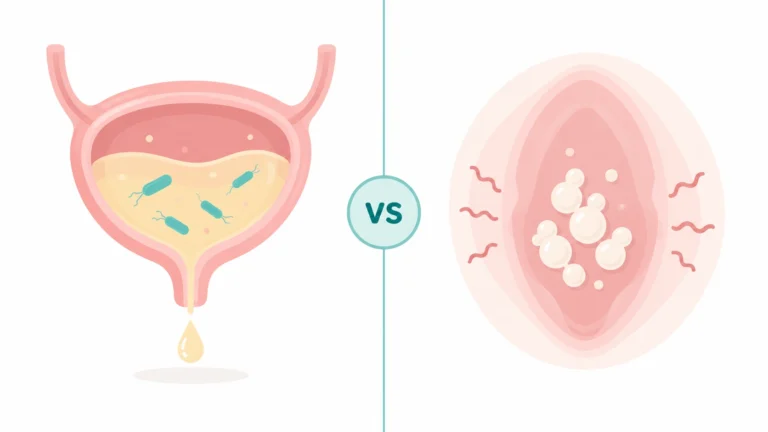
What does pass between partners is an STI. Chlamydia and gonorrhea cause burning that feels like a UTI and are the most common reason a sexually active younger man has painful urination. Both partners need testing and treatment. Our guide to UTI vs STD explains how to tell them apart.
Prostatitis: when the infection is in the prostate
The prostate sits just below the bladder and wraps around the urethra, so bacteria can settle there. A 2024 review in American Family Physician (AAFP) says prostatitis affects about 10% to 15% of men, but only about 1 in 10 cases is a bacterial infection. There are four types:
| Type | What it is | Treatment |
|---|---|---|
| Acute bacterial prostatitis | A sudden infection with fever, chills, painful or difficult peeing and pain in the pelvis or rectum | Antibiotics for at least 14 days (AAFP); 10 to 14 days (IDSA); IV antibiotics if seriously ill |
| Chronic bacterial prostatitis | Bacteria that stay in the prostate and cause repeat UTIs with the same germ | 4 weeks of a fluoroquinolone, or 6 weeks of another antibiotic |
| Chronic prostatitis / chronic pelvic pain syndrome (CP/CPPS) | Long-lasting pelvic pain, urinary symptoms and sexual problems with no infection | No antibiotics; a mix of non-antibiotic treatments |
| Asymptomatic inflammatory prostatitis | Inflammation found on a test, with no symptoms | Usually none |
CP/CPPS is the most common type, and it’s often mistaken for a UTI. Urine cultures keep coming back negative, and rounds of antibiotics don’t help. If that sounds familiar, ask your doctor or a urologist about it.
What else feels like a UTI in men?
| Condition | Clues | Next step |
|---|---|---|
| STI urethritis | Discharge, itching inside the penis, a new partner | STI test (urine NAAT) |
| CP/CPPS | Pelvic or perineal pain for months, negative urine cultures | Urologist |
| Epididymitis | One sore, swollen testicle, sometimes fever | Same-day visit |
| Testicular torsion | Sudden, severe pain in one testicle, often in teens and young men | Emergency room right away |
| Kidney stone | Waves of sharp side or back pain spreading to the groin, often with blood | Same-day care |
| Enlarged prostate (BPH) | Weak stream, dribbling, getting up at night, no burning | Doctor visit |
| Urethral stricture | Slow or spraying stream, straining, past injury or catheter | Urologist |
| Bladder cancer | Painless blood in the urine, often in smokers over 50 | Full workup |
| Bowel-to-bladder fistula | Air bubbles or stool in the urine, repeat UTIs, a history of diverticulitis | Doctor visit |
The last one is rare but worth knowing. The Cleveland Clinic Journal of Medicine notes that diverticular disease causes most bowel-to-bladder connections (colovesical fistulas) in men, and that passing air or stool in the urine is a telltale sign. A urologist at Atlantic Health puts it simply: a UTI in a man raises suspicion of an enlarged prostate, kidney stones or even a colon infection.
For more conditions that cause burning, see why it burns when you pee. If you see blood, our guide to blood in urine explains what it can mean.
How doctors diagnose a UTI in men
Expect more testing than a woman with a simple bladder infection might get.
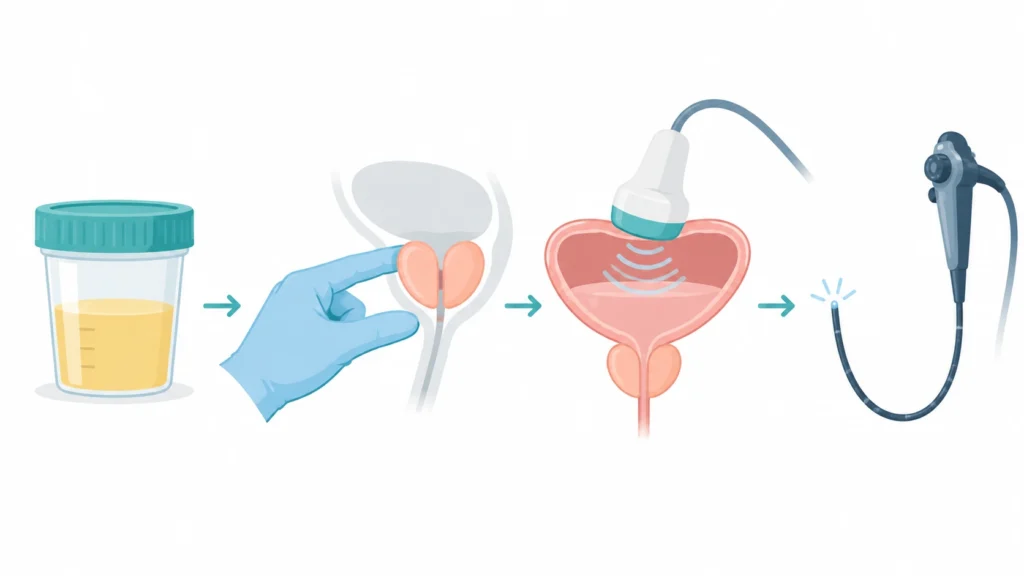
- History and symptoms. Your doctor will ask about fever, pain location, how you’re peeing, past infections, catheters or procedures, and your sexual history, including new partners, condom use and anal sex.
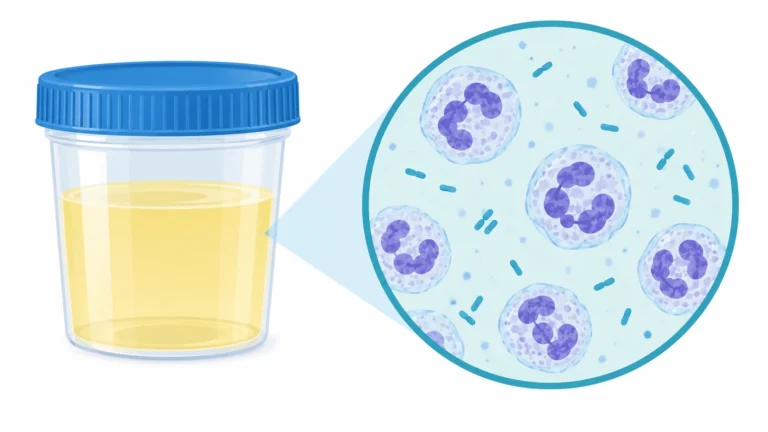
- Urinalysis and urine culture. A clean-catch sample is checked for white blood cells, bacteria and blood. Ireland’s Health Service Executive (HSE) advises sending a urine culture for every man before antibiotics start, so the drug can be matched to the bacteria. Our guide to urinalysis results explains each part of the report, and our leukocytes guide covers white cells with no bacteria.
- STI testing, with a urine NAAT for chlamydia and gonorrhea, above all in younger or sexually active men.
- A prostate exam. A gentle rectal exam checks the size and tenderness of the prostate. The AAFP advises against prostate massage when acute prostatitis is suspected.
- A bladder scan to measure how much urine stays behind after you pee (post-void residual).
- Imaging or a scope when needed: a kidney ultrasound or CT scan for fever that doesn’t settle, stones, blood or repeat infections, and cystoscopy to look inside the urethra, prostate and bladder.
About PSA tests: A UTI or prostatitis can raise your prostate-specific antigen (PSA) level for weeks. NHS guidance for doctors advises retesting PSA 6 to 8 weeks after the infection rather than acting on a high reading taken during or right after it.
UTI treatment for men
Antibiotics cure bacterial UTIs in men. The drug and the length of treatment depend on where the infection is.
| Type of infection | Usual length |
|---|---|
| Bladder infection, no fever | 7 days |
| Kidney infection | 5 to 7 days of a fluoroquinolone, or 7 days of another antibiotic |
| Fever with suspected acute prostatitis | 10 to 14 days, or at least 14 days |
| Chronic bacterial prostatitis | 4 to 6 weeks |
| STI urethritis, or epididymitis from an STI | The STI treatment, with your partner treated too |
The 7-day rule comes from a 2021 trial in JAMA of 272 men without fever. Symptoms cleared in 93.1% of men given 7 days and 90.2% given 14, so the extra week added side effects without adding benefit. Kidney courses are shorter than they used to be too: the 2025 IDSA guideline prefers 5 to 7 days for most kidney infections in people who are improving.
Which antibiotics work best for men?
Doctors usually pick a drug that reaches both the urine and the prostate, then adjust it once the urine culture is back.
- TMP-SMX (Bactrim) and fluoroquinolones (ciprofloxacin, levofloxacin) reach prostate tissue, so they’re common choices when the prostate might be involved. Fluoroquinolones carry FDA warnings about tendon, nerve and other side effects, so they’re used with care.
- Cephalosporins such as cephalexin are another option for a simple bladder infection.
- Nitrofurantoin (Macrobid) works only in the bladder. Ireland’s HSE still lists it first for men with a simple bladder infection, for 7 days, but says not to use it if prostatitis is suspected. In the Dutch study of male UTIs, nitrofurantoin failed in 25% of courses, rising from 13% in men aged 18 to 39 to 29% in men 80 and older. Ciprofloxacin failed in 10% and TMP-SMX in 14%.
- Fosfomycin, the single-dose packet used for women, isn’t licensed for men, according to the HSE.
For doses, side effects and drug interactions, see our guide to antibiotics for a UTI.
How long until you feel better?
Harvard Health says most simple UTIs start to improve within 1 to 2 days of the right antibiotic. Finish every dose even after you feel fine. Call your doctor if you’re not better after 2 days, if symptoms return after you finish, or if you get a rash or fever. Men with severe kidney or prostate infections, or vomiting that won’t let them keep pills down, may need IV antibiotics in the hospital. Our guide to how long a UTI lasts has the day-by-day timeline.
Fixing the cause
In men, curing the infection is only half the job. If an enlarged prostate is leaving urine behind, medicines that relax or shrink the prostate, or surgery, can improve flow and cut the risk of more infections, per Harvard Health. Stones may need to be removed, a narrowed urethra widened, and a long-term catheter changed or replaced with another option.
Will a UTI in men go away on its own?
Don’t count on it. Some UTIs in women clear without antibiotics, but there’s little evidence that the same is true for men, and a male UTI is more likely to reach the prostate or kidneys if you wait. Drinking more water helps you pee more often and can ease symptoms, but it doesn’t reliably “flush out” an infection. See a doctor within a day or two of symptoms, and the same day if you have fever or back pain.
Pain relief can help while the antibiotic starts working. Phenazopyridine (AZO) eases burning for up to 2 days but turns urine orange and doesn’t kill bacteria, so give your urine sample first. Skip baking soda: some websites say it helps, but it makes urine less acidic, not more, and taking too much can be dangerous, according to MedlinePlus.
Recurrent UTIs in men
Two or more UTIs in a man is a signal to look for a cause, not to keep refilling antibiotics. The HSE advises referring men with recurrent UTIs to a specialist. Common reasons infections come back:
- Chronic bacterial prostatitis, where bacteria hide in the prostate and return after each short course
- Urine left behind from an enlarged prostate, a stricture or a nerve problem
- Stones that hold bacteria
- A catheter
- Rarely, a bowel-to-bladder fistula or a bladder tumor
A urologist can measure how well you empty, image the kidneys and look inside the bladder. If the same germ keeps returning, a longer course aimed at the prostate is often the fix. Our guide on why UTIs keep coming back covers the wider causes and prevention options.
How men can lower their UTI risk
You can’t prevent every UTI, but these steps help:
- Drink enough water that your urine stays pale yellow.
- Pee when you feel the urge, and before bed. Don’t hold it for hours.
- Get prostate symptoms checked early. Harvard Health advises men approaching 50 to see a doctor for a weaker stream, trouble starting, dribbling or a feeling of not emptying.
- Use condoms with new partners, and always for insertive anal sex.
- Keep diabetes under control.
- If you use a catheter, wash your hands before touching it, keep the bag below your bladder and follow your care team’s cleaning steps.
UTIs in boys
Boys get UTIs too, mostly as babies. By age 7, about 2% of boys have had one, according to the NIDDK, and in the first year of life boys get more UTIs than girls, with uncircumcised baby boys at higher risk. A baby or child with a fever and no clear cause, or who pees with pain, should see a doctor the same day. Our UTI guide covers UTIs in children.
When to see a doctor or go to the ER
See a doctor within a day or two for any burning, urgency or frequent peeing, even if it’s mild. In a man, a UTI is a reason to get checked, not to wait it out.
Get care the same day for fever, chills, back or side pain, pain in the rectum or between your legs, nausea or blood in your urine.
Call 911 or go to the ER if you:
- Can’t pee at all, or only a few drops come out
- Have sudden, severe pain in a testicle
- Have a high fever with shaking chills, confusion, a racing heart or dizziness
- Are vomiting and can’t keep antibiotics down
The bottom line
Men get UTIs less often than women, mostly after 50, when an enlarged prostate stops the bladder from emptying. In younger men, burning when you pee is often an STI rather than a bladder infection. A simple bladder infection without fever is now treated for about 7 days after a urine culture, while prostate infections need 2 weeks or more. Fever, back pain or testicle pain need same-day care, and repeat infections deserve a urology workup to find and fix the cause.
Frequently asked questions
What should a man drink when he has a UTI?
Water is best. Alberta Health advises skipping caffeine and fizzy drinks, which can irritate the bladder, and alcohol is worth avoiding too. Cranberry juice hasn’t been shown to treat an infection that’s already there.
Can a UTI come on suddenly in men?
Yes. Burning and urgency can start within hours. Acute bacterial prostatitis can also come on fast, with high fever, chills and pelvic pain, and needs same-day care.
Can dehydration cause a UTI in men?
It can raise the risk. When you don’t drink enough, urine gets concentrated and you pee less often, so bacteria have more time to grow in the bladder. Drinking enough water helps but doesn’t replace antibiotics.
Can a man have sex while he has a UTI?
It’s best to wait until treatment is finished and symptoms are gone, since sex can worsen irritation. If the cause is an STI, the CDC advises waiting at least 7 days after treatment and until your partner is treated.
Can a UTI affect erections or ejaculation?
A simple bladder infection isn’t known to cause erection problems. Prostatitis is different: chronic pelvic pain syndrome, its most common form, can bring sexual problems along with pelvic pain, according to the AAFP. A urologist can help.
Do condoms lower a man’s UTI risk?
They lower the risk of STIs that cause urethritis, and they reduce exposure to bowel bacteria during anal sex. They don’t prevent UTIs caused by an enlarged prostate or stones.
Sources
- National Institute of Diabetes and Digestive and Kidney Diseases. Definition & Facts of Bladder Infection in Adults
- National Institute of Diabetes and Digestive and Kidney Diseases. Definition & Facts of Urinary Tract Infections in Children
- Nitrofurantoin failure in males with an uncomplicated urinary tract infection: a primary care observational cohort study. British Journal of General Practice, 2023
- Long B. Guideline Update: 2025 IDSA Management of Complicated UTI. emDocs, 2025
- CIDRAP. Trial supports shorter antibiotics for UTIs in men (Drekonja DM, et al. JAMA, 2021)
- Health Service Executive (Ireland). Uncomplicated UTI in Adult Male
- American Family Physician. Acute and Chronic Prostatitis, 2024
- Centers for Disease Control and Prevention. Epididymitis: STI Treatment Guidelines
- Centers for Disease Control and Prevention. Urinary Tract Infection Basics
- Harvard Health Publishing. Men and urinary tract infections, 2025
- Harvard Health Publishing. Urinary tract infection in men (A to Z)
- WebMD. What Causes UTIs in Men and How Are They Treated?
- Atlantic Health. Can Men Get UTIs? 2024
- Ackerman Urology. UTI in Men: Causes, Symptoms, and When to See a Urologist
- Urology Group of Virginia. Urinary Tract Infection in Men
- Alberta Health Services, MyHealth Alberta. Urinary Tract Infections (UTI) in Men: Care Instructions
- Cleveland Clinic Journal of Medicine. Colovesical fistula, 2023
- NHS West Hampshire GP portal. PSA level advice
- MedlinePlus. Baking soda overdose
Disclaimer
This blog is for informational and educational purposes only, and does not intend to substitute any professional medical advice or consultation. For any health related concerns, please consult with your physician, or call 911.