UTI in Pregnancy: Symptoms, Safe Treatment and Risks to Your Baby
A urinary tract infection (UTI) affects about 8% of pregnancies, according to the American College of Obstetricians and Gynecologists (ACOG). Pregnancy slows the flow of urine, so bacteria have more time to grow. Symptoms include burning when you pee, urgency and cloudy or bloody urine, but some UTIs cause no symptoms at all. Every UTI in pregnancy needs an antibiotic chosen for your stage of pregnancy. Fever, chills, back pain or vomiting can mean a kidney infection, which needs care the same day.
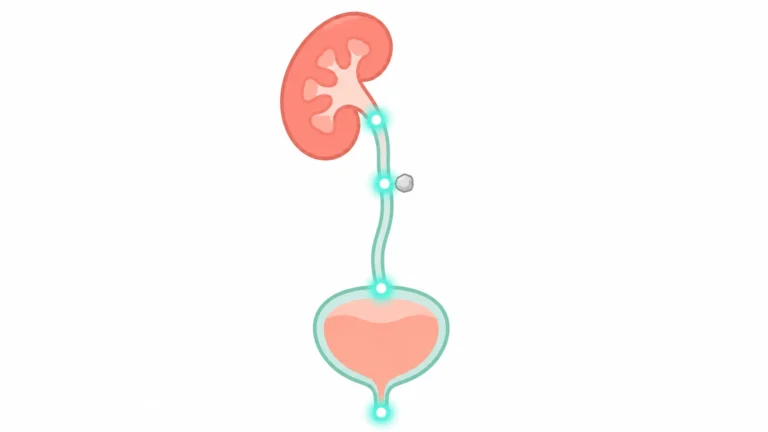
A UTI while pregnant is common and highly treatable when it’s caught early. The worry is what happens when it isn’t. An untreated infection can climb to the kidneys, and kidney infections are linked to preterm labor and low birth weight.
This guide covers the signs, how a UTI differs from normal pregnancy changes, the prenatal urine test, which antibiotics are used in each trimester, whether AZO is safe and when to go to the hospital.
| Quick facts | |
|---|---|
| How common | About 8% of pregnancies (ACOG); US estimates run from 10% to 18% |
| Main cause | E. coli, in 80% to 90% of cases |
| How it’s found | A urine culture, done at an early prenatal visit and whenever you have symptoms |
| Treatment | 5 to 7 days of an antibiotic that’s safe for your trimester |
| Go to the hospital for | Fever of 100.4°F or higher, chills, back or side pain, vomiting or contractions |
How common are UTIs in pregnancy?
Quite common. ACOG calls UTI one of the more common complications of pregnancy, affecting about 8% of pregnancies. StatPearls, a medical reference from the National Library of Medicine, puts the US figure at 10% to 18%. In a CDC-led study of 41,869 women, 18% reported at least one UTI during pregnancy.
Three types: bacteria with no symptoms, bladder infection, kidney infection
ACOG describes UTIs in pregnancy as a spectrum:
- Asymptomatic bacteriuria. Bacteria grow in your urine, but you feel fine. StatPearls says this happens in 2% to 10% of pregnancies, and about 25% of untreated cases turn into an infection with symptoms. Our guide to bacteria in urine explains this finding in people who aren’t pregnant.
- Acute cystitis (bladder infection). The classic UTI, with burning and urgency. It occurs in about 1% to 2% of pregnancies.
- Pyelonephritis (kidney infection). The most serious form. It also occurs in about 1% to 2% of pregnancies, most often in the second trimester.
Screening is the reason kidney infections are now uncommon. Since doctors began testing every pregnant woman’s urine for bacteria, the rate of kidney infection in pregnancy has fallen from 20% to 35% down to 1% to 4%, StatPearls reports.
Why pregnancy makes UTIs more likely
UTIs in pregnancy are caused by the same bacteria that cause them at any other time. E. coli, which lives in the gut, is behind 80% to 90% of them, Cleveland Clinic says. Other causes include Klebsiella, Proteus, group B Streptococcus and Staphylococcus saprophyticus. Our main guide to UTI symptoms, causes and treatment covers how bacteria get in.
What changes is how easily they take hold:
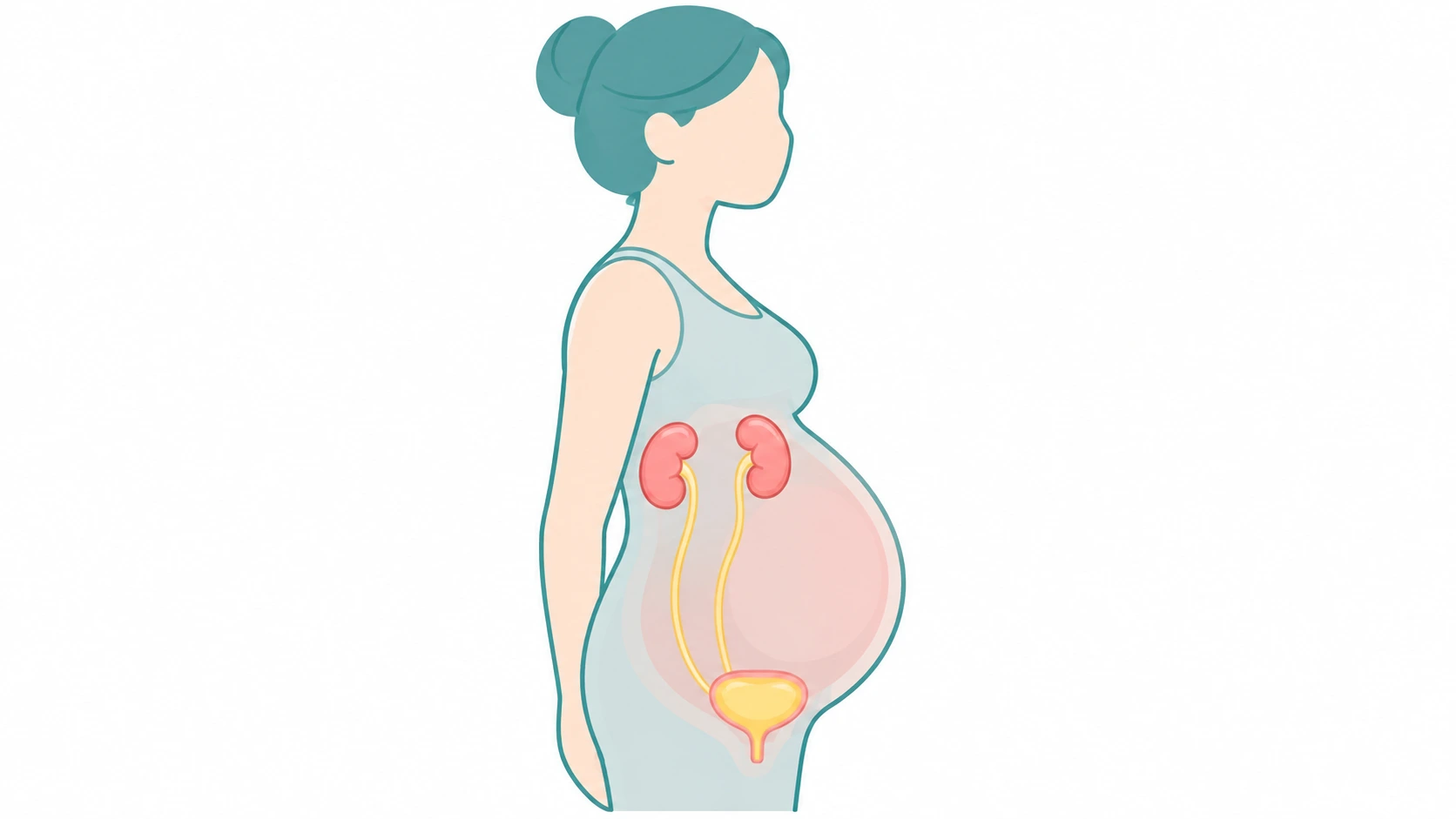
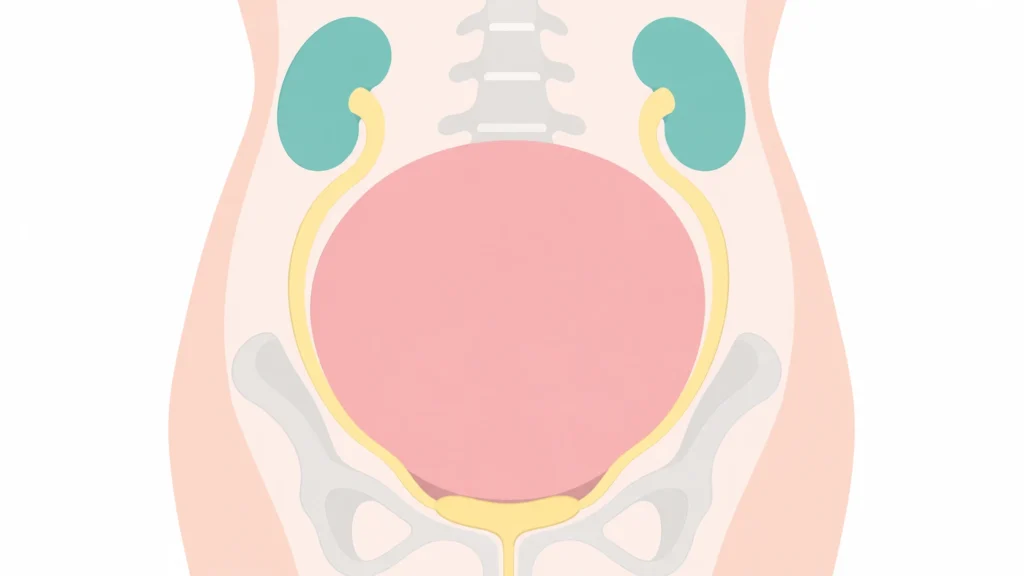
- Progesterone relaxes the urinary tract. StatPearls explains that rising progesterone relaxes the smooth muscle in the ureters and bladder. Urine moves more slowly and the bladder doesn’t empty as well.
- The growing uterus presses on the bladder and ureters. That pressure can block urine from draining, Cleveland Clinic and the American Pregnancy Association note.
- The ureters widen. An American Family Physician (AFP) review reports that about 90% of pregnant women develop widened ureters starting around week 6 and peaking at weeks 22 to 24.
- More sugar in the urine. The same AFP review notes that up to 70% of pregnant women pass some glucose in their urine, which feeds bacteria.
- The immune system shifts. Pregnancy lowers some immune defenses, Cleveland Clinic says.
- Anatomy and hygiene. Medscape points to the short female urethra, about 3 to 4 cm, and the difficulty of wiping well with a large belly.
Cleveland Clinic and the American Pregnancy Association both say risk is highest from week 6 through week 24.
Other risk factors
A CDC-led analysis of the National Birth Defects Prevention Study found UTIs in pregnancy were more common in women who had diabetes before pregnancy, women who had a UTI in the 3 months before conceiving, mothers under 19, and women with lower household income. Medscape adds sickle cell disease, a nerve-related bladder problem (neurogenic bladder), smoking, a weakened immune system, repeat UTIs before pregnancy and starting prenatal care late. If UTIs keep coming back for you, our guide to why you keep getting UTIs covers the usual triggers.
UTI symptoms during pregnancy
The signs are the same as at any other time. Cleveland Clinic and the American Pregnancy Association list:
- Pain or burning when you pee
- Needing to pee more often, or a sudden urge to go
- Waking up at night to pee
- Cloudy urine, or urine with a strong or foul smell
- Blood or mucus in the urine
- Cramps, pressure or pain low in the belly, over the bladder
- Leaking urine
- Pain during sex
- Passing more or less urine than usual
Many of these overlap with normal pregnancy, and StatPearls notes the overlap makes symptoms a poor guide on their own. Only about 26% of pregnant women with urinary symptoms had a positive urine culture in one study it cites. That’s why your provider will test your urine rather than diagnose from symptoms alone.
Signs the infection has reached your kidneys
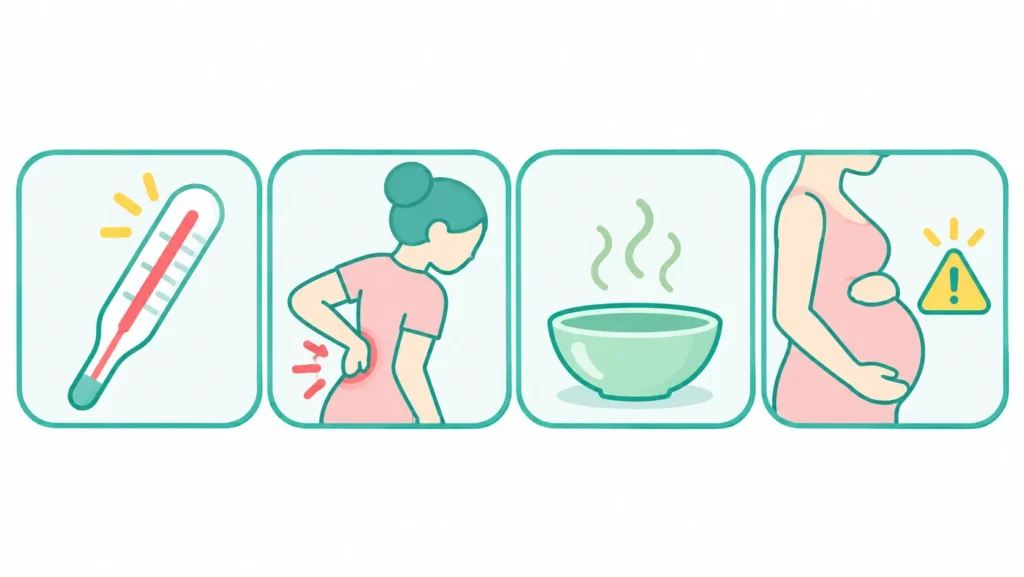
Call right away or go to the hospital if you have any of these, which Cleveland Clinic, ACOG and StatPearls link to a kidney infection:
- Fever of 100.4°F (38.0°C) or higher
- Chills or sweats
- Pain in your back or side, under the ribs
- Nausea or vomiting
- Confusion
- Contractions or a tightening belly
Is it a UTI or just pregnancy?
Peeing more often is one of the earliest signs of pregnancy. Mayo Clinic explains that your blood volume rises, so your kidneys process extra fluid that ends up in your bladder. That alone isn’t a UTI.
The difference is in what comes with it. Cleveland Clinic advises calling your provider when frequent peeing or leaking comes with pain when you pee, pain during sex, cloudy urine or fever. A UTI isn’t a sign of pregnancy, but pregnancy raises the chance of getting one, so you can have both at once. Our guide to whether a UTI affects your period compares UTI and early pregnancy symptoms side by side.
Painful urination in pregnancy that isn’t a UTI
Burning can come from other places. StatPearls lists vaginal infections and sexually transmitted infections as common lookalikes. A yeast infection is common in pregnancy and causes itching and thick discharge along with burning. Our guides to UTI vs yeast infection and UTI vs STD explain how to tell them apart. Back pain with fever can also come from kidney stones, appendicitis, gallbladder problems or preterm labor, which is one more reason to get checked rather than guess.
UTI in early pregnancy, second and third trimester
UTIs can happen at any point. In the CDC-led study, women reported UTIs at almost the same rate in each trimester: 8% in the first, 8% in the second and 7% in the third. What changes is the type of infection and the medicine used:
- First trimester and early pregnancy. This is when your first prenatal urine screen is done, so bacteria without symptoms are usually found now. Some antibiotics, nitrofurantoin and trimethoprim-sulfamethoxazole (Bactrim), are used in the first trimester only when no other suitable option exists.
- Second trimester. Kidney infections are most common now, StatPearls notes. The widest range of antibiotics is open to you.
- Third trimester. StatPearls says group B Streptococcus is often found in urine cultures late in pregnancy. Near delivery, doctors avoid nitrofurantoin and Bactrim because of risks to the newborn, covered in the treatment section below.
Prenatal urine screening for bacteria
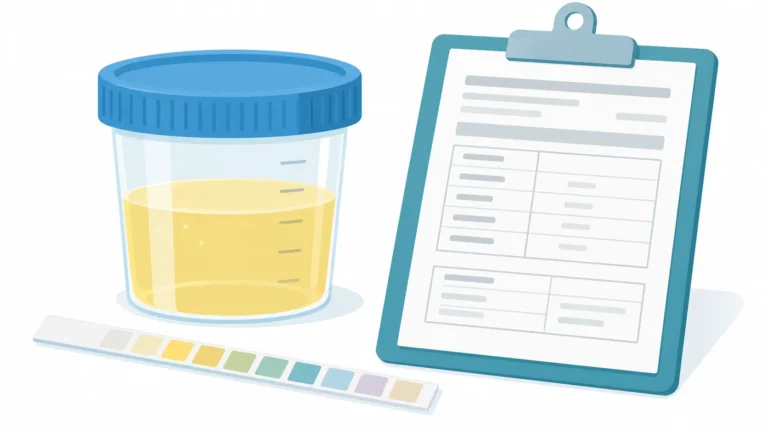
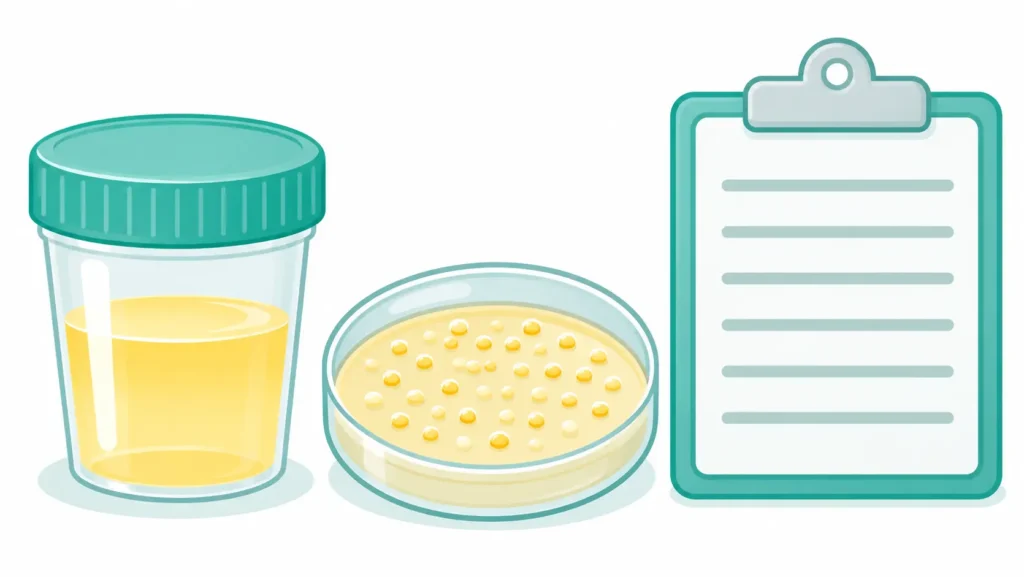
You’ll likely be screened even if you feel well. The US Preventive Services Task Force (USPSTF) recommends screening every pregnant person for asymptomatic bacteriuria with a midstream, clean-catch urine culture at the first prenatal visit or at 12 to 16 weeks, whichever comes first. ACOG advises screening once, early in prenatal care.
A urine culture is considered positive at 100,000 colony-forming units per milliliter (CFU/mL) or more of one type of bacteria. ACOG says to treat that result with 5 to 7 days of an antibiotic matched to the bacteria, even if you have no symptoms. ACOG found too little evidence to recommend repeat screening after a negative first test.
Why dipsticks aren’t enough
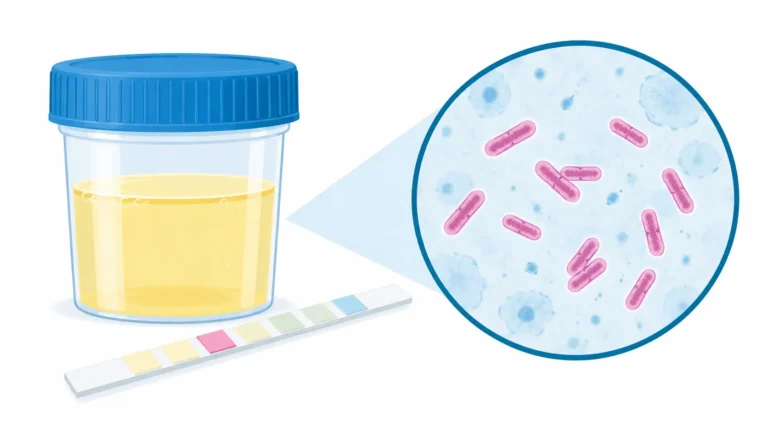
A quick dipstick isn’t used for this screen. StatPearls notes that ACOG’s 2023 guidance doesn’t recommend routine dipstick testing at every prenatal visit because it predicts infection poorly. An older AFP review found the leukocyte dipstick caught only about half of the women whose cultures showed bacteria. Our guide to nitrites in urine explains why a negative strip doesn’t rule out infection in pregnancy, and our UTI test guide compares the options.
Pregnancy also changes how a urinalysis reads. StatPearls explains that urine is often more dilute, small amounts of protein can appear normally, and vaginal discharge or blood can get into the sample. A urine culture sorts out real infection from these effects.
Group B strep in your urine
Group B Streptococcus (GBS) is a common bacterium that can make newborns seriously ill. If GBS shows up in your urine at any count during pregnancy, StatPearls and ACOG guidance say you should get IV antibiotics during labor to protect the baby. A count of 100,000 CFU/mL or more is also treated as a UTI right away. Make sure your labor team knows about any GBS result.
How a UTI is treated during pregnancy
A UTI in pregnancy needs a prescription antibiotic. Cleveland Clinic says there’s no home treatment that reliably cures one, and an untreated bladder infection can turn into a kidney infection.
ACOG recommends 5 to 7 days of an antibiotic for both bacteria without symptoms and a bladder infection. If you have symptoms, your provider may start an antibiotic before the urine culture comes back, then switch based on the result. ACOG advises against plain amoxicillin or ampicillin as a first guess, because many E. coli strains resist them.
Antibiotics used in pregnancy
| Antibiotic | Used for | Pregnancy notes |
|---|---|---|
| Nitrofurantoin (Macrobid, Macrodantin) | Bacteria without symptoms, bladder infection | First-line in the second and third trimesters; first trimester only if nothing else suitable is available (ACOG); label advises against use at 38 to 42 weeks; not for kidney infection or G6PD deficiency |
| Cephalexin (Keflex) and other cephalosporins | Bacteria without symptoms, bladder infection | The antibiotics used most often for UTIs in pregnancy, StatPearls says |
| Amoxicillin-clavulanate (Augmentin) | Bacteria without symptoms, bladder infection | Used once the urine culture shows it will work |
| Fosfomycin (Monurol) | Bacteria without symptoms | A single dose; may work less well for a bladder infection than multi-day courses; not for kidney infection |
| Trimethoprim-sulfamethoxazole (Bactrim) | Bladder infection | Avoided in the first trimester when possible because trimethoprim blocks folate; avoided near delivery because of a risk of newborn jaundice (kernicterus) |
| Fluoroquinolones (ciprofloxacin, levofloxacin) | Not used | Avoided in pregnancy when a safer option exists |
StatPearls also lists pivmecillinam, a newer antibiotic, as an option for bladder infections. Our guide to antibiotics for UTI covers each drug in more detail.
You may see old FDA letter categories online, such as “Keflex pregnancy category B.” Those letters are being phased out in favor of plain-language labels, so ask your pharmacist or OB-GYN about a specific drug rather than relying on a letter.
ACOG’s position, as summarized by Contemporary OB/GYN, is that nitrofurantoin and sulfa drugs can be first-line in the second and third trimesters and are appropriate in the first trimester when no other suitable antibiotic is available. Leaving a UTI untreated carries more risk than these medicines do.
Is Macrobid safe in pregnancy?
Macrobid (nitrofurantoin) is one of the most used UTI antibiotics in pregnancy. MotherToBaby, a service of the Organization of Teratology Information Specialists, reports that an increased chance of birth defects has not been confirmed, and two studies covering 173 pregnancies found no link to miscarriage. Some older studies raised concerns, but MotherToBaby says flaws in their design make the results questionable.
The product label advises against nitrofurantoin at 38 to 42 weeks or close to delivery because of a risk of anemia in the newborn. People with G6PD deficiency shouldn’t take it either, StatPearls notes, because it can break down red blood cells. It also doesn’t reach the kidneys well, so it isn’t used for a kidney infection.
Can you take AZO while pregnant?
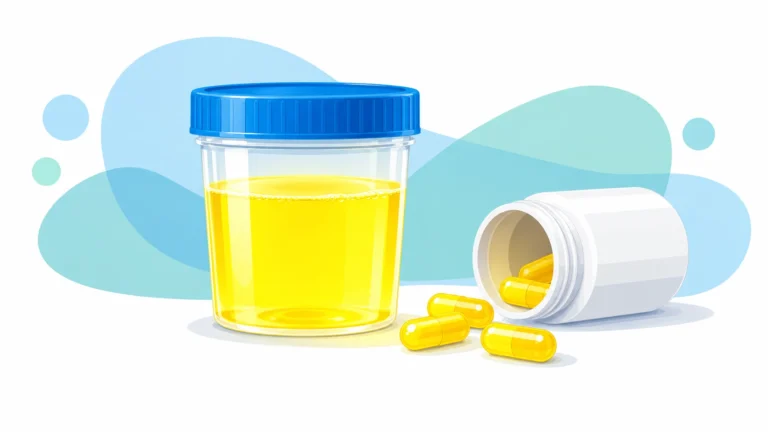
Ask first. AZO and Uristat contain phenazopyridine, a urinary pain reliever that eases burning but doesn’t kill bacteria. Cleveland Clinic lists it, along with acetaminophen (Tylenol), as a pain reliever to talk to your provider about while you wait for the antibiotic to work.
The safety data is thin. Drugs.com notes there are no data on phenazopyridine use in pregnant women, and animal studies showed no harm to the fetus. Its advice is to use it in pregnancy only if the benefit outweighs the risk. A few more points:
- AZO is for short-term relief only, and the label limits it to 2 days without a doctor.
- It turns urine orange and can change urine test results, so give your sample before your first dose.
- It can hide symptoms that tell your provider whether treatment is working.
- It never replaces the antibiotic.
Our guide to getting rid of a UTI fast covers how AZO works and its label directions.
After treatment: follow-up urine tests
Take every dose, even after you feel better. ACOG says your provider may repeat a urine culture 1 to 2 weeks after you finish, or may check again only if symptoms come back. Ask which approach your provider prefers.
Kidney infection during pregnancy
A kidney infection (pyelonephritis) is the most serious kind of UTI in pregnancy and one of the more common reasons pregnant women are admitted to the hospital. StatPearls notes it more often affects the right kidney, because of how the uterus presses on the ureters.
ACOG advises starting treatment in the hospital. Care usually includes:
- IV antibiotics that reach the kidneys, such as ceftriaxone or cefepime, or ampicillin plus gentamicin. Aztreonam is an option for people with a penicillin allergy. Nitrofurantoin and fosfomycin aren’t used, StatPearls says.
- IV fluids and acetaminophen for fever.
- Monitoring of the baby and of contractions once the pregnancy is far enough along.
- A switch to pills after you’ve been stable for at least 48 hours, per StatPearls.
- 14 days of antibiotics in total, counting IV and pills, per ACOG.
Most people improve within 48 to 72 hours, according to an ObG Project review of ACOG’s guidance, but about 1 in 4 get another infection before delivery. Your provider may suggest a daily low-dose antibiotic for the rest of the pregnancy.
Without prompt care, a kidney infection can spread. StatPearls reports that among pregnant women with pyelonephritis, about 7.5% develop bacteria in the blood, 13.3% develop sepsis and 1.9% go into septic shock. Up to 10% develop lung problems, including fluid in the lungs, and up to 25% develop anemia. Our guide to kidney infection vs UTI covers the general warning signs.
Can a UTI hurt your baby?
A bladder infection that’s treated promptly usually doesn’t affect the baby, Cleveland Clinic says. The American Pregnancy Association agrees that a UTI treated early and properly won’t cause harm.
The risk comes from infections that are missed or left untreated. ACOG says UTIs in pregnancy are linked to higher rates of preterm delivery and low birth weight. Among pregnant women with a kidney infection, StatPearls reports:
- Water breaking early (preterm premature rupture of membranes) in about 6.3%
- Preterm delivery in about 11%
- A birth weight under 2,800 grams (about 6 lb 3 oz) in about 8.2%
- Delivery within 72 hours of diagnosis in about 7%
StatPearls adds that the risk of preterm birth is highest in the first week after a UTI is diagnosed and stays raised until 37 weeks, mainly when the infection starts before 28 weeks. Older trials found that treating bacteria without symptoms cut preterm births. Newer studies are less certain about that effect, but screening and treatment still clearly prevent kidney infections.
Can a UTI cause a miscarriage?
A UTI by itself doesn’t cause a miscarriage, according to Cleveland Clinic, but complications from an untreated UTI can. MotherToBaby also notes that untreated urine infections may raise the chance of miscarriage. Either way, the answer is the same: get tested and take the full antibiotic course.
Repeat UTIs during pregnancy
About 4% to 5% of pregnancies have two or more UTIs, StatPearls reports. Medscape says a daily preventive antibiotic for the rest of the pregnancy is used in some cases, including after two or more bladder infections or one kidney infection. StatPearls lists nitrofurantoin or cephalexin once a day, or a single dose after sex, chosen to match the bacteria from your urine culture.
How to lower your risk of a UTI while pregnant
You can’t prevent every UTI. Cleveland Clinic notes they can happen even when you do everything right. These habits, recommended by Cleveland Clinic and the American Pregnancy Association, lower the odds:
- Drink enough fluids that you pee regularly
- Pee as soon as you feel the urge, and empty your bladder fully
- Pee before and after sex
- Wipe from front to back
- Wear cotton or cotton-crotch underwear and change it daily
- Skip tight pants and leggings when you can
- Avoid douches, feminine sprays, powders and harsh or scented soaps
- Limit baths to 30 minutes, no more than twice a day
- Keep your prenatal appointments, including the early urine screen
Talk to your provider before taking any supplement for UTI prevention, since not all are suited to pregnancy.
When to call your doctor or go to the hospital
Call your OB-GYN or midwife the same day if you have any UTI symptom, or if a urine test found bacteria or GBS. Pregnancy isn’t the time to wait and see.
Go to the hospital or call 911 if you have:
- A fever of 100.4°F (38.0°C) or higher, or shaking chills
- Pain in your back or side
- Nausea or vomiting that keeps you from holding down fluids or pills
- Contractions, belly tightening, or fluid leaking from the vagina
- A racing heartbeat, dizziness, confusion or feeling faint, which can be signs of sepsis
- Symptoms that get worse while you’re on antibiotics
The bottom line
A UTI in pregnancy is common, and with prompt treatment it rarely causes lasting problems. Pregnancy slows urine flow, so bacteria take hold more easily, and some infections cause no symptoms, which is why your urine is screened early in pregnancy. Bladder infections and bacteria without symptoms are treated with 5 to 7 days of an antibiotic chosen for your trimester. Fever, back pain, vomiting or contractions can mean a kidney infection, which needs hospital care right away.
Frequently asked questions
Can a UTI go away on its own while pregnant?
Don’t wait to find out. Even if symptoms fade, bacteria can stay in the bladder and climb to the kidneys. ACOG advises antibiotics for every confirmed infection in pregnancy, with or without symptoms.
Will drinking more water flush out a UTI while pregnant?
Water helps you pee more often and can ease burning, and Cleveland Clinic suggests 6 to 8 glasses a day. It can’t clear an infection by itself, so you still need the antibiotic.
Is cranberry juice safe for a UTI during pregnancy?
Unsweetened cranberry juice is a normal drink in pregnancy. Cleveland Clinic suggests it for prevention, and so does the American Pregnancy Association. It won’t cure an infection you already have, so it’s no substitute for antibiotics.
How soon will I feel better after starting antibiotics?
Cleveland Clinic says symptoms should start to clear by day three. The American Pregnancy Association advises calling your doctor if burning continues after three days of medicine.
Can I have sex with a UTI while pregnant?
The American Pregnancy Association advises avoiding sex while you’re being treated for a UTI. Wait until your symptoms clear and you’ve finished the antibiotic, then go back to peeing right after sex.
Sources
- American College of Obstetricians and Gynecologists. Urinary Tract Infections in Pregnant Individuals, Clinical Consensus No. 4, 2023 (reaffirmed 2026)
- Guideline Central. Urinary Tract Infections in Pregnant Individuals (ACOG 2023 overview)
- US Preventive Services Task Force. Asymptomatic Bacteriuria in Adults: Screening, 2019
- Habak PJ, Carlson K. Urinary Tract Infection in Pregnancy. StatPearls, 2026
- Cleveland Clinic. UTI During Pregnancy, 2024
- American Pregnancy Association. Urinary Tract Infection: UTI During Pregnancy, 2026
- Platte RO. Urinary Tract Infections in Pregnancy. Medscape, 2026
- Johnson CY, et al. Characteristics of women with urinary tract infection in pregnancy. Journal of Women’s Health, 2021
- Delzell JE, Lefevre ML. Urinary Tract Infections During Pregnancy. American Family Physician, 2000
- Contemporary OB/GYN. ACOG approves use of some antibiotics in first trimester, with reservations
- MotherToBaby. Nitrofurantoin fact sheet
- Drugs.com. Phenazopyridine Pregnancy and Breastfeeding Warnings
- AZO Urinary Pain Relief Maximum Strength, Drug Facts label
- The ObG Project. Pyelonephritis and pregnancy
- Mayo Clinic. Symptoms of pregnancy: What happens first
Disclaimer
This blog is for informational and educational purposes only, and does not intend to substitute any professional medical advice or consultation. For any health related concerns, please consult with your physician, or call 911.