Kidney Infection vs UTI: How to Tell If a UTI Has Spread to Your Kidneys
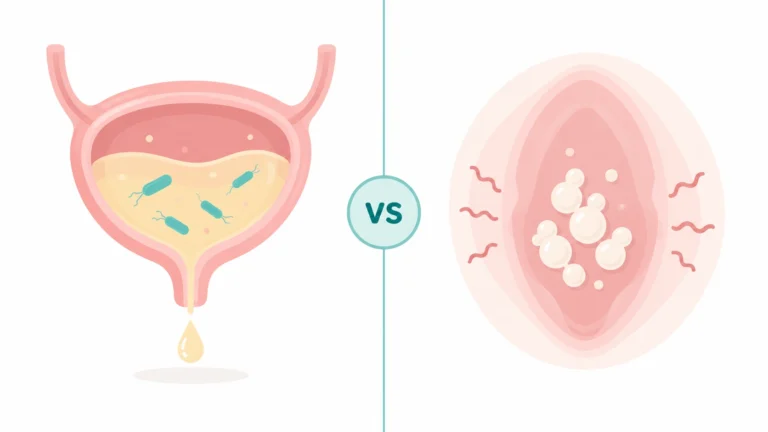
A UTI is any infection of the urinary tract, and most are bladder infections that cause burning, urgency and pressure low in the belly. A kidney infection is a UTI that has climbed to the kidneys. It adds fever, chills, pain in the back or side below the ribs, nausea or vomiting, and you feel sick all over. It needs a doctor the same day and a longer course of antibiotics.
A bladder infection is uncomfortable. A kidney infection can make you seriously ill. The two start the same way and share many symptoms, so it isn’t always obvious when one has turned into the other. This guide compares them side by side, explains what a kidney infection feels like, how often a UTI spreads, how doctors tell them apart, how treatment differs and when to get help right away.
Kidney infection vs UTI at a glance
| Bladder infection (most UTIs) | Kidney infection | |
|---|---|---|
| Medical name | Cystitis | Pyelonephritis |
| Where it is | Bladder and urethra | One or both kidneys |
| Main symptoms | Burning, urgency, peeing often, pressure low in the belly | The same, plus fever, chills, nausea or vomiting |
| Pain | Low in the belly; sometimes a low backache | Back or side below the ribs, sometimes the groin |
| How you feel | Uncomfortable but not ill | Sick all over, tired and achy |
| Fever | Usually none | Common, often over 101°F (38.3°C) |
| Urgency of care | See a doctor within a day or two | Same day; ER if severely ill |
| Antibiotics | Short course, often 1 to 5 days in women | Longer course, usually 7 to 14 days |
Sources: Mayo Clinic, MedlinePlus, NHS
UTI, bladder infection and kidney infection: what the words mean
These terms get mixed up, so it helps to sort them out first.
- UTI (urinary tract infection) is the umbrella term. It means an infection anywhere in the urinary tract: the urethra, bladder, ureters or kidneys.
- Bladder infection (cystitis) is the most common type of UTI. When people say “UTI,” this is usually what they mean.
- Kidney infection (pyelonephritis) is a UTI that has reached one or both kidneys. It’s an upper urinary tract infection, while a bladder infection is a lower one.
So is a bladder infection the same as a UTI? Every bladder infection is a UTI, but not every UTI is a bladder infection. And a kidney infection isn’t a separate illness from a UTI. It’s a UTI in a more serious spot. Doctors also sort UTIs into uncomplicated and complicated ones. An infection limited to the bladder, with no fever, is uncomplicated. The 2025 Infectious Diseases Society of America (IDSA) guideline counts a kidney infection as complicated, along with a UTI that comes with fever, back or side pain, a blockage such as a kidney stone, or a catheter or stent. That label changes the choice and length of antibiotics. Our guide to UTI symptoms, causes and treatment covers every type.
Signs of a kidney infection
Mayo Clinic lists these kidney infection symptoms:
- Fever and chills
- A burning feeling or pain when you pee
- Peeing often, with a strong, lasting urge
- Pain in the back, side or groin
- Belly pain
- Nausea and vomiting
- Pus or blood in the urine
- Urine that smells bad or looks cloudy
The NHS adds dark urine and two easy-to-miss signs: feeling hot, cold and shivery, and a temperature that’s unusually low, below 96.8°F (36°C).
What does the beginning of a kidney infection feel like? Often like a bladder infection that suddenly gets worse. The burning and urgency may already be there, then over hours to a day or two you start to feel feverish, achy and wiped out, and a deep ache sets in on one side of your back. Many people describe it as the flu with back pain. Fever, back or side pain and nausea are the three signs that most often point to the kidneys.
What does your pee look like? It may be cloudy, dark, bloody or foul-smelling. These changes can happen with a bladder infection too, so urine alone doesn’t tell you the infection has spread. Fever and back pain matter more.
Where kidney infection pain is felt
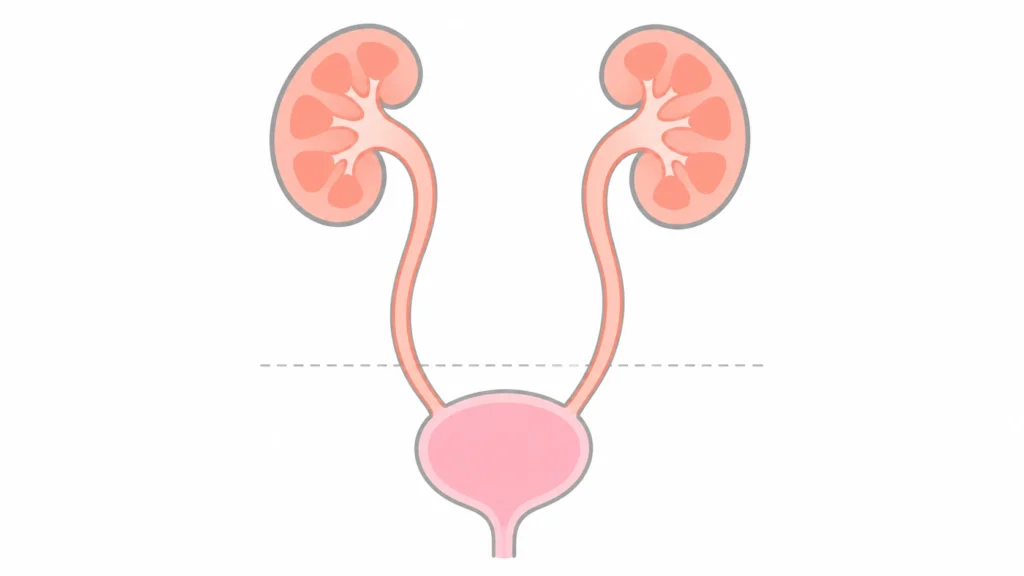
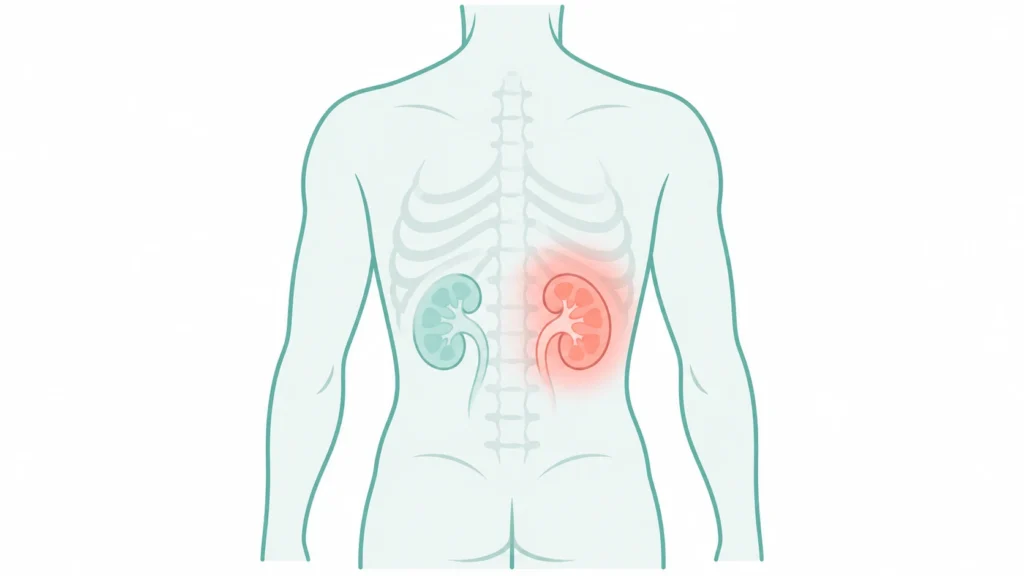
Your kidneys sit high in the back, just under the lower ribs, one on each side of the spine. Kidney infection pain is usually a deep, steady ache there, often on one side, and it can spread around to the side or down to the groin. A bladder infection hurts lower, in the middle of the belly just above the pubic bone, and any backache tends to be low and dull.
Where to press to check for kidney pain? During an exam, a doctor may press or tap gently on your back over each kidney, just below the ribs. With a kidney infection, that often hurts sharply. You can’t rule an infection out by pressing yourself, though, and back pain has many other causes, from muscle strain to a kidney stone. Our guide to other causes of back and side pain explains how they differ.
Can you have a kidney infection without a fever?
Yes. Fever is common, but it isn’t always there. MedlinePlus notes that in older adults, confusion or other mental changes may be the only sign of a urinary infection. The NHS says a temperature below 96.8°F (36°C) can also be a warning sign, and young children may show only a high fever and nothing else.
What about UTI lower back pain with no fever? A bladder infection can cause a dull ache low in the back, so low back pain on its own doesn’t mean the kidneys are infected. Pain higher up under the ribs, mainly when it comes with chills, nausea or feeling unwell, is more concerning even without a fever. Some infections cause few bladder symptoms at all, as our guide to a UTI with no burning at all explains.
How a UTI turns into a kidney infection
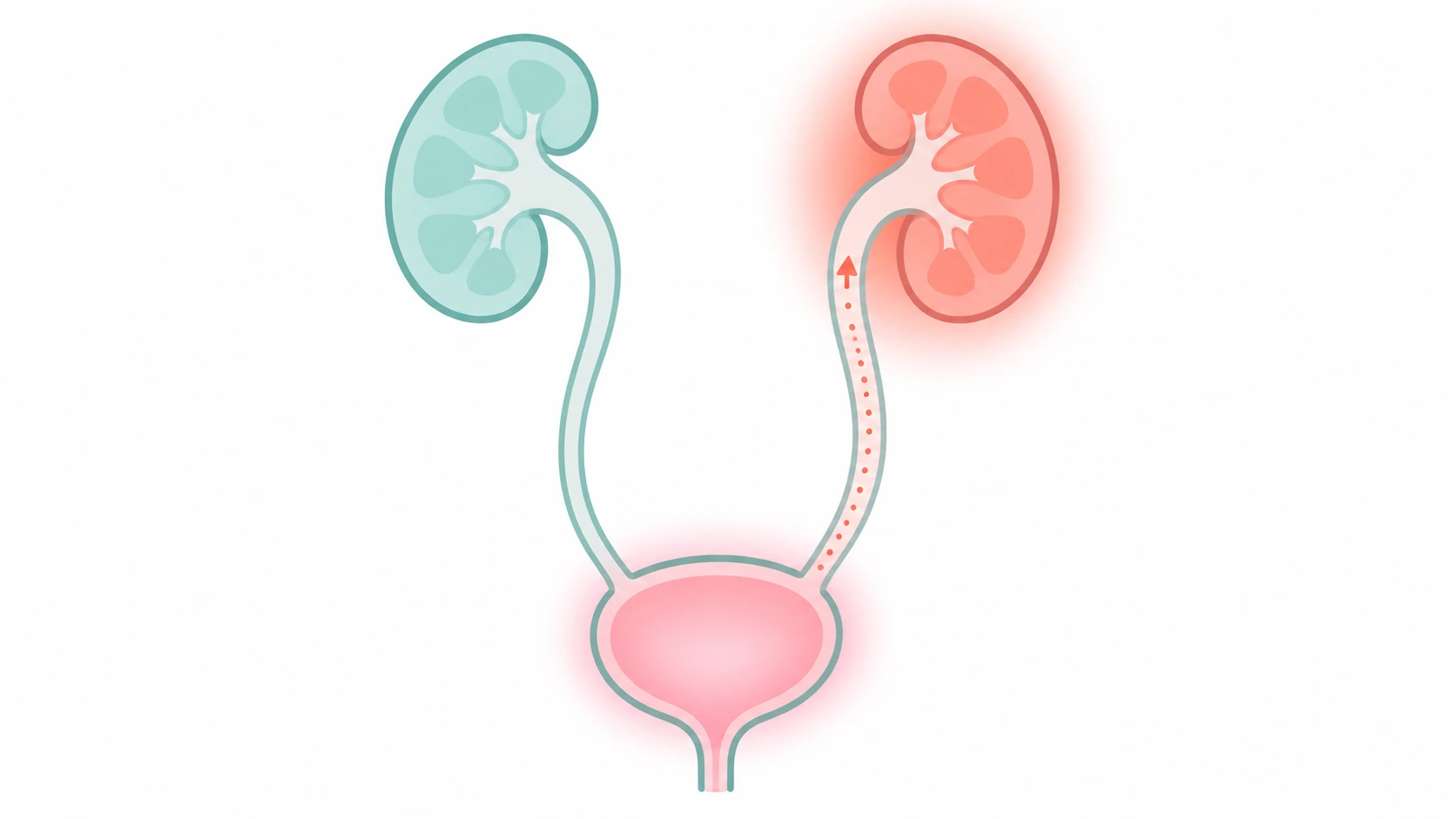
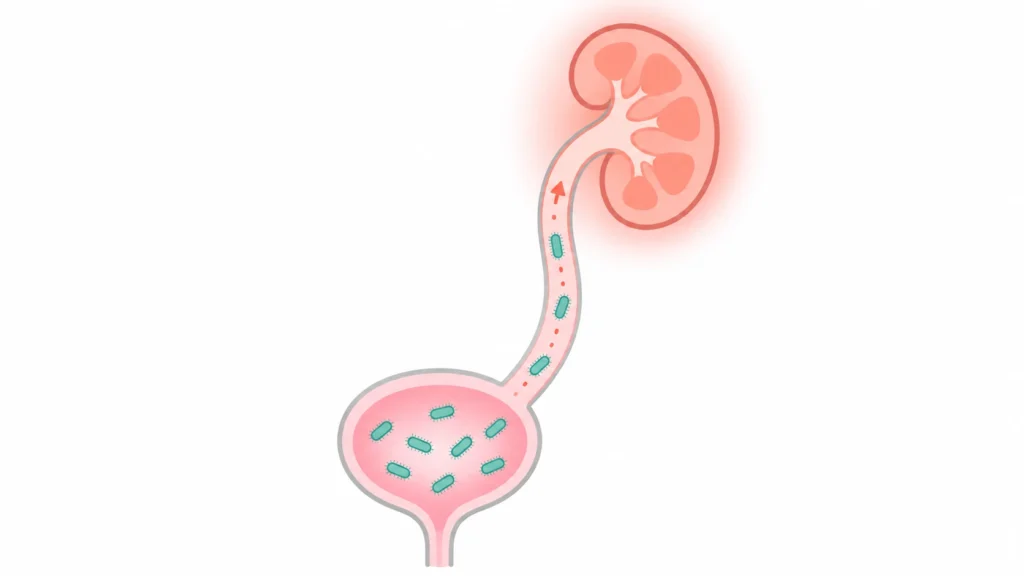
Most kidney infections start the same way. Bacteria, usually from the bowel, get into the urethra and multiply in the bladder. Mayo Clinic explains that from there they can travel up the ureters to the kidneys. Less often, bacteria reach the kidneys through the blood from an infection somewhere else in the body.
How often does a bladder infection spread? Less often than many people fear. In placebo-controlled trials of untreated bladder infections, summarized by the Canadian drug-information service RxFiles, 0.4% to 2.6% of people went on to develop a kidney infection. In one case, it was diagnosed on day 3. The risk is small, but it’s real, which is why doctors treat bladder infections rather than wait.
How long until a UTI turns into a kidney infection? There’s no set timeline. It can happen within a few days or not at all. What matters is watching for the signs that it’s happening.
Mayo Clinic lists these risk factors for a kidney infection:
- Being female. The urethra is shorter, so bacteria reach the bladder more easily.
- Pregnancy.
- A blockage, such as a kidney stone, a narrowed urethra or an enlarged prostate
- A weak immune system, from diabetes, HIV or medicines taken after an organ transplant
- Nerve damage around the bladder, which can hide the feeling of a bladder infection
- A urinary catheter or a stent in the ureter
- Vesicoureteral reflux, where urine flows backward from the bladder toward the kidneys
Signs your UTI is spreading to your kidneys:
- A new fever or chills
- Pain moving from low in your belly to your back or side
- Nausea or vomiting
- Feeling suddenly much sicker
- No improvement after 2 to 3 days of antibiotics. Mayo Clinic advises telling your doctor if this happens.
How doctors tell a kidney infection from a UTI
Symptoms come first. Fever, back or side pain, nausea and feeling ill point to the kidneys. Then:
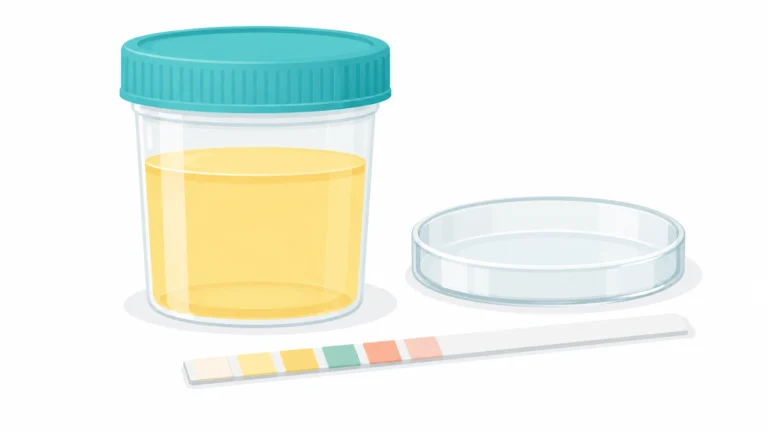
- Urine test. Mayo Clinic says the urine is checked for bacteria, blood and pus (white blood cells). This confirms a UTI but can’t tell on its own whether the kidneys are involved.
- Urine culture. A urine culture names the bacteria and shows which antibiotics will work. It matters more for a kidney infection, because the first antibiotic is a guess until the results come back.
- Blood tests. A blood count shows how hard your body is fighting the infection, and a blood test for bacteria checks whether the infection has reached the bloodstream.
- Imaging, when needed. Most people don’t need a scan. A 2019 review in the Cleveland Clinic Journal of Medicine advises imaging, such as an ultrasound or CT scan, if fever or a high white blood cell count persists after 72 hours of antibiotics, or earlier for people with diabetes, a weak immune system, kidney stones or a severe illness.
Can urgent care diagnose a kidney infection? Yes. An urgent care clinic can examine you, test your urine and start antibiotics. It will send you to the ER if you’re severely ill, vomiting, pregnant with a high fever or showing signs of sepsis. Home UTI test strips can’t tell a bladder infection from a kidney infection.
Treatment: bladder infection vs kidney infection
A bladder infection is treated with a short course of antibiotics. MedlinePlus says this is usually 1 to 5 days in women and 7 to 14 days in men.
A kidney infection needs stronger, longer treatment:
- Antibiotics for 7 to 14 days, according to the NHS. The 2025 IDSA guideline on complicated UTIs supports shorter courses for many people: 5 to 7 days of a fluoroquinolone, or 7 days of another antibiotic.
- Not every UTI antibiotic works. Nitrofurantoin and oral fosfomycin, two common bladder infection drugs, don’t reach high enough levels in the kidneys. Our guide to antibiotics for kidney infections covers the usual choices.
- Hospital care if you’re severely ill. Mayo Clinic says severe infections may need antibiotics and fluids through a vein in the hospital. People who can’t keep pills down, who are pregnant or who have other health problems are more likely to need this.
- Finish the full course. Mayo Clinic notes that symptoms often improve within a few days, but stopping early can let the infection come back. Your doctor may repeat the urine culture to confirm it’s gone.
The NHS says most people feel better after about 2 weeks. Our guide to how long a kidney infection lasts covers the day-by-day timeline.
At home while the antibiotics work, Mayo Clinic suggests:
- A heating pad on your back, side or belly for pain
- Acetaminophen for fever and aches. If you have chronic kidney disease, avoid or limit NSAIDs such as ibuprofen.
- Plenty of fluids to help flush bacteria out
- Skipping coffee and alcohol until the infection clears, since they can worsen the urge to pee
Will a kidney infection clear up without antibiotics? Don’t count on it. Some mild bladder infections settle on their own, but a kidney infection is treated with antibiotics. Water, cranberry and home remedies don’t replace them. Waiting raises the risk of the complications below.
How serious is a kidney infection?
Most kidney infections clear completely with prompt antibiotics. They’re also common: the Cleveland Clinic Journal of Medicine review estimates about 250,000 office visits and 200,000 hospital admissions for kidney infections each year in the US.
Left untreated, Mayo Clinic says a kidney infection can cause:
- Kidney scarring, which can lead to chronic kidney disease, high blood pressure and kidney failure
- Blood poisoning, when bacteria spread into the bloodstream
- Pregnancy problems, including a higher risk of a baby with low birth weight
Can a kidney infection kill you? It can, though it’s uncommon when treated early. Mayo Clinic notes that a severe kidney infection can lead to blood poisoning, tissue damage and, in severe cases, death. The danger is sepsis, the body’s extreme reaction to an infection in the blood. The National Institute of Diabetes and Digestive and Kidney Diseases (NIDDK) lists confusion, fast breathing, a racing heart and shortness of breath among its signs. There’s no fixed number of hours or days. Sepsis can develop quickly once bacteria reach the blood, which is why fever with back pain shouldn’t wait.
Kidney infections in pregnancy, children and older adults
Pregnancy. Mayo Clinic says pregnant people have a higher risk of kidney infection, and an infection during pregnancy raises the risk of a baby with low birth weight. The NHS advises urgent care for any suspected kidney infection during pregnancy. Some pregnant women need hospital treatment, and the antibiotic is chosen to be safe for the baby.
Children. The NHS says a child under 2 with a kidney infection may only have a high temperature. Older children may wet the bed or seem unusually drowsy. Any baby or young child with an unexplained fever needs to see a doctor.
Older adults. Fever and pain may be mild or missing. MedlinePlus notes that confusion or sudden changes in thinking may be the only sign. A urine test helps when an older person suddenly seems unwell, but bacteria in the urine without symptoms aren’t always an infection, so doctors look at the whole picture.
When to go to urgent care or the ER
See a doctor the same day, at your own office or an urgent care clinic, if you have:
- Fever or chills with UTI symptoms
- Pain in your back or side below the ribs
- Nausea, or blood in your urine
- UTI symptoms while pregnant
- No improvement after 2 to 3 days of antibiotics
Go to the ER or call 911 if you have:
- Confusion, drowsiness or trouble speaking
- Fast breathing, a racing heart or shortness of breath
- Vomiting that stops you keeping down fluids or antibiotics
- Shaking chills with a high fever, or a temperature below 96.8°F (36°C)
- Little or no urine all day
- Severe pain
The NHS advises not driving yourself if you feel this unwell.
The bottom line
A kidney infection is a UTI that has climbed to the kidneys. A bladder infection burns and makes you pee often. A kidney infection adds fever, chills, pain in the back or side below the ribs, nausea and feeling sick all over. Only a small share of bladder infections spread, but when one does, it needs a doctor the same day and usually 7 to 14 days of the right antibiotic. Confusion, fast breathing, vomiting or little urine mean the ER.
Frequently asked questions
What causes 80% of UTIs?
E. coli. The CDC says this gut bacterium causes 80% to 90% of UTIs. These are strains that live harmlessly in the bowel, not the type linked to food poisoning.
Can cranberry juice treat a kidney infection?
No. A 2023 Cochrane review found cranberry products lower the chance of repeat UTIs in some groups, including women who get them often. That’s prevention. They don’t treat an active infection of the kidneys.
Can a kidney infection come back?
Yes. Mayo Clinic says repeated kidney infections can be a sign of a problem in the shape of the urinary tract. Your doctor may refer you to a urologist to look for one.
Can men get kidney infections?
Yes, though less often than women, since the male urethra is longer. Mayo Clinic lists an enlarged prostate as a risk factor because it can block urine flow and leave the bladder partly full.
Sources
- Mayo Clinic. Kidney infection: Symptoms and causes, 2026
- Mayo Clinic. Kidney infection: Diagnosis and treatment
- NHS. Kidney infection
- MedlinePlus. Urinary tract infection – adults
- National Institute of Diabetes and Digestive and Kidney Diseases. Symptoms & Causes of Kidney Infection (Pyelonephritis)
- Lacy ME, Sidhu N, Miller J. When does acute pyelonephritis require imaging? Cleveland Clinic Journal of Medicine, 2019
- LeBras M. What is the risk of pyelonephritis with cystitis? RxFiles, 2017
- Long B. Guideline Update: 2025 IDSA Management of Complicated UTI. emDocs, 2025
- Centers for Disease Control and Prevention. Urinary Tract Infection Basics
- Williams G, et al. Cranberries for preventing urinary tract infections. Cochrane Database of Systematic Reviews, 2023
Disclaimer
This blog is for informational and educational purposes only, and does not intend to substitute any professional medical advice or consultation. For any health related concerns, please consult with your physician, or call 911.