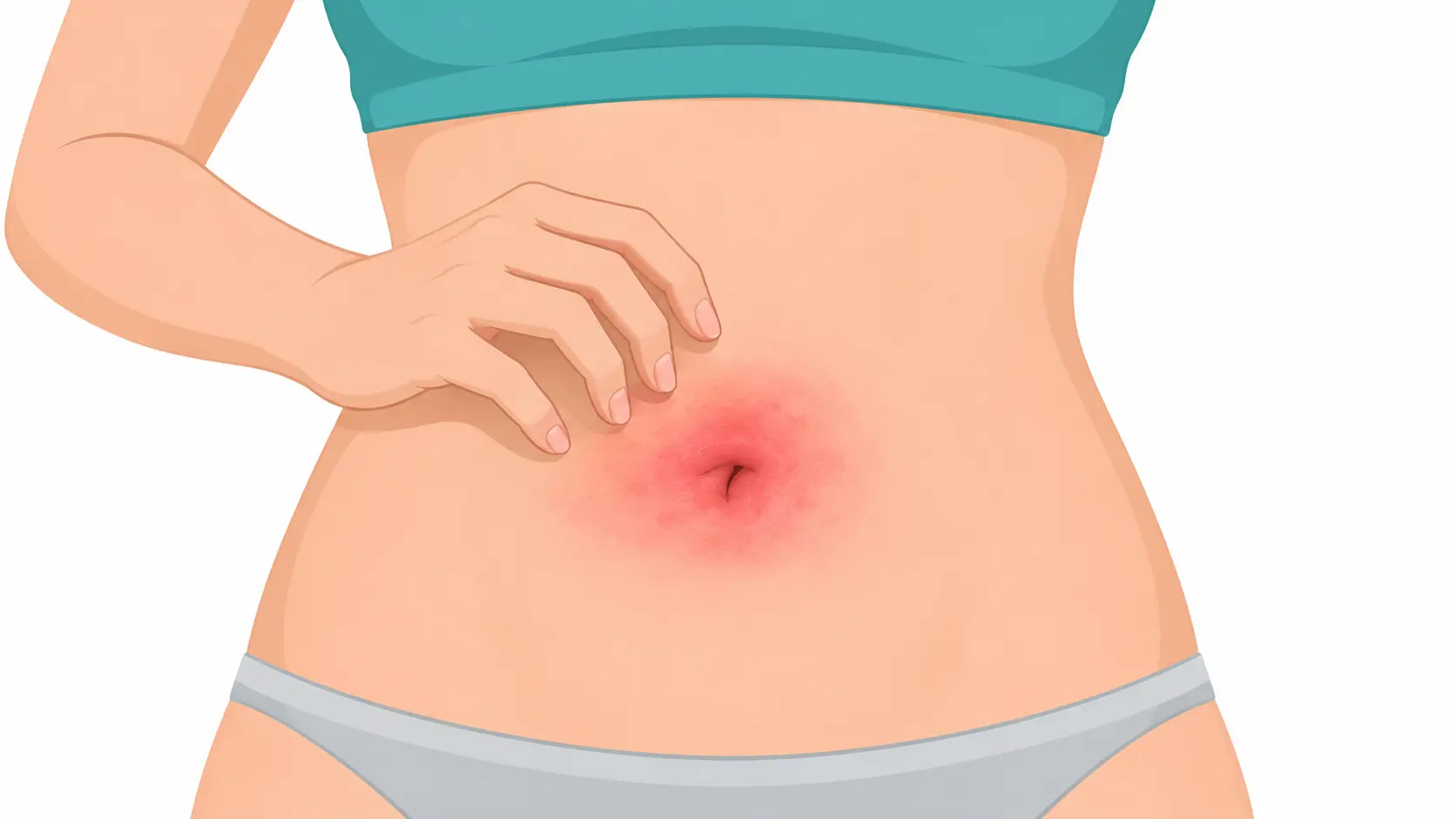
Why Is My Belly Button Red? Causes of a Red, Itchy Belly Button and What to Do
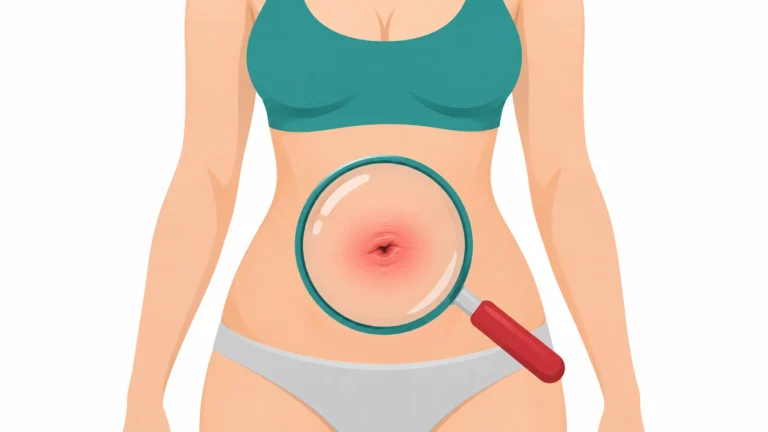
A red belly button is most often caused by moisture and rubbing in the skin fold (intertrigo), a yeast infection, or a skin reaction to soap, lotion or the nickel in a jeans snap or belt buckle. Itching points toward yeast, an allergy or irritation. Pain, warmth, swelling or pus points toward a bacterial infection. Most cases clear with the right cream and a clean, dry navel. See a doctor for fever, spreading redness, a painful bulge or a lump.
Your belly button is a deep fold of skin that stays warm and damp, and it sits right where waistbands, snaps and buckles press on your belly. That makes it an easy spot for both rashes and infections. If the rash spreads past the navel, our guide to a rash on your stomach covers the rest of the belly.
This guide walks through the common causes of a red belly button, how to tell them apart, what it means when it’s itchy, crusty or smelly, the rare causes that need a doctor quickly, and which creams help.
Here’s a quick guide to the most common causes:
| Cause | Clues | What helps |
|---|---|---|
| Intertrigo | Red, raw skin deep in the fold, worse with sweat and heat | Keeping the navel dry and aired out |
| Yeast infection | Bright red, itchy rash that may burn, white discharge, small red spots around it | Antifungal cream |
| Contact dermatitis | Itchy or burning rash after a new soap, lotion or detergent | Stopping the product; hydrocortisone cream |
| Nickel allergy | Itchy rash right where a jeans snap, belt buckle or navel ring touches | Avoiding the metal; hydrocortisone cream |
| Bacterial infection | Painful, warm, swollen skin, sometimes with pus or fever | A provider visit; often antibiotics |
| Piercing problem | Redness, swelling or ooze around the jewelry | Saltwater cleaning; a provider if infected |
| Inverse psoriasis | Smooth, shiny, sore patch with little scale | Psoriasis treatment from a provider |
| Scabies | Intense itch with a pimple-like rash around the waist | Prescription scabies treatment |
Sources: StatPearls, Cleveland Clinic, Mayo Clinic, American Family Physician, AAD, CDC, NHS.
Intertrigo: moisture and rubbing
Intertrigo is a rash in a skin fold. StatPearls says it’s triggered by warmth, friction, moisture and poor airflow, and it’s more common in hot, humid weather and in people with obesity or diabetes. The skin turns red and irritated. Because it sits deep inside the navel, it’s a common cause when the inside of your belly button is red.
Intertrigo also opens the door to yeast and bacteria. The American Family Physician (AFP) review notes that small red bumps or pus spots around the edge of the rash, called satellite lesions, suggest Candida has moved in.
Yeast infection

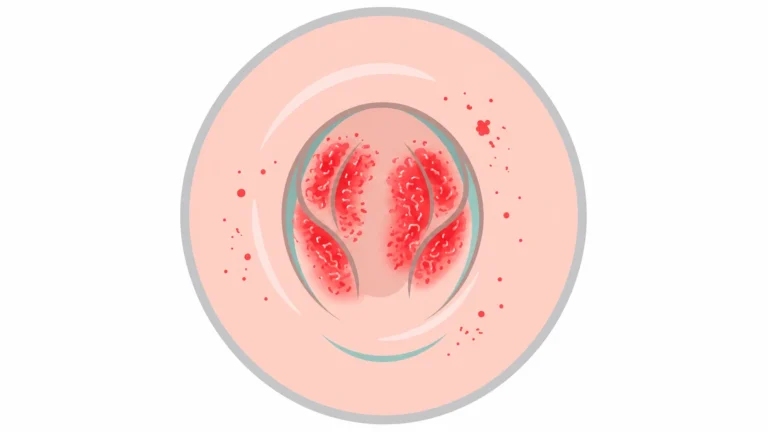
A yeast infection is one of the most common reasons for a red, itchy belly button. Cleveland Clinic describes a bright red rash in the skin folds of the navel that’s usually itchy and may burn, sometimes with scaling, swelling or a white discharge. Tight clothes, sweat, antibiotics, pregnancy, obesity and diabetes raise the risk. An antifungal cream usually clears it. Our guide to a belly button yeast infection covers which creams to use and why it comes back.
Contact dermatitis from soaps and lotions
Contact dermatitis is a rash where your skin touched something that irritated it or that you’re allergic to. Mayo Clinic lists soap, bleach and detergents among common irritants, and fragrances and preservatives among common allergens. Symptoms include an itchy rash, bumps or blisters, swelling, burning and tenderness. On white skin the rash looks dry, cracked and scaly, while on brown or Black skin it may form darker, leathery patches.
Think about anything new: a body wash, a lotion you rubbed into the navel, a laundry detergent or a new pair of pants. Our guide to skin rashes and bumps explains contact dermatitis in more detail.
Nickel allergy from snaps, buckles and jewelry
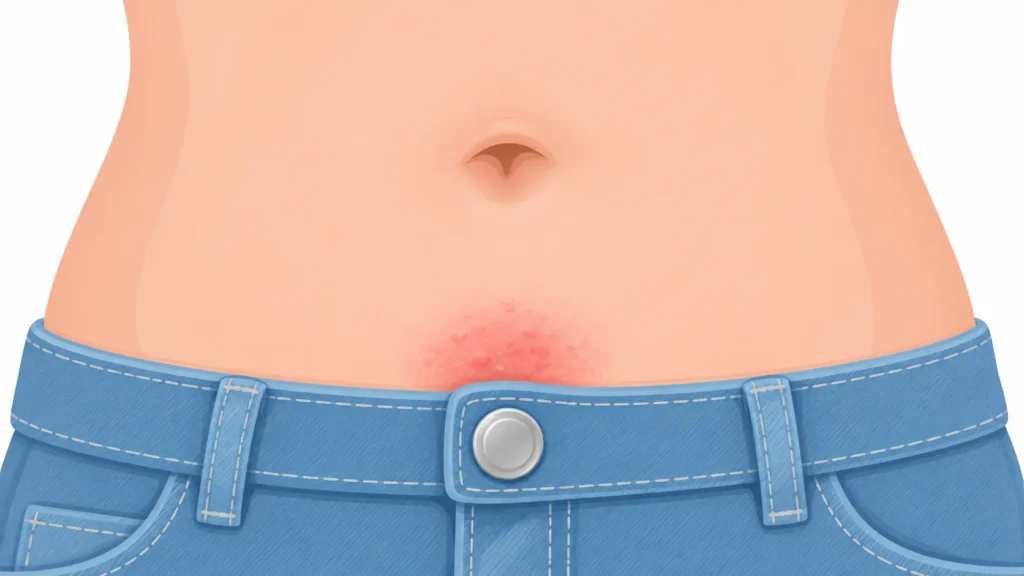
Nickel allergy is a type of contact dermatitis, and the belly button is one of its favorite spots. A 2005 AFP case report notes that an itchy rash near the belly button almost always comes from nickel allergy, often from the metal snap on jeans.
Mayo Clinic lists clothing fasteners such as snaps, zippers and belt buckles, plus piercing jewelry, as common sources of nickel. The rash usually starts within a couple of days of contact and can be intensely itchy, with bumps, color changes, blisters or thick, leathery skin. Once you’re allergic, the reaction comes back every time your skin touches nickel.
Clues it’s nickel: the rash sits just below the navel where a snap or buckle rests, or right around a navel ring, and it flares after wearing the same jeans or belt.
Bacterial infection
Bacteria such as staph can infect the skin in and around the navel, often through a scratch, a crack in irritated skin or a piercing. The CDC says a staph skin infection looks like a bump or patch that’s red, swollen, painful and warm, sometimes with pus or drainage and a fever. Pain, more than itch, is the giveaway.
A bacterial infection usually needs a provider and sometimes antibiotics. Our guide on whether a belly button infection can turn dangerous explains the warning signs that need urgent care.
An irritated or infected piercing
A new navel piercing is slow to heal. Cleveland Clinic says some tenderness, redness and crusting is normal for 12 to 18 months. Redness that’s getting worse instead of better is a different story.
The NHS lists these signs of an infected piercing: swelling, pain, heat, redness or darkening of the skin, and blood or pus coming out. It advises leaving the jewelry in unless a doctor tells you to remove it, and cleaning the piercing twice a day with warm, salty water. If the redness is itchy and sits right where the metal touches, nickel in the jewelry may be the cause instead.
Psoriasis in skin folds is called inverse psoriasis. The American Academy of Dermatology (AAD) says it forms where skin touches skin and causes shiny, smooth patches instead of scaly ones. The patches are often bright red and sore. The National Psoriasis Foundation adds that on darker skin the patches can look purple or brown, and that inverse psoriasis is often mistaken for a fungal infection.
If an antifungal cream hasn’t helped a red, shiny navel, and you have psoriasis elsewhere or in your family, ask a dermatologist to take a look.
Scabies
Scabies is an infestation of tiny mites that burrow into the skin. The CDC describes intense itching and a pimple-like rash, sometimes with tiny raised, crooked lines where the mites burrow. The waist is one of the common spots, and DermNet lists scabies burrows as one cause of skin problems at the belly button. The first time you get scabies, symptoms can take three to six weeks to appear, and you can pass it on even before symptoms start. It needs a prescription treatment.
Itching and pain point in different directions:
- Mostly itchy: yeast, nickel allergy, contact dermatitis, scabies or, less often, psoriasis
- Mostly painful, warm or swollen: a bacterial infection, an infected piercing or an inflamed cyst
Whatever the cause, try not to scratch. For contact dermatitis, Mayo Clinic advises against scratching and suggests trimming your nails and covering the itchy area.
Red and crusty
A crust forms when fluid from the skin dries. A healing piercing can crust for months, as noted above. Crusting can also come from blisters in a dermatitis rash that drain and then dry. Crusting with pain, warmth, pus or fever points more toward a bacterial infection, and that’s worth a provider visit.
Red and smelly or wet
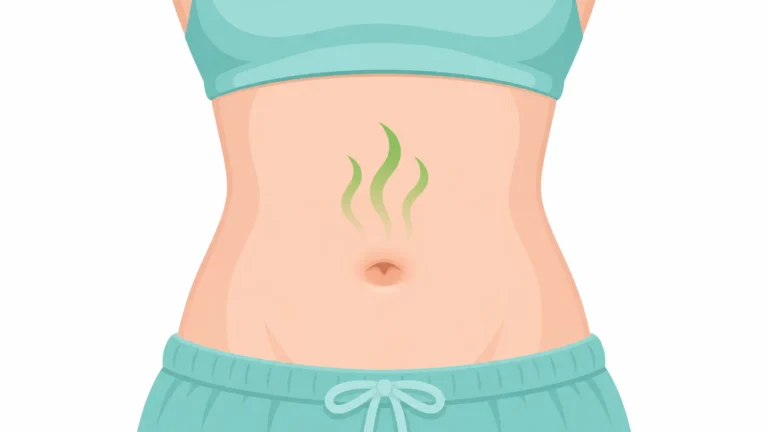
Redness with a bad smell or a damp navel usually means something is draining. A white discharge with an itchy rash points to yeast, while pus with pain and warmth points to a bacterial infection. Our guide to why your belly button smells walks through each type of discharge.
Red with bleeding
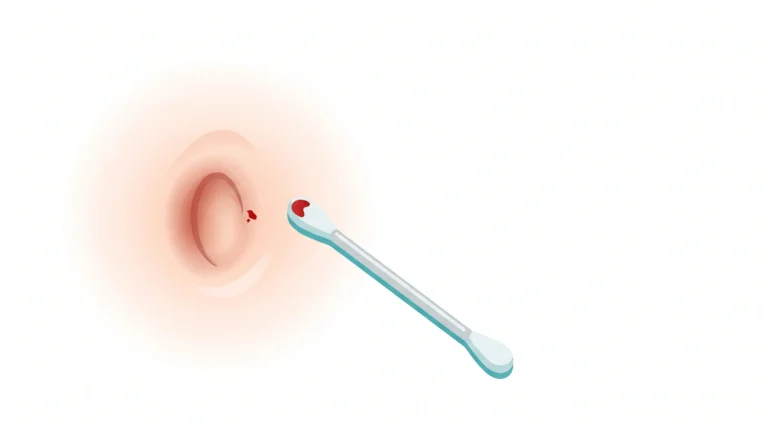
A little blood can come from scratching an itchy rash or from a piercing. Bleeding without an obvious reason, or bleeding that comes back, needs a check. Our guide to belly button bleeding covers the causes.
Rare but serious causes
Most red belly buttons are a skin problem. A few causes come from deeper in the body and need prompt care:
- Strangulated umbilical hernia: a bulge at the navel that gets trapped. The Merck Manual describes steady, growing pain, nausea, vomiting and a tender bulge that can’t be pushed back in, sometimes with red skin over it. The trapped bowel can start to die in as few as 6 hours, so this needs emergency surgery.
- Redness with severe belly pain: DermNet lists a red navel among the signs of serious problems inside the belly, such as dying bowel or peritonitis, an infection of the belly lining. Belly pain with fever or vomiting needs the ER.
- Umbilical endometriosis: tissue like the lining of the uterus growing in the navel. DermNet lists it among the growths seen at the belly button.
- Sister Mary Joseph nodule: a red bump or nodule in the navel caused by cancer that has spread from inside the belly. DermNet says that in about a quarter of cases, it’s the first sign of the cancer, most often from the stomach, colon, pancreas, ovary or uterus. It’s rare, but a firm, growing lump in the navel always needs a doctor.
A newborn’s belly button can turn red from a cord infection. The American Academy of Pediatrics (AAP) lists red skin around the base of the cord, foul-smelling yellowish discharge and crying when you touch the area as signs to call the pediatrician. A small red or brownish lump that drains light-yellow fluid after the cord falls off is usually an umbilical granuloma, which often goes away in about a week.
Home care

- Keep the navel clean and dry. Wash gently, pat it dry and let it air out. StatPearls and the AFP both say keeping skin folds dry helps intertrigo heal and stay away.
- Stop anything new. Skip new soaps, lotions or detergents until the rash clears.
- Block the nickel. Mayo Clinic suggests a barrier such as clear nail polish over snaps, and the AFP case report suggests tape over the inside of the jeans button. Choose nickel-free navel jewelry, such as titanium or surgical-grade stainless steel.
- Cool it down. Mayo Clinic suggests a cool, wet cloth for 15 to 30 minutes several times a day for itchy contact dermatitis.
- Wear loose clothes that don’t rub or trap sweat.
Which cream to use
The right cream depends on the cause, and the wrong one can make things worse:
| Cause | Cream | Notes |
|---|---|---|
| Yeast or intertrigo with satellite spots | Antifungal, such as clotrimazole or miconazole | Twice a day until the rash is gone |
| Contact dermatitis or nickel allergy | 1% hydrocortisone | Mayo Clinic suggests 1 to 2 times a day for a few days |
| Bacterial infection | Antibiotic, prescribed by a provider | See a provider first |
| Psoriasis | Prescription treatment | Strong steroids are not ideal for skin folds, says the National Psoriasis Foundation |
Sources: Cleveland Clinic, AFP, Mayo Clinic, National Psoriasis Foundation.
Hydrocortisone doesn’t kill yeast. If the rash has small red spots around its edge or a white discharge, start with an antifungal, or ask a pharmacist if you can’t tell yeast from irritation.
When to see a doctor
See a provider if:
- The redness spreads, or you see red streaks moving away from the navel
- You have pain, warmth, swelling, pus or a fever
- You notice a lump or bulge in or near the belly button
- The rash hasn’t improved after a couple of weeks of home care, or keeps coming back
- You think you have scabies
- You have diabetes or a weak immune system
- A newborn’s cord area is red or smells bad
Go to the ER for a painful bulge at the navel with vomiting, severe belly pain, or fever with confusion or a racing heart.
The bottom line
A red belly button is usually a skin-fold problem. Moisture and rubbing (intertrigo), yeast, contact dermatitis and nickel allergy from a jeans snap or belt buckle are the most common causes, and itching points toward these. Pain, warmth, swelling and pus point toward a bacterial infection or an infected piercing. Keep the navel clean and dry, stop new products, block nickel, and match the cream to the cause: antifungal for yeast, hydrocortisone for irritation or allergy. A painful bulge, severe belly pain, fever or a growing lump needs a doctor quickly.
Frequently asked questions
Scabies is one reason to consider. The CDC says scabies causes intense itching that's usually worse at night, and the itchy bumps often show up around the waist. See a provider if you notice this pattern.
A thin layer can help protect irritated skin. The AFP review lists petrolatum and zinc oxide as skin barriers for skin-fold rashes, but don't pack the navel, since trapped moisture feeds yeast.
Rarely. DermNet lists the raised, moist patches of secondary syphilis among conditions seen at the navel. A rash with genital sores, fever or a new partner is a reason to get tested for STIs.
Often, once you remove the cause. Mayo Clinic says contact dermatitis usually clears in 2 to 4 weeks after you avoid the trigger. Infections and psoriasis need treatment, so see a provider if it lingers.
Sources
- StatPearls. Intertrigo. National Library of Medicine
- Kalra MG, Higgins KE, Kinney BS. Intertrigo and Secondary Skin Infections. American Family Physician, 2014
- Cleveland Clinic. Belly Button Yeast Infection, 2022
- Mayo Clinic. Contact Dermatitis: Symptoms and Causes
- Mayo Clinic. Contact Dermatitis: Diagnosis and Treatment
- Mayo Clinic Care Network. Nickel Allergy
- Barankin B. Itchy Plaques on the Abdomen. American Family Physician, 2005
- American Academy of Dermatology. What Does Psoriasis Look Like?
- National Psoriasis Foundation. Inverse Psoriasis
- Centers for Disease Control and Prevention. Symptoms of Scabies
- Centers for Disease Control and Prevention. About Methicillin-resistant Staphylococcus aureus (MRSA)
- Cleveland Clinic. Infected Belly Button Piercing, 2023
- NHS. Infected Piercings
- Oakley A. Skin Problems On and Around the Umbilicus. DermNet
- DermNet. Sister Mary Joseph Nodule
- Ansari P. Abdominal Wall Hernias. Merck Manual Consumer Version, 2024
- American Academy of Pediatrics, HealthyChildren.org. Umbilical Cord Care, 2025
Disclaimer
This blog is for informational and educational purposes only, and does not intend to substitute any professional medical advice or consultation. For any health related concerns, please consult with your physician, or call 911.