Why Does My Belly Button Smell? Causes, Discharge and How to Stop It
Most belly buttons smell because sweat, dead skin, oil and lint collect in the folds, and the bacteria living there turn that mix into odor. Deep belly buttons trap more of it, so they can smell even if you shower every day. Washing inside the navel with soap and water and drying it well usually fixes it. A smell that comes with discharge, pain, redness, a lump or fever points to an infection or a cyst and needs a doctor.
Your belly button is easy to miss in the shower. Water runs over it, but soap rarely gets into the folds. Over a few days, that small pocket fills with the same things that make armpits and feet smell.
This guide explains why your belly button smells, what different smells and discharge can mean, the medical causes to know about, how to get rid of the odor, and when to see a doctor.
Trapped sweat, skin and bacteria
The most common reason is simple buildup. Cleveland Clinic says sweat, dirt and dead skin collect in the belly button, and an innie’s folds make a dark, damp spot where bacteria grow well.

A 2023 study in the journal Microbes and Environments looked at the dirt inside the belly buttons of 24 young women. The samples that smelled worst held more of certain anaerobic bacteria, the kind that grow without oxygen, such as Peptoniphilus, Arcanobacterium and Mobiluncus. The most common bacteria in the samples, Corynebacterium, wasn’t linked to the smell.
That’s also why your finger can smell after you touch the inside of your belly button. You’re picking up the same trapped mix, not a sign of disease on its own.
Why it can smell even after a shower
Shape matters. In the same 2023 study, deep, narrow belly buttons smelled stronger than wide, shallow ones. The researchers also found that cleaning habits went the opposite way from odor: the people who cleaned their belly buttons more often tended to have less smelly samples.

A daily shower that skips the inside of the navel won’t clear what has built up in a deep fold. Cleveland Clinic recommends cleaning inside your belly button at least once a week, and says daily cleaning is fine if you’re gentle.
You’re more likely to notice belly button odor if you have:
- A deep belly button, which traps more sweat and skin
- Obesity, heavy sweating or tight clothing, which DermNet lists as risks for yeast infections in skin folds
- Diabetes, HIV or a weak immune system from medicines such as chemotherapy or steroids, also on DermNet’s list
- A new navel piercing, which is an open wound that Cleveland Clinic says can take up to a year or longer to heal
What the smell can tell you
A smell alone can’t diagnose anything. What comes with it tells you far more.
| What you notice | Likely cause | What to do |
|---|---|---|
| Sweaty or sour smell, no pain or redness | Built-up sweat, dead skin and bacteria | Wash inside the navel and dry it well |
| Musty smell with a red, itchy rash | Yeast infection in the skin fold | Antifungal cream; see a provider if unsure |
| Bad smell with pus, swelling, warmth or pain | Bacterial infection or infected piercing | See a provider; don’t squeeze it |
| Grayish-white, cheesy, foul material from a lump | Infected epidermoid cyst | See a provider |
| A hard plug that won’t wash out | Navel stone | Have a doctor remove it |
| Pus from a tender lump below the navel, with fever | Infected urachal cyst (rare) | Get medical care promptly |
| Stool-like drainage from a baby’s navel | Patent omphalomesenteric duct (rare) | Call the baby’s doctor right away |
Sources: Cleveland Clinic, CDC, MedlinePlus, Clinical Case Reports, Case Reports in Gastroenterology, Journal of Pediatric Surgery Case Reports.
People often describe the smell as cheesy, like poop or like fish. No study ties a specific smell like fish to one cause in the belly button, so go by the other signs in the table, not the smell alone.
Yeast infection (candidal intertrigo)
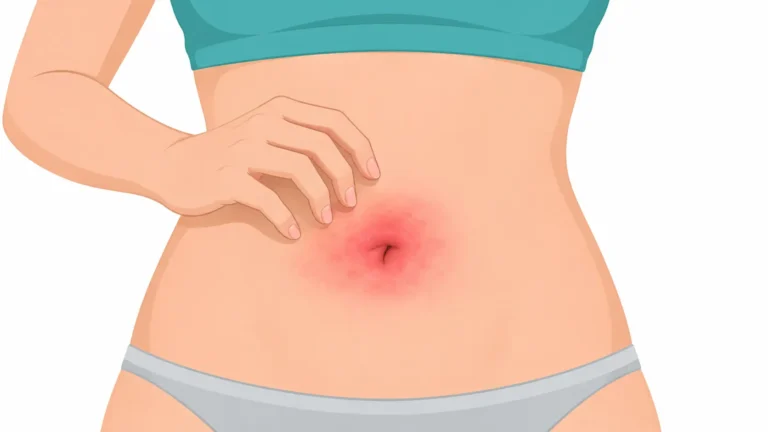
Candida is a yeast that grows best in warm, moist skin creases like the navel. Cleveland Clinic says a belly button yeast infection causes a bright red, itchy rash that may burn, sometimes with scaling or a white discharge. A musty smell is usually absent, but it can happen when the infection sits in a skin fold rash called intertrigo.
DermNet describes candidal intertrigo as red, moist patches with scaly edges, often with small red bumps or pus spots around them. Clotrimazole cream is a first-line treatment, along with keeping the skin cool and dry. For rashes in other places, see our guide to skin rashes and bumps.
Bacterial infection
Bacteria such as staph can infect the skin in and around the navel. The CDC says a staph skin infection looks like a bump or patch that’s red, swollen, painful and warm, sometimes with pus or drainage and a fever. Don’t pick at or pop it. Most of these infections are minor, but our guide on whether a belly button infection can kill you explains the warning signs that need urgent care.
Infected piercing
The NHS lists these signs of an infected piercing: the area is swollen, painful, hot and red or dark, depending on your skin color, with blood or pus coming out. Some people also feel hot, cold, shivery or unwell. Cleveland Clinic adds that ooze from a piercing that smells bad points more toward infection.
The NHS advises leaving the jewelry in unless a doctor tells you to take it out, and cleaning the piercing twice a day with warm, salty water.
Epidermoid cyst
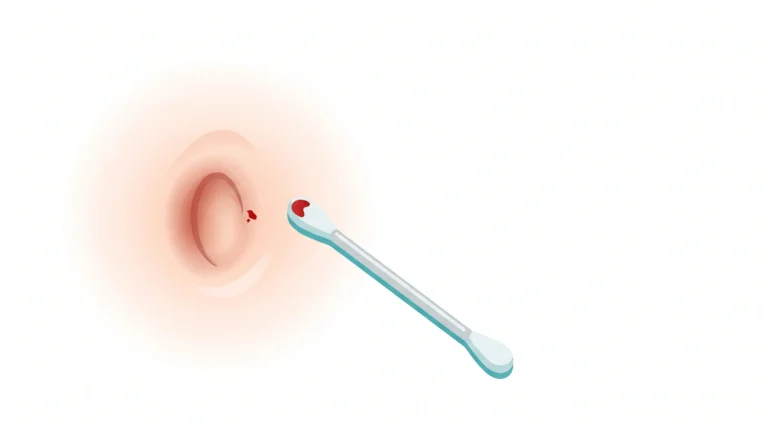
An epidermoid cyst is a closed sac under the skin filled with dead skin cells. MedlinePlus describes a small, painless lump, often with a tiny pit in the center. If it becomes infected, it can drain grayish-white, cheesy, foul-smelling material, and the skin around it turns red, sore and warm.
MedlinePlus says these cysts aren’t dangerous and only need treatment if they cause symptoms. A provider can drain or remove one, and an infected cyst may need antibiotics. Our guide to a lump that hurts when pressed covers how cysts, boils and other lumps differ.
A navel stone is a hard plug of skin oil (sebum) and keratin, a skin protein, that builds up in the belly button. A 2022 review in Clinical Case Reports says it mostly shows up in older adults with a deep, narrow navel, and that neglect, poor hygiene and obesity raise the risk.
A navel stone can sit unnoticed for years. Left in place, it can irritate the skin and cause sores, bleeding or infection. Doctors remove it with forceps, sometimes after softening it with glycerin or olive oil first.
Infected urachal cyst
The urachus is a channel between the bladder and belly button that normally closes before birth. When part of it stays open, it can form a cyst that later becomes infected. A 2016 case report in Case Reports in Gastroenterology describes the usual pattern: a tender lump below the belly button, discharge from the navel and signs of a body-wide infection. It’s rare in adults, and the cyst is usually removed with surgery.
A belly button that stays damp and smells usually has something draining into it. The color and texture of the discharge give clues:
| Discharge | What it can point to |
|---|---|
| White, with an itchy red rash | Yeast infection |
| Pus, with pain and warmth | Bacterial infection |
| Blood or pus around jewelry | Infected piercing |
| Grayish-white, cheesy material | Infected epidermoid cyst |
| Pus from a tender lump below the navel | Infected urachal cyst |
Sources: Cleveland Clinic, CDC, NHS, MedlinePlus, Case Reports in Gastroenterology.
Plain sweat can make the navel feel damp after exercise or on a hot day. Discharge that keeps coming back, has a color or comes with pain isn’t sweat, and it’s worth having a provider take a look.
A newborn’s belly button needs its own checks. The American Academy of Pediatrics (AAP) lists these signs of an umbilical cord infection:
- Foul-smelling yellowish discharge from the cord
- Red skin around the base of the cord
- Crying when you touch the cord or the skin next to it
Call your pediatrician if you see any of these. The AAP also describes an umbilical granuloma, a small red or brownish lump of scar tissue that can stay after the cord falls off and drain a light-yellowish fluid. It usually goes away in about a week.
In rare cases, a baby’s navel drains stool. A 2022 report in the Journal of Pediatric Surgery Case Reports describes a newborn whose belly button discharge turned into stool drainage. The cause was a patent omphalomesenteric duct, a channel between the gut and the navel left over from early development, and it was fixed with surgery.

For odor from buildup, cleaning fixes it. Cleveland Clinic suggests:
- Use a mild, fragrance-free soap and warm water.
- For an innie, put soapy water on a cotton swab or the corner of a washcloth and gently clean inside the folds.
- For an outie, lather it with your hands or a washcloth and rinse.
- Dry it fully with a clean swab or towel.
- Repeat at least once a week, or daily if you sweat a lot.
What to skip:
- Lotion inside the navel. Cleveland Clinic advises against it, since it keeps the area moist.
- Hard scrubbing. Cleveland Clinic warns that small tears from scrubbing can let a bacterial infection in.
- Hydrogen peroxide or iodine on broken skin. Mayo Clinic says both can irritate wounds.
- Digging out a hard plug with tweezers or a nail; a navel stone should be removed by a doctor.
For a yeast rash, keep the area dry and use an antifungal cream; DermNet lists clotrimazole as a first choice. For an infected piercing, follow the NHS saltwater steps above.
If the smell doesn’t go away
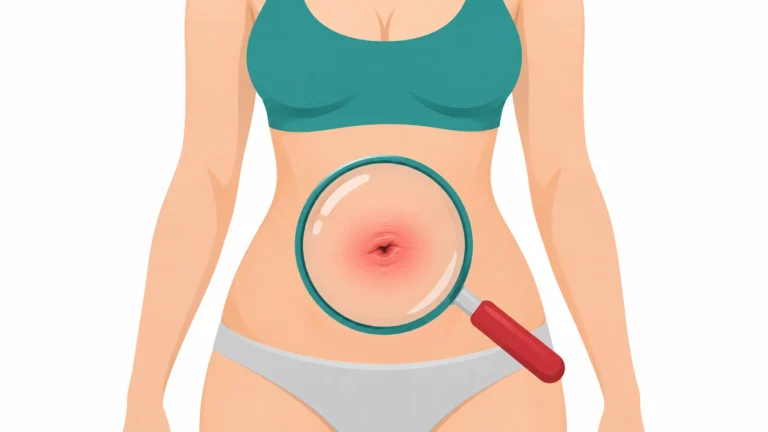
If the smell keeps coming back even with regular cleaning, or shows up with a rash or discharge, see a provider. Cleveland Clinic says a provider can diagnose a belly button yeast infection by examining it or by scraping a little skin to check under a microscope. Treatment then depends on the cause: an antifungal for yeast, antibiotics for a bacterial infection, or draining or removing a cyst.
When to see a doctor
Cleveland Clinic advises seeing a doctor if your belly button is painful or has discharge. Make an appointment if you notice:
- Discharge of any color, or pus
- Redness, swelling or warmth around the navel
- A lump in or under the belly button
- A hard plug you can’t wash out
- An itchy rash that doesn’t clear with home care
- Smell that keeps coming back after cleaning
Get care the same day for fever, redness that spreads, severe pain, or pus from a tender lump below the navel. For a newborn, call the pediatrician about any of the cord infection signs above.
The bottom line
A smelly belly button is usually trapped sweat, dead skin, oil and lint that bacteria break down into odor. Deep belly buttons trap more, which is why they can smell even after a shower. Cleaning inside the navel with mild soap and water at least once a week and drying it well fixes most cases. A musty smell with an itchy red rash points to yeast. Pus, pain, warmth, a cheesy discharge from a lump, a hard plug or fever point to an infection, cyst or navel stone that needs a provider. In babies, any foul discharge from the cord stump needs a call to the pediatrician.
Frequently asked questions
Yes. Cleveland Clinic explains that sweat has no odor on its own; body odor appears when sweat meets the bacteria on your skin. A faint smell after a long day isn't a concern.
Possibly, when yeast is behind the smell. Cleveland Clinic notes that providers who find yeast in the navel may test for diabetes, because people with diabetes get these infections more easily.
Gently wiping it out with a soapy swab is fine. Picking with nails or sharp tools can tear the thin skin, and the Clinical Case Reports review notes repeated rubbing can cause sores and bleeding.
For a belly button that keeps getting yeast rashes, DermNet suggests a drying agent such as talcum powder to keep skin folds dry. Use a light layer, and ask a provider first if the skin is broken.
Sources
- Yano T, Okajima T, Tsuchiya S, Tsujimura H. Microbiota in Umbilical Dirt and Its Relationship with Odor. Microbes and Environments, 2023
- Cleveland Clinic Health Essentials. How To Clean Your Belly Button, 2025
- Cleveland Clinic. Body Odor, 2022
- Cleveland Clinic. Belly Button Yeast Infection, 2022
- Cleveland Clinic. Infected Belly Button Piercing, 2023
- DermNet. Candidiasis of Skin Folds
- Centers for Disease Control and Prevention. About Methicillin-resistant Staphylococcus aureus (MRSA)
- NHS. Infected Piercings
- MedlinePlus. Epidermoid Cyst, 2025
- Jouini W, Litaiem N, Zaimi Y, Mouelhi L, Debbeche R, Zeglaoui F. Omphalolith: An Underdiagnosed Entity. Clinical Case Reports, 2022
- Kwok CM. Infected Urachal Cyst in an Adult: A Laparoscopic Approach. Case Reports in Gastroenterology, 2016
- Patent Omphalomesenteric Duct in a Newborn; a Rare Finding and Presentation. Journal of Pediatric Surgery Case Reports, 2022
- American Academy of Pediatrics, HealthyChildren.org. Umbilical Cord Care, 2025
- Mayo Clinic. Cuts and Scrapes: First Aid
Disclaimer
This blog is for informational and educational purposes only, and does not intend to substitute any professional medical advice or consultation. For any health related concerns, please consult with your physician, or call 911.