Urobilinogen in Urine: Normal Range and What 0.2, 2.0 and 4.0 Mean
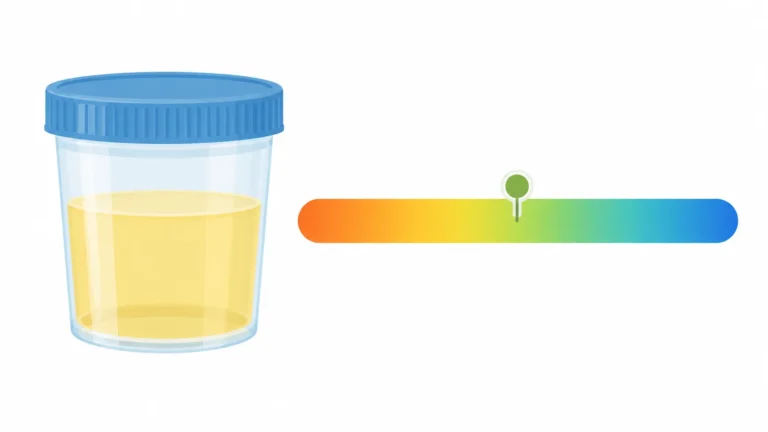
Urobilinogen is a normal waste product made when your body recycles old red blood cells, and a small amount always passes into urine. On most urine dipsticks, 0.2 to 1.0 mg/dL is normal and 2.0 or higher is high. The number means the most when your doctor reads it with urine bilirubin and your symptoms.
The line on your report might say “Urobilinogen, Semi-QN: 0.2,” “UA Urobilinogen: 2.0” or just “URO: Normal.” Most results like these are fine. A few point to the liver, the bile ducts or red blood cells breaking down too fast. Below is how to tell which is which.
For the rest of your report, our guide to urinalysis results explained walks through every line.
What is urobilinogen in urine?
Urobilinogen is a colorless substance that bacteria in your gut make from bilirubin, the yellow pigment left over when old red blood cells are recycled. Most of it leaves the body in stool. A small share is absorbed into the blood, and a little of that is filtered by the kidneys into urine.
Here is the full path, step by step:
- Red blood cells live about 120 days. Old ones are broken down, mostly in the spleen.
- The hemoglobin inside them becomes unconjugated bilirubin, which travels in the blood stuck to a protein called albumin.
- The liver changes it into conjugated bilirubin, a water-soluble form, and sends it into bile.
- Bile flows through the bile ducts into the intestine.
- Gut bacteria turn bilirubin into urobilinogen.
- Most urobilinogen is changed into stercobilin, which gives stool its brown color.
- A small share is absorbed back into the blood. The liver takes most of it back into bile, and the kidneys pass the rest into urine.
Once it reaches urine and meets air, urobilinogen turns into urobilin, one of the pigments that makes urine yellow. Our guide to neon yellow pee covers the other things that change urine color.
How does urobilinogen get into urine?
It gets there through the blood. Urobilinogen absorbed from the gut circulates in the bloodstream, and the kidneys filter the small amount the liver doesn’t take back. That is why the urine level rises when the gut makes more of it or when the liver can’t clear it.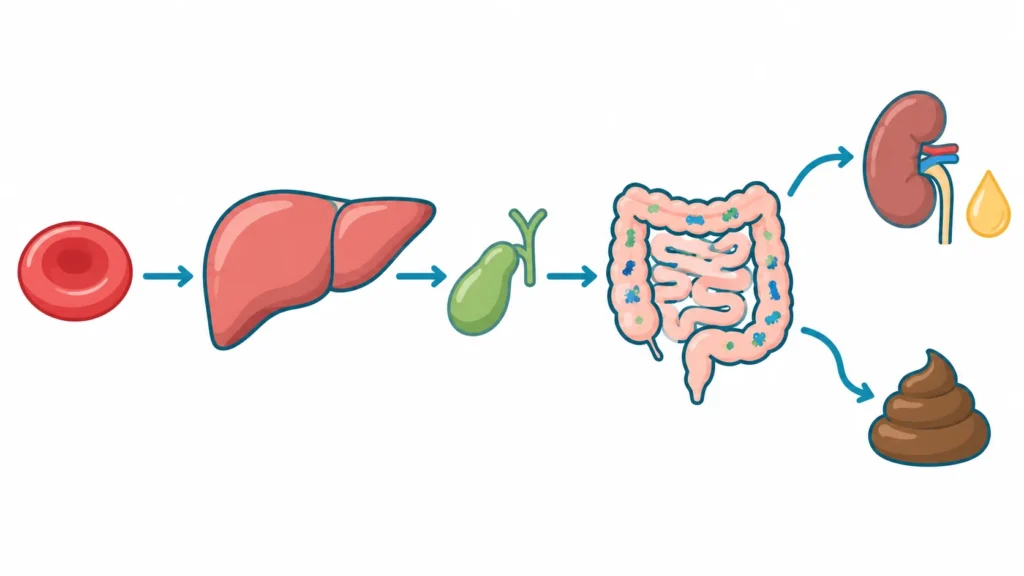
What is the normal range for urobilinogen in urine?
The normal range on most US urine dipsticks is 0.2 to 1.0 mg/dL. A result of 2.0 mg/dL or higher is above normal and usually gets a second look.
You may see slightly different numbers elsewhere, such as 0.1 to 1.0 mg/dL or 0.1 to 1.8 mg/dL (1.7 to 30 µmol/L). Those come from different test methods and reference books. The reference range printed on your own report is the one that applies to your result.
Is urobilinogen 0.2 in urine normal?
Yes. A urobilinogen of 0.2 mg/dL is normal, and it is the most common result on a urine test. It is the lowest level the dipstick can read, so it means the normal small amount was present, not that something is missing.
Some lab systems flag 0.2 as “low” because their range starts higher. That flag is a quirk of the software, not a finding about your liver.
How urobilinogen shows up on your urinalysis report
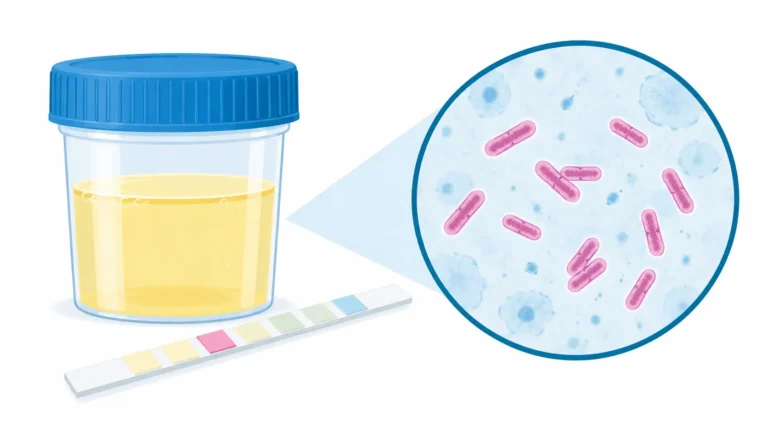
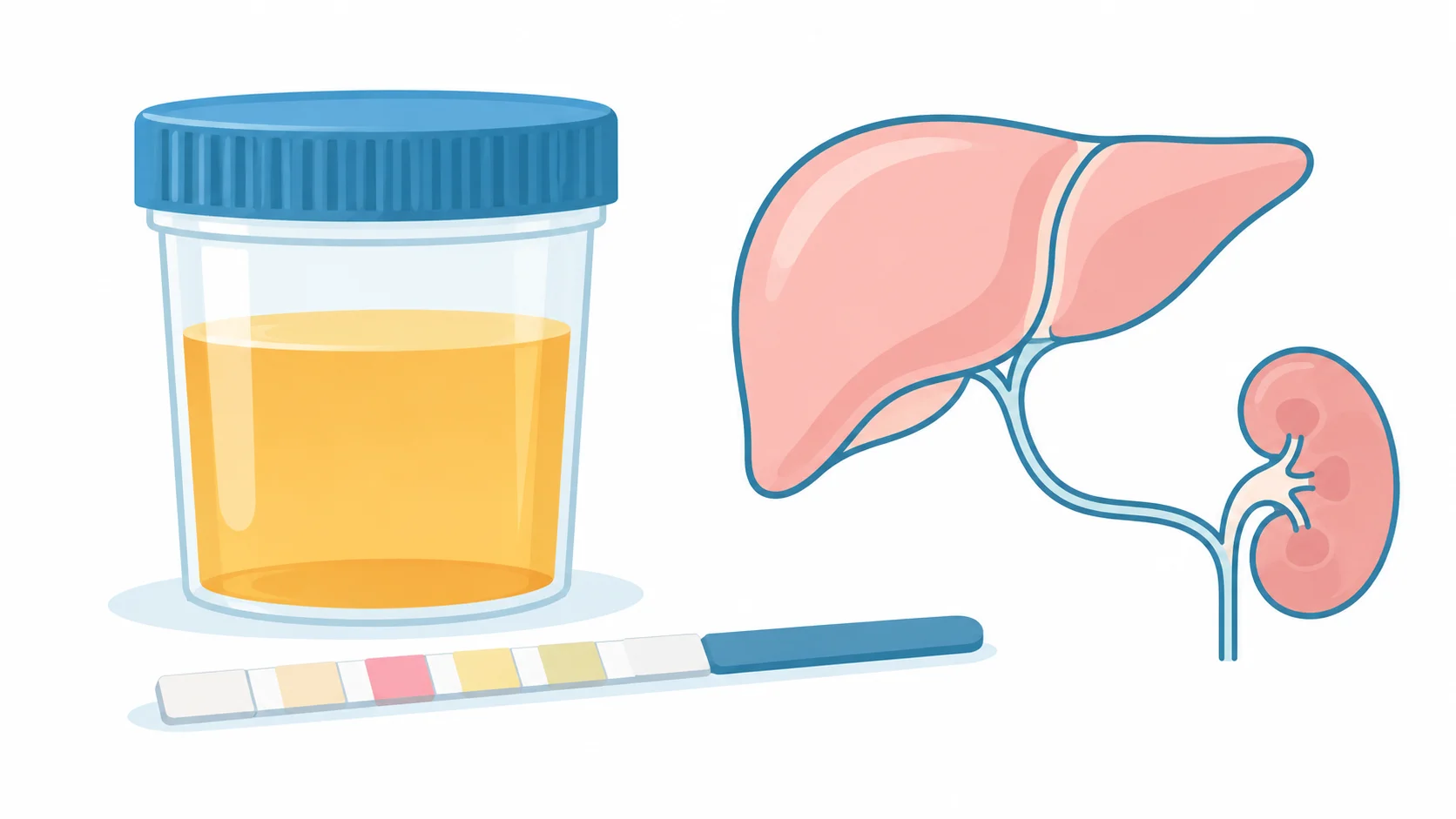
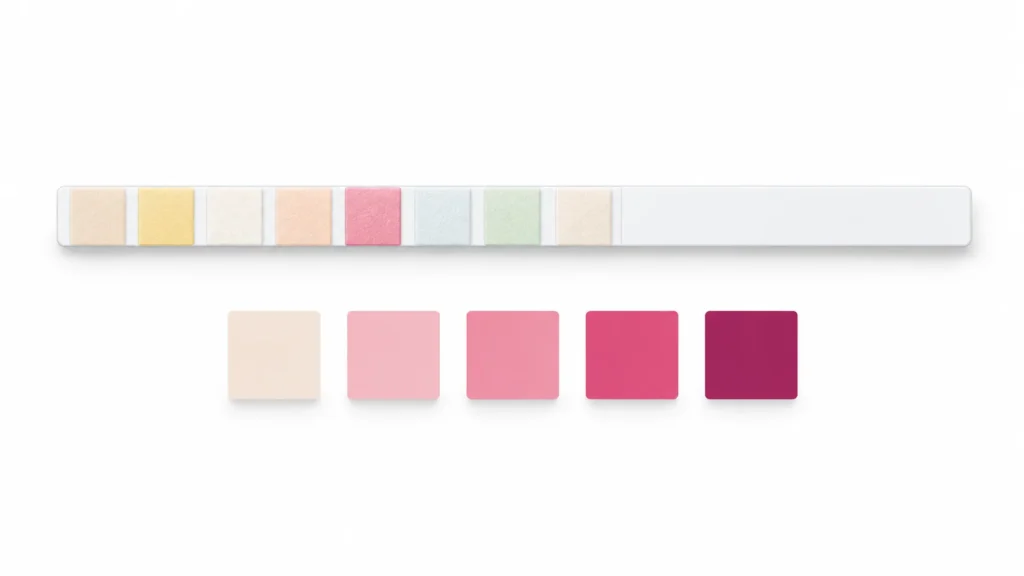
Urobilinogen is measured on the same dipstick as the rest of a routine urinalysis. The pad changes to a deeper pink as the level rises, and the reader matches it to one of five color blocks. That is why results come in fixed steps instead of exact numbers.
| What your report says | What it means |
|---|---|
| Urobilinogen, Semi-QN | Semi-quantitative: an approximate level from the dipstick color |
| UA Urobilinogen, Urobilinogen, UA | Part of a urinalysis (UA) |
| Urobilinogen POC, POCT | Point-of-care: tested in the clinic, not the main lab |
| URO, UBG | Short labels for urobilinogen |
| EU/dL | Ehrlich units per deciliter; on dipsticks, 1 EU/dL is about 1 mg/dL |
| µmol/L | Metric unit; 1 mg/dL is about 17 µmol/L, so 2.0 mg/dL is about 34 µmol/L |
The five steps on a standard dipstick are 0.2, 1, 2, 4 and 8 EU/dL. Here is what each one means.
| Result (mg/dL or EU/dL) | What it usually means |
|---|---|
| 0.2 | Normal; the lowest level the strip reads |
| 1.0 | Normal; top of the usual range |
| 2.0 | Mildly high; often repeated or read with other tests |
| 4.0 | High; worth checking the liver and red blood cells |
| 8.0 | Much higher than normal; needs follow-up soon |
What does high urobilinogen in urine mean?
High urobilinogen means more of it is reaching the urine than normal. That happens for two main reasons: the body is making too much bilirubin because red blood cells are being destroyed too fast, or the liver is not taking back the urobilinogen absorbed from the gut.
A raised reading on its own is a clue, not a diagnosis. The Merck Manual notes that a rise in urine urobilinogen is neither specific nor sensitive for liver disease, so doctors confirm it with blood tests.
What does urobilinogen 2.0 in urine mean?
A urobilinogen of 2.0 mg/dL is one step above the normal range. In someone who feels well and has negative urine bilirubin, it is often a one-off finding. Doctors usually repeat the urinalysis or check a liver panel and blood count, and they move faster if anything else on the report is off.
Timing can matter too. Urobilinogen output peaks in the afternoon, which is why labs that measure it precisely prefer a sample collected between 2 and 4 p.m. A borderline reading can shift one step depending on when you gave the sample.
What does urobilinogen 4.0 or 8.0 in urine mean?
A result of 4.0 or 8.0 mg/dL is clearly high. Your doctor will likely order blood tests for liver function and red blood cell destruction. If those come back normal, the next question is whether the strip result was false, a topic covered further down.
Red blood cells breaking down too fast
When red blood cells are destroyed faster than normal, called hemolysis, the liver receives more bilirubin than usual. More bilirubin reaches the gut, more urobilinogen forms and more spills into urine. Causes include:
- Hemolytic anemia, including autoimmune hemolytic anemia
- Sickle cell disease
- G6PD deficiency, an inherited enzyme problem triggered by some drugs, infections or fava beans
- Hereditary spherocytosis
- Malaria, which destroys red blood cells
- A transfusion reaction
- A large bruise or internal bleed being reabsorbed
- Pernicious anemia and other B12 or folate deficiencies, where faulty red cells are destroyed early
Liver disease
A damaged liver can’t take back the urobilinogen that returns from the gut, so more of it passes to the kidneys. This is seen with:
- Viral hepatitis (A, B or C)
- Alcohol-related liver disease
- Liver injury from medicines, such as an acetaminophen overdose
- Cirrhosis
Other causes
A few other conditions can push the level up, though the effect is smaller and less consistent. Right-sided heart failure can back blood up into the liver and slow its work. Constipation gives gut bacteria more time to make urobilinogen. Hard endurance exercise can destroy a small number of red blood cells.
What does low or negative urobilinogen in urine mean?
A truly low urobilinogen means little or no bilirubin is reaching the gut, or there aren’t enough gut bacteria to convert it. But most “low” results on a dipstick aren’t truly low, because the strip can’t measure zero.
The procedure for a widely used dipstick (Siemens Multistix) states plainly that the strip cannot determine the absence of urobilinogen. Its lowest block reads 0.2. Some reports print that first block as “Normal” or “Negative,” which means “nothing above the lowest level,” not “none at all.”
A true drop in urobilinogen points to one of these:
- Blocked bile ducts. Gallstones in the common bile duct, a tumor of the pancreas or bile duct, or a narrowed duct stops bile from reaching the gut. With no bilirubin in the intestine, no urobilinogen forms.
- Severe cholestasis. Bile flow slows inside the liver, from liver disease or some medicines.
- Broad-spectrum antibiotics. They kill the gut bacteria that make urobilinogen. The level recovers after the course ends.
- Newborn babies. The gut has few bacteria in the first days of life. In infants, absent urobilinogen together with jaundice can be an early clue to biliary atresia, a rare blockage of the bile ducts.
The sample itself can also give a falsely low reading. Urobilinogen breaks down quickly in light and at room temperature, so the strip should be read within an hour of collection or the sample refrigerated. Strongly acidic urine and the preservative formalin also lower the reading. Our guide to normal urine pH explains acidic urine.
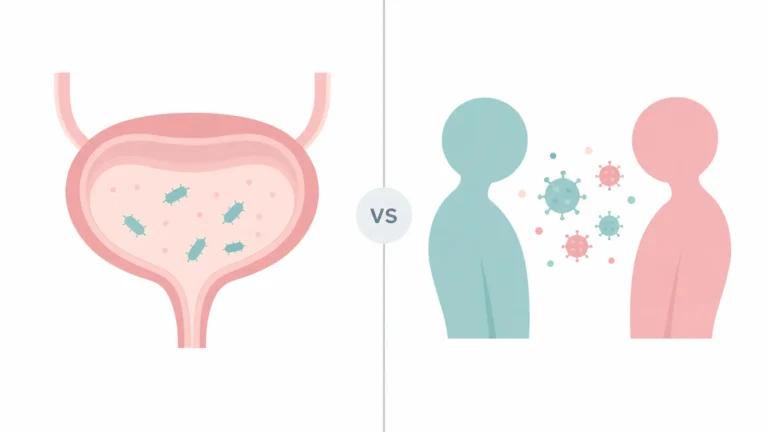
Urobilinogen vs bilirubin in urine: what’s the difference?
Urine bilirubin should be negative, while urine urobilinogen is normally present in a small amount. Bilirubin only appears in urine when conjugated bilirubin builds up in the blood, which happens with liver disease or blocked bile ducts. Unconjugated bilirubin is bound to albumin and can’t pass into urine at all, according to Merck.
Doctors read the two lines together because the pattern points to where the problem is.
| Urine bilirubin | Urine urobilinogen | What it usually points to |
|---|---|---|
| Negative | 0.2 to 1.0 | Normal |
| Negative | High | Red blood cells being destroyed too fast (hemolysis) |
| Positive | High or normal | Liver cell disease, such as hepatitis or cirrhosis |
| Positive | 0.2 or “negative” | Bile blocked from reaching the gut, such as a gallstone or tumor in the bile duct |
| Negative | Normal, with mild yellow eyes during fasting or illness | Gilbert syndrome; confirmed with a blood test |
| Negative | 0.2 or “negative” | Antibiotics, an old or light-exposed sample, or nothing at all |
Gilbert syndrome deserves a word. It affects an estimated 3% to 7% of Americans, according to MedlinePlus Genetics, and raises unconjugated bilirubin in the blood, mostly during fasting, dehydration, illness, hard exercise or menstruation. Because that form of bilirubin can’t enter urine, the urine test stays normal. It is harmless and needs no treatment.
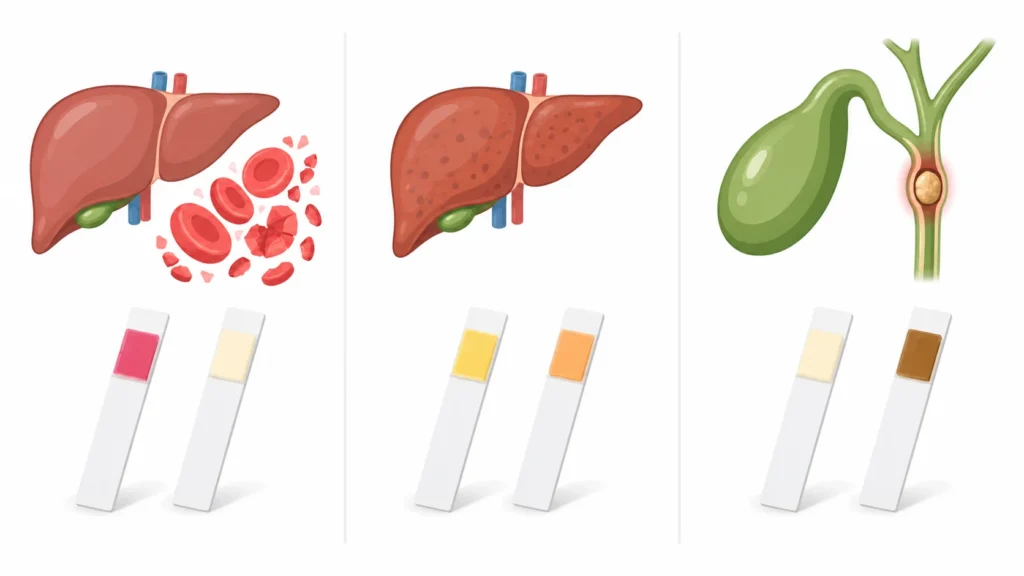
Any positive urine bilirubin needs follow-up with liver blood tests, because it means conjugated bilirubin is building up in the blood, and it can show up before yellow skin or eyes. Vitamin C, an old sample and dyes such as phenazopyridine can throw off the result. Our guide to bilirubin in urine explains each result level, the causes and the tests that come next.
When the urobilinogen result is wrong: false highs and lows
Most dipsticks measure urobilinogen with Ehrlich’s reagent, a chemical that reacts with several other substances too. Those can make the pad turn pink even when urobilinogen is normal.
Acute hepatic porphyria. This rare inherited condition fills the urine with porphobilinogen, which reacts like urobilinogen on the strip. In a 2023 study in Scientific Reports, all 11 tested patients with acute hepatic porphyria had a high urine urobilinogen even though their blood bilirubin was normal. Most had been misdiagnosed before, often as a bowel blockage. The authors suggest that a high urine urobilinogen with normal blood bilirubin in someone with severe belly pain should prompt testing for porphyria.
Medicines and other substances. The Multistix procedure lists these as causes of falsely high results:
- Sulfonamide antibiotics, such as sulfamethoxazole
- Para-aminosalicylic acid (PAS), a tuberculosis drug
- Para-aminobenzoic acid (PABA)
- Procaine, a local anesthetic
- Methyldopa, a blood pressure drug
- 5-HIAA and indole, substances some tumors and gut conditions raise
Dyes can also hide the true color. Phenazopyridine (Pyridium), Azo Gantrisin (an older sulfa-and-dye combination), riboflavin (vitamin B2) and high levels of bilirubin can all mask the pad.
Sample handling. Light, a delay of more than an hour, acidic urine and formalin give falsely low results, as covered above.
If your result surprises your doctor, tell them about every medicine and supplement you take, including over-the-counter bladder pain pills.
Can dehydration, a UTI or an infection change urobilinogen?
These are three of the most common questions about this test. In each case the effect is indirect.
Can dehydration cause high urobilinogen?
Dehydration doesn’t make your body produce more urobilinogen. It does concentrate your urine, which can nudge a borderline reading up one step. If dehydration is the only explanation, a repeat test after drinking normally should come back in range.
Can a UTI cause urobilinogen in urine?
A urinary tract infection doesn’t raise urobilinogen. The antibiotics used to treat a UTI can lower it for a while by killing gut bacteria. A UTI shows up on other lines of the report; our guides to leukocytes in urine and nitrites in urine explain those.
Can infection cause high urobilinogen?
Yes, when the infection affects the liver or red blood cells. Viral hepatitis inflames the liver, and malaria destroys red blood cells. Both can raise urobilinogen. Severe bloodstream infections can also strain the liver.
Symptoms that make a urobilinogen result matter
An abnormal urobilinogen matters much more when it comes with symptoms. MedlinePlus lists these as signs of liver or bile duct trouble:
- Yellow skin or eyes (jaundice)
- Dark urine and pale stools
- Itching all over
- Nausea, vomiting or loss of appetite
- Swelling or pain in the belly
- Swelling in the legs or ankles
- Tiredness and weakness
Red blood cell destruction can cause:
- Tiredness and shortness of breath with activity
- Dizziness or headaches
- A pounding or racing heartbeat
- Yellow skin or eyes
- Pain under the left ribs from an enlarged spleen
- Red or brown urine in some types, from hemoglobin released into the blood
Hemoglobin in urine reacts with the blood pad on the dipstick, not the urobilinogen pad. Our guide to occult blood in urine explains that result.
What happens next: tests your doctor may order
A urobilinogen result can’t diagnose anything alone, so the next step is usually blood work. Depending on your symptoms and the rest of the report, your doctor may order:
- A repeat urinalysis on a fresh sample, sometimes collected in the afternoon.
- A liver panel: ALT, AST, alkaline phosphatase (ALP), GGT, and total and direct bilirubin.
- A complete blood count with a reticulocyte count, to look for anemia and a bone marrow working hard to replace lost red cells.
- LDH and haptoglobin, two blood markers that change when red cells are destroyed.
- An ultrasound of the liver, gallbladder and bile ducts.
- An MRCP (an MRI of the bile ducts) or ERCP (a scope that can also remove a stone) if a blockage is suspected.
- Urine porphobilinogen if severe belly pain comes with a high urobilinogen and normal blood bilirubin.
How is high urobilinogen treated?
Urobilinogen isn’t treated on its own. The level returns to normal when the cause is managed, so treatment depends entirely on what the follow-up tests find.
| Cause | Examples of treatment |
|---|---|
| Hemolytic anemia | Stopping a trigger medicine, folic acid for long-term hemolysis, steroids for warm autoimmune hemolysis, transfusion when needed (Merck) |
| Malaria | Antimalarial medicine |
| Viral hepatitis | Antiviral medicine for hepatitis B or C; supportive care for hepatitis A |
| Alcohol- or drug-related liver injury | Stopping the alcohol or drug; specific antidotes, such as for acetaminophen overdose |
| Gallstone in the bile duct | Removal by ERCP, often followed by gallbladder surgery |
| Tumor or narrowing of the bile duct | Stent, surgery or cancer treatment |
| Gilbert syndrome | None needed |
Online advice about “lowering urobilinogen” leans on extra water, tomatoes, detox teas and liver supplements. None of these changes the cause, and some herbal liver supplements can injure the liver themselves. A healthy diet and limiting alcohol are good for the liver, but they won’t fix hemolysis or a blocked duct.
When should you see a doctor about urobilinogen?
See your doctor if urobilinogen is 2.0 or higher on repeat tests, if urine bilirubin is positive, or if you have any of the symptoms listed above. A single 0.2 or 1.0 with a normal rest-of-report needs no action.
Get care the same day for yellow skin or eyes, dark urine with pale stools, fever with pain under the right ribs, or severe belly pain.
Call 911 or go to the nearest emergency room if you feel confused, vomit blood, pass black or bloody stools, faint, or have severe belly pain with a racing heartbeat.
Frequently asked questions
Is urobilinogen a kidney test?
No. It appears on a urine report because the kidneys filter it, but it reflects your liver, bile flow and red blood cells. Kidney health is judged by protein in urine, creatinine and eGFR instead.
Can urobilinogen be measured in a blood test?
Not routinely. Standard blood work measures total and direct bilirubin, the substances urobilinogen comes from. Those blood levels tell your doctor more about the liver than a urobilinogen number would.
Can fatty liver cause bilirubin in urine?
Simple fatty liver rarely does, because the liver still clears bilirubin normally. Bilirubin in urine is more likely once fatty liver has progressed to inflammation or cirrhosis, which a liver panel and imaging can check.
What color is pee when the liver is failing?
It often turns dark brown, like strong tea or cola. Dark urine alone is usually dehydration, but paired with jaundice or clay-colored stools it points to the liver or bile ducts.
What does bilirubin poop look like?
When bile can’t reach the intestine, stool turns pale, gray or clay-colored and may float or look greasy. One pale stool after a light meal is common; repeated pale stools need a doctor.
Can a home urine test strip check urobilinogen?
Yes. Ten-parameter home strips include a urobilinogen pad that works like the clinic version, with the same steps and limits. Read it at the exact time printed on the package, because the color keeps changing.
Which is worse, high or low bilirubin?
High bilirubin in the blood is the one that matters, because it can signal liver disease, blocked bile ducts or red cell destruction. A low blood bilirubin has no known harmful effect and needs no treatment.
Can alcohol raise urobilinogen in urine?
Heavy drinking over months or years can inflame and scar the liver, which can raise it. A single drink the night before your test won’t change the result in any meaningful way.
Sources
- MedlinePlus. Urobilinogen in Urine
- Siemens Multistix 10 SG. Urobilinogen in Urine, laboratory procedure
- Song C, Liu Y. A high urinary urobilinogen/serum total bilirubin ratio indicates acute hepatic porphyria in patients with abdominal pain. Scientific Reports, 2023
- Merck Manual Professional Version. Laboratory Tests of the Liver and Gallbladder
- Merck Manual Professional Version. Jaundice
- Merck Manual Professional Version. Overview of Hemolytic Anemia
- MedlinePlus Genetics. Gilbert syndrome
Disclaimer
This blog is for informational and educational purposes only, and does not intend to substitute any professional medical advice or consultation. For any health related concerns, please consult with your physician, or call 911.