Bacteria in Urine: What Your Test Result Means and When It Needs Treatment
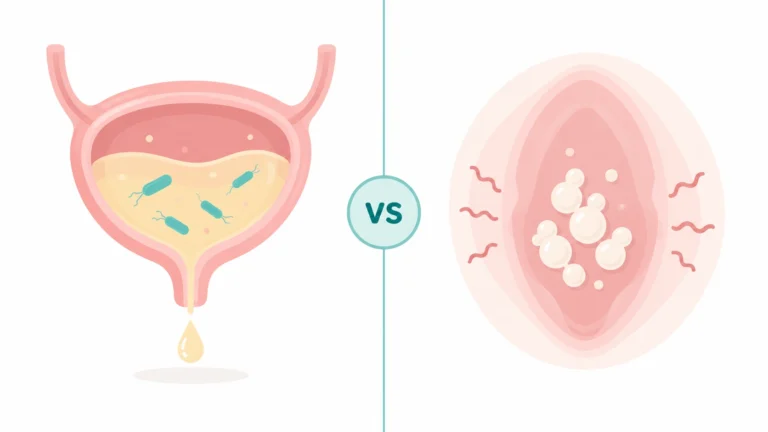
Bacteria in urine, called bacteriuria, can mean three different things: a urinary tract infection (UTI), harmless bacteria living in the bladder, or a sample that picked up bacteria from the skin. Your symptoms decide which one it is. If you feel fine, you usually don’t need antibiotics. The main exceptions are pregnancy and some urology procedures. A urine culture names the bacteria and the drugs that work.
A lab report that says “Bacteria: Many” or “Bacteria, UA: Abnormal” can look alarming, above all when you feel perfectly well. This guide explains how to read the result on a urinalysis and a urine culture, which bacteria cause infections, when bacteria without symptoms need treatment and when they don’t, and what usually happens next.
What does bacteria in urine mean?
Bacteria get into urine mostly from the bowel and the skin around the urethra. Kaiser Permanente points out that urine isn’t completely sterile, so finding some bacteria isn’t automatically a problem. What matters is whether you have symptoms, how many bacteria there are, which kind, and how the sample was collected.
| What’s going on | Symptoms | Typical lab picture | Needs antibiotics? |
|---|---|---|---|
| Urinary tract infection | Burning, urgency, peeing often, pressure, sometimes fever or back pain | Bacteria plus white blood cells, often positive nitrite; one type of bacteria at a high count on urine culture | Yes |
| Asymptomatic bacteriuria | None | One type of bacteria at a high count, with no symptoms | Usually no, except in pregnancy and before some procedures |
| Contaminated sample | Usually none | Several types of bacteria, many skin (squamous) cells | No; a cleaner repeat sample may be needed |
The rest of this page goes through each piece: reading the report, the bacteria themselves, and the groups who need treatment even without symptoms.
How to read bacteria on your urine test
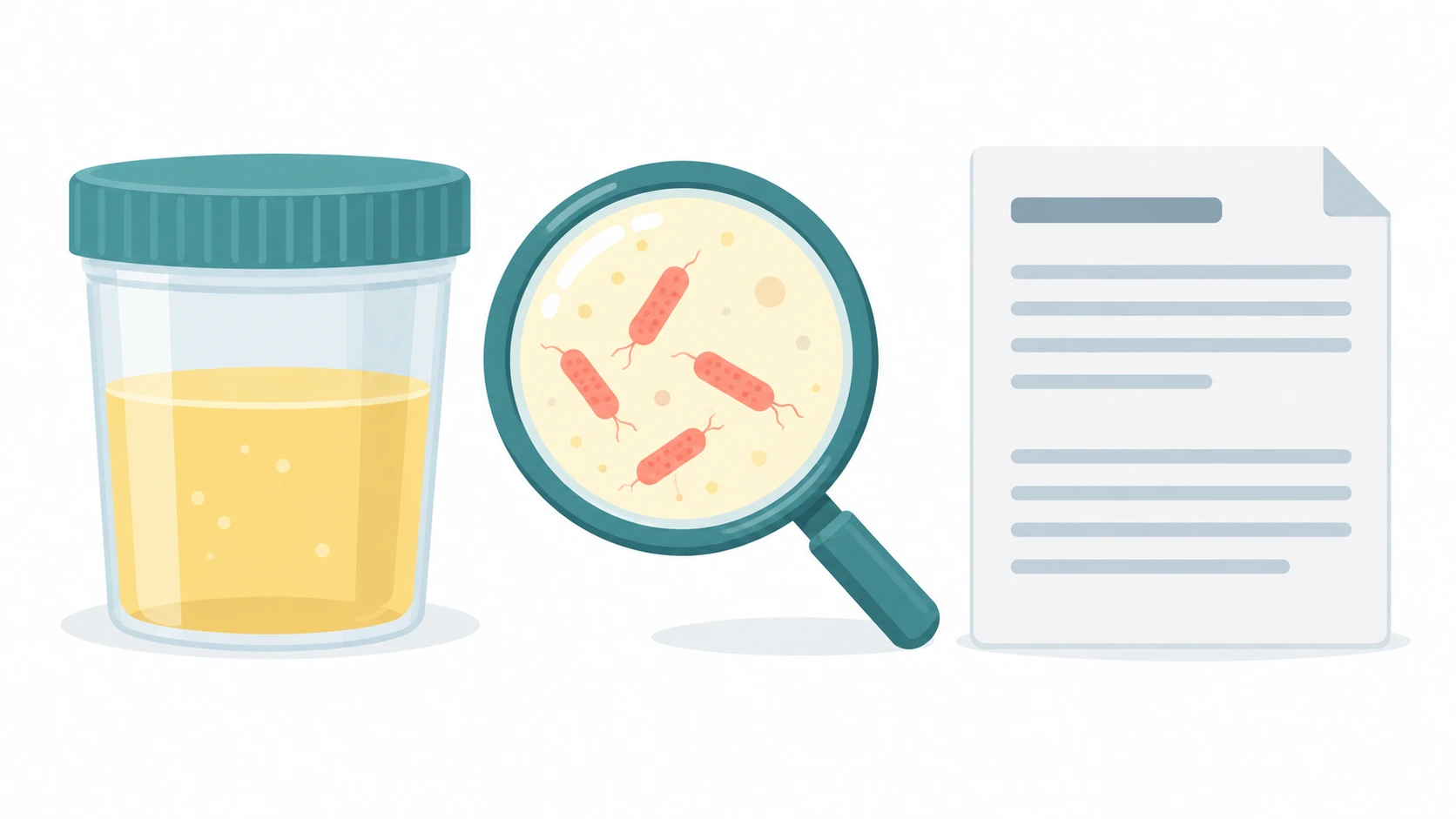
Bacteria can show up in two different tests, and they mean different things. A urinalysis is the quick test on a dipstick and under the microscope. A urine culture grows the bacteria in a lab to count and name them. Our guide to urinalysis results covers the full report.
Urinalysis: rare, few, moderate or many
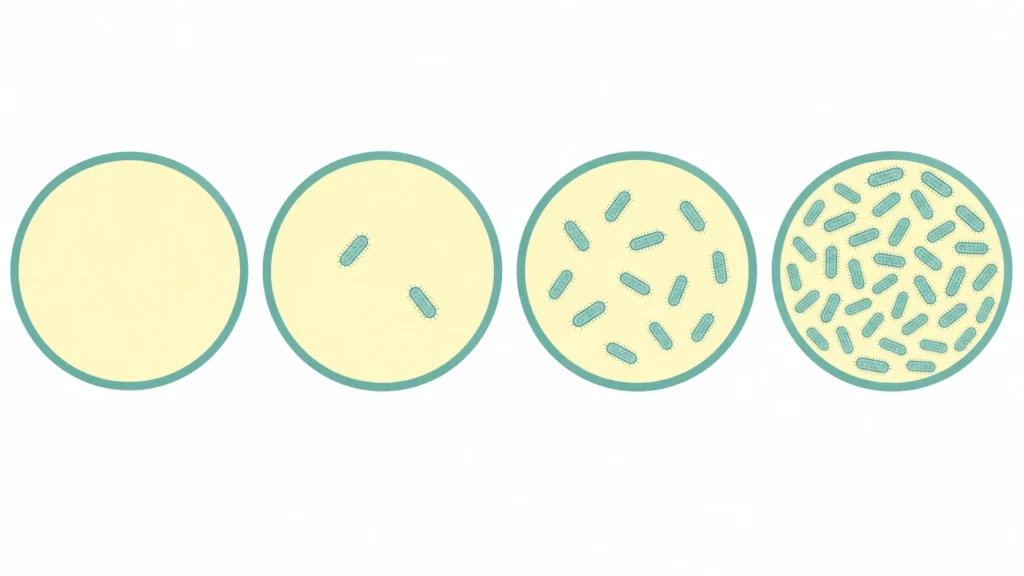
Under the microscope, many labs report bacteria as none, rare, few, moderate or many, or as a number per high-power field (HPF). There’s no single national scale, so the same sample can read a little differently from lab to lab.
| Report says | What it often means | What usually happens |
|---|---|---|
| None or not seen | No bacteria spotted | Doesn’t fully rule out a UTI, because bacteria are hard to see unless there are a lot of them |
| Rare or few | A small number | Often skin bacteria or normal bladder bacteria; usually nothing more if you feel fine |
| Moderate or many | A larger number | With symptoms, it supports a UTI, and a urine culture may follow; with no symptoms, it may be harmless bacteria or contamination |
| “Abnormal” flag | The result is above the lab’s reference range | Read it with your symptoms and the rest of the report |
The American Family Physician (AAFP) notes that bacteria are hard to see on microscopy unless they’re abundant, and that they show up with both infection and contamination. So the bacteria line is never read alone. Doctors look at it together with:
- Nitrite, made by many common UTI bacteria. Our guide to nitrites in urine explains it.
- Leukocytes (white blood cells), a sign of inflammation. See our guide to leukocytes in urine.
- Squamous epithelial cells, a sign the sample touched skin.
- Mucus, which is often normal; our guide to mucus in urine covers it.
Urine culture: what the CFU/mL number means
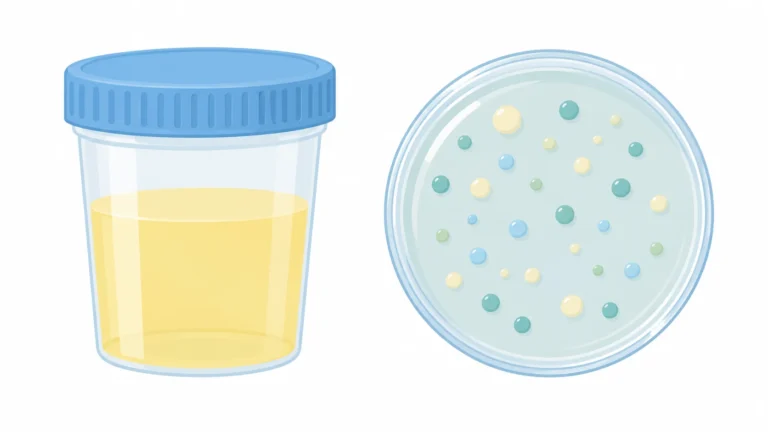
A urine culture counts bacteria in colony-forming units per milliliter (CFU/mL). The American Society for Microbiology (ASM) says bacteria usually take about a day to grow enough to read, so results often come back in 1 to 2 days. Our guide to the UTI test compares the urine culture with home strips and urinalysis.
| Urine culture result | What it usually means |
|---|---|
| No growth | No bacteria grew |
| Low count from a voided sample | Often not meaningful, though labs may report more detail from a catheter sample |
| 10,000 CFU/mL or more of 1 or 2 types | The lab names the bacteria, according to ASM; whether it counts depends on symptoms and who you are |
| 100,000 CFU/mL or more of one type | The classic cutoff for adults, according to AAFP. With symptoms, it’s a UTI; without symptoms, it’s asymptomatic bacteriuria |
| 3 or more types, none above 100,000 | Often reported as mixed flora, which usually means contamination |
Lower counts can still matter. The AAFP notes that 100 to 1,000 CFU/mL can count as a UTI in men, in someone whose UTI was partly treated, or with E. coli and similar bacteria, as long as there are symptoms.
If the lab names the bacteria, it usually also tests which antibiotics work, called sensitivity or susceptibility testing. Next to each drug you’ll see S (sensitive, should work), I (intermediate) or R (resistant, won’t work well).
Signs your sample was contaminated
Contamination is common, and ASM notes it can’t be fully prevented. The clues:
- Many squamous epithelial cells. The AAFP says more than 5 per HPF suggests the sample picked up cells and bacteria from the skin.
- Several types of bacteria, often reported as mixed or urogenital flora. Our guide to mixed urogenital flora explains that result.
- No symptoms and no white blood cells.
Even in a contaminated sample, the AAFP says blood or white blood cells still point to a UTI. If you have symptoms and the sample looks contaminated, a repeat clean-catch sample usually sorts it out. To give one, wash your hands, clean the area around the urethra, start peeing into the toilet, then catch the middle part of the stream in the cup without touching the inside.
Which bacteria cause UTIs?
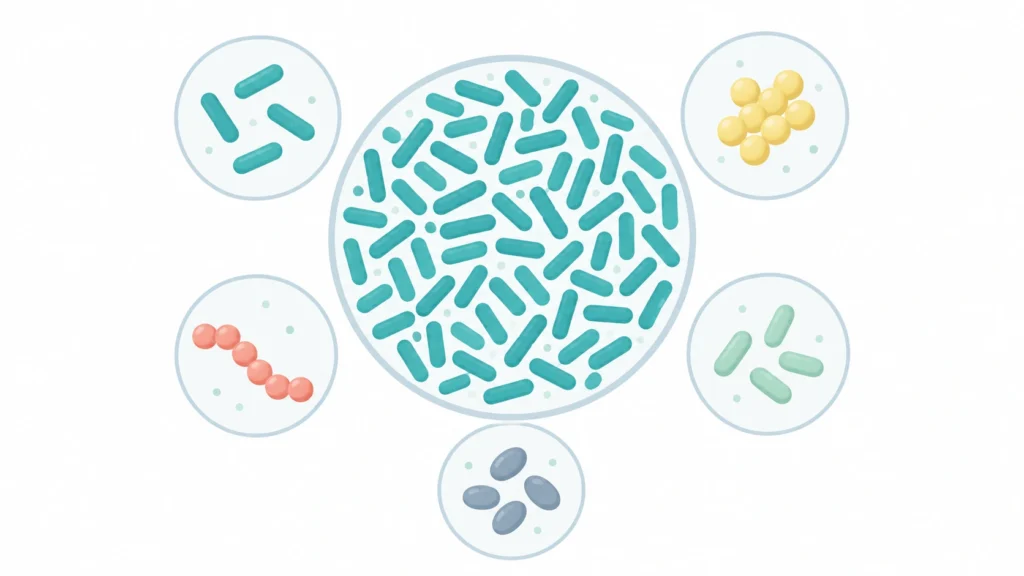
The CDC says E. coli causes 80% to 90% of UTIs. These are the bacteria you’re most likely to see named on a urine culture report:
| Bacteria | Good to know |
|---|---|
| E. coli (Escherichia coli) | Lives in the bowel; the top cause of UTIs and of bacteria without symptoms |
| Klebsiella pneumoniae | The second most common cause of bacteria without symptoms, according to Cleveland Clinic |
| Proteus mirabilis | Makes an enzyme that raises urine pH and can lead to struvite stones; see our guide to normal urine pH |
| Staphylococcus saprophyticus | Listed by the CDC among common UTI causes |
| Enterobacter | Another gut bacterium on the CDC’s list |
| Enterococcus | Doesn’t make nitrite, so the nitrite test can be negative even with an infection (AAFP) |
| Pseudomonas aeruginosa | The CDC names multidrug-resistant Pseudomonas among the hardest UTI germs to treat |
| Group B Streptococcus (GBS) | Matters most in pregnancy (below) |
The top 3 bacterial causes of UTIs are E. coli, Klebsiella and, depending on the group studied, Proteus or Staphylococcus saprophyticus. Anaerobic bacteria, which live without oxygen, are rare causes, according to a 2022 review in the journal Anaerobe.
What does “gram-negative bacilli” mean? It’s an early lab note that rod-shaped bacteria of a common type are growing, before the exact species is known. E. coli, Klebsiella, Proteus and Pseudomonas are all gram-negative rods. The final report names the species a day or so later.
What does ESBL mean? ESBL stands for extended-spectrum beta-lactamase, an enzyme some E. coli and Klebsiella make that lets them resist many common antibiotics. The CDC lists ESBL-producing bacteria among the resistant germs that make UTIs harder to treat, and resistance tends to rise with repeat infections. The sensitivity results show which drugs still work.
Symptoms of E. coli in urine
E. coli in urine causes the same symptoms as any bladder infection: burning when you pee, a strong and frequent urge, cloudy or smelly urine, sometimes blood, and pressure low in the belly. Fever, chills, back pain or vomiting mean it may have reached the kidneys. E. coli in urine with no symptoms at all is asymptomatic bacteriuria, covered next.
Bacteria in urine without symptoms (asymptomatic bacteriuria)
Asymptomatic bacteriuria (ASB) means a urine culture grows at least 100,000 CFU/mL of bacteria while you have no UTI symptoms. The Infectious Diseases Society of America (IDSA) says women need two positive samples to confirm it, ideally within two weeks; one sample is enough for men. Harvard Health notes it may come from weaker bacteria that don’t trigger symptoms.
It’s common, and it rises with age and with medical devices. According to the IDSA’s 2019 guideline:
| Group | People with bacteria in urine and no symptoms |
|---|---|
| Healthy women before menopause | About 1% to 5% |
| Healthy women after menopause | About 2.8% to 8.6% |
| Pregnant women | About 2% to 7% |
| Older adults in long-term care, people with catheters or spinal cord injury | Much higher |
Cleveland Clinic adds that almost everyone with a long-term catheter or stent has bacteria in their urine.
Can bacteria in urine go away by itself?
Often, yes. Cleveland Clinic says these episodes can be brief, sometimes lasting only a day. Harvard Health notes that in other people the bacteria stay for a long time without causing any illness, and in some they come before a UTI. That’s why the advice is to watch for symptoms rather than to keep retesting.
When bacteria without symptoms is treated, and when it isn’t
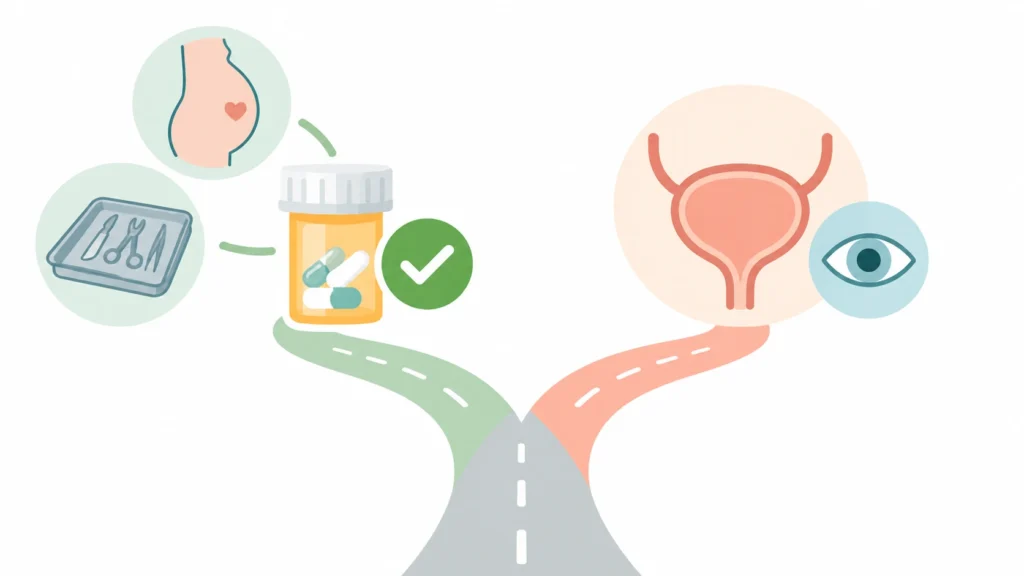
The IDSA recommends screening for and treating ASB only in these situations:
- Pregnancy. Untreated bacteria in pregnancy can lead to a kidney infection, and Cleveland Clinic notes links to preterm birth and low birth weight. Treatment lasts about 4 to 7 days.
- Before urology procedures that cut or scrape the lining of the urinary tract, such as some prostate or bladder surgeries.
- Early after a kidney transplant, which Cleveland Clinic also lists.
The IDSA recommends not screening for or treating it in healthy non-pregnant women, children, older adults at home or in care homes, people with diabetes, people with catheters, people with spinal cord injuries, and most transplant recipients.
Why not just kill the bacteria? Research hasn’t shown a benefit in these groups. Kaiser Permanente explains that unnecessary antibiotics wipe out helpful bacteria and can make future UTIs more likely and harder to treat. They also raise the risk of C. diff diarrhea and antibiotic resistance.
Bacteria in urine with symptoms: a UTI
If bacteria show up and you have urinary symptoms, it’s usually a UTI. The common signs are burning, urgency, peeing often, pressure in the lower belly, and cloudy, smelly or bloody urine. Some UTIs cause urgency or pressure without burning; our guide to UTIs without pain covers those quieter signs. For the full picture, see our guide to UTI symptoms, causes and treatment.
Get care the same day for fever, chills, back or side pain, nausea or vomiting, which can mean a kidney infection. Burning with discharge, sores or a new partner can be an STI instead; our guide to why it burns when you pee covers the lookalikes.
What happens next after bacteria shows up
| Your situation | What usually happens |
|---|---|
| No symptoms, not pregnant, no procedure coming up | Usually nothing. Call if symptoms start |
| Symptoms of a UTI | A urine culture may be sent, and you’ll likely get antibiotics |
| Pregnant | A urine culture, and treatment if bacteria are confirmed |
| Surgery on the urinary tract coming up | A urine culture, and treatment before the procedure |
| Sample looks contaminated, and you have symptoms | A repeat clean-catch sample |
| Older adult with new confusion but no urinary symptoms | Doctors look for other causes first; bacteria alone don’t prove a UTI |
| Man with symptoms | A urine culture every time; our guide to UTIs in men explains why |
Questions worth asking about your result: Do I need anything at all? What grew, and how much? Was the sample clean? And what symptoms should make me call back?
How to get rid of bacteria in urine
If the bacteria are causing a UTI, antibiotics are what kill them. The urine culture shows which drugs work. Our guide to antibiotics for a UTI compares the options and how long to take them.
If you have bacteria but no symptoms and you’re not in a treat-group, Kaiser Permanente says you don’t need antibiotics to “get rid of” them. The bacteria often clear on their own or stay without harm.
Can you flush out bacteria with water?
Water helps you pee more often, which clears some bacteria, and diluted urine stings less if you have a UTI. Harvard Health says drinking water may discourage bacteria from growing, though that hasn’t been proven. Water can’t cure an infection that has already started, and cranberry juice doesn’t treat one either, though cranberry products may lower the chance of repeat UTIs in some women (Cochrane 2023). For relief while you wait for treatment, see our guide to how to get rid of a UTI fast.
Bacteria in urine in pregnancy, older adults and people with catheters
Pregnancy. Pregnant women are screened with a urine culture early in pregnancy, and bacteria are treated even without symptoms, per the IDSA and the US Preventive Services Task Force. Cleveland Clinic says treating it can lower the risk of certain pregnancy complications by up to 35%. Group B Streptococcus deserves its own mention: the CDC guideline, summarized by the AAFP, says GBS in the urine at any point in pregnancy means you should get antibiotics during labor to protect the baby. Make sure your labor team knows.
Older adults. Bacteria without symptoms is common in older adults, above all in care homes. A positive test plus confusion, a fall or tiredness doesn’t prove a UTI, and treating the bacteria doesn’t help unless there are urinary symptoms or fever. Doctors look for other causes too.
People with catheters. Nearly everyone with a long-term catheter has bacteria in their urine, according to Cleveland Clinic. It’s treated only when it causes symptoms such as fever, new pain or confusion with other signs of infection.
Men. Bacteria in a man’s urine is confirmed with one sample, and a UTI in a man gets a urine culture every time.
The bottom line
Bacteria in urine can mean a UTI, harmless bacteria or a contaminated sample, and your symptoms are the best guide. On a urinalysis, “few” or “rare” bacteria with no symptoms usually means nothing, while “many” with burning or urgency supports a UTI. On a urine culture, 100,000 CFU/mL of one type is the usual adult cutoff, and mixed growth often means contamination. Bacteria without symptoms usually aren’t treated, except in pregnancy and before some urology procedures. If symptoms start, call your provider.
Frequently asked questions
Is bacteria in urine an STD?
No. Bacteria on a urine test usually come from your own bowel or skin. STIs like chlamydia and gonorrhea are separate infections, and they’re found with a different urine test that you have to ask for.
Can bacteria in urine make it cloudy or smelly?
They can, but Kaiser Permanente notes that cloudy or smelly urine on its own isn’t a symptom of a UTI. Burning, a strong urge or peeing more often are more telling signs of infection.
Does bacteria in urine mean a kidney infection?
Usually not. Most bacteria stay in the bladder or cause no illness at all. Kidney involvement usually makes you feel sick, with a high temperature and pain under the ribs, and that needs care the same day.
Can children have bacteria in urine without a UTI?
Yes. The IDSA advises against screening for or treating bacteria without symptoms in children. A child with a fever, pain when peeing or new accidents should still see a doctor the same day.
Is bacteria in urine contagious?
No. Bacteria in your urine and UTIs aren’t passed to other people like a cold, and the CDC doesn’t count UTIs as sexually transmitted infections. You can share a bathroom and go to work as usual.
Sources
- Centers for Disease Control and Prevention. Clinical Overview of Urinary Tract Infections
- Centers for Disease Control and Prevention. Urinary Tract Infection Basics
- Nicolle LE, et al. Clinical Practice Guideline for the Management of Asymptomatic Bacteriuria: 2019 Update by the Infectious Diseases Society of America
- Cleveland Clinic. Asymptomatic Bacteriuria
- Harvard Health Publishing. Asymptomatic bacteriuria, 2026
- Kaiser Permanente. Bacteria in the Urine without Symptoms (Asymptomatic Bacteriuria)
- Hitzeman N, et al. Office-Based Urinalysis. American Family Physician, 2022
- American Society for Microbiology. Urine Good Hands: Diagnosing UTIs With Urine Cultures, 2021
- American Family Physician. Prevention of Perinatal Group B Streptococcal Disease: Updated CDC Guideline, 2012
- US Preventive Services Task Force. Asymptomatic Bacteriuria in Adults: Screening, 2019
- Legaria MC, et al. Urinary tract infections caused by anaerobic bacteria. Utility of anaerobic urine culture. Anaerobe, 2022
- Williams G, et al. Cranberries for preventing urinary tract infections. Cochrane Database of Systematic Reviews, 2023
- Doral Health & Wellness. Understanding Bacteria in Urine: Causes and Treatments
Disclaimer
This blog is for informational and educational purposes only, and does not intend to substitute any professional medical advice or consultation. For any health related concerns, please consult with your physician, or call 911.