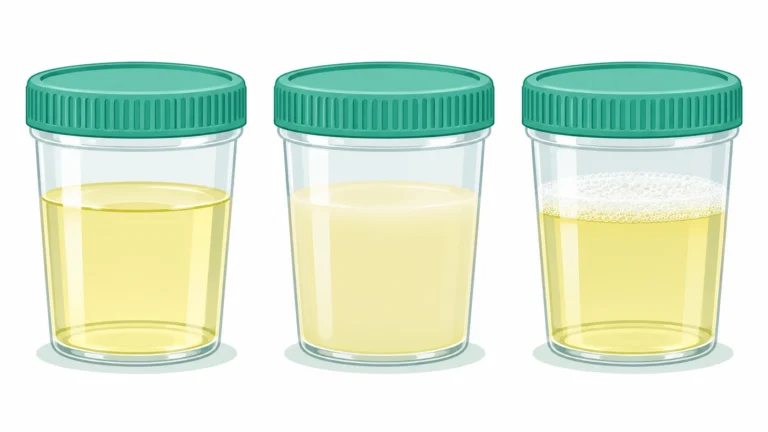
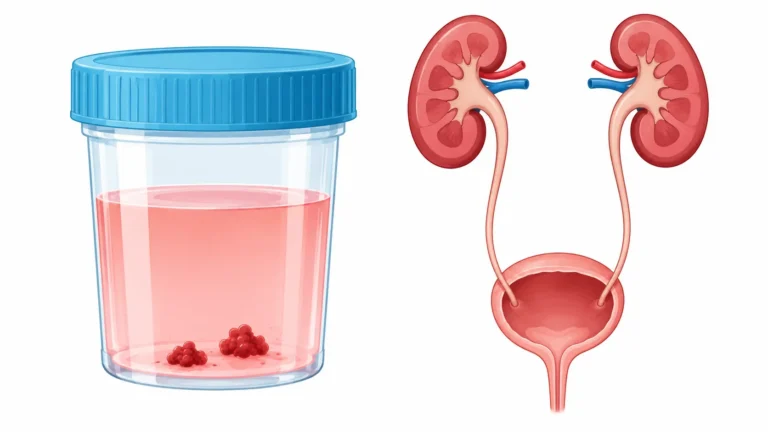
Epithelial Cells in Urine: What Your Result Means by Type and Number
A few epithelial cells in urine are normal, because the lining of your urinary tract sheds cells all the time. Squamous cells, the type most often listed on a report, usually come from the skin or vagina during collection, not from disease. Transitional cells can rise with infection, kidney stones or a catheter. Renal tubular cells matter most, because they come from inside the kidney and can point to kidney damage. The type of cell tells you more than the count.
An “epithelial cells” line on a urinalysis report often worries people because it isn’t explained anywhere on the page. Most of the time, it’s harmless. MedlinePlus notes that a small number of certain types of epithelial cells in urine is normal, and that an abnormal result doesn’t always mean you have a condition that needs treatment.
This guide explains the three types of epithelial cells, how to read few, moderate or many and the per-HPF numbers on your report, why squamous cells usually mean the sample picked up extra cells, what causes high counts, and what to do next.
| Cell type | Where it comes from | What a high count usually means | Usual next step |
|---|---|---|---|
| Squamous | Skin around the urethra, the vagina and the outer urethra | The sample picked up cells during collection | Repeat with a clean-catch sample if results are unclear |
| Transitional | Lining of the bladder, ureters and kidney collecting system | Irritation from infection, stones, a catheter or a recent procedure; rarely cancer | Look at the rest of the urinalysis and your symptoms |
| Renal tubular | Tiny tubes inside the kidneys | Possible kidney injury or disease | Doctor review, blood tests for kidney function |
What are epithelial cells in urine?
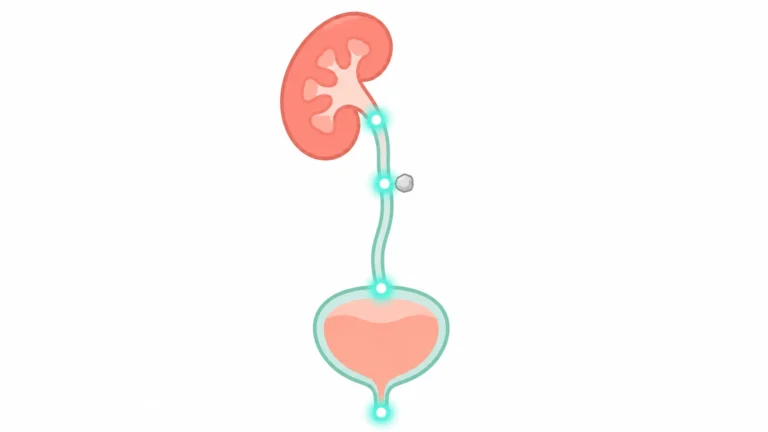
Epithelial cells are the cells that cover the inside and outside surfaces of your body. MedlinePlus explains that they’re found on your skin, in your blood vessels and in your organs, including your urinary tract: the kidneys, ureters, bladder and urethra.
These linings renew themselves, so old cells flake off and leave your body in your urine. That’s why a small number of epithelial cells on a urine test is expected.
Epithelial cells aren’t measured by the dipstick. They’re counted in the microscopic part of a urinalysis, when a lab looks at a spun-down sample of your urine under a microscope. MedlinePlus says a provider may order the test as part of a routine checkup, after an abnormal visual or chemical urine test, or for symptoms such as frequent or painful urination, belly or back pain, or blood in the urine.
The three types of epithelial cells in urine
MedlinePlus lists three types of epithelial cells that line the urinary tract. Each comes from a different place and carries a different meaning.

Squamous epithelial cells
Squamous cells are large, flat and thin, with a small center. They line the outer part of the urethra and, in women, the vagina, and they cover the skin around the genitals. Because they sit right where urine leaves the body, they’re the type most likely to end up in a sample by accident. MedlinePlus notes that squamous cells in urine may mean the sample was contaminated. This type gets its own section below.
Transitional (urothelial) epithelial cells
Transitional cells, also called urothelial cells, line the inside of the bladder, the ureters, the collecting system of the kidneys and parts of the urethra. Levels, a health company whose clinical team reviews lab guides, explains that this lining forms a barrier that keeps urine from damaging nearby tissue. A few transitional cells are normal. Higher numbers can follow irritation of the bladder lining.
Renal tubular epithelial cells
Renal tubular cells come from the tiny tubes inside your kidneys that fine-tune what ends up in your urine. These are the cells that matter most. FPnotebook, a clinical reference used by family doctors, states that renal tubular epithelial cells suggest kidney disease.

How to read epithelial cells on a urinalysis report
Your report may list epithelial cells as a word, a number range or both, and it may or may not name the type.
Few, moderate or many
MedlinePlus says results are often reported as a general amount, such as few, moderate or many, and that a normal result is usually few. Moderate or many cells may be a sign of:
- A urinary tract infection
- A yeast infection
- Kidney disease
- Liver disease
- Certain types of cancer
That list sounds alarming, but the type of cell matters more than the word. “Many squamous cells” in a sample from someone with no symptoms usually points to how the sample was collected. “Moderate renal tubular cells” deserves a closer look.
Epithelial cells in urine normal range
There’s no single normal range that every lab uses. A common reference for squamous cells is 5 or fewer per high-power field, the range Levels lists in its squamous cell guide. FPnotebook uses the same line, noting that more than 5 squamous cells per field suggests contamination. Healthline cites 1 to 5 squamous cells per field as normal.
For renal tubular cells, the bar is much lower. FPnotebook treats their presence as a sign of possible kidney disease, and Healthline notes that more than 15 renal tubular cells per field may mean the kidney isn’t working properly. Always read your result against the reference range printed on your own report.
What 4-6, 6-10, 10-20 or 20-25 per HPF means
HPF stands for high-power field, the view of the sample a lab tech sees through the microscope at high magnification. A result like “6-10/HPF” means the tech counted about 6 to 10 cells in each field they checked.
Here’s how those numbers usually read for squamous cells, the type most reports count:
| Squamous cells per HPF | What it usually means |
|---|---|
| 0 to 5 | Within the common reference range |
| 4-6 | At or just above the top of the range; usually not a concern |
| 6-10 | Above the range; FPnotebook reads more than 5 as a sign of contamination |
| 10-20, 20-25 or “many” | Clear sign the sample picked up skin or vaginal cells; research shows urinalysis results get less reliable once squamous cells pass 8 |
A higher squamous count doesn’t mean you’re sicker. It means the sample is less clean, which can make other results on the same test less reliable. If you have symptoms and the count is high, your doctor may ask for a repeat sample.
For transitional or renal tubular cells, any count above what your lab calls normal is worth discussing with your doctor, along with your symptoms and the rest of the report.
“Squam epithel, UA” and “epithelial cells (non renal)” on a report
Labs use short labels. “Squam epithel, UA,” “UA squam epi” or “Epi cells, squamous” all mean squamous epithelial cells on a urinalysis. “Epithelial cells (non renal)” usually means the count leaves out kidney (renal tubular) cells, the type that carries the most weight. Ask your doctor whether any renal cells were seen if your report doesn’t say. Our guide to urinalysis results explains the other lines on the report.
Squamous epithelial cells in urine
Squamous cells are the most common epithelial cells on urine reports, and the most misunderstood.
Why squamous cells usually mean contamination
Urine passes over skin and, in women, near the vagina on its way out. If the area isn’t cleaned first, or the first part of the stream goes into the cup, flat cells from those surfaces wash into the sample. MedlinePlus explains that squamous cells in urine may mean the sample was contaminated, which can happen if the genital area isn’t cleaned well enough before a clean-catch collection.
The problem isn’t the cells themselves. They’re harmless. The problem is what comes with them. Skin and vaginal surfaces also carry bacteria and white blood cells, so a contaminated sample can look like an infection that isn’t there.
What the research says about squamous cells and contamination
Squamous cells aren’t a perfect test for a dirty sample, and doctors don’t read them that way.
- They don’t reliably predict a contaminated urine culture. In a study of 19,328 urine records published in Academic Emergency Medicine in 2016, Mohr and colleagues found that the squamous cell count was a poor predictor of whether a urine culture would turn out contaminated.
- They do make the urinalysis less reliable. The same study found that when more than 8 squamous cells were present, the urinalysis did a much worse job of predicting bacteria in the urine. A 2020 study in The American Journal of Emergency Medicine by Maher and colleagues, covering 6,490 paired samples, found that squamous cells lowered the accuracy of urinalysis for predicting a positive urine culture and advised relying less on contaminated samples to diagnose a UTI.
- A well-collected sample has almost none. In a 2022 study in The Journal of Urology, Chen and colleagues compared voided and catheter samples from women referred for blood in the urine. Catheter samples had fewer squamous cells and fewer red blood cells, and fewer than 2 squamous cells per field marked a properly collected sample. Using that rule raised the share of referrals with true microscopic blood from 46.1% to 68.8%.
The takeaway: many squamous cells don’t prove anything is wrong, but they’re a reason to question the rest of the results on that sample.
Squamous epithelial cells in urine in women
Women tend to have more squamous cells on urine tests. Levels notes that women usually have higher levels because of anatomy: squamous cells line the urethra, the vagina and parts of the external genitals, while in men they’re found mainly in the urethra. A period or vaginal discharge can add even more cells to a sample.
Healthline lists pregnancy among the situations linked with higher epithelial cell counts, and Levels notes that hormone changes and pressure on the bladder in pregnancy can affect the urinary lining. If you’re pregnant and your result shows many squamous cells, a repeat clean-catch sample is usually the first step. When squamous cells show up with yeast, it often means the yeast came from the vagina, as our guide to yeast in urine explains.
Squamous cells with bacteria, yeast or white blood cells
Squamous cells change how the rest of the report reads:
- With several kinds of bacteria: likely contamination, often reported on a urine culture as mixed urogenital flora.
- With bacteria and symptoms: a UTI is still possible. Our guide to bacteria in urine explains how doctors sort this out.
- With white blood cells: white cells can come from the vagina too, so they’re less telling in a contaminated sample. See leukocytes in urine for what a positive result means.
What causes high epithelial cells in urine?
Leaving aside squamous cells from collection, a rise in transitional or renal tubular cells means the lining of the urinary tract is shedding faster than usual. Common causes include:
- Urinary tract infection. Inflammation from bacteria makes the bladder lining shed more cells. MedlinePlus lists a UTI first among conditions linked to moderate or many cells. Our guide to UTI symptoms and treatment covers the signs.
- Kidney infection. An infection that reaches the kidneys can shed kidney cells into urine. See kidney infection vs UTI for the warning signs.
- Kidney stones. Levels notes that stones irritate the lining as they move. Our guide to the stages of passing a kidney stone explains what to expect, and a report may also show crystals in urine.
- Catheters and procedures. Levels lists catheterization, cystoscopy and other urinary procedures as causes of a short-term rise in transitional cells.
- Interstitial cystitis. This long-term bladder inflammation without infection can increase shedding, Levels explains.
- Sexually transmitted infections. Chlamydia and gonorrhea can inflame the urethra and add cells to urine, according to Levels.
- Kidney disease or injury. Renal tubular cells point here. In a 2019 study in the Brazilian Journal of Nephrology, Goldani and colleagues found that renal tubular cells and granular casts in urine were highly specific for early acute kidney injury after heart surgery.
- Liver disease. MedlinePlus lists liver disease among conditions linked to moderate or many cells.
- Cancer. Rare, and covered in its own section below.
Healthline adds that diabetes, high blood pressure, an enlarged prostate, a weakened immune system and a family history of chronic kidney disease are linked with higher counts.
Can epithelial cells in urine mean cancer?
Rarely. MedlinePlus lists certain types of cancer among the possible causes of moderate or many epithelial cells, and Levels notes that cancers of the bladder or urinary tract can disrupt the lining and lead to abnormal cells in urine. Squamous cells from a contaminated sample are not a sign of cancer.
Bladder cancer usually starts in the transitional (urothelial) cells that line the bladder. ARUP Consult, a test-guidance resource from ARUP Laboratories at the University of Utah, notes that blood in the urine is the most common first sign of bladder cancer. When cancer is a concern, doctors don’t rely on a routine epithelial cell count. They use urine cytology, a test that looks closely at cell shape for cancer changes, along with cystoscopy and imaging. ARUP Consult notes that cytology is good at confirming high-grade bladder cancer but can miss some cases, so it’s one tool among several.
If you have blood in your urine, mainly without pain, ask your doctor about further testing. Our guide to blood in urine covers the causes and next steps.
How to give a clean-catch urine sample
The simplest fix for a high squamous count is a better sample. MedlinePlus describes the clean-catch method:
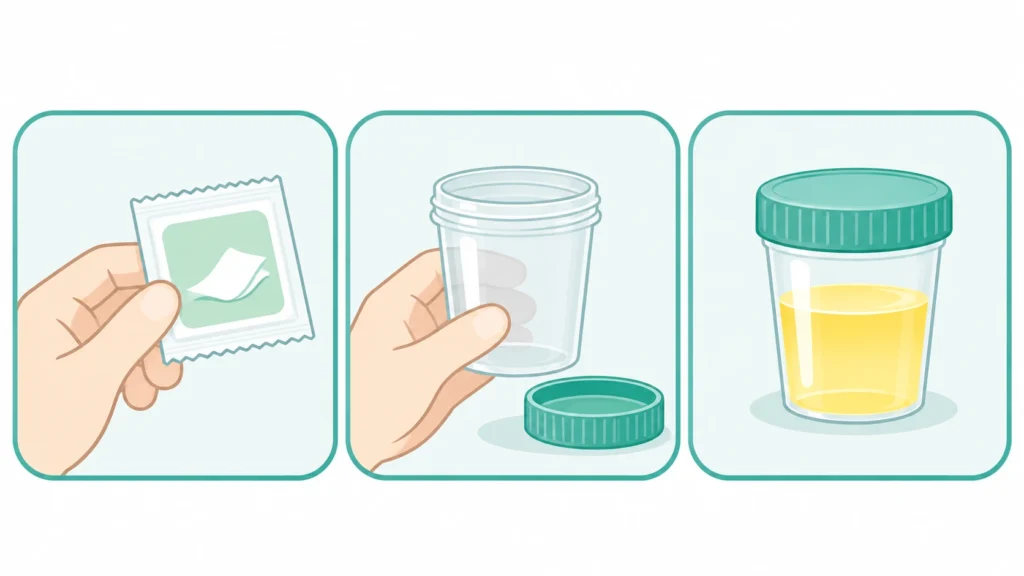
- Wash your hands with soap and water and dry them.
- Open the container without touching the inside.
- Clean the genital area with the wipe. With a penis, wipe the head, pulling back the foreskin first if you have one. With a vagina, separate the labia and wipe the inner sides from front to back.
- Start peeing into the toilet for a few seconds, then stop.
- Pee into the cup without letting it touch your body, collecting an ounce or two.
- Finish peeing into the toilet, cap the cup and return it as instructed.
MedlinePlus also advises telling your provider before the test if you have your period or hemorrhoids that bleed. If a clean catch still comes back contaminated and the answer matters, a doctor may collect urine with a thin catheter, which avoids skin contact. Our guide to the UTI test explains how urine tests for infection work.
What to do next and when to see a doctor
What you do with an epithelial cell result depends on the type and on how you feel.
- Few cells of any type, no symptoms: nothing to do. This is a normal result.
- Squamous cells above the range, no symptoms: usually nothing, unless your doctor wants a cleaner repeat test.
- Squamous cells above the range, with urinary symptoms: ask about a repeat clean-catch sample or a urine culture, since contamination can hide or mimic an infection.
- Transitional cells above the range: your doctor will look at the rest of the report and any symptoms such as burning, urgency, blood or pain.
- Renal tubular cells: contact your doctor. They may order blood tests for kidney function and repeat the urinalysis.
See a doctor soon if your report shows renal tubular cells or casts, or if you have blood in your urine, burning when you pee, fever, pain in your side or back, or swelling in your legs or around your eyes. Our guide to the early signs of kidney disease lists other changes worth watching.
The bottom line
Epithelial cells in urine are usually nothing to worry about. A few are normal, and squamous cells, the most common type on reports, mostly show that skin or vaginal cells got into the sample. High counts of transitional cells can come from infection, stones or a recent procedure. Renal tubular cells are the ones to take seriously, since they can point to kidney injury. Read the cell type, check your lab’s range, and when results are unclear, a clean-catch repeat sample is often the quickest way to an answer.
Frequently asked questions
What does cancerous urine look like?
It often looks normal. The warning sign is blood, which can turn urine pink, red or cola-colored, or show up only under a microscope. Painless blood in urine always deserves a doctor’s visit.
What are epithelial casts in urine?
They’re tube-shaped clumps that form inside the kidney’s tubules and contain kidney cells. Unlike loose squamous cells, a cast can only be made within the kidney, so it points to kidney injury and needs prompt review.
Why am I passing fleshy tissue when I pee?
Epithelial cells are microscopic, so anything you can see is something else, such as a blood clot, thick mucus or a piece of tissue. Save it in a clean container if you can and see a doctor.
Can drinking more water lower epithelial cells in urine?
Not in a meaningful way. Squamous cells depend on how the sample is collected, and transitional or kidney cells depend on the cause. Water won’t fix a contaminated sample or kidney damage.
Can men have squamous cells in urine?
Yes, though usually fewer than women. They can come from the tip of the urethra or from under the foreskin when the area isn’t cleaned before a sample.
How long can a urine sample sit before testing?
Levels advises testing within 1 to 2 hours or refrigerating the sample. Cells start breaking down and bacteria can multiply at room temperature, which can skew the results.
Sources
- MedlinePlus. Epithelial Cells in Urine
- FPnotebook. Urine Microscopic Examination
- Levels. Guide to Squamous Epithelial Cells in Urine
- Levels. Guide to Transitional Epithelial Cells in Urine, 2025
- Healthline. Epithelial Cells in Urine: Types, Test Results, Causes, and More
- Mohr NM, et al. Urinary Squamous Epithelial Cells Do Not Accurately Predict Urine Culture Contamination, but May Predict Urinalysis Performance in Predicting Bacteriuria. Academic Emergency Medicine, 2016
- Maher PJ, Jablonowski KD, Richardson LD. Squamous epithelial cell presence reduces accuracy of urinalysis for prediction of positive urine cultures. The American Journal of Emergency Medicine, 2020
- Chen A, et al. Defining Properly Collected Urine: Thresholds to Improve the Accuracy of Urinalysis for Microscopic Hematuria Evaluation in Women. The Journal of Urology, 2022
- Goldani JC, et al. Urine microscopy as a biomarker of Acute Kidney Injury following cardiac surgery with cardiopulmonary bypass. Brazilian Journal of Nephrology, 2019
- ARUP Consult. Bladder Cancer: Choose the Right Test, 2026
Disclaimer
This blog is for informational and educational purposes only, and does not intend to substitute any professional medical advice or consultation. For any health related concerns, please consult with your physician, or call 911.