Glucose in Urine: What Your Levels Mean and What Causes It
A tiny amount of glucose in urine is normal, and most tests read it as negative. More than a trace usually means your blood sugar has climbed above what your kidneys can hold back, and diabetes is the most common cause. Glucose can also show up with normal blood sugar during pregnancy, with a harmless kidney trait called renal glycosuria, or while taking SGLT2 diabetes medicines. A urine test can’t diagnose diabetes on its own; a blood glucose or A1C test confirms it.
Sugar in your urine has a medical name, glycosuria (also spelled glucosuria). It often shows up by chance on a routine urinalysis, a prenatal checkup or a home test strip, and it rarely causes symptoms by itself. What it means depends on how much glucose there is, what your blood sugar is doing and whether you’re pregnant or taking certain medicines.
This guide explains how glucose gets into urine, how to read each result, what causes it with and without diabetes, and what to do next.
| Result | Approximate glucose | What it usually means |
|---|---|---|
| Negative | Below what the strip can detect | Normal |
| Trace | 100 mg/dL | Often a big carb meal, pregnancy or early high blood sugar |
| 1+ | 250 mg/dL | Blood sugar likely above the kidney’s limit; check blood sugar |
| 2+ | 500 mg/dL | Likely high blood sugar or an SGLT2 medicine |
| 3+ or more | 1,000 mg/dL or higher | High blood sugar is likely; SGLT2 medicines can also do this |
Strip values from the Siemens Multistix procedure used by hospital labs. Your lab’s scale may differ slightly.
What is glucose in urine (glycosuria)?
Glucose is the sugar your body runs on. It comes from the food you eat, travels in your blood, and enters your cells with the help of insulin.
Your kidneys filter your blood all day. Glucose passes through those filters along with water and waste, but healthy kidneys pull nearly all of it back into the blood. MedlinePlus explains that this is why urine normally contains little or no glucose.
Glycosuria means more glucose in your urine than there should be. Cleveland Clinic and WebMD both define it as more than 0.25 mg/mL of glucose in a urine sample, which equals 25 mg/dL. In Clinical Methods, a medical reference on the NCBI Bookshelf, Cowart and Stachura note that healthy people pass up to 25 mg/dL, and that more than that in a random fresh sample is abnormal.
Glycosuria isn’t a disease on its own. It’s a sign that either your blood has too much glucose, your kidneys aren’t holding on to it, or both.
Why glucose spills into urine: the renal threshold
Your kidneys can only take back so much glucose at once. When blood sugar rises past that limit, the extra spills into the urine. That limit is called the renal threshold for glucose.
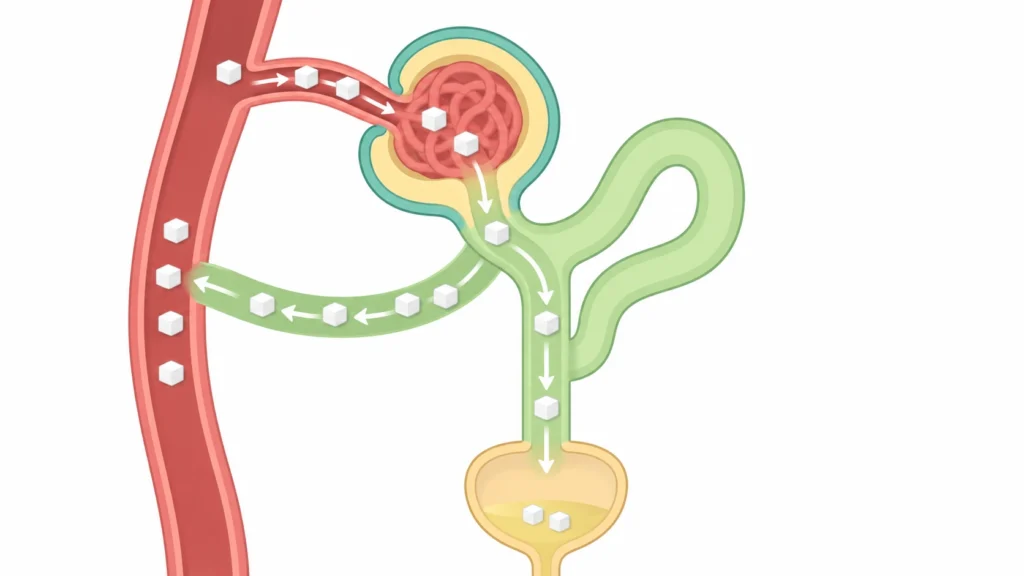
The commonly quoted threshold is about 180 mg/dL of blood glucose. Medical News Today notes that blood sugar usually has to pass about 180 mg/dL (10 mmol/L) before glucose appears in urine. That number isn’t the same for everyone. Clinical Methods reports that among people with diabetes, the threshold has been measured anywhere from 54 to 300 mg/dL.
This range explains two things that confuse many people:
- Glucose can be in your urine while your blood sugar is normal, if your threshold is low. Pregnancy lowers it.
- Your urine can be negative while your blood sugar is high, if your threshold is high. Clinical Methods notes that age, heart failure, kidney disease and long-term high blood sugar can all raise it.
There’s also a time lag. Clinical Methods notes it can take 20 to 120 minutes for a rise in blood sugar to show up in urine, so a urine test reflects the recent past, not this moment.
Urine glucose levels: what your result means
Labs and home strips report glucose as negative, trace, a plus scale or a number in mg/dL. Always read your result next to the reference range printed on your report, since labs vary.
Glucose in urine normal range
The normal result for a urine glucose test is negative. The Siemens Multistix procedure lists the reference range as negative and notes that small amounts of glucose are normally passed in urine but stay below what the strip can detect. On a lab that measures the exact amount, anything up to 0.25 mg/mL (25 mg/dL) is considered normal.
Levels, a health company whose advisor Benjamin Bikman, PhD, writes on glucose, uses a similar line of 0.8 mmol/L, which is roughly 15 mg/dL.
Negative glucose in urine
“Negative” or “glucose UA negative” means the strip didn’t find glucose. That’s the normal result. It’s reassuring but not proof that your blood sugar is fine. MedlinePlus points out that you can have a normal urine glucose level while your blood glucose is high, so a negative urine test doesn’t rule out diabetes.
Trace glucose in urine
Trace is the lowest positive reading, about 100 mg/dL on Multistix strips. A trace can follow a large, carbohydrate-heavy meal, happen in pregnancy, or be an early sign that blood sugar is running high. Mention a single trace reading to your doctor, who may simply repeat the test. Repeated trace readings are worth a blood test.
What 100, 250, 500 or 1,000 mg/dL means
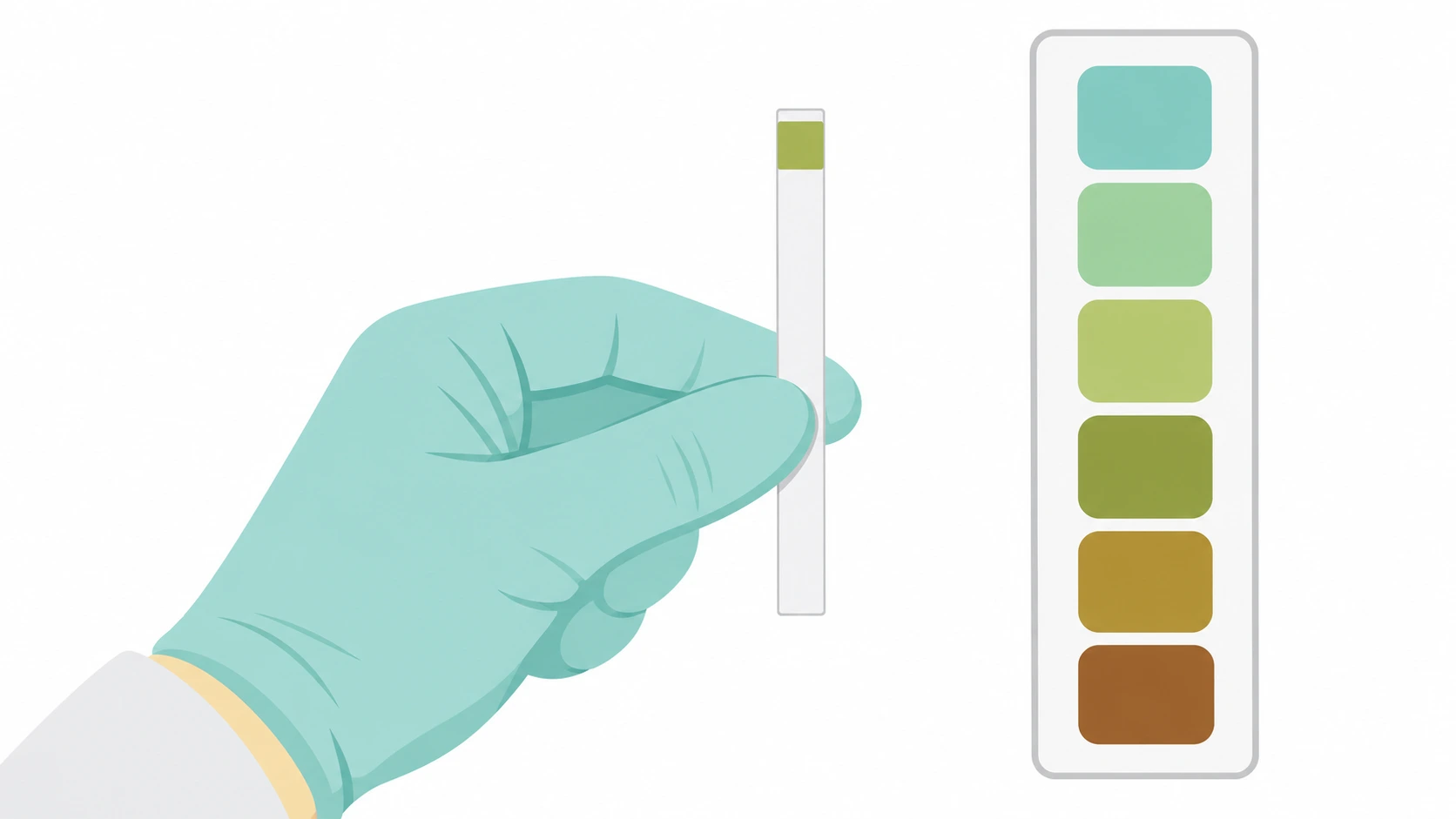
The Multistix procedure lists these color blocks for glucose:
- Trace: 100 mg/dL
- 1+: 250 mg/dL
- 2+: 500 mg/dL
- 3+ or more: 1,000 mg/dL or higher
So “glucose 1,000 in urine” or “3+ glucose” is the top of the scale. In someone who isn’t taking an SGLT2 inhibitor, readings of 1+ and above can mean blood sugar has been above the renal threshold. Get a blood glucose check soon, and the same day if you feel unwell.
People who take SGLT2 inhibitors can show high urine glucose readings even when their blood sugar is under control, because the medicine sends glucose into the urine on purpose.
“UA glucose” on a lab report
“UA” stands for urinalysis. Glucose is one of the chemical pads on the dipstick, read alongside protein, ketones, blood, nitrites and leukocytes. If glucose is flagged, the lab report alone won’t say why. Our guide to urinalysis results explains the other lines on the report.
Glucose with ketones or protein on the same test
Other results on the same strip change what glucose means:
- Glucose and ketones: sugar in the urine along with ketones can mean the body is short of insulin and burning fat. In someone with diabetes, that’s a warning sign of diabetic ketoacidosis. Our guide to ketones in urine explains each ketone level.
- Glucose and protein: high blood sugar over years can damage the kidney filters, and protein leaking into urine is one of the first signs. See our guide to protein in urine for what each protein level means.
What causes glucose in urine?
Cleveland Clinic groups the causes of glycosuria into three types: your body doesn’t make or use insulin properly, there’s more sugar in your system than your body can handle at once, or you have a kidney disorder.
Type 1 and type 2 diabetes
Diabetes is the most common cause, according to MedlinePlus. In type 1 diabetes, the pancreas makes little or no insulin. In type 2 diabetes, the body doesn’t respond to insulin well or doesn’t make enough. Either way, glucose builds up in the blood until it passes the renal threshold and spills into urine.
Medical News Today notes that glucose in urine can be the first clue to diabetes that hasn’t been diagnosed yet. If you already have diabetes, MedlinePlus says high urine glucose may mean your diabetes isn’t well controlled.
A large, carbohydrate-heavy meal
Cleveland Clinic describes a short-lived type called alimentary glycosuria, which happens when you eat a lot of carbohydrates at once. Blood and urine glucose take longer than usual to settle, but in people without a blood sugar condition, it should pass within several hours. WebMD adds that it can happen in healthy people as well as in people with diabetes. Testing after a big meal can show glucose that disappears on a fasting sample.
SGLT2 inhibitor medicines
SGLT2 inhibitors are diabetes medicines that block glucose from being reabsorbed in the kidneys, so it leaves in the urine. They include canagliflozin (Invokana), dapagliflozin (Farxiga) and empagliflozin (Jardiance). The Merck Manual notes that these drugs are now used to protect the heart and kidneys even in people without diabetes.
If you take one of these medicines, glucose in your urine is expected and isn’t a sign that your diabetes is out of control. It does affect infection risk. Sugar in the urine can feed yeast, and our guide to yeast in urine explains that link. Don’t stop the medicine on your own.
Renal glycosuria
Renal glycosuria is a rare inherited trait in which the kidneys let glucose into the urine even though blood sugar is normal or low. The Merck Manual explains that it comes from a defect in the kidney tubule cells that take glucose back into the blood. It causes no symptoms or serious problems, and no treatment is needed. A doctor usually finds it when a routine urine test shows glucose but blood glucose is normal.
Clinical Methods notes that true renal glycosuria is rare when doctors stick to strict rules, such as finding glucose in urine after an overnight fast with normal blood sugar.
Fanconi syndrome and kidney tubule damage
Fanconi syndrome is a problem with the kidney tubules that makes them lose several substances at once. Cleveland Clinic explains that people with Fanconi syndrome have trouble reabsorbing potassium, phosphorus and glucose, so these leave the body in urine. It can be inherited or develop later in life.
WebMD lists acquired causes such as certain drugs, heavy metal exposure, low vitamin D and a kidney transplant. Inherited causes include Wilson disease, Dent disease, Lowe syndrome and cystinosis. The Merck Manual adds that other diseases that damage the kidney tubules can also cause glucose to leak.
Glucose in urine without diabetes
If your blood sugar is normal, glucose in urine usually comes from one of these:
- A large carbohydrate meal before the test
- Pregnancy
- An SGLT2 inhibitor taken for heart or kidney protection
- Renal glycosuria, an inherited and harmless trait
- Fanconi syndrome or another kidney tubule problem
Cleveland Clinic notes that if you have glycosuria without an underlying health condition, you may not need to do anything, but you should still see a provider if new symptoms appear. A fasting blood glucose or A1C test is the step that separates harmless causes from early diabetes.
Glucose in urine during pregnancy
Glucose in urine is common in pregnancy, and it doesn’t always mean gestational diabetes. MedlinePlus says some glucose in urine is common while pregnant, but high levels that keep showing up could be a sign of gestational diabetes, a type of diabetes that happens only during pregnancy.
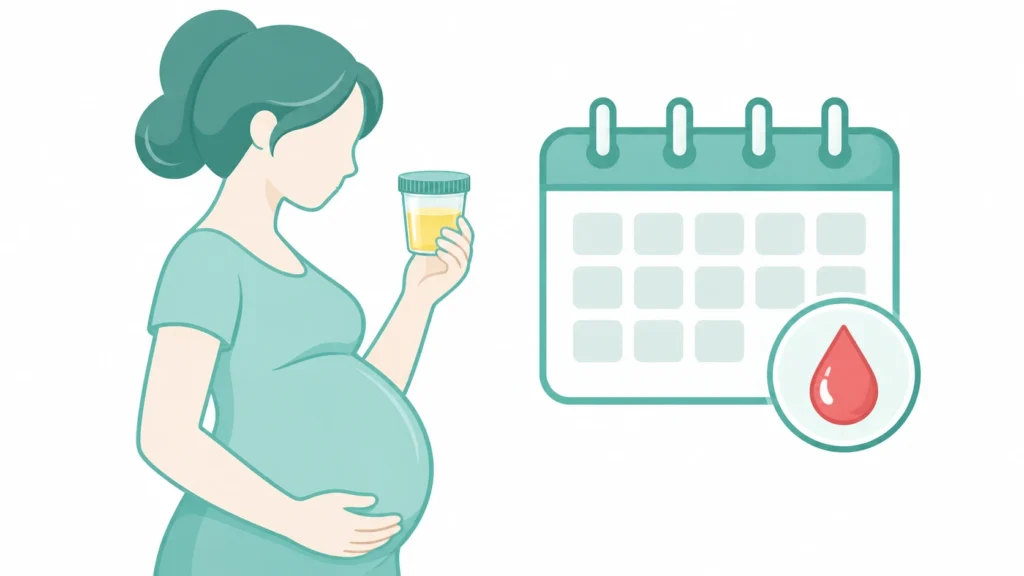
Medical News Today explains that the kidneys let more glucose leave the body during pregnancy. Because of that, a urine glucose result isn’t a reliable way to diagnose gestational diabetes, and doctors use blood tests instead. A 2005 review in The Journal of Family Practice by Alto went further and concluded that routine urine dipstick checks for glucose at every prenatal visit don’t screen well for gestational diabetes.
WebMD notes that most pregnant women have a glucose drink test with a blood draw around 24 to 28 weeks, and a doctor may order it earlier if urine tests keep showing high glucose. Gestational diabetes needs care because high blood sugar in pregnancy can lead to a larger baby, high blood pressure and high blood sugar in the baby. It usually clears after birth, but Medical News Today notes it raises the chance of type 2 diabetes later in life.
Glucose in urine symptoms
Glucose in urine doesn’t cause symptoms you can feel. Cleveland Clinic notes that you might have glycosuria for years without knowing it. Any symptoms come from the high blood sugar behind it. Cleveland Clinic and MedlinePlus list:
- Feeling thirsty all the time
- Peeing more than usual, including at night
- Feeling hungry even after eating
- Tiredness
- Blurred vision
- Weight loss without trying
- Cuts and sores that heal slowly
- Numbness or tingling in the hands or feet
- Darkened skin in body folds, such as the neck or armpits
Renal glycosuria and pregnancy-related glycosuria usually cause no symptoms at all, WebMD notes. Some people with high blood sugar also notice urine that smells sweet or looks foamy; our guide to cloudy, foamy or smelly urine explains those changes.
Glucose in urine and UTIs
A urinary tract infection doesn’t put sugar in your urine. The link runs the other way: sugar in urine can make infections more likely. Levels notes that glucose in urine can feed bacteria in the urinary tract and raise the chance of a UTI.
The clearest evidence comes from SGLT2 inhibitors, which raise urine glucose on purpose. In December 2015, the FDA added warnings about serious urinary tract infections to the labels of these drugs after 19 cases of blood infection or kidney infection that started in the urinary tract, all of which needed a hospital stay. Our guide to why you keep getting UTIs covers the trial data on these medicines, and our guide to UTI vs yeast infection explains how to tell the two apart.
If your urine test shows glucose along with leukocytes or nitrites, or you have burning, urgency or fever, see our guide to UTI symptoms and treatment and contact your doctor.
How glucose in urine is tested
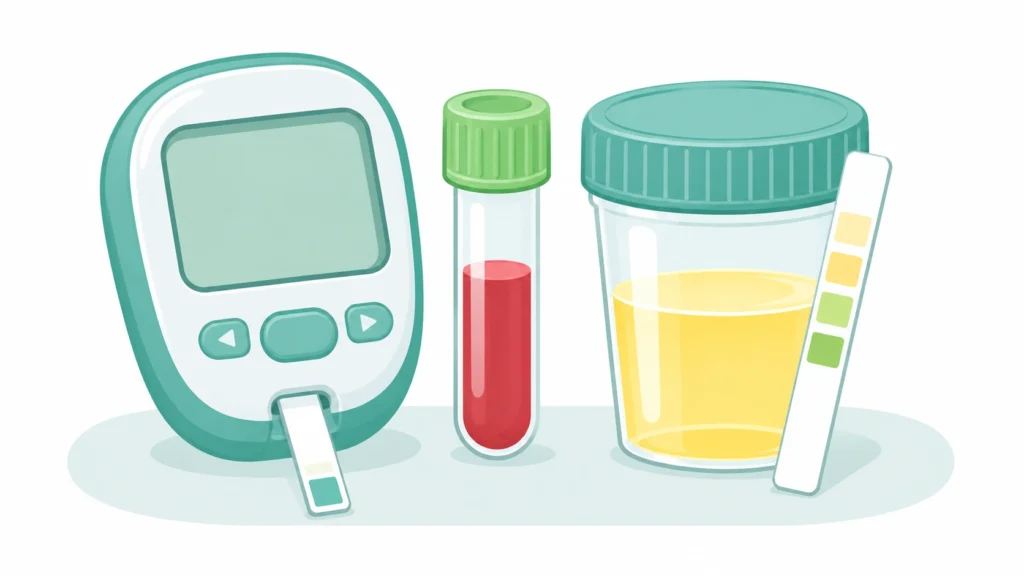
Most people find out about glucose in urine from a urinalysis. A lab tech dips a strip into your sample, and the glucose pad changes color. MedlinePlus explains that a urine glucose test is usually part of a routine urinalysis and can also be done at home with strips if your provider asks you to.
How accurate is a urine glucose test?
A urine glucose test is useful as a clue but weak as a measure. UMass Memorial Health notes that it’s easier to do than a blood test but not as accurate, and that it reflects what your blood sugar was a few hours earlier. MedlinePlus explains that blood tests have largely replaced urine glucose tests for diagnosing and monitoring diabetes. A urine test also can’t warn of low blood sugar.
The Multistix procedure lists several things that can make the glucose pad read falsely low:
- Moderate amounts of ketones in the same sample
- Large amounts of vitamin C (ascorbic acid)
- Concentrated urine, since the pad reacts less as urine gets more concentrated
- Temperature differences when the strip is read
MedlinePlus adds that certain medicines, vitamin C and a large meal can all affect results, so tell your provider what you take before a test. Vitamin C supplements can affect other strip pads too, as our guide to normal urine pH notes.
Blood tests that confirm the cause
If glucose shows up, Cleveland Clinic and WebMD say a provider will usually order:
- A blood glucose test to see whether your blood sugar is high right now
- An A1C test to measure your average blood sugar over the past three months
If blood sugar and A1C are normal, your doctor may look at your medicines, pregnancy or kidney causes next.
How to lower glucose in urine
There’s no way to flush sugar out of your urine directly. Glucose in urine goes away when the cause is fixed. Cleveland Clinic says that once the underlying condition is treated, urine glucose should return to normal.
- Diabetes: follow your care plan. Cleveland Clinic and WebMD list options such as eating more vegetables and whole grains, regular physical activity, metformin, insulin and GLP-1 medicines. Fewer sweets, sugary drinks and refined white starches can help keep blood sugar below the threshold.
- A big carb meal: nothing is needed. Retest on a fasting sample if your provider asks.
- SGLT2 inhibitors: glucose in urine is the expected effect. Report any burning, itching or fever to your doctor.
- Renal glycosuria: the Merck Manual says no treatment is needed.
- Fanconi syndrome: care focuses on the cause, guided by a kidney specialist.
- Pregnancy: follow your obstetrician’s plan for glucose testing.
When to see a doctor
See your doctor if a urine test shows glucose more than once, if you have symptoms such as constant thirst, peeing a lot or weight loss you can’t explain, or if you have diabetes and notice a sudden change in your symptoms, as Cleveland Clinic advises. If you’re pregnant, tell your obstetrician about any glucose reading.
Cleveland Clinic advises calling 911 or going to the nearest emergency room if your blood glucose is above 250 mg/dL and you have belly pain, trouble staying awake, dry skin, a fast heartbeat or rapid breathing. Go to the ER, too, if a urine test shows both glucose and moderate or large ketones and you feel sick or are vomiting.
The bottom line
Glucose in urine means sugar has gotten past your kidneys’ filters. A negative or tiny amount is normal. Trace or higher usually points to high blood sugar, most often from diabetes, but a big meal, pregnancy, SGLT2 medicines and harmless kidney traits can do the same with normal blood sugar. A urine test is only a clue. A blood glucose or A1C test tells you what’s really going on, and fixing the cause is what clears glucose from your urine.
Frequently asked questions
Will drinking water reduce sugar in urine?
Water can make a sample read lower by diluting it, but it doesn’t lower your blood sugar, which is what matters. Stay hydrated, mainly with high blood sugar, but don’t rely on water to fix the cause.
What does pee look like with high blood sugar?
It usually looks like ordinary urine. Color and clarity don’t reveal glucose. You may notice that you’re peeing more often and in larger amounts, which is a clue to get your blood sugar checked.
Can fever or exercise cause glucose in urine?
They can. Clinical Methods notes that fever, exercise, pregnancy and an overactive thyroid can lower the kidney’s glucose threshold, so some glucose may spill into urine at blood sugar levels that would usually stay hidden.
How fast does glucose in urine go away?
After a big carb meal, it should clear within several hours. When it comes from diabetes, it fades once blood sugar returns to your target range. With renal glycosuria or SGLT2 medicines, it stays.
Is glucose in urine the same as diabetes?
No. It’s a clue that blood sugar may be high, but other causes exist and some people with diabetes test negative. Diabetes is diagnosed with blood tests such as fasting glucose or A1C.
Can children have glucose in urine?
Yes. Type 1 diabetes often starts in childhood or the teen years, and inherited kidney conditions such as renal glycosuria and Fanconi syndrome can be found in children. Any positive result in a child deserves a doctor’s review.
Sources
- Cleveland Clinic. Glycosuria: What It Is, Causes, Symptoms and Treatment, 2024
- MedlinePlus. Glucose in Urine Test
- WebMD. Glycosuria: Causes, Symptoms, and Treatment, 2025
- Merck Manual Consumer Version. Renal Glucosuria, 2026
- Cowart SL, Stachura ME. Glucosuria. In: Clinical Methods: The History, Physical, and Laboratory Examinations, 3rd edition. NCBI Bookshelf
- UMass Memorial Health. Glucose (Urine)
- Medical News Today. What to Know About Glycosuria
- Bikman B. What Does Glucose in My Urine Mean for My Health? Levels, 2024
- Glucose in Urine (Siemens Multistix 10 SG) Laboratory Procedure
- Drugs.com. FDA Drug Safety Communication: SGLT2 Inhibitor Labels to Include Warnings About Too Much Acid in the Blood and Serious Urinary Tract Infections, 2015
- Alto WA. No need for glycosuria/proteinuria screen in pregnant women. The Journal of Family Practice, 2005
Disclaimer
This blog is for informational and educational purposes only, and does not intend to substitute any professional medical advice or consultation. For any health related concerns, please consult with your physician, or call 911.