Bilirubin in Urine: What a Positive Result Means, Causes and Next Steps
Bilirubin shouldn’t show up on a urine test. When it does, called bilirubinuria, it means a form of bilirubin made by the liver is building up in the blood, most often because of liver disease or a blocked bile duct. It can appear before yellow skin or eyes do. Any positive result needs a liver blood test, though a single trace reading can be a false alarm.
Seeing “Bilirubin: Small” or “1+” on a urinalysis can be unsettling, above all when you feel fine. This guide explains how bilirubin ends up in urine, what each result level means, what causes it, which results can be wrong, what dark urine looks like and what your doctor will likely check next.
What is bilirubin in urine?
Bilirubin is a yellow substance your body makes when it breaks down old red blood cells. Your liver uses it to make bile, which flows into the intestine and leaves the body in stool. In a healthy person, the bilirubin line on a urine test reads negative. MedlinePlus explains that when the liver or bile ducts have a problem, bilirubin can build up in the blood and spill into the urine, and that this can be an early sign of a liver condition.
How bilirubin gets into urine
Bilirubin comes in two forms, and only one can reach the urine:
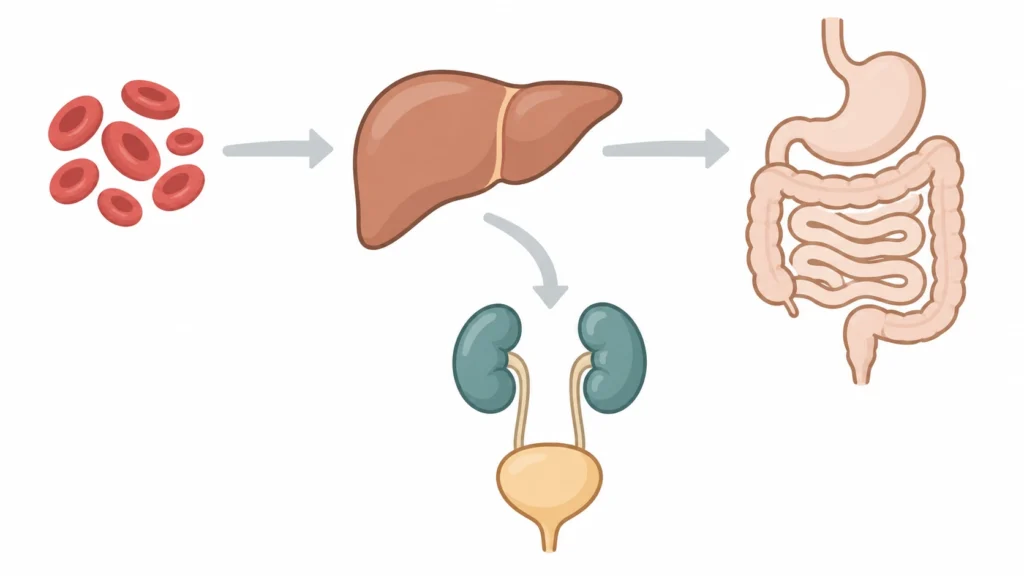
- Old red blood cells break down, and the hemoglobin inside them becomes unconjugated (indirect) bilirubin. It doesn’t dissolve in water, so it travels in the blood stuck to a protein called albumin.
- The liver changes it into conjugated (direct) bilirubin, which dissolves in water.
- The liver sends it into bile, which drains through the bile ducts into the intestine. Gut bacteria turn it into urobilinogen and stercobilin, the pigment that colors stool brown.
- If the liver can’t clear it or bile can’t drain, conjugated bilirubin backs up into the blood. Because it dissolves in water, the kidneys filter it into the urine.
According to the StatPearls review on bilirubinuria from the National Library of Medicine, unconjugated bilirubin can’t be passed into urine at all. That’s why urine bilirubin points so directly at the liver and bile ducts.
What your urine bilirubin result means
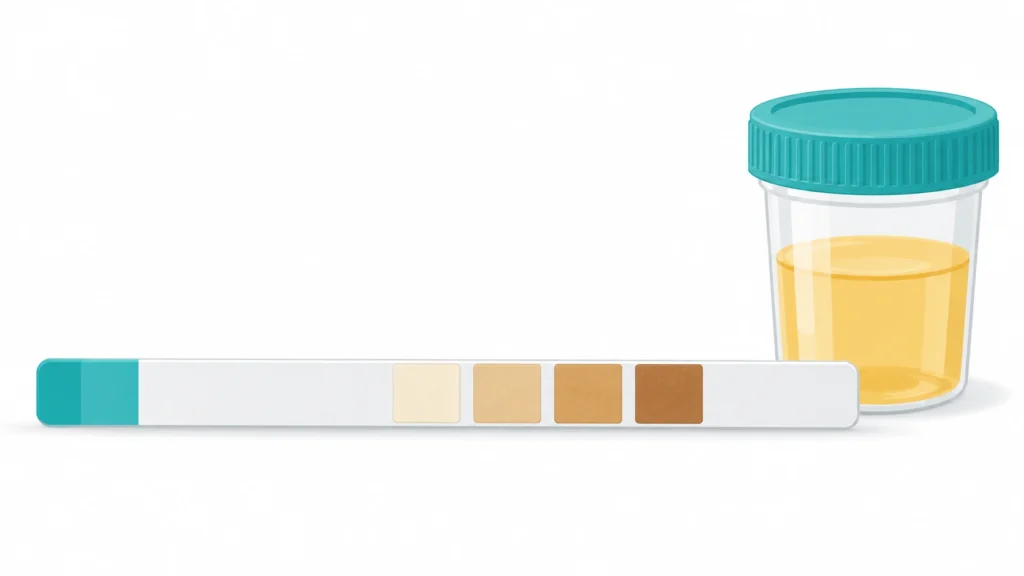
Normal adult urine holds about 0.02 mg/dL of bilirubin, far too little for a routine test to pick up, according to the lab procedure for Siemens Multistix strips, a dipstick many labs use. The bilirubin pad detects levels from about 0.4 to 0.8 mg/dL and up. So any reading above negative is outside the normal range.
| Report says | What it means | What usually happens |
|---|---|---|
| Negative | No bilirubin detected. This is normal | Nothing more, unless you have symptoms of liver disease |
| Trace or small (1+) | A low amount detected | Repeat the urine test on a fresh sample and check liver blood tests |
| Moderate (2+) | A clear rise in conjugated bilirubin in the blood | Liver blood tests soon, and often an ultrasound |
| Large (3+) | A high amount, often with dark urine you can see | Prompt liver blood tests and imaging; same-day care if you have fever, pain or yellow eyes |
The Multistix procedure says even trace amounts are abnormal enough to need further investigation. A single small result on a sample that sat too long or was highly concentrated can still be a false reading, which is why the first step is often a fresh repeat sample plus a blood test. Labs write the result in different ways: negative, 1+ to 3+, or small, moderate and large. Our guide to urinalysis results explains how this line fits into the rest of the report.
Bilirubin and urobilinogen together
Doctors read the bilirubin line together with urobilinogen, the substance gut bacteria make from bilirubin. The pair hints at where the problem is:
| Urine bilirubin | Urine urobilinogen | What it usually points to |
|---|---|---|
| Negative | Normal | Normal |
| Negative | High | Red blood cells breaking down too fast |
| Positive | Normal or high | Liver cell damage, such as hepatitis |
| Positive | Low or absent | Bile blocked from reaching the gut, such as a gallstone or tumor |
Our guide to urobilinogen in urine explains urobilinogen results and the rarer patterns.
How serious is bilirubin in urine?
Bilirubin in urine isn’t a disease by itself, and it doesn’t harm the kidneys or bladder. It’s a signal, and how serious it is depends on what’s behind it. A gallstone stuck in a duct, a short bout of hepatitis A or a medicine reaction can clear up fully once the cause is dealt with. Cirrhosis or a tumor pressing on the bile duct is a much bigger problem.
What makes the finding worth acting on is timing. The MSD Manual notes that dark urine from conjugated bilirubin marks the start of the problem more accurately than jaundice, the yellowing of the skin and eyes. The StatPearls review advises doctors to order liver blood tests after an unexpected positive result, even when the person has no symptoms. An estimated 3.9% to 6.9% of Americans have some form of chronic liver disease, according to the same review, and many don’t know it.
What causes bilirubin in urine?
The causes fall into three groups: problems inside the liver, blockages in the bile ducts, and a few rare inherited or pregnancy-related conditions. The StatPearls review lists these causes.
Liver cell damage
When liver cells are inflamed or scarred, they can’t move conjugated bilirubin into bile, so it leaks back into the blood:
- Viral hepatitis, types A through E
- Alcohol-related liver disease, from fatty liver to alcoholic hepatitis and cirrhosis
- Fatty liver disease linked to weight and metabolism, now called metabolic dysfunction-associated steatotic liver disease (MASLD), once it has progressed to inflammation
- Autoimmune hepatitis
- Drug- or supplement-induced liver injury, including some herbal products
- Inherited metabolic conditions such as Wilson disease (copper buildup) and hemochromatosis (iron buildup)
- Low blood flow to the liver (ischemic hepatitis), sarcoidosis and sepsis, a severe body-wide infection
- Liver cancer, listed by Healthline
Blocked bile ducts
When bile can’t drain, conjugated bilirubin has nowhere to go but back into the blood. Common causes:
- Gallstones lodged in the common bile duct
- Narrowed bile ducts (strictures), often after surgery or inflammation
- Cholangitis, an infection or inflammation of the bile ducts, including primary sclerosing cholangitis
- Cancer of the bile ducts (cholangiocarcinoma) or the head of the pancreas, or lymphoma pressing on the ducts
- Chronic pancreatitis
- Bile duct cysts
The MSD Manual notes that jaundice that comes on slowly with itching and clay-colored stools suggests a blockage or bile backup.
Inherited conditions and pregnancy
- Dubin-Johnson syndrome and Rotor syndrome. These rare inherited conditions slow the liver’s release of conjugated bilirubin. They cause lifelong mild bilirubin in the urine but are usually harmless.
- Cholestasis of pregnancy. In this liver condition, bile flow slows during pregnancy. Mayo Clinic says the main symptom is intense itching without a rash, usually on the palms and soles, often worse at night and most common in the third trimester. Jaundice is less common. It raises the risk of preterm birth and stillbirth, so a provider may recommend delivery around 37 weeks. Call your pregnancy care provider if itching becomes constant or severe.
What doesn’t cause bilirubin in urine
Some conditions raise bilirubin in the blood but leave the urine test negative, because they raise only the unconjugated form:
- Gilbert syndrome, a harmless inherited trait that affects 3% to 7% of Americans, according to MedlinePlus Genetics. Mayo Clinic notes that once Gilbert syndrome is known to be the cause, there’s no need to worry about it.
- Hemolysis, when red blood cells break down too fast, as in sickle cell disease or some anemias. It raises urobilinogen, not urine bilirubin.
- Newborn jaundice, which is mostly unconjugated bilirubin.
False positives and false negatives
The bilirubin pad is easy to fool. The StatPearls review and the Multistix procedure list these causes of wrong results:
False negatives (bilirubin is there, but the test misses it):
- An old sample or one left in the light. Bilirubin breaks down in urine that sits around, so labs test within an hour.
- Vitamin C (ascorbic acid) in the urine, above about 15 mg/dL.
- Nitrite in the urine, which most UTIs produce.
- Acidic urine with a pH below 5.5. Our guide to normal urine pH explains that number.
- Recent antibiotics.
- Long-standing bile backup, where much of the bilirubin binds tightly to albumin and can no longer pass into urine.
False positives (the test reads positive when bilirubin isn’t the cause):
- Phenazopyridine (AZO, Pyridium), the over-the-counter UTI pain reliever that turns urine orange
- Chlorpromazine, an antipsychotic
- Etodolac (Lodine), an anti-inflammatory painkiller
- Indican and other substances that color urine red or orange
If your result doesn’t fit how you feel, ask for a fresh sample tested promptly, and mention every medicine and supplement you take.
Can a UTI cause bilirubin in urine?
Not directly. A urinary tract infection doesn’t raise bilirubin. It can make the result less reliable, though, in two ways: nitrite from the infection can hide bilirubin that’s really there, and AZO taken for UTI pain can make the pad read positive. Our guide to the UTI test explains why to give a sample before taking AZO, and our guide to nitrites in urine covers the nitrite pad.
The one link runs through the bloodstream: the StatPearls review lists sepsis among the causes of bilirubin in urine. A UTI that spreads into the blood and causes sepsis is rare, and it comes with fever, chills and feeling seriously ill, not just a lab finding.
What color is urine with bilirubin?
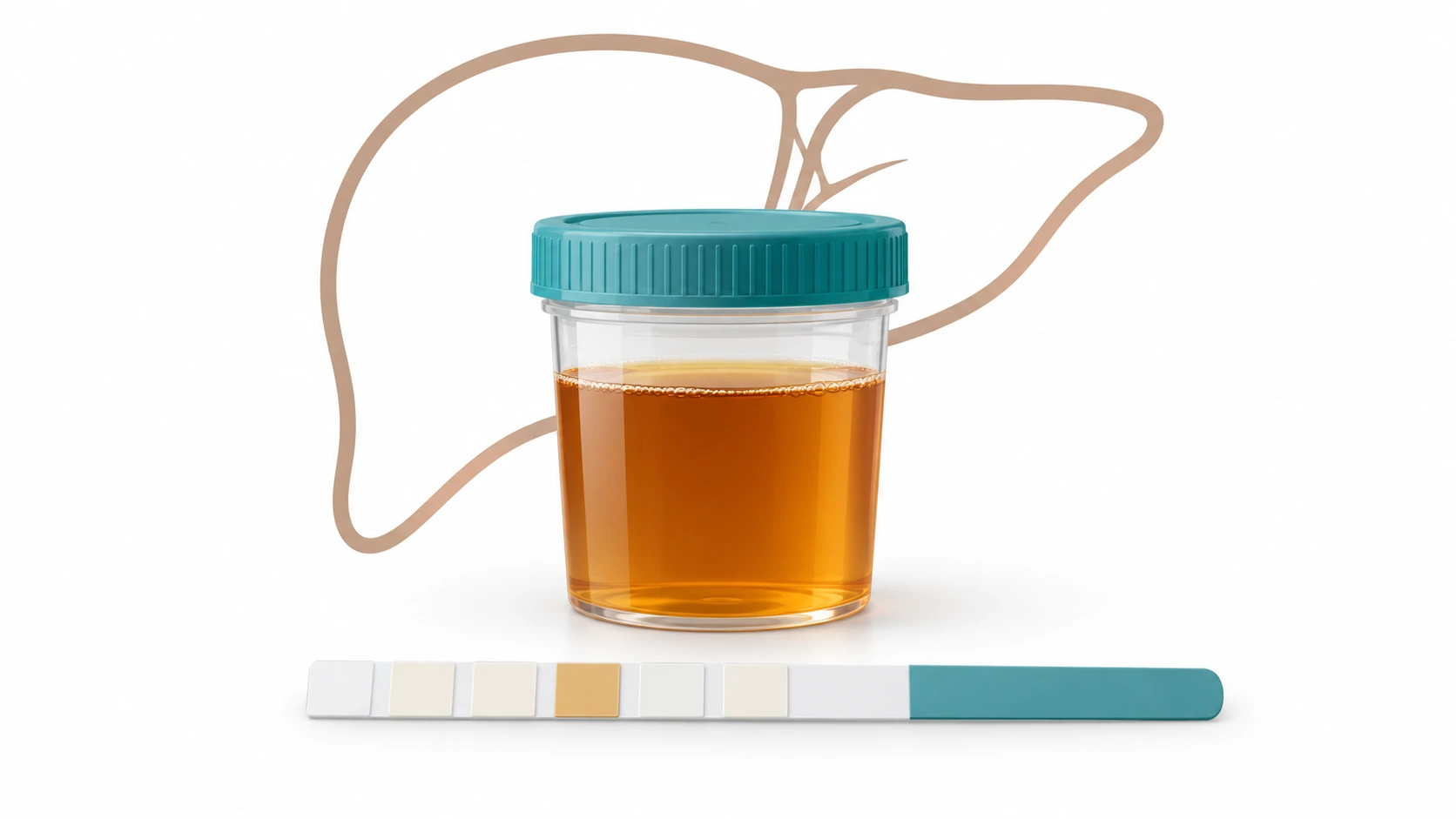
Bilirubin turns urine dark: deep amber, brownish-orange or the color of strong tea or cola. Mayo Clinic says high bilirubin can make urine look brown or orange and stool look light or clay-colored. The combination of dark urine and pale stool is the classic sign that bile isn’t draining.
Dark urine has other, more common causes, so color alone can’t tell you it’s bilirubin:
| Urine color | Common causes |
|---|---|
| Dark yellow or amber | Not drinking enough; clears within a day of more fluids |
| Brownish-orange, tea or cola, with pale stool or yellow eyes | Bilirubin from a liver or bile duct problem |
| Bright orange | Phenazopyridine (AZO), some antibiotics, or not drinking enough |
| Pink, red or cola, sometimes with clots | Blood in the urine; see our guide to blood in urine |
| Neon yellow | B vitamins, above all riboflavin; see our guide to neon yellow pee |
If dark urine doesn’t lighten within a day or two of drinking more water, get it checked.

Symptoms that can come with bilirubin in urine
Bilirubin in urine causes no symptoms of its own. Any symptoms come from whatever is causing it. MedlinePlus lists these signs of a liver, gallbladder or bile duct problem:
- Yellow skin or yellow whites of the eyes (jaundice)
- Dark urine and light-colored stool
- Itching that comes and goes or won’t stop
- Tiredness and weakness
- Nausea, vomiting and loss of appetite
- Pain or swelling in the belly, often under the right ribs
- Swelling in the ankles and legs
Get emergency care for any of these, which the MSD Manual flags as warning signs:
- Fever or chills with steady pain under the right ribs, which can mean an infected, blocked bile duct (cholangitis)
- Confusion, unusual sleepiness or personality changes
- Vomiting blood, black stools, or easy bruising and bleeding
- Severe belly pain
Urine bilirubin vs blood bilirubin
A urine test only says yes or no to conjugated bilirubin. A blood test gives the actual numbers, split into total and direct (conjugated) bilirubin:
| Blood test | Typical adult result | Source |
|---|---|---|
| Total bilirubin | About 0.2 to 1.3 mg/dL | Cleveland Clinic; Mayo Clinic lists about 1.2 mg/dL |
| Direct (conjugated) bilirubin | About 0.3 mg/dL | Mayo Clinic |
| Level where jaundice becomes visible | About 2 to 3 mg/dL | MSD Manual |
Ranges differ a little from lab to lab. A high direct bilirubin in the blood is what puts bilirubin in the urine. A high indirect bilirubin with a normal direct level, as in Gilbert syndrome, leaves the urine test negative.
What happens next: tests your doctor may order
After a positive urine bilirubin, the next steps usually follow the approach the MSD Manual describes:
- A history and exam, including when dark urine started, stool color, itching, alcohol, every medicine and supplement, travel and hepatitis risks.
- Liver blood tests: total and direct bilirubin, ALT and AST (liver cell enzymes), alkaline phosphatase (ALP) and often GGT and albumin. The pattern points to the cause:
| Blood test pattern | What it suggests |
|---|---|
| ALT and AST over 500 U/L, ALP less than 3 times normal | Liver cell damage, such as hepatitis |
| ALT and AST under 200 U/L, ALP more than 3 times normal | Bile backup or a blocked duct |
- Hepatitis and autoimmune blood tests, if those are possible causes.
- An abdominal ultrasound, usually the first imaging test, which is highly accurate for spotting a blocked duct.
- MRCP, endoscopic ultrasound or ERCP if the ultrasound shows a blockage. MRCP is a special MRI of the bile ducts. ERCP passes a scope through the mouth into the bile duct and can also remove stones or place a stent.
- A liver biopsy, only when other tests don’t explain the findings.
How is bilirubin in urine treated?
There’s no treatment for the urine finding itself. The goal is to fix the cause, and the bilirubin clears from the urine once the liver or bile ducts recover. The StatPearls review notes ERCP is an effective way to diagnose and treat a stone blocking the common bile duct. Other causes have their own treatment:
- Gallstones: removing the stone, often by ERCP, and sometimes the gallbladder
- Viral hepatitis: rest and monitoring for hepatitis A, or antiviral medicine for hepatitis B or C
- Drug or supplement injury: stopping the product, under a doctor’s guidance
- Alcohol-related liver disease: stopping alcohol, which is the most important step
- Autoimmune hepatitis: medicines that calm the immune system
- Tumors or strictures: stents to open the duct, surgery or cancer care
- Cholestasis of pregnancy: monitoring, medicine for itching and bile flow, and planned delivery
Don’t stop a prescribed medicine on your own because of a urine result. Ask your doctor first.
Can you prevent bilirubin in urine?
You can’t prevent every cause, such as inherited syndromes or gallstones. You can lower the risk of liver damage, which the StatPearls review and MedlinePlus point to:
- Limit alcohol, and avoid it if you already have liver disease.
- Check herbal products and supplements with your doctor, since some can harm the liver.
- Get vaccinated against hepatitis A and B, and ask about precautions before traveling to areas where hepatitis is common.
- Practice safer sex and never share needles, which spread hepatitis B and C.
- Manage weight and diabetes, two risk factors MedlinePlus lists for liver disease.
- Use acetaminophen and other medicines only as directed.
The bottom line
Bilirubin in urine is never normal. It means conjugated bilirubin is building up in the blood, most often from liver cell damage, such as hepatitis, or a blocked bile duct, such as a gallstone. It can show up before jaundice, so even a trace result deserves a repeat test and liver blood work. Gilbert syndrome and red blood cells breaking down too fast don’t cause it, and vitamin C, AZO, old samples and UTIs can throw off the result. Get emergency care for fever with right-sided belly pain, confusion or bleeding.
Frequently asked questions
Will dehydration cause bilirubin in urine?
No. Dehydration makes urine darker and more concentrated, which can make a strip harder to read, but it doesn’t put conjugated bilirubin into the urine. A repeat test after drinking normally settles the question.
Can drinking more water lower bilirubin?
No study shows that it does. Water dilutes urine and lightens its color, but it doesn’t fix whatever is pushing bilirubin into the blood, so the cause still needs testing.
Is bilirubin peed or pooped out?
Mostly pooped out. The liver sends bilirubin into bile, and bacteria in the intestine change it into the pigments that color stool brown. Healthy urine carries only a trace far too small to detect.
Can bilirubin in urine go away on its own?
It can when the cause clears, such as hepatitis A that runs its course, a gallstone that passes or a medicine that’s stopped. Some causes keep getting worse, so blood tests still matter.
Can I check for bilirubin in urine at home?
Yes. MedlinePlus notes that some home urine test strips include a bilirubin pad. Follow the timing on the package, use a fresh sample and share any positive result with your provider.
Sources
- MedlinePlus. Bilirubin in Urine
- Hoilat GJ, John S. Bilirubinuria. StatPearls, National Library of Medicine, 2023
- MSD Manual Professional Version. Jaundice
- Siemens Multistix 10 SG. Bilirubin in Urine, laboratory procedure
- Mayo Clinic. Bilirubin test
- Cleveland Clinic. Bilirubin Test
- Mayo Clinic. Cholestasis of pregnancy
- MedlinePlus Genetics. Gilbert syndrome
- Healthline. Overview of Bilirubinuria (Having Bilirubin in Your Urine)
Disclaimer
This blog is for informational and educational purposes only, and does not intend to substitute any professional medical advice or consultation. For any health related concerns, please consult with your physician, or call 911.