How Long Do Zepbound Side Effects Last? A Timeline for Each Side Effect
Most Zepbound side effects last a few days at a time. In clinical trials, diarrhea lasted about 3 days, nausea 3 to 4 days and vomiting 1 to 2 days per episode. They’re most common in the first weeks and after each dose increase, and they fade once you stay on the same dose. After your last shot, Zepbound takes about 3 to 4 weeks to leave your body, so stomach symptoms can linger for days to weeks.
Zepbound (tirzepatide) is a weekly shot for weight loss and obstructive sleep apnea. It belongs to the same family as other GLP-1 medications, and like them, it acts on the gut. That’s why most of its side effects are stomach-related.
This guide covers how long each Zepbound side effect lasts, when they start, why they come back after a dose increase, which ones are serious, what happens after you stop, and what helps.
How long do Zepbound side effects last?
For most people, Zepbound side effects come in short episodes rather than lasting all the time. A 2024 review in Patient Preference and Adherence found that stomach side effects with tirzepatide usually lasted 2 to 4 days and went away on their own.
| Side effect | How long it usually lasts | Source |
|---|---|---|
| Nausea | 3 to 4 days per episode | Jensen et al., 2024 |
| Diarrhea | About 3 days per episode | Jensen et al., 2024 |
| Vomiting | 1 to 2 days per episode | Jensen et al., 2024 |
| Constipation | Can last longer; improves with fluids and diet changes | Drugs.com |
| Injection site redness, swelling or pain | A few hours to a few days | Drugs.com |
| Fatigue | No trial data on duration; tell your doctor if it doesn’t improve | Zepbound label |
The bigger picture is the dose schedule. The FDA label for Zepbound says most nausea, vomiting and diarrhea happened while doses were being raised and decreased with continued use.
Zepbound side effects timeline
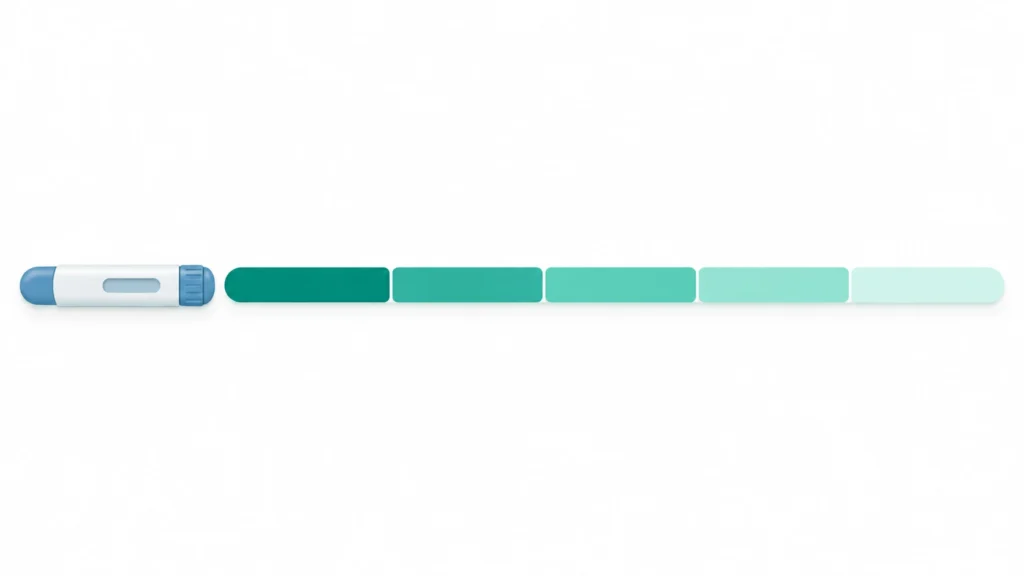
Here’s what to expect at each stage, based on the FDA label, Lilly’s trial data and published research:
| Stage | What to expect |
|---|---|
| The first 1 to 3 days after a shot | Zepbound reaches its highest level in your blood about 24 hours after a shot (range 8 to 72 hours). |
| Your first week | In an analysis of 67,305 FDA side-effect reports, 62% of reported side effects started in the first week. |
| Weeks 1 to 4 (2.5 mg) | The 2.5 mg starting dose lets your body get used to the drug. It isn’t a long-term dose. Zepbound builds to a steady level in your blood after 4 weeks. |
| Each dose increase | The dose goes up by 2.5 mg after at least 4 weeks on the current dose. In the trials, this phase lasted about 20 weeks, and most stomach side effects happened during it. |
| A steady maintenance dose | Side effects drop off. In the SURMOUNT-4 trial, 36% of people had nausea in the first 36 weeks, when doses were rising, compared with 8% in the later part of the trial on a steady dose. |
| After stopping | The drug clears in about 3 to 4 weeks. Stomach symptoms usually fade within days to weeks. |
When do Zepbound side effects start?
Side effects can start within hours to a few days of your first shot. The FDA side-effect analysis, published in Drug, Healthcare and Patient Safety in 2026, found a median time to onset of about 6 days for all side effects and about 5.6 days for stomach side effects. About 75% started within the first month.
Why side effects come back after a dose increase
Your body gets used to each dose, then has to adjust again when the dose goes up. In Lilly’s trials, people started at 2.5 mg for 4 weeks and moved up by 2.5 mg every 4 weeks until they reached their target dose. Most stomach side effects happened during this escalation and then decreased.
Why does Zepbound cause side effects?
Zepbound works on two gut hormone receptors, GIP and GLP-1, according to its FDA label. These hormones tell your brain you’re full and lower blood sugar after meals. Zepbound also slows how fast food leaves your stomach.
Those same effects explain most side effects. Food sitting longer in the stomach can cause nausea, fullness, burping and heartburn. Changes in how the gut moves can lead to diarrhea or constipation. Eating much less than before is part of how the drug works, so your body needs time to get used to smaller meals.
Most common Zepbound side effects
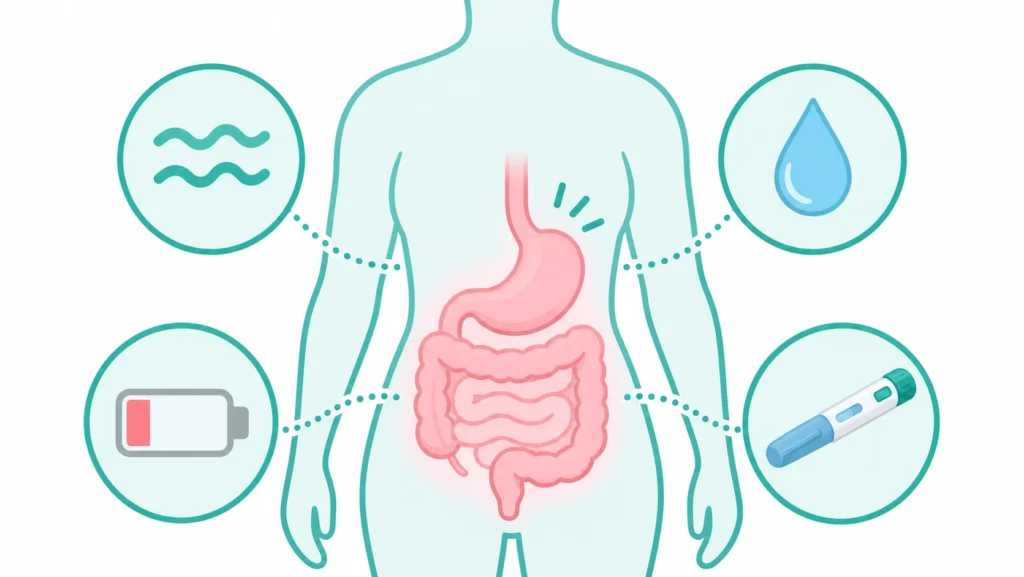
In the main weight-loss trials, 56% of people on Zepbound had at least one stomach side effect, compared with 30% on placebo. Most were mild to moderate, Lilly reports. Only 1.9% to 4.3% of people stopped Zepbound because of stomach problems.
| Side effect | Placebo | 5 mg | 10 mg | 15 mg |
|---|---|---|---|---|
| Nausea | 8% | 25% | 29% | 28% |
| Diarrhea | 8% | 19% | 21% | 23% |
| Vomiting | 2% | 8% | 11% | 13% |
| Constipation | 5% | 17% | 14% | 11% |
| Stomach (abdominal) pain | 5% | 9% | 9% | 10% |
| Indigestion | 4% | 9% | 9% | 10% |
| Injection site reactions | 2% | 6% | 8% | 8% |
| Fatigue | 3% | 5% | 6% | 7% |
| Burping | 1% | 4% | 5% | 5% |
| Hair loss | 1% | 5% | 4% | 5% |
| Acid reflux (GERD) | 2% | 4% | 4% | 5% |
Source: Zepbound FDA label, pooled SURMOUNT-1 and SURMOUNT-2 trials.
Nausea
Nausea is the most common Zepbound side effect, affecting about 1 in 4 people. Zepbound slows how fast your stomach empties, so food sits longer and you feel full or queasy. Episodes usually last 3 to 4 days.
Lilly suggests:
- Splitting 3 daily meals into 4 or more smaller ones
- Stopping when you feel full
- Avoiding fatty foods like butter or cheese
- Trying bland foods like toast, crackers or rice
Diarrhea
About 1 in 5 people on Zepbound get diarrhea, and an episode lasts about 3 days. The biggest risk is losing too much fluid. Lilly advises drinking 8 to 10 glasses of clear fluids a day, mostly water, limiting dairy, and eating bland foods such as chicken broth, rice or carrots. You can check what your stool is telling you with the Bristol Stool Scale.
Vomiting
Vomiting is less common, affecting 8% to 13% of people depending on the dose, and it usually lasts 1 to 2 days. Repeated vomiting can dehydrate you fast. If you can’t keep food or fluids down for a long stretch, your body may start burning fat for fuel, which can raise ketones in your urine. Call your doctor if vomiting doesn’t stop.
Constipation
Constipation affects 11% to 17% of people on Zepbound, and it was most common on the 5 mg dose. It can last longer than other stomach side effects. Drugs.com notes it usually improves with fluids and diet changes. GoodRx suggests an over-the-counter stool softener, psyllium husk (Metamucil) or polyethylene glycol (MiraLax). Ask your pharmacist which one fits you.
Heartburn, burping and indigestion
Indigestion affects up to 10% of people, and burping and acid reflux about 5%. GoodRx suggests avoiding spicy, greasy and acidic foods and drinks, such as orange juice, coffee and alcohol, and choosing high-fiber, low-acid foods instead.
Fatigue
Fatigue affected 5% to 7% of people on Zepbound, compared with 3% on placebo. Lilly lists it among the most common side effects, but the trials didn’t report how long it lasted. If tiredness doesn’t ease once you settle on a dose, tell your doctor.
Headache
Headache wasn’t reported as a side effect in Zepbound’s studies, according to Healthline. It can still happen as a sign of low blood sugar or dehydration from nausea, vomiting or diarrhea. Healthline suggests staying hydrated, resting, a cool compress and acetaminophen (Tylenol), after checking with your pharmacist.
Injection site reactions
Redness, itching, swelling or mild pain where you inject affected 6% to 8% of people, and these reactions last a few hours to a few days, Drugs.com says. GoodRx recommends rotating between the belly, thigh and back of the upper arm to lower the risk of irritation, bruising and thickened skin.
Hair loss
Hair loss affected 4% to 5% of people on Zepbound, compared with 1% on placebo. It’s far more common in women, as the next section shows.
Zepbound side effects by dose
Side effects follow the dose, but not in a straight line. Here’s what the label and Lilly’s trial data show:
- 2.5 mg: This is the starting dose for the first 4 weeks. Lilly notes it isn’t an approved long-term dose, and the label’s side-effect table doesn’t report it separately.
- 5 mg: Nausea affected 25% and constipation 17%, the highest constipation rate of any dose.
- 10 mg: Nausea peaked at 29% in the pooled data. In SURMOUNT-1 alone, 33% of people on 10 mg had nausea.
- 15 mg: Vomiting (13%) and diarrhea (23%) were highest at this dose.
Serious stomach trouble also rises with the dose. In pooled trial data, severe stomach side effects affected 1.7% of people on 5 mg, 2.5% on 10 mg and 3.1% on 15 mg, compared with 1% on placebo. The share who stopped Zepbound because of any side effect was 4.8%, 6.3% and 6.7%, compared with 3.4% on placebo.
People with type 2 diabetes reported somewhat less nausea. In SURMOUNT-2, which enrolled adults with obesity and type 2 diabetes, 20% to 22% had nausea on 10 mg or 15 mg, compared with 31% to 33% in SURMOUNT-1.
You don’t have to reach the top dose. The label lists 5 mg, 10 mg and 15 mg as maintenance doses, so your doctor can stop at the one that works for you.
Zepbound side effects in women and men
Most side effects affect women and men alike, but the label points to two differences:
- Hair loss: 7.1% of women on Zepbound reported hair loss, compared with 0.5% of men. On placebo, the rates were 1.3% and 0%.
- Birth control pills: Zepbound can make birth control pills less effective. The label advises switching to a non-oral method, or adding a barrier method such as condoms, for 4 weeks after starting Zepbound and for 4 weeks after each dose increase.
Zepbound should be stopped if you become pregnant.
Is Zepbound safe? Serious and long-term side effects
Serious side effects are rare, but the FDA label lists these:
- Severe stomach problems: Tell your doctor if stomach problems are severe or don’t go away. Zepbound isn’t recommended for people with severe gastroparesis.
- Kidney injury from dehydration: Fluid lost through vomiting or diarrhea can harm the kidneys. Dark, concentrated urine is an early clue, and a test called urine specific gravity measures it. Watch for the early signs of kidney disease.
- Gallbladder problems: Gallbladder inflammation affected 0.7% of people on Zepbound, compared with 0.2% on placebo.
- Pancreatitis: Rare, at 0.2% on both Zepbound and placebo. Severe stomach pain that spreads to your back, with or without vomiting, needs urgent care.
- Low blood sugar: In people with type 2 diabetes, 4.2% had blood sugar below 54 mg/dL, compared with 1.3% on placebo. The risk is higher with insulin or sulfonylureas.
- Serious allergic reactions: Swelling of the face, lips, tongue or throat, trouble breathing, or a fast heartbeat need emergency care.
- Thyroid C-cell tumors: Zepbound has a boxed warning because these tumors appeared in rats. It’s unknown whether this happens in people. Don’t take it if you or a family member has had medullary thyroid cancer or MEN 2.
- Faster heart rate: Heart rate rose by an average of 1 to 3 beats per minute.
- Vision changes: People with type 2 diabetes should report vision changes, since diabetic eye disease can worsen.
New eye warning in 2026
On November 9, 2026, the FDA required all GLP-1 drugs, including tirzepatide, to add a warning about non-arteritic anterior ischemic optic neuropathy (NAION). This rare condition causes sudden vision loss. In the FDA’s review, it occurred in 6.4 per 100,000 person-years with GLP-1 drugs, compared with 3.8 with other drugs, Optometry Times reports. Get help right away for sudden, painless vision loss in one eye.
How long do side effects last after stopping Zepbound?
Zepbound doesn’t stop working the day you skip a shot. Its half-life is about 5 to 6 days, meaning half the drug is gone from your blood in that time. Drugs.com explains that most medicines have little effect left after 4 to 5 half-lives. For Zepbound, that’s about 3 to 4 weeks.
Drugs.com says stomach side effects like nausea and diarrhea usually go away within days to weeks after stopping. Some people search for “Zepbound withdrawal.” The main change Drugs.com describes after stopping is that appetite suppression fades, so hunger returns and weight can come back if eating habits don’t change.
Talk with your doctor before you stop.
How to reduce Zepbound side effects
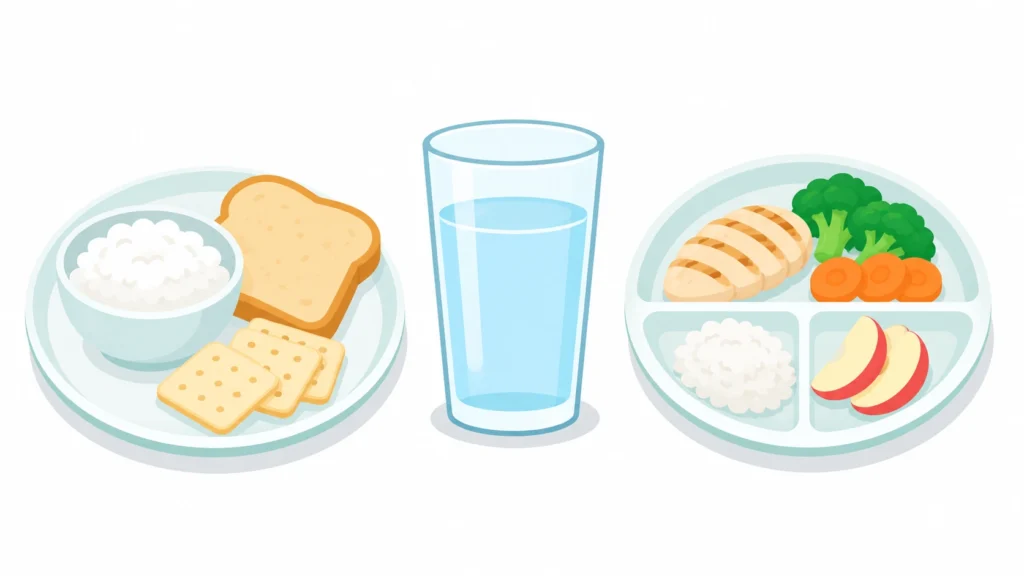
These steps from Lilly, GoodRx and Drugs.com can make side effects easier to live with:
- Eat smaller meals. Smaller portions help with nausea and fullness.
- Choose bland, low-fat foods. Fatty, greasy and spicy foods make stomach symptoms worse.
- Drink plenty of fluids, even more when you have diarrhea or vomiting. Water, electrolyte drinks, clear broth and tea all count.
- Stop eating when you feel full. Zepbound slows digestion, so overeating hits harder.
- Rotate your injection site each week.
- Don’t rush dose increases. GoodRx notes your doctor may lower the dose or change the time between dose increases if side effects are hard to manage.
- Work with a dietitian to get enough nutrition while eating less.
When to call your doctor
Call your doctor if side effects bother you or don’t go away. Get medical care right away for:
- Vomiting or diarrhea that won’t stop, or signs of dehydration such as dizziness, peeing much less than usual or dark urine
- Severe stomach pain, with or without vomiting
- Pain in the upper right belly, fever, yellow skin or eyes, or clay-colored stool
- Signs of an allergic reaction, such as swelling of the face or throat, a rash or trouble breathing
- Shakiness, sweating, confusion or a fast heartbeat, which can signal low blood sugar
- Sudden vision loss or any change in vision
- A lump or swelling in the neck, trouble swallowing or a hoarse voice
The bottom line
Most Zepbound side effects are stomach-related and short-lived. Nausea lasts 3 to 4 days per episode, diarrhea about 3 days and vomiting 1 to 2 days, and they’re most common in the first weeks and after each dose increase. They ease once you stay on a steady dose. Constipation can last longer, and hair loss is more common in women. Serious problems such as pancreatitis, gallbladder disease and kidney injury from dehydration are rare. After your last shot, Zepbound takes about 3 to 4 weeks to clear. Smaller meals, bland foods, plenty of fluids and slow dose increases help most people stay on treatment.
Frequently asked questions
Can you take Zepbound before surgery?
Tell your surgeon and anesthesia team you take it. The label warns that slower stomach emptying can raise the risk of food entering the lungs during general anesthesia or deep sedation.
Can Zepbound affect your mood?
The FDA removed the suicidal thoughts and behavior warning from the Zepbound label in February 2026. Drugs.com still lists mood changes as a reason to call your doctor, so report anything that worries you.
What should you do if you miss a dose?
The label says to take it within 4 days of the missed dose. If more than 4 days have passed, skip it and take your next dose on your usual day.
Can Zepbound side effects show up months later?
Yes, some can. The FDA report analysis found gallbladder and liver problems appeared after a median of about 44 days, much later than stomach symptoms. Report new upper belly pain at any point.
Does Zepbound cause dizziness?
It can. The label lists dizziness in about 1 in 20 people taking Zepbound, compared with 2% on placebo, and low blood pressure in up to 2%. Dizziness can also signal dehydration or low blood sugar.
Sources
- DailyMed. Zepbound (tirzepatide) Injection Label, revised August 2026
- Lilly Medical. How Often Were Gastrointestinal Adverse Events Reported in Zepbound (tirzepatide) Clinical Studies?
- Eli Lilly. Managing Possible Side Effects, Zepbound
- Jensen TL, Brønden A, Karstoft K, Sonne DP, Christensen MB. The Body Weight Reducing Effects of Tirzepatide in People with and without Type 2 Diabetes: A Review on Efficacy and Adverse Effects. Patient Preference and Adherence, 2024
- Gu S. Adverse Events Associated with Tirzepatide: Updated Pharmacovigilance Analysis Using FAERS (2022 Q1-2025 Q1). Drug, Healthcare and Patient Safety, 2026
- Drugs.com. How Long Do Zepbound Side Effects Typically Last? 2025
- Drugs.com. Drug Half-life Explained, 2025
- GoodRx. 7 Ways to Manage Tirzepatide Side Effects, 2026
- Healthline. Does Zepbound Cause Headaches? 2026
- Optometry Times. FDA Now Requiring NAION Warning Across GLP-1 Receptor Agonist Class, 2026
Disclaimer
This blog is for informational and educational purposes only, and does not intend to substitute any professional medical advice or consultation. For any health related concerns, please consult with your physician, or call 911.