Poop Color, Shape and Mucus: What Your Stool Says About Your Health
Healthy poop is usually some shade of brown, soft and easy to pass, and shaped like a smooth sausage. Food, drinks, supplements and medicines cause most color changes, and these fade within a few days. Black or red stool can mean bleeding and needs prompt care. Pale, white or clay-colored stool can mean bile isn’t reaching the gut. A small amount of clear mucus is normal. See a doctor for any change in color, shape or habits that lasts more than a few days.
Most people glance in the toilet before they flush. When something looks different, it’s natural to wonder whether it matters. Usually it doesn’t. Stool changes with what you eat, how much you drink and how fast food moves through your gut. A few changes, though, are worth a call to your doctor.
This guide covers what healthy poop looks like, what each color means, the seven stool types on the Bristol Stool Scale, floating and thin stools, mucus, and the signs that need medical care.
| Poop color | Common harmless causes | Medical causes to rule out | How soon to act |
|---|---|---|---|
| Brown (any shade) | Normal | None | No action needed |
| Green | Leafy greens, green food dye, iron supplements | Food moving through too fast, as with diarrhea; infection | If it lasts more than a few days |
| Yellow, greasy, foul-smelling | Fried or fatty foods | Fat malabsorption, celiac disease, pancreatitis | If it lasts more than a few days |
| Orange | Carrots, sweet potatoes, orange dyes | Rifampin or aluminum antacids; low bile | If it comes with lasting diarrhea |
| Pale, white, clay or gray | Barium, aluminum antacids, bismuth | Bile duct blockage, liver disease | See a doctor right away |
| Black | Iron, bismuth (Pepto-Bismol), black licorice, blueberries | Bleeding in the upper digestive tract | Get care right away |
| Red | Beets, cranberries, tomato juice, red gelatin or drinks | Bleeding in the lower digestive tract, hemorrhoids | Get care right away |
Based on Mayo Clinic, Cleveland Clinic, MedlinePlus and Healthline.
What does healthy poop look like?
Cleveland Clinic calls brown the ideal poop color for adults. Shades can vary from light to dark. In shape, healthy stool is formed and soft. Types 3 and 4 on the Bristol Stool Scale, a sausage shape with a few cracks or a smooth, soft snake shape, are the most ideal, according to Cleveland Clinic. Stool like this holds together but isn’t hard to pass.
Why is poop brown?
Poop gets its brown color from bile. MedlinePlus explains that the liver releases bile salts into the stool, which gives it its normal brown color.
The pigment behind it is bilirubin, a yellow substance made when old red blood cells break down. Dr. David Wang, a professor of medicine at Albert Einstein College of Medicine, told Live Science that bilirubin in the intestine is turned into urobilinogen, then stercobilinogen, and finally stercobilin, the pigment responsible for the brown color of feces. Our guide to urobilinogen in urine follows the small share that ends up in urine.
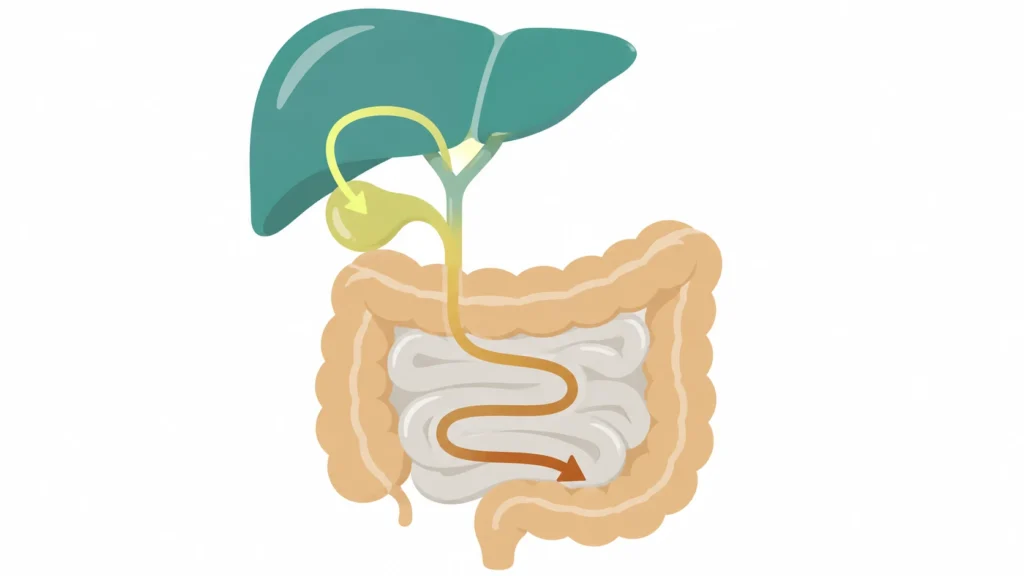
That’s why many color changes come back to bile. When stool moves through the gut too fast, bile doesn’t have time to finish changing, and poop can stay green. When bile can’t reach the gut at all, poop turns pale.
How often should you poop?
There’s no single number that’s right for everyone. The National Institute of Diabetes and Digestive and Kidney Diseases (NIDDK) describes constipation as fewer than three bowel movements a week, with stools that may be hard, dry or lumpy. It defines diarrhea as passing loose, watery stools three or more times a day, or more often than what is normal for you.
What matters most is your own pattern. A clear change from your usual rhythm, such as going much more or much less often, deserves attention if it lasts.
Poop color meaning, color by color
Most color changes come from something you ate or a medicine you took. Mayo Clinic notes that stool color is usually diet-related and only rarely signals a serious intestinal condition.
Brown, light brown and dark brown
Any shade of brown is normal. Light brown and dark brown both fall within the usual range, and the shade can change from day to day with food and fluids. Dark brown stool can also come from blood that mixes into stool, the American Cancer Society notes, so dark stool along with other warning signs in this guide should be checked.
Green poop
Green poop is common and usually harmless. Mayo Clinic links it to food moving quickly through the large intestine, as with diarrhea, and to:
- Green leafy vegetables
- Green food coloring, such as in flavored drink mixes or ice pops
- Iron supplements
Cleveland Clinic adds that green stool can come with a bacterial infection or irritable bowel syndrome (IBS). If green stool comes with diarrhea, cramps or fever, or keeps happening, check with a doctor.
Yellow poop
Yellow stool that looks greasy and smells foul can mean too much fat in the stool, Mayo Clinic says. That can happen with a malabsorption condition such as celiac disease, in which gluten in breads and cereals damages the small intestine. Fried foods can also cause it.
Cleveland Clinic lists carrots, sweet potatoes and fried foods as everyday causes, and excess fat in the stool, pancreatitis and celiac disease as medical causes. Yellow, greasy stool that keeps coming back, mainly with weight loss, needs a medical checkup.
Orange poop
Orange stool usually comes from orange food, according to Healthline. Beta carotene, the pigment in carrots, sweet potatoes and winter squash, can tint stool orange, and so can orange food dyes and beta carotene supplements.
Some medicines can do it too. Healthline notes that the antibiotic rifampin can cause orange or light-colored stool, and antacids containing aluminum hydroxide can cause orange or gray stool in some people. Orange stool alone rarely needs a visit, but tell your doctor if it comes with diarrhea that lasts more than a couple of days.
Pale, white, clay-colored or gray poop
Pale stool is one color change you shouldn’t wait out. Because bile gives stool its color, stool turns pale, white or clay-colored when bile doesn’t reach the intestine. MedlinePlus lists causes such as:
- Gallstones
- Narrowed or blocked bile ducts
- Viral or alcoholic hepatitis
- Biliary cirrhosis and sclerosing cholangitis
- Bile duct cysts
- Tumors of the liver, bile ducts or pancreas
- Certain medicines
Mayo Clinic says to see a medical professional right away for white stool, mainly if it comes with belly pain, fever, nausea, itching or yellow skin and eyes (jaundice). Pale stool with dark urine is a classic pairing when bile backs up, as our guides to high bilirubin and bilirubin in urine explain.
Not every pale stool is a liver problem. Barium, the white liquid swallowed for some X-rays, can turn stool white for a short time. Mayo Clinic also lists antacids with aluminum hydroxide and high doses of bismuth subsalicylate. Cleveland Clinic adds some anti-diarrhea medicines and eating a lot of dairy.
Black poop
Black stool can mean bleeding in the upper digestive tract, Mayo Clinic says. The American Cancer Society notes that blood in the stool can make it look dark brown or black.
Black stool has harmless causes too. Mayo Clinic and Cleveland Clinic list:
- Iron supplements
- Bismuth subsalicylate (Pepto-Bismol, Kaopectate)
- Black licorice
- Blueberries and dark leafy vegetables
If you take iron or bismuth, black stool is expected. If you don’t, Mayo Clinic advises seeking medical attention right away.
Red poop
Bright red stool can mean bleeding in the lower digestive tract, often from hemorrhoids, according to Mayo Clinic. Cleveland Clinic adds anal fissures (small tears), ulcers and inflammatory bowel disease (IBD). The American Cancer Society lists rectal bleeding with bright red blood among the signs of colorectal cancer.
Food can mimic blood. Mayo Clinic lists red food coloring, beets, cranberries, tomato juice or soup, red gelatin and some drink mixes. If you’ve eaten one of these and the color fades by the next bowel movement or two, food is the likely cause. If you haven’t, or you see red streaks on the paper or blood in the bowl, get it checked.
How long does a color change last?
Food-related color changes fade once the food passes through your system, Cleveland Clinic says. When a color lingers for a few days or weeks, it may be a sign of something more serious. MedlinePlus advises contacting your provider if stools aren’t the normal brown color for several days.
Types of poop: the Bristol Stool Scale
Doctors use the Bristol Stool Scale to describe stool shape and texture without guesswork. It was published by Lewis and Heaton in 1997 in the Scandinavian Journal of Gastroenterology, which showed the scale could be used to track changes in how the gut is working. Each type hints at how long stool spent in the colon. Harder stool spent longer; looser stool moved through faster.
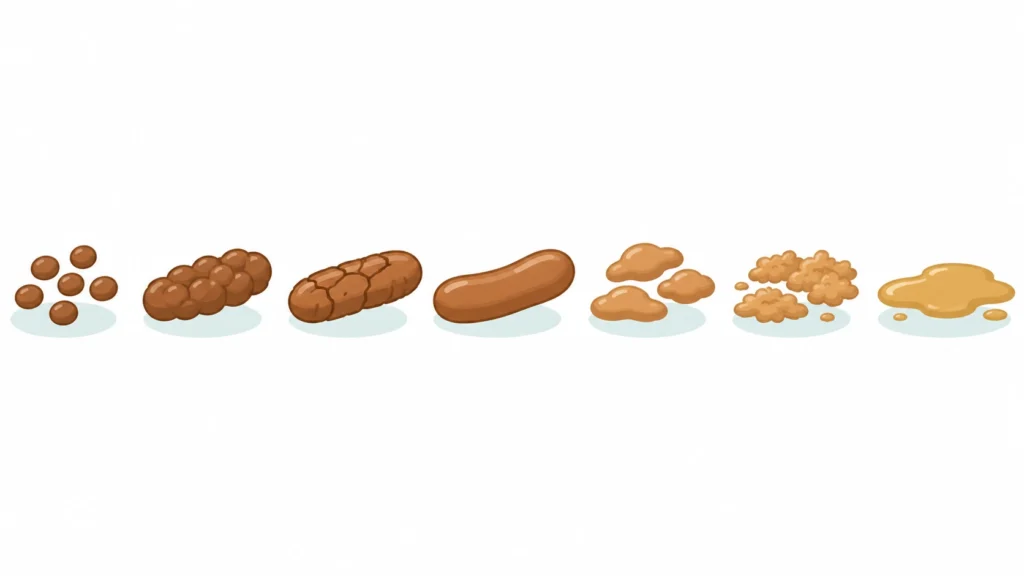
| Type | What it looks like | What it suggests |
|---|---|---|
| Type 1 | Separate hard lumps, like little pebbles | Constipation |
| Type 2 | Hard and lumpy, but sausage-shaped | Constipation |
| Type 3 | Sausage-shaped, with cracks on the surface | Ideal |
| Type 4 | Smooth, soft and snakelike | Ideal |
| Type 5 | Soft blobs with clear-cut edges | Leaning toward diarrhea |
| Type 6 | Fluffy, mushy pieces with ragged edges | Diarrhea |
| Type 7 | Watery, liquid, with no solid pieces | Diarrhea |
Descriptions from Cleveland Clinic.
Cleveland Clinic calls types 3 and 4 the most ideal. Hertfordshire Partnership University NHS Foundation Trust, a UK health service, counts types 3 to 5 as ideal. Occasional hard or mushy stools are normal and often follow changes in diet or fluids, Cleveland Clinic notes.
Hard or lumpy stool (types 1 and 2)
Types 1 and 2 point to constipation. NIDDK reports that about 16 out of 100 US adults have symptoms of constipation, rising to about 33 out of 100 adults age 60 and older. Hard, lumpy stool that’s difficult to pass is one of its main signs.
One twist: the NHS trust notes that people with severe constipation can also pass watery type 7 stool. Liquid leaks around a hard mass of stool, which is called overflow diarrhea.
Soft, mushy or watery stool (types 5 to 7)
Soft blobs, fluffy or mushy pieces and watery stool point to diarrhea, or to stool moving through faster than usual. Cleveland Clinic notes that mild type 5 stools may improve with more fiber.
NIDDK sorts diarrhea by how long it lasts:
- Acute: less than a week, and usually gets better on its own
- Persistent: longer than 2 weeks but less than 4 weeks
- Chronic: at least 4 weeks, either constant or coming and going
Persistent or chronic diarrhea needs a doctor’s visit to find the cause.
Other changes: floating, greasy, thin or foul-smelling poop
Floating stool. Most of the time, floating stool is due to what you eat, MedlinePlus says. Extra gas makes stool float, and a stomach or intestinal infection can do it too. Floating stool that’s also greasy and foul-smelling, mainly with weight loss, can point to fat malabsorption, when the body doesn’t absorb fat properly.
Greasy or oily stool. Stool that looks oily and smells foul can mean extra fat in the stool, as covered in the yellow poop section. It’s worth a checkup if it keeps happening.
Thin or narrow stool. The American Cancer Society lists narrowing of the stool that lasts more than a few days among the signs of colorectal cancer, along with other changes in bowel habits such as diarrhea or constipation. One thin stool now and then isn’t a concern. A lasting change is.
Foul-smelling stool. All stool smells, and the smell changes with food. A stronger smell than usual paired with yellow or greasy stool fits the malabsorption picture Mayo Clinic describes.
Mucus in stool: when it’s normal
Seeing some mucus in or on your stool is usually nothing to worry about, according to Mayo Clinic. Mucus is a jelly-like substance your intestines make to keep the lining of the colon moist and lubricated, and stool often carries a small amount. Cleveland Clinic says it’s normal to see some clear mucus.
Mucus is worth a doctor’s visit when there’s a lot of it, when it keeps happening, or when it comes with blood, belly pain or a change in bowel habits. Mayo Clinic notes that larger amounts with diarrhea can come from intestinal infections, while bloody mucus or mucus with belly pain may signal Crohn’s disease, ulcerative colitis or, rarely, cancer. Cleveland Clinic also flags mucus that’s off-white or yellowish. Our full guide to mucus in stool covers each color and cause.
When to worry about poop color or shape
Most changes in your stool come from food and pass on their own. Use this list to decide when to call.
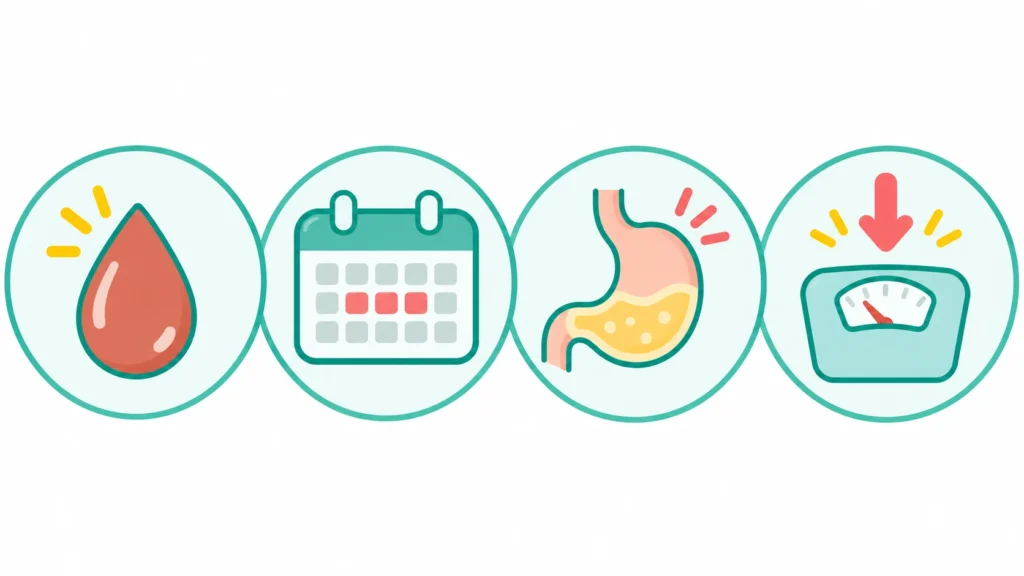
Get care right away if you have:
- Black stool that isn’t explained by iron, bismuth or food
- Bright red blood in or on your stool, or in the toilet
- White, pale or clay-colored stool, mainly with yellow skin or eyes
- Bloody stools with weight loss, dizziness and fever, which MedlinePlus says need a call to your provider right away
See a doctor soon if you notice:
- Any color other than brown that lasts more than a few days, per Cleveland Clinic
- Yellow, greasy, foul-smelling stools that keep coming back
- Diarrhea that lasts more than a few days, or keeps coming back
- A change in bowel habits, such as diarrhea, constipation or narrow stool, that lasts more than a few days
- A feeling that you need to have a bowel movement that doesn’t go away after you go
- Belly pain or cramping, ongoing tiredness or weight loss you can’t explain
- More mucus than usual, or mucus with blood
Lasting changes in bowel habits or stool shape, an urge to go that doesn’t ease, belly cramping, tiredness and unexplained weight loss are among the colorectal cancer signs listed by the American Cancer Society. They often have other causes, but they should be checked. Colorectal cancer screening matters even when stool looks normal. The US Preventive Services Task Force recommends screening for adults ages 45 to 75.
The bottom line
Healthy poop is brown, soft and formed, and most changes in color come from food, drinks, supplements or medicines. Green, yellow and orange stools are usually harmless if they fade within a few days. Black, red and pale or white stools are the ones to act on quickly, because they can mean bleeding or a bile problem. On the Bristol Stool Scale, types 3 and 4 are the ideal shape, hard lumps point to constipation and loose stools point to diarrhea. A little clear mucus is normal. Any change that sticks around for more than a few days is worth a call to your doctor.
Frequently asked questions
Is it normal for poop color to change from day to day?
Yes, within limits. Cleveland Clinic says a few off-color bowel movements aren’t necessarily a problem, since shade shifts with meals and drinks. A new color lasting several days is different and worth a call.
What does pancreatitis poop look like?
Chronic pancreatitis can raise the amount of fat in stool, MedlinePlus notes. Stool with extra fat tends to look greasy and yellowish, smell foul and float. Mention it to your doctor if it keeps happening.
What does colon cancer poop look like?
Often it looks completely normal, the American Cancer Society says, which is why screening matters. When changes show up, they can include blood, dark stool or a lasting change in shape or frequency.
Sources
- Mayo Clinic. Stool color: When to worry, 2024
- Mayo Clinic. What causes white stool? Should I be concerned?
- Mayo Clinic. Mucus in stool: A concern? 2024
- Cleveland Clinic. Stool (Poop) Color: What Each Color Means, 2025
- Cleveland Clinic. Bristol Stool Chart, 2026
- Cleveland Clinic. Mucus in Stool (Poop), 2025
- MedlinePlus. Stools – pale or clay-colored
- MedlinePlus. Stools – floating
- National Institute of Diabetes and Digestive and Kidney Diseases. Definition & Facts for Constipation
- National Institute of Diabetes and Digestive and Kidney Diseases. Definition & Facts for Diarrhea
- American Cancer Society. Colorectal Cancer Signs and Symptoms
- US Preventive Services Task Force. Colorectal Cancer: Screening, 2021
- Lewis SJ, Heaton KW. Stool form scale as a useful guide to intestinal transit time. Scandinavian Journal of Gastroenterology, 1997
- Hertfordshire Partnership University NHS Foundation Trust. Bristol Stool Chart
- Live Science. Why is poop brown? 2022
- Healthline. Orange Poop: Causes and When to See a Doctor, 2023
Disclaimer
This blog is for informational and educational purposes only, and does not intend to substitute any professional medical advice or consultation. For any health related concerns, please consult with your physician, or call 911.