Cloudy, Foamy or Smelly Urine: What Causes It and When to Worry
Cloudy urine most often comes from not drinking enough, from minerals in alkaline urine after a meal rich in fruit and vegetables, or from a urinary tract infection (UTI). Foam is usually just a fast stream, but foam that shows up again and again can mean protein is leaking from the kidneys. A new strong smell is most often food, vitamins or concentrated urine. See a doctor if a change lasts more than a few days or comes with pain, fever, swelling or blood.
Most changes in how urine looks or smells are short-lived and harmless. Cleveland Clinic says cloudy urine is usually harmless, and Mayo Clinic says most changes in urine odor are temporary. Still, cloudy, bubbly or smelly urine can be the first clue to an infection, diabetes or kidney disease, so it helps to know which pattern is which.
This guide covers what normal urine looks like, every common cause of cloudy pee, how to tell normal bubbles from foamy urine, what each smell can mean, and the signs that mean you should get a urine test.
| Change | Common harmless cause | Cause worth checking | See a doctor if |
|---|---|---|---|
| Cloudy | Not drinking enough, phosphate from food | UTI, STI, kidney stone, diabetes | It lasts more than a few days or comes with burning, fever or pain |
| Foamy | Fast stream, full bladder, toilet cleaner | Protein in urine (kidney disease, diabetes, lupus) | It happens most days, takes more than one flush, or comes with swelling |
| Smelly | Asparagus, coffee, vitamin B6, dehydration | UTI, diabetes, liver disease | The smell lingers, smells sweet, or comes with pain or fever |
What normal urine looks and smells like
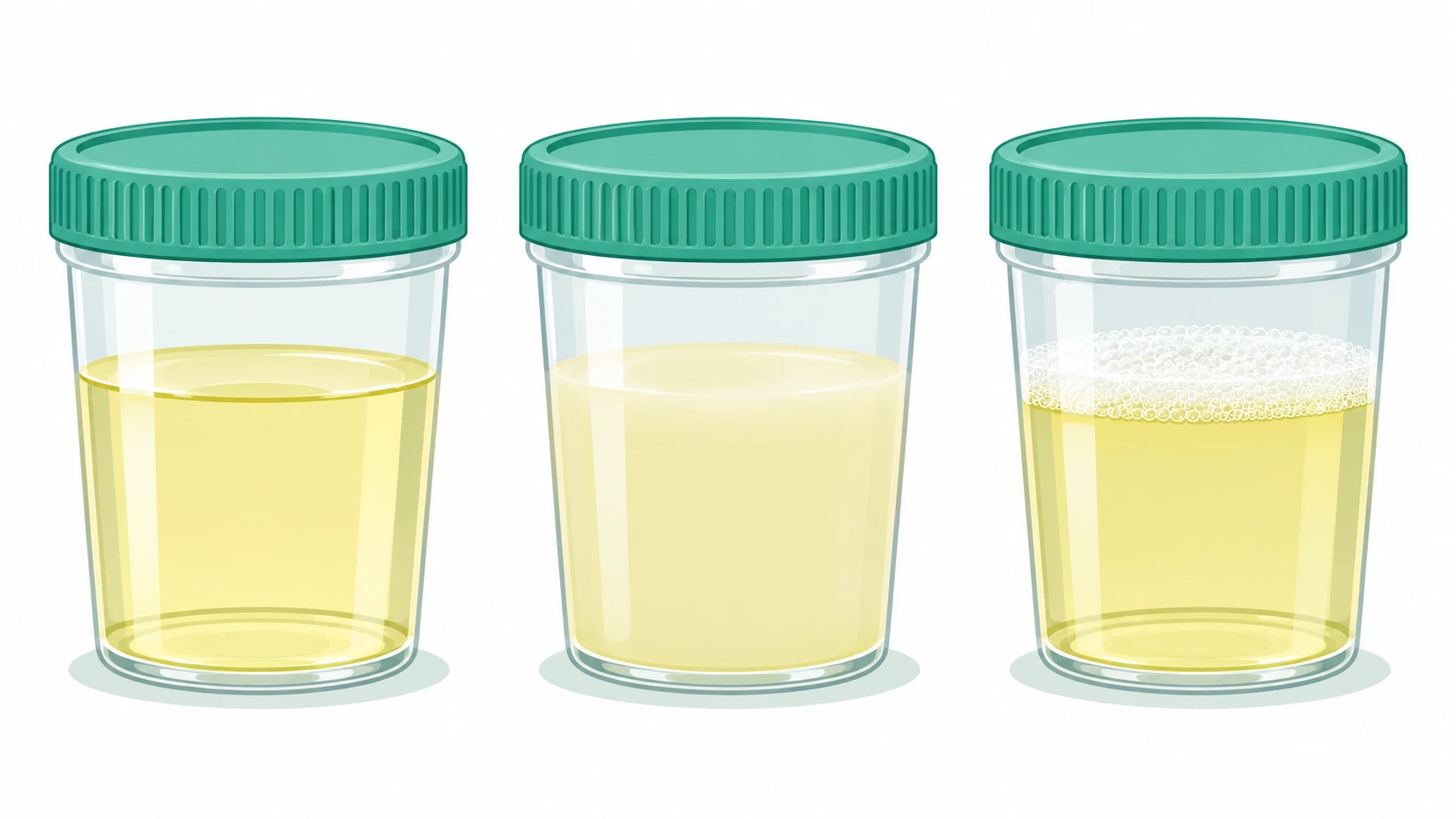
Healthy urine is light yellow, a bit like lemonade, and clear enough to see through. The shade shifts with how much you drink: pale when you’re well hydrated, darker when you’re not. Urine has a mild smell that gets stronger when it’s concentrated, such as first thing in the morning.
Urine is mostly water mixed with salts and waste the kidneys filter out of the blood. Its acid level, or pH, normally sits anywhere from 4.5 to 8, according to Cleveland Clinic. Where it lands depends on what you eat and drink, and that balance has a lot to do with whether urine looks clear or cloudy. Our guide to normal urine pH explains what each reading means.
A single cloudy, bubbly or odd-smelling trip to the bathroom is rarely a problem. What matters more is a change that keeps happening, gets worse, or shows up with other symptoms.
Why is my urine cloudy?
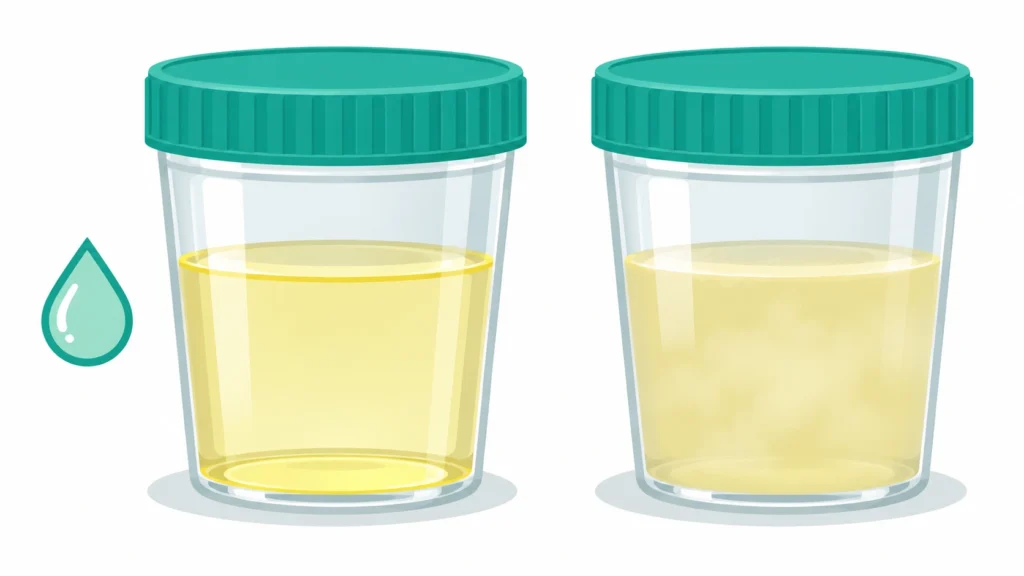
Cloudy urine, sometimes called turbid or foggy pee, looks milky, hazy or murky instead of see-through. It happens when something in the urine scatters light: mineral crystals, white blood cells, bacteria, mucus, discharge, protein or, rarely, fat. Here are the causes, from the most common to the rare.
Not drinking enough water
When you’re short on fluids, your kidneys hold on to water and the urine becomes concentrated. WebMD notes that concentrated urine can look cloudy and turns a darker yellow. This is the reason many people notice cloudy urine in the morning: you haven’t had anything to drink for seven or eight hours.
The fix is simple. Drink more water through the day and your urine should turn clear and light yellow again. Call a doctor if you feel dizzy or faint, get confused, have a racing heartbeat or are breathing hard, since those are signs of more serious dehydration.
Phosphate crystals and alkaline urine
The most common cause of cloudy urine is urine that’s more alkaline than usual, according to Cleveland Clinic. Alkaline urine lets minerals such as phosphate settle out as tiny crystals, and those crystals make urine look milky. Henry Ford Health notes that high phosphate is most often harmless.
Food plays a big part. Cleveland Clinic says alkaline levels can rise if you eat lots of fruits and vegetables and little meat, grain or cheese. WebMD adds that a diet heavy in meat, fish and cheese tends to push urine pH down. Vitamin and mineral supplements that contain phosphate can cloud urine too.
This type of cloudiness tends to come and go with meals and has no other symptoms. If you’ve had kidney stones before, mention repeated alkaline readings to your doctor, since some stone types form more easily in alkaline urine.
Urinary tract infection
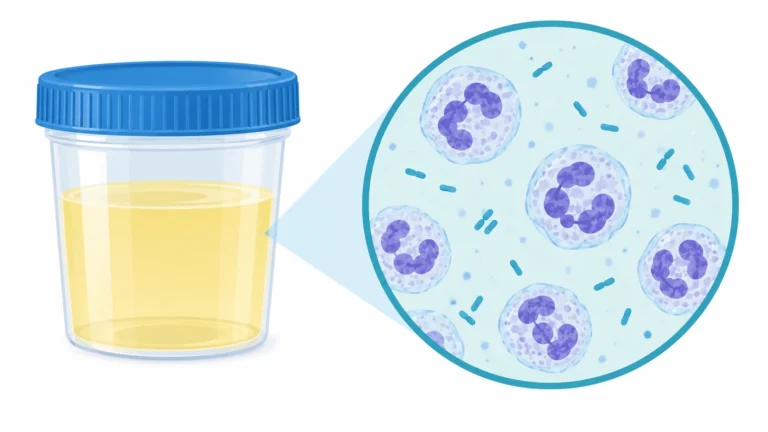
A UTI can make urine cloudy because pus (white blood cells) and bacteria mix into it. WebMD lists the symptoms that tend to come with it: burning or pain when you pee, needing to go more often, leaking, smelly or bloody urine and pain in the lower belly. Fever over 100.5°F, chills, flank pain or vomiting can mean the infection has spread higher.
Cloudy urine alone isn’t proof of a UTI, though. Public Health Ontario tells families plainly that smelly or cloudy urine doesn’t mean a person has a urinary tract infection. Burning, urgency and peeing more often are far more telling. Our guide to UTI symptoms covers the full picture, and it’s also possible to have a UTI without pain.
Sexually transmitted infections
Chlamydia and gonorrhea can cause a milky discharge from the penis or vagina that turns urine cloudy, WebMD explains. Henry Ford Health adds that STIs can cloud urine with white blood cells. Other signs include green, yellow or bloody discharge, burning when you pee or have sex, and itching.
Because an STI and a UTI can feel alike, testing is the only reliable way to tell them apart. Our guide to UTI vs STD walks through the differences, symptom by symptom.
Kidney stones
A kidney stone can make urine cloudy, bloody or smelly, and it may turn it red, pink or brown. The giveaway is pain: often sharp, in the side or lower back, sometimes with nausea, vomiting, fever or chills. Stones that block urine flow can also lead to infection, which needs care the same day. If you’re not sure which you have, see our guide to kidney stone vs UTI.
Diabetes and kidney disease
High blood sugar can spill sugar into the urine. WebMD notes this can throw bacteria and yeast out of balance and raise the risk of UTIs, which then cloud the urine. Cleveland Clinic lists both diabetes and chronic kidney disease (CKD) among the causes of cloudy urine. WebMD adds that urine that’s both cloudy and foamy may point to a kidney problem.
Rare causes: chyluria and retrograde ejaculation
Chyluria is the most striking cause of milky urine. It happens when lymph fluid (chyle), which carries fat from the gut, leaks into the urinary tract. A 2017 BMJ Case Reports review by Tan describes lymphatic filariasis, a parasitic infection spread by mosquitoes, as the main cause worldwide. Outside the regions where that infection is common, chyluria is rare and can follow trauma, surgery, a tumor, tuberculosis or pregnancy.
Retrograde ejaculation happens when semen flows backward into the bladder at orgasm instead of out through the penis. It causes a dry orgasm, and the next urine looks cloudy because it contains semen. WebMD notes it can follow nerve damage from diabetes or multiple sclerosis, or come from some medicines.
Medicines and supplements
Cleveland Clinic lists several drugs that can cloud urine:
- Some oral diabetes medicines
- Laxatives
- Phenazopyridine, a UTI pain reliever
- Warfarin, a blood thinner
- Rifampin, an antibiotic
- Vitamin or mineral supplements that contain phosphate
Don’t stop a prescribed medicine because of cloudy urine. Ask the doctor or pharmacist who prescribed it whether it could be the cause.
Cloudy urine in women, men and during pregnancy
The same causes apply to everyone, but a few are more likely depending on your body and stage of life.
Cloudy urine in women
Vaginal discharge is one of the most common reasons a woman’s urine sample looks cloudy. Discharge can drip into the toilet or sample cup, so the urine itself may be clear. Vaginitis, an inflammation or infection of the vagina, is a frequent source. WebMD describes the three main types:
- Bacterial vaginosis (BV): thin white or gray discharge with a strong fishy smell, mainly after sex
- Yeast infection: thick, white, cottage-cheese-like discharge with itching and redness
- Trichomoniasis: a frothy gray-green discharge that may smell bad, with burning and soreness
Women also get UTIs far more often than men because the urethra is shorter. If you’re trying to work out whether burning comes from inside the bladder or from irritated skin, our guide to UTI vs yeast infection can help. Stringy, cloudy threads in a sample are often mucus in urine, which has its own list of causes.
Cloudy urine in men
In men, cloudy urine is more likely to involve the prostate or semen. WebMD explains that a swollen prostate can block urine flow, letting blood or debris build up in trapped urine and cloud it. Signs that point to the prostate include dribbling, trouble starting to pee, getting up at night to go, pain when you ejaculate, and pain in the lower back, hips or groin.
Cloudy urine right after sex can be leftover semen or retrograde ejaculation. Chlamydia and gonorrhea can cause a milky discharge from the penis. Infections in men are less common, so doctors usually want a urine test; our guide to UTI in men explains what that involves.
Is cloudy pee a sign of pregnancy?
No. Cloudy urine can’t tell you whether you’re pregnant; only a pregnancy test can. Pregnancy does change urine, though. WebMD lists the common causes of cloudy urine in pregnancy:
- Dehydration from morning sickness
- A urinary infection, which is more likely in pregnancy
- Preeclampsia, a form of high blood pressure that can leak protein into the urine
- Extra vaginal discharge
If you’re pregnant, call your doctor about cloudy or discolored urine that keeps coming back, mainly if it comes with a headache, blurry vision, belly pain or new swelling. Those can be signs of preeclampsia, which needs prompt care.
Foamy urine and bubbles in urine
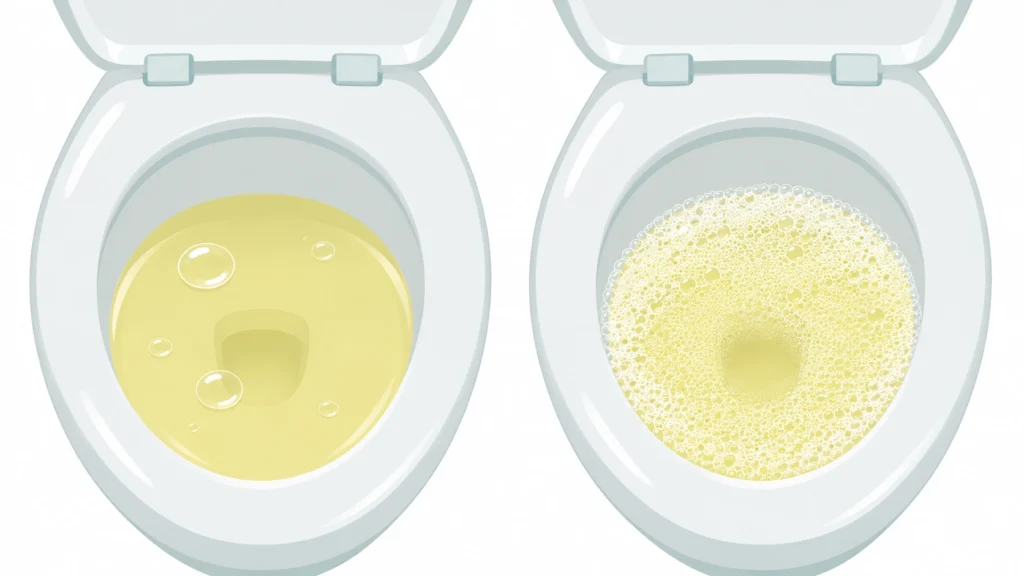
Foamy urine means a layer of bubbles that covers part or all of the toilet water after you pee. It can also be called bubbly, frothy or fizzy urine. Most of the time it’s harmless. Cleveland Clinic says occasional foamy pee is common for everyone.
Normal bubbles vs foamy urine
Small, scattered bubbles that pop quickly are normal. They form when urine hits the water with force, so they show up most when your bladder is full and the stream is strong. A toilet cleaner in the bowl can also make urine foam until the chemicals are flushed away, and concentrated urine from dehydration can look bubblier than usual.
Cleveland Clinic gives three signs that foam is worth a check:
- It happens regularly, not just once in a while
- It takes more than one flush to clear
- The bubbles look thick, frothy and white, like the head on a root beer float
MyKidneyDiseaseTeam describes worrying foam as several layers of small to medium bubbles that stay in the bowl after you’re done, sometimes even after flushing. One easy test: pee into a clean toilet without cleaner, at a normal pace, and see whether the foam still forms and lingers.
Protein in the urine
Foam that keeps coming back is the main sign of protein in the urine, or proteinuria. Healthy kidneys keep protein in the blood. Damaged filters let it slip into the urine, where it lowers the surface tension of the urine and lets bubbles last.
Cleveland Clinic links regular or worsening foam to diabetes, lupus and CKD. Early kidney disease usually causes no symptoms, but Cleveland Clinic notes that foamy urine can show up as early as stage 2 CKD when protein levels are high. Foam that comes with swelling in the legs, feet, hands or face may point to nephrotic syndrome, where the kidneys leak large amounts of protein.
Foam doesn’t always mean protein. MyKidneyDiseaseTeam cites a small 2012 study in which about 22% of people who saw a doctor for foamy urine had a high protein level. A 2019 review by Khitan and Glassock in the Clinical Journal of the American Society of Nephrology asks the question in its title, “Foamy urine: is this a sign of kidney disease?” The answer is sometimes, and a urine test is the only way to know. Our guide to protein in urine explains the results, and our guide to the early signs of kidney disease lists the other clues to watch.
Other causes of foamy urine
Cleveland Clinic lists a few other causes:
- Diabetes: long-term high blood sugar can damage the kidney filters (diabetic nephropathy) and let protein through
- Retrograde ejaculation: semen in the bladder can make the next urine foamy
- Amyloidosis: abnormal proteins build up in organs, including the kidneys
- Phenazopyridine: the UTI pain reliever can make urine foamy as well as orange
Bubbles in urine in men
Men may notice more bubbles simply because they pee standing up, from a height, with a strong stream. That kind of foam is normal. Bubbles after sex can come from semen or from retrograde ejaculation. Foam that shows up every day, at any time, deserves the same urine protein test as in anyone else, mainly if you have diabetes or high blood pressure.
How to get rid of foamy urine
The answer depends on the cause. If you’re dehydrated, drinking more water is the fix, and Cleveland Clinic says darker yellow, foamy urine is a cue to drink up. If you use a bowl cleaner, flush once before you pee to see whether the foam disappears.
Foam from protein won’t go away with water. It needs treatment of the cause, such as controlling blood sugar in diabetes, lowering blood pressure, or medicines for lupus or kidney disease. Cleveland Clinic says a doctor will start with a urinalysis to find out which applies. Reach out if foam lasts more than a few days, gets worse, or comes with:
- Swelling, mainly around the hands, feet or eyes
- Fatigue that rest doesn’t fix
- Nausea and vomiting
- Loss of appetite
- Dark, cloudy or bloody urine
Why does my urine smell?
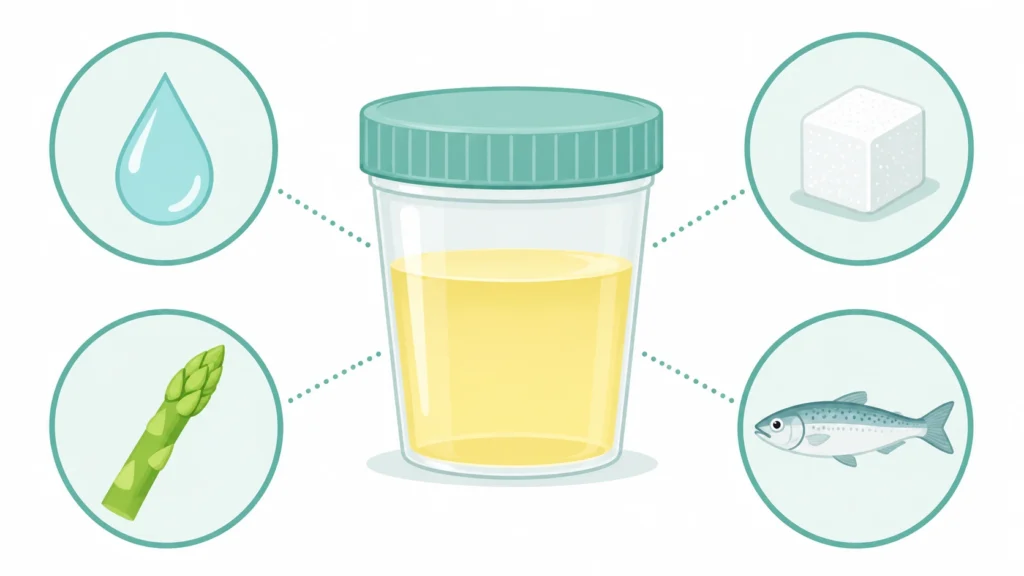
Urine always has some smell, and it’s stronger when it’s concentrated. A new smell is most often from food, drink or vitamins. Cleveland Clinic names asparagus, Brussels sprouts, fish, cumin, onions and garlic as foods that can change how urine smells, and says vitamin B6 is known for giving urine a musky odor. A smell that sticks around, or comes with other symptoms, is worth checking.
| Smell | Common causes | Less common causes |
|---|---|---|
| Ammonia or bleach | Dehydration, UTI | Kidney stones, kidney or liver disease, prostate infection, STIs, menopause |
| Sweet or fruity | High blood sugar, diabetes | Diabetic ketoacidosis, maple syrup urine disease in newborns |
| Sulfur or rotten eggs | Asparagus, garlic, onions | Some sulfa antibiotics and other medicines |
| Fishy | Bacterial vaginosis | Trimethylaminuria |
| Popcorn | Diabetes, ketosis | UTI, a metabolic disorder, PKU in babies |
| Musty | (none) | Liver failure, PKU and other metabolic disorders |
| Like stool | (none) | A fistula between the bowel and the bladder |
Ammonia smell in urine
Urine that smells like ammonia or bleach is the most common odd smell. Waste in urine breaks down into ammonia, so the less water there is, the stronger the smell. That’s why dehydration is a frequent cause.
Cleveland Clinic names a UTI as the most common medical cause of an ammonia smell, followed by kidney stones, kidney disease, liver disease, menopause, prostate infection and STIs. Bacteria can make urine smell foul or pungent. If a lab finds bacteria in your sample, our guide to bacteria in urine explains when that needs treatment and when it doesn’t.
Sweet or fruity smell
A sugary or fruity smell can be a warning sign of diabetes or high blood sugar, Cleveland Clinic says. Sugar that spills from the blood into the urine can make it smell sweet or like honey. A fruity smell with thirst, peeing a lot, nausea, belly pain, fast breathing or confusion can mean diabetic ketoacidosis, which Mayo Clinic lists as a cause of urine odor and which needs emergency care.
In a newborn, urine that smells like maple syrup or burnt sugar can be a sign of maple syrup urine disease, a rare inherited disorder. Call the baby’s doctor right away.
Sulfur or rotten egg smell
Asparagus is the classic cause. Cleveland Clinic explains that the body turns an acid in asparagus into sulfur compounds, which give urine a rotten-egg smell soon after eating it. Garlic and onions can do the same. MyKidneyDiseaseTeam notes that some medicines, including sulfa-based antibiotics, can make urine smell like sulfur too.
A sulfur smell on its own, after one of these foods, is harmless. A rotten smell with burning, cloudy urine or fever points more toward an infection.
Fishy smell
A fishy smell is often not from the urine at all. Bacterial vaginosis causes a fishy vaginal odor, mainly after sex, which is easy to notice when you pee. Mayo Clinic lists BV among the causes of urine odor.
A rarer cause is trimethylaminuria, also called fish odor syndrome. MedlinePlus Genetics explains that people with this inherited condition can’t break down trimethylamine, a compound that gut bacteria make from foods such as eggs, liver, legumes and some fish. The result is a strong fishy smell in sweat, urine and breath. It isn’t dangerous, but it can cause social and emotional distress, and certain foods or stress can make the smell stronger.
Smells in babies
Some inherited metabolic conditions show up as an unusual urine smell in infants. Mayo Clinic lists phenylketonuria (PKU) and maple syrup urine disease among them. PKU can cause a musty or mousy smell. Newborn screening in the US checks for both, but call the doctor if a baby’s urine smells sweet, musty or foul.
Cloudy and smelly urine together
When urine is both cloudy and foul-smelling, an infection moves higher on the list. White blood cells and bacteria cloud the urine, and bacteria give off the smell. Burning, urgency, peeing often or pressure low in the belly make a UTI more likely still.
Dehydration can cause both changes too. Concentrated urine looks darker and hazier and smells stronger. If it clears after a day of drinking more water, that was probably the cause.
In women, cloudy and smelly urine without burning is often vaginal: BV or trichomoniasis can cloud a sample and add a fishy or foul smell. In men, it can come from prostate infection or an STI. In all of these cases, a urine test sorts things out faster than guessing.
How doctors find the cause
A doctor will ask when the change started, what you’ve eaten, which medicines and supplements you take, and whether you have pain, fever, discharge or swelling. Then they’ll usually test a urine sample. Common tests include:
- Urinalysis: a dipstick and a look under a microscope for white blood cells, red blood cells, crystals, bacteria, protein and sugar. Our guide to urinalysis results explains each line of the report.
- Urine culture: grows any bacteria to confirm a UTI and pick the right antibiotic.
- Urine albumin-to-creatinine ratio (UACR): measures protein more precisely when foam or a dipstick suggests it.
- STI tests: a urine or swab test for chlamydia, gonorrhea and trichomoniasis.
- Blood tests: blood sugar, kidney function (creatinine and eGFR) or liver tests, depending on the clues.
White blood cells on the report are one of the most common findings with cloudy urine; our guide to leukocytes in urine explains what they mean. Imaging, such as an ultrasound or CT scan, is used when a stone, blockage or chyluria is suspected.
When to see a doctor
Most cloudy, foamy or smelly urine clears on its own within a day or two. Book a routine appointment if:
- Cloudy urine happens nearly every time you pee or doesn’t clear in a few days
- Foam appears most days, takes more than one flush to clear, or keeps getting worse
- A new smell lasts more than a day or two without an obvious food or vitamin cause
- You have diabetes, high blood pressure or kidney disease and notice any new urine change
Get care the same day if the change comes with burning, urgency, blood in the urine, discharge, or pain in your back or side. Fever, chills, nausea or vomiting can mean an infection has reached the kidneys; our guide to kidney infection vs UTI explains the warning signs.
Go to the ER or call 911 for severe pain in your side or back, a high fever with shaking chills, confusion, little or no urine, or a fruity smell with vomiting and fast breathing. If you’re pregnant, call your doctor about any urine change that comes with headache, vision changes or sudden swelling. Call a baby’s doctor right away if their urine smells sweet, musty or foul.
The bottom line
Cloudy, foamy or smelly urine is usually harmless and short-lived, caused by not drinking enough, food, vitamins, a fast stream or minerals in alkaline urine. The pattern to watch is a change that keeps coming back or arrives with other symptoms. Cloudy urine with burning points to infection, foam that lingers day after day can mean protein, and a sweet smell can mean high blood sugar. A simple urine test is the quickest way to find the cause.
Frequently asked questions
Do I need antibiotics for cloudy urine?
Only if a urine test shows a bacterial infection. Cloudiness from dehydration, diet or mineral crystals clears without medicine, and antibiotics taken without a confirmed infection can cause side effects and resistance.
What does urine look like with kidney failure?
People with kidney failure often make much less urine than before, sometimes almost none. The urine they do pass may be foamy from protein, dark, or tinged with blood. These changes usually come with fatigue, itching and swelling.
What does kidney failure pee smell like?
There’s no smell unique to kidney failure. Cleveland Clinic lists kidney disease among the causes of ammonia-smelling urine, but dehydration and urinary infections cause that smell far more often, so a smell alone can’t point to kidneys.
Can coffee change how your pee smells?
Yes. Cleveland Clinic notes that coffee drinkers may notice a brewed smell when they pee. Coffee is also a mild diuretic and a bladder irritant, so cutting back may help if you’re peeing often.
Why can’t some people smell asparagus pee?
It’s partly genetic. A 2016 BMJ study of 6,909 adults found that about 60% couldn’t detect the smell, and researchers linked this to variants in a cluster of smell-receptor genes. More women than men reported missing it.
Can toilet bowl cleaner make urine look foamy?
It can. Cleaning chemicals left in the water can make urine foam until they’re flushed away. Flush once before you pee; if the foam disappears in a clean bowl, the cleaner was the cause, not your kidneys.
Sources
- Cleveland Clinic. Cloudy Urine: Causes, Treatment and When to Worry, 2024
- Cleveland Clinic. Foamy Urine: Causes, Treatment and When to Call a Doctor, 2024
- Cleveland Clinic Health Essentials. Here’s Why Your Pee Smells, 2026
- Mayo Clinic. Urine odor: Causes
- WebMD. Cloudy Urine: Causes, Symptoms and Treatment
- Henry Ford Health. What Your Pee Says About Your Health, 2025
- Khitan ZJ, Glassock RJ. Foamy Urine: Is This a Sign of Kidney Disease? Clinical Journal of the American Society of Nephrology, 2019
- MyKidneyDiseaseTeam. 5 Urine Changes From Rare Kidney Disease: Foamy, Bloody, Smelly and More, 2025
- MedlinePlus Genetics. Trimethylaminuria
- Tan Y. Chyluria in non-filarial endemic areas: an internist’s perspective. BMJ Case Reports, 2017
- Markt SC, et al. Sniffing out significant “Pee values”: genome wide association study of asparagus anosmia. The BMJ, 2016
- Public Health Ontario. Urinary Tract Infections: Family Newsletter, 2018
Disclaimer
This blog is for informational and educational purposes only, and does not intend to substitute any professional medical advice or consultation. For any health related concerns, please consult with your physician, or call 911.