Mucus in Urine: What’s Normal, What Causes More, and When to Get Checked
A small amount of mucus in urine is normal. When more shows up, the most common source is vaginal discharge mixing into the sample, and less often an infection or irritation in the urinary tract. What matters is the rest of your urinalysis and whether you have symptoms.
Maybe your lab report says “mucus: few” with a red “Abnormal” flag next to it. Or maybe you looked down and saw white strands or something like tissue floating in the toilet. Both are common, and both usually have a simple explanation. Here’s how to tell the harmless causes from the ones worth a doctor’s visit.
Is mucus in urine normal?
Yes. According to MedlinePlus, a small or moderate amount of mucus in urine is a normal test result. Mucus coats and protects the lining of the urinary tract, so a little of it leaves the body every time you urinate.
A large amount of mucus can point to a medical condition. MedlinePlus lists urinary tract infections (UTIs), sexually transmitted infections (STIs), kidney stones, irritable bowel syndrome (IBS) and, rarely, bladder cancer. Even then, the mucus is a clue, not a diagnosis. Other findings and symptoms decide what it means.
What is mucus in urine made of?
Mucus in urine is a slippery, gel-like material that comes from two main places: small glands along the urethra, and a protein made by the kidneys called uromodulin, also known as Tamm-Horsfall protein.
Uromodulin is the most abundant protein in normal human urine. Cells in a part of the kidney called the thick ascending limb of the loop of Henle make it and release it straight into the urine. A 2018 review in the journal Molecules describes how uromodulin binds to E. coli, the bacteria behind most UTIs, which helps keep them from sticking to the urinary tract.
Uromodulin forms long fibers and turns into a gel when urine is concentrated or acidic. It is the same protein that forms hyaline casts, the clear, tube-shaped particles a lab sometimes sees in healthy, concentrated urine.
What does mucus on a urinalysis report mean?
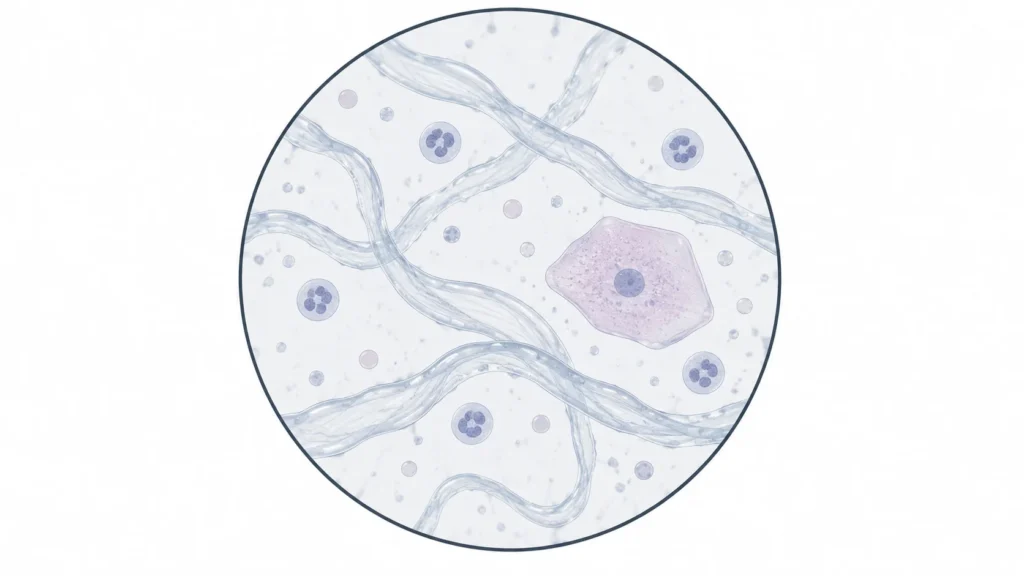
Mucus on a urinalysis report means the lab saw mucus threads when it looked at your urine under a microscope. A dipstick cannot detect mucus, so it only appears on reports that include the microscopic exam.
Labs print this line in many ways: “mucus,” “mucous,” “mucus threads,” “UA mucus,” or a long label such as “Mucus, UR Sed, QL, Automated Count.” These all name the same test. The word after it, such as “rare” or “present,” is your result. To see how this line fits with the rest of the report, read our guide to urinalysis results explained.
What do rare, few, moderate and many mean?
Mucus has no numeric normal range. Labs describe the amount in words or on a plus scale, and each lab sets its own scale, so compare your result only with the range printed on your own report.
The table below shows how these grades are usually read when the rest of the urinalysis is normal and you have no symptoms.
| Result on report | What it usually means |
|---|---|
| None / Negative | No mucus seen |
| Rare / Trace | A tiny amount; common in healthy people |
| Few / Occasional | A small amount; common without symptoms |
| Present | Mucus was seen, but the lab didn’t grade the amount |
| Moderate / 1+ to 2+ | More than usual; read with the other results |
| Many / Heavy / 3+ to 4+ | A large amount; worth discussing with your doctor, even if contamination is the likely cause |
You may also see “/HPF” or “/LPF” next to the result. These mean per high-power field or per low-power field, the two microscope magnifications used to count what’s in the sample.
Why is mucus flagged “Abnormal”?
Many labs set the expected result for mucus to “none,” so their software flags any amount it detects, even “rare.” An “Abnormal” flag next to rare or few mucus describes the lab’s cutoff, not a disease.
The flag deserves more attention when the mucus result is moderate or higher and other lines on the same report are abnormal too.
What does mucus with bacteria or white blood cells mean?
Mucus with bacteria and white blood cells is more likely to reflect a real infection than mucus alone, and more so if nitrites or leukocyte esterase are positive and you have urinary symptoms. In that case, a urine culture usually follows to identify the bacteria.
Mucus with many squamous epithelial cells points the other way. Squamous cells come from the skin around the urethra and vagina, and Medscape notes that 15 to 20 or more per high-power field suggests the sample picked up skin and genital material during collection. For what different white blood cell counts mean, see our guide to leukocytes in urine.
What is the white tissue or stuff floating in my urine?
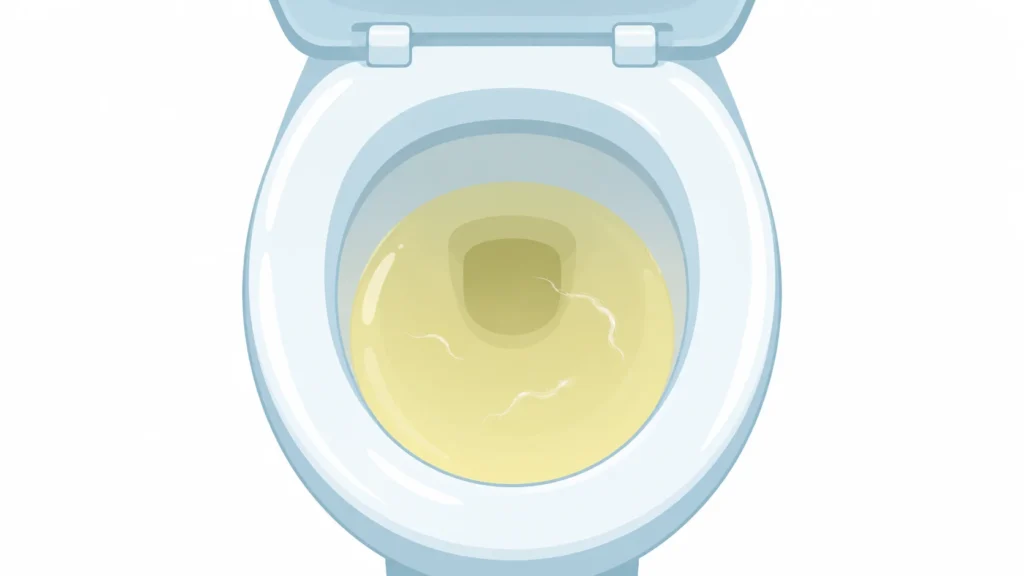
In most cases, the white “tissue” or stringy material people see floating in the toilet is vaginal discharge, mucus strands or, in men, semen. Real tissue in urine is rare, and anything that looks like actual tissue or blood clots should be checked by a doctor.
The table below lists the common look-alikes and how to tell them apart.
| What you might see | What it usually is | Clues |
|---|---|---|
| White or clear stringy strands | Mucus from the urethra, or cervical mucus | Thin and stretchy; changes with your cycle |
| White or creamy clumps that sink or float | Vaginal discharge mixed into the toilet water | More noticeable around ovulation, in pregnancy or on hormonal birth control |
| Thick white or gray strands after sex | Semen | Shows up in the first urination after ejaculation |
| Cloudy, milky urine with burning | Pus (white blood cells) from an infection | Comes with pain, urgency or fever |
| Fine white cloudiness or grit | Phosphate crystals | Common in alkaline urine; no other symptoms |
| Foam or bubbles that last | Protein in the urine, or a strong stream | Persistent foam is worth a urine protein check |
| Jelly-like mucus on stool | Mucus from the bowel | Comes from a bowel movement, not from urine |
| Pieces that look like flesh, or dark clots | Blood clots or tissue | See a doctor promptly |
Why is my pee sticky, slimy or thick?
Pee that looks slimy or thick usually has mucus or vaginal discharge mixed into it. Urine that feels sticky can also come from sugar in the urine when blood sugar is high, a sign of diabetes that is worth checking if you are thirsty, urinating often or losing weight without trying.
A simple blood glucose test or an HbA1c test answers that question quickly.
Why is there discharge when I pee?
In women, discharge seen while urinating is most often normal vaginal discharge that leaves the body along with urine. In men, any discharge from the penis is not normal and should be tested for STIs such as chlamydia and gonorrhea.
Discharge that is yellow, green or gray, smells foul, or comes with itching, burning or pelvic pain needs a visit in anyone.
What causes mucus in urine?
Mucus in urine comes from normal protection, from material mixing into the sample, or from irritation somewhere along the urinary tract. There are 7 common causes, from most to least common.
Vaginal discharge in the sample
Vaginal discharge is the most common reason women see mucus in urine or on a lab report. Cervical mucus changes through the menstrual cycle and gets thicker and more noticeable around ovulation, during pregnancy and with some hormonal birth control.
Because the urethra sits close to the vaginal opening, a little discharge enters the stream or the cup, even with careful collection.
Urinary tract infection
A UTI irritates the lining of the urinary tract, and the irritated lining makes more mucus. According to the National Institute of Diabetes and Digestive and Kidney Diseases (NIDDK), bladder infection symptoms may include burning when you urinate, frequent or intense urges, lower belly pain, and cloudy, bloody or strong-smelling urine.
Mucus from a UTI usually comes with white blood cells and bacteria on the urinalysis.
Sexually transmitted infections
Chlamydia and gonorrhea can inflame the urethra and cause a mucus-like discharge that shows up in urine. Men tend to notice it more, as discharge from the tip of the penis or cloudy first urine of the day.
Many people with these infections have no symptoms. A urine STI test, which is different from a standard urinalysis, detects them.
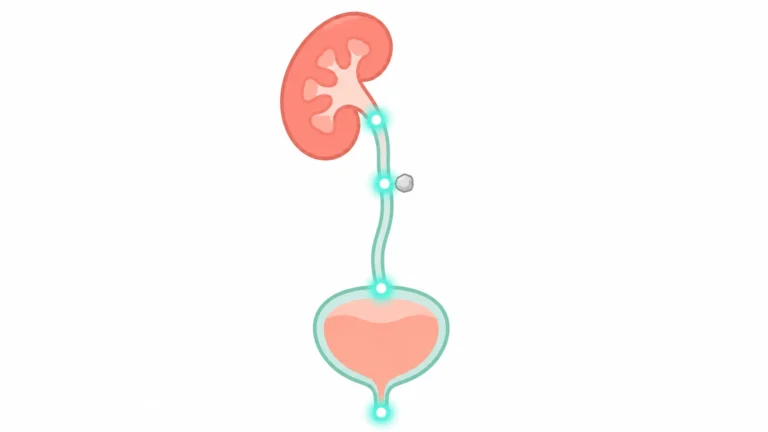
Kidney stones
A kidney stone moving down the urinary tract scrapes and irritates the lining, which can add mucus to the urine. Stones usually announce themselves with sharp pain in the back or side that can spread to the groin, blood in the urine, and nausea.
Prostatitis and interstitial cystitis
Prostatitis, an inflamed or infected prostate gland, can add mucus to a man’s urine along with pain in the pelvis, between the legs or during ejaculation. Interstitial cystitis, a long-term bladder pain condition, can do the same with pelvic pain and frequent urination.
Bowel conditions
IBS and ulcerative colitis can produce mucus in the stool. That mucus does not enter the urine; it mixes with urine in the toilet bowl, which makes it look like it came from the bladder.
Bladder cancer
Bladder cancer is a rare cause of mucus in urine. Blood in the urine, often painless, is a far more common first sign. Mucus on its own, with a normal urinalysis otherwise, does not point to cancer.
Is mucus in urine different in women and men?
Yes. Mucus in women’s urine is most often from vaginal discharge, while mucus in men’s urine more often comes from the urethra or prostate.
Mucus in urine in women
Because vaginal and cervical secretions enter the sample so easily, rare to moderate mucus is a routine finding on women’s urine tests. Clues that point away from simple discharge include burning, an urge to urinate often, a fishy or foul smell, itching, or a change in the color of discharge. Yeast infections and bacterial vaginosis can increase discharge too; our guide to yeast in urine explains what it means when a urinalysis finds yeast.
Mucus in urine in men
Men have less contact between urine and other secretions, so mucus on a man’s urinalysis is a little more likely to come from the urethra or prostate. Common harmless sources include semen left in the urethra after ejaculation, and retrograde ejaculation, where semen goes backward into the bladder and leaves with the next urination as cloudy, stringy material.
Mucus in men together with discharge from the penis, burning, or pain in the pelvis or testicles needs a check for STIs, prostatitis or a UTI.
Is mucus in urine normal during pregnancy?
Yes, more vaginal discharge is normal in pregnancy, so more of it ends up in urine samples and in the toilet. The mucus plug, a thick collection of mucus that seals the cervix, can come out in the weeks or days before labor. It passes from the vagina, not the bladder, though people often first notice it in the toilet.
Pregnant people have their urine checked more closely. The US Preventive Services Task Force (USPSTF) recommends a urine culture at the first prenatal visit or at 12 to 16 weeks to look for bacteria. Tell your OB-GYN or midwife about burning, fever, back pain, bleeding or a gush of fluid.
Why is there mucus in urine after bladder surgery?
People who have had their bladder removed and replaced with a piece of bowel, such as an ileal conduit (urostomy) or a neobladder, will have mucus in their urine for life. The bowel lining keeps making mucus even after it becomes part of the urinary system.
According to a patient guide from the University of Rochester Medical Center, this mucus is normal in urine from a bowel-based urinary diversion, but it can build up and lead to stones. The amount often decreases in the months after surgery. Call your urology team the same day if no urine is draining, if mucus blocks a catheter and won’t clear, or if you have fever, back pain or foul-smelling urine.
When is mucus in urine a warning sign?
Mucus in urine is a warning sign when it comes with symptoms or with other abnormal results. Contact a doctor if mucus appears with any of these:
- Burning or pain when you urinate
- A frequent or urgent need to urinate
- Fever, chills, or pain in your back or side
- Blood in the urine
- Discharge from the penis, or vaginal discharge that is yellow, green, gray or foul-smelling
- Pelvic or testicle pain
- Mucus that keeps increasing on repeat tests
One rare cause deserves a mention. A fistula is an abnormal opening between the bowel and the bladder, most often from diverticulitis, Crohn’s disease or cancer. StatPearls lists air bubbles passing with urine (pneumaturia), stool-like material in the urine (fecaluria), foul-smelling urine and repeated UTIs as its main signs. Gas or brown debris in your urine needs a prompt medical visit.
Once you know where the mucus is likely coming from, the next questions are what to do about it and which tests help.
How do you get rid of mucus in your urine?
You don’t treat the mucus itself; you treat what’s causing it. Normal amounts need no treatment at all, and extra mucus from an infection, an STI or a stone clears once that cause is treated.
If your lab report shows mucus that is likely from contamination, a better-collected sample often clears it up. MedlinePlus recommends this clean-catch method:
- Wash your hands with soap and water.
- Open the container without touching the inside.
- Clean the genital area with the wipe provided. Separate the labia and wipe front to back, or pull back the foreskin and wipe the tip of the penis.
- Urinate into the toilet for a few seconds, then stop the flow.
- Start again into the container without letting it touch your body.
- Finish in the toilet and cap the container.
Tell your provider before the test if you have your period or bleeding hemorrhoids. If contamination keeps showing up on urine cultures too, our guide to mixed urogenital flora explains why it happens and what helps.

- What tests might a doctor order?
The tests depend on your symptoms and what else the urinalysis showed. Doctors commonly use these 5:
- A repeat urinalysis from a carefully collected sample, to see whether the mucus was contamination.
- A urine culture, to identify bacteria if an infection is suspected.
- An STI test, a urine or swab test for chlamydia and gonorrhea.
- Imaging, such as an ultrasound or CT scan, if a kidney stone or blockage is suspected.
- Cystoscopy, a look inside the bladder with a thin camera, if there is unexplained blood in the urine or a concern about the bladder lining.
When should you see a doctor?
See a doctor if mucus in your urine comes with burning, frequent urination, discharge, pelvic pain, or a moderate or heavy result on more than one test. Get care the same day for a fever of 100.4°F (38°C) or higher, chills, pain in your back or side, blood in your urine, or pain during pregnancy.
Call 911 or go to the nearest emergency room if you can’t pass urine at all, have severe pain with vomiting, feel confused, or have trouble breathing.
Frequently asked questions
Can dehydration cause mucus in urine?
Not directly. There is no good evidence that dehydration makes the body produce more mucus. Dark, concentrated urine can make strands that are already there easier to see in the toilet.
Can kidney failure cause mucus in urine?
No. Mucus is not a typical sign of kidney failure. Kidney disease more often shows up as protein, blood or casts on a urinalysis, and blood tests such as creatinine confirm it.
Does mucus in urine smell?
No. Mucus itself has little or no smell. A strong or foul odor usually comes from concentrated urine, certain foods or an infection, and a foul odor with burning needs a check.
Can mucus in urine come and go?
Yes. The amount can change from day to day with your menstrual cycle, sexual activity and how the sample was collected. Mucus that keeps increasing along with symptoms deserves a visit.
Sources
- MedlinePlus. Mucus in Urine
- Wu TH, et al. Tamm-Horsfall Protein is a Potent Immunomodulatory Molecule and a Disease Biomarker in the Urinary System. Molecules, 2018
- Rampoldi L, et al. The rediscovery of uromodulin (Tamm-Horsfall protein): from tubulointerstitial nephropathy to chronic kidney disease. Kidney International
- Medscape. Urinalysis: Reference Range, Interpretation, Collection and Panels
- National Institute of Diabetes and Digestive and Kidney Diseases. Symptoms & Causes of Bladder Infection (UTI) in Adults
- U.S. Preventive Services Task Force. Asymptomatic Bacteriuria in Adults: Screening
- University of Rochester Medical Center. Radical Cystectomy and Neobladder: patient guide
- StatPearls. Colovesical and Other Enterovesical Fistulas
Disclaimer
This blog is for informational and educational purposes only, and does not intend to substitute any professional medical advice or consultation. For any health related concerns, please consult with your physician, or call 911.