What Level of RDW Is Dangerous? What a High or Low RDW Blood Test Means
No RDW level is dangerous by itself, and doctors don’t use a danger cut-off. A normal RDW is about 12% to 15%. A high RDW means your red blood cells vary more than usual in size, which is a clue to look for low iron, vitamin B12 or folate, blood loss or a long-term illness. It matters more when your hemoglobin is low, when you have symptoms like tiredness or shortness of breath, or when the number keeps rising. A low RDW is not a cause for concern.
RDW is one of the rows on a complete blood count that people notice when it’s flagged high. The name sounds technical, and searching for it brings up charts that call some numbers “dangerous.” Those charts aren’t based on medical guidelines.
This guide explains what an RDW blood test measures, normal ranges for RDW-CV and RDW-SD, what level of RDW is worth worrying about, how doctors read it with other results, the causes of a high RDW, what research says about long-term health, low RDW, and what happens next.
What is an RDW blood test?
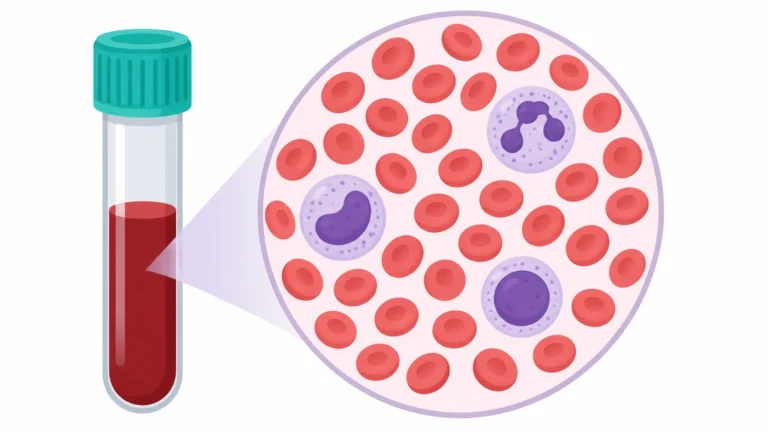
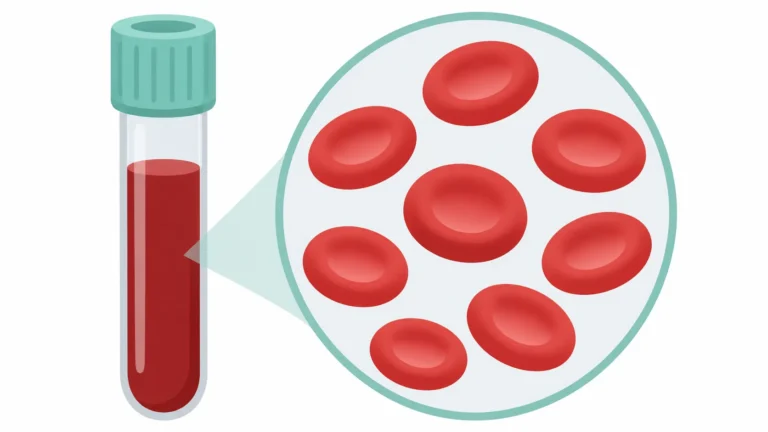
RDW stands for red cell distribution width. MedlinePlus explains that it measures how much the size and volume of your red blood cells vary. It’s reported as part of every complete blood count (CBC), so you don’t need a separate test.
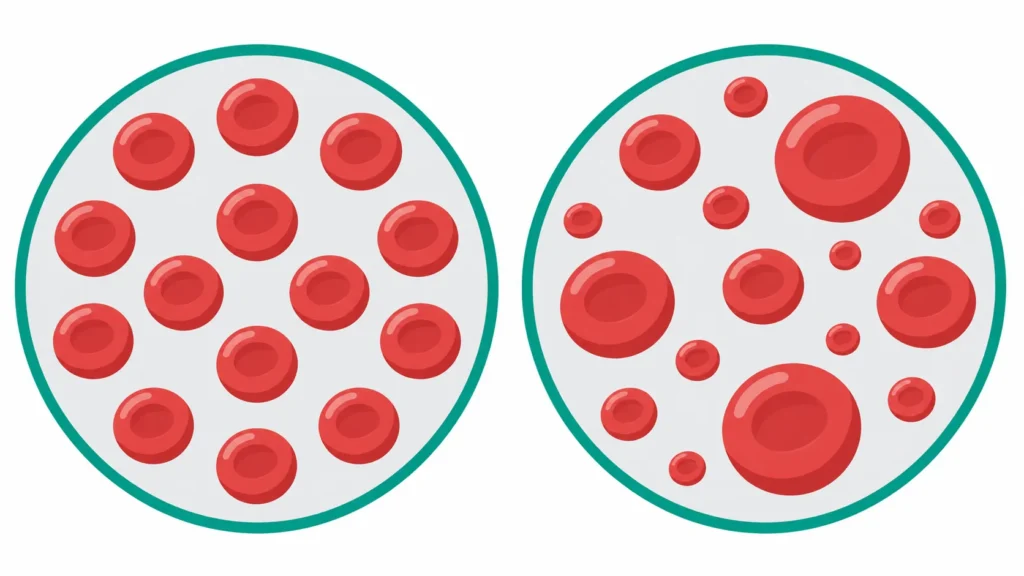
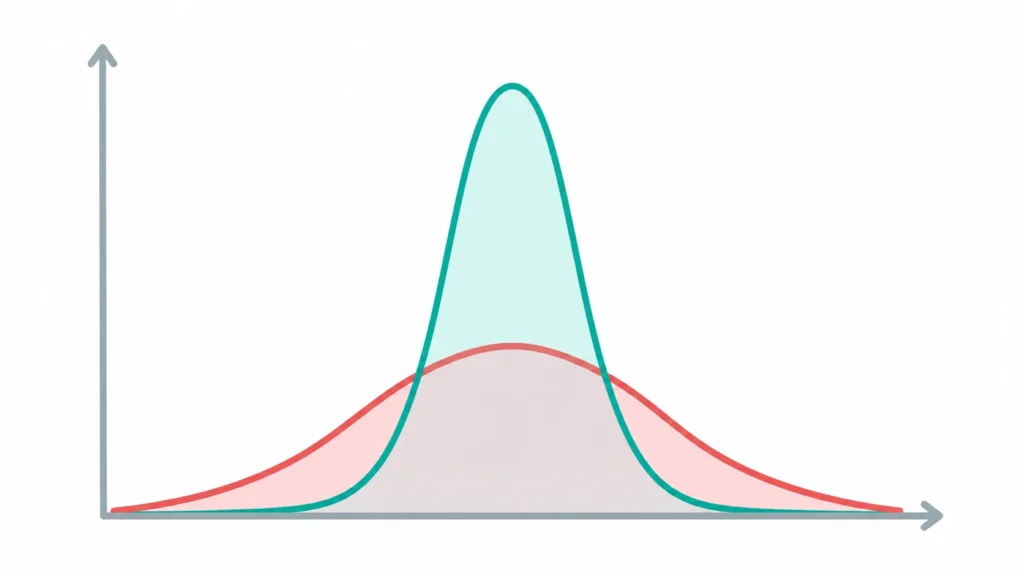
Despite the word “width,” it doesn’t measure how wide your cells are. WebMD notes that “distribution width” describes the spread between the smallest and largest cells. Healthy red cells are close to the same size. When some are much smaller or larger than others, the RDW goes up. Doctors call this mix of sizes anisocytosis.
Doctors mainly use RDW to help find the cause of anemia, a shortage of healthy red cells or hemoglobin, according to MedlinePlus.
RDW normal range
Cleveland Clinic gives a normal RDW of 12% to 15%. A result of 15% or more is high, and one below 12% is low. Ranges vary slightly from lab to lab, so compare your number to the range printed on your own report.
RDW-CV vs. RDW-SD
Labs report RDW in one or both of two ways:
| Measure | What it is | Normal range |
|---|---|---|
| RDW-CV | The spread of red cell sizes as a percentage of the average cell size | About 11% to 16% |
| RDW-SD | The spread of red cell sizes measured directly, in femtoliters (fL) | 39 to 46 fL |
Source: The Blood Project, by Dr. William Aird.
Most reports that just say “RDW” mean RDW-CV. Dr. Aird explains that RDW-SD is a direct measure that doesn’t depend on average cell size (MCV), while RDW-CV is calculated using it. Small average cells can push RDW-CV up, and large ones can make it look normal. If your report shows RDW-SD in fL, compare it to the fL range, not the percentage.
What level of RDW is dangerous?
There isn’t one. “There is no such thing as a concerning value,” Dr. Brady Stein, a hematologist at Northwestern Medicine, told WebMD. He calls RDW one of many CBC values that help a doctor find the cause of anemia.
You may see charts online that label 14.6% to 16% as “mildly high,” 16% to 18% as “moderately high” and anything above 18% as “dangerous.” These bands come from clinic websites, not from lab standards or medical guidelines. A higher number does mean your red cells vary more, but the number alone doesn’t tell you how sick you are.
A high RDW deserves more attention when:
- Your hemoglobin is low. WebMD says a high RDW can be a sign of anemia or related conditions.
- You have symptoms of anemia. Cleveland Clinic advises calling your provider if tiredness, pale skin, shortness of breath or an irregular heartbeat get worse.
- Your cell size (MCV) is also off. The pairing points doctors toward a cause, as the next section explains.
- It keeps rising. A nurse reviewer at Tua Saude notes that RDW climbing over several tests may matter more than one isolated result.
- You’re already seriously ill. The same RDW means more in someone in the hospital than in someone who feels well, Tua Saude adds.
What a high RDW means: reading it with MCV and hemoglobin
Doctors almost never read RDW alone. Dr. Stein says they always follow it with other tests. The most useful partner is MCV, the average size of your red cells.
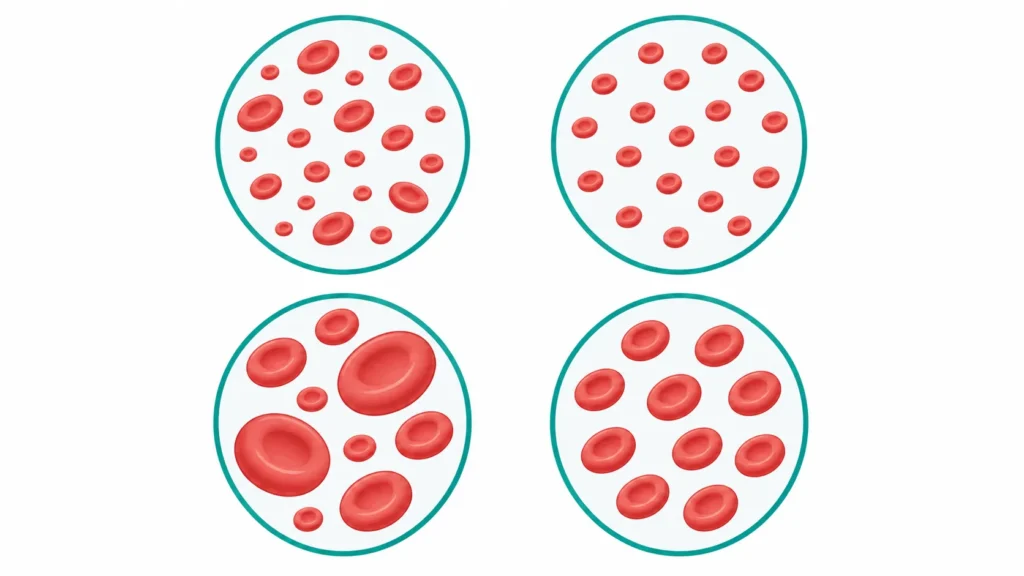
| RDW | Cell size (MCV) | What it can point to |
|---|---|---|
| High | Small (low MCV) | Iron deficiency anemia is a common cause, says Dr. Stein |
| Normal | Small (low MCV) | Thalassemia, an inherited blood condition (Dr. Stein), or anemia of chronic disease (American Family Physician) |
| High | Large (high MCV) | Low vitamin B12 or folate, according to WebMD |
| Normal | Normal | The usual healthy pattern |
These are starting points, not diagnoses. A review in American Family Physician says RDW is often high in iron deficiency and normal in anemia of chronic disease, but it isn’t reliable enough on its own to tell iron deficiency from beta-thalassemia trait. That takes blood tests made for the job.
Causes of a high RDW
Low iron, vitamin B12 or folate
Nutrient shortages are the classic cause. When your body runs low on iron, it makes smaller red cells. When it runs low on vitamin B12 or folate, it makes larger ones. That mix of sizes raises the RDW. WebMD notes that a high RDW can help a doctor spot low folate or B12.
Blood loss and fast red cell destruction
The Blood Project lists recent bleeding and rapid red cell destruction (hemolysis) as causes. Slow, hidden bleeding from the gut can show up as black or tarry stool and can lead to iron deficiency. Hemolysis, when red blood cells break down too fast, can also raise bilirubin.
Inflammation, autoimmune and long-term disease
MedlinePlus links high RDW with chronic liver disease, heart disease, diabetes, kidney disease and cancer. The Blood Project adds autoimmune disorders, sickle cell disease and myelodysplastic syndrome, a bone marrow disorder. Cleveland Clinic also lists thalassemia and long-term illnesses such as Crohn’s disease and HIV.
A 2019 analysis in Frontiers in Neurology described RDW as a possible marker of inflammation, which may be why it rises in so many long-term conditions.
Things that aren’t a disease
Not every high RDW points to illness. The Blood Project lists these other causes:
- Hard physical exercise
- Pregnancy
- A recent blood transfusion, since donor cells differ in size from your own
- Treatment with erythropoietin, a medicine that boosts red cell production
- Ancestry, as Black people tend to have higher RDW values
Does a high RDW cause symptoms?
Not on its own. Any symptoms come from what’s behind it, most often anemia. WebMD lists these anemia symptoms:
- Tiredness and weakness
- Shortness of breath
- Feeling cold
- Dizziness
- Pale or dry skin
- Headache
- A heartbeat that’s too fast or uneven
High RDW but everything else normal
This is one of the most common situations. If your RDW is a little high but your hemoglobin, MCV and other results are normal and you feel well, it may reflect an early iron shortage, a recent illness or one of the non-disease causes above. Tua Saude’s nurse reviewer says a mildly high result in someone who feels well may only need further evaluation.
It’s still worth a conversation with your doctor. A large U.S. study found that a higher RDW was tied to higher death risk even in people without anemia, so a high RDW is a reason to look at your health as a whole, not to ignore it.
What a high RDW can mean for long-term health
Researchers have studied RDW as a sign of general health, not just anemia. These studies show links, not proof that RDW causes disease.
Death risk: A study in Archives of Internal Medicine followed 8,175 U.S. adults aged 45 and older from a national health survey. For every 1% increase in RDW, the risk of death from any cause rose by 22%. People in the top fifth, with an RDW above 14.05%, had about twice the risk of those in the lowest fifth. The link held even in people without anemia.
Stroke: A 2019 analysis of 31 studies and nearly 3.5 million patients in Frontiers in Neurology found that a high RDW was linked to a higher risk of ischemic stroke, the kind caused by a blocked artery. A higher RDW was also tied to worse recovery and higher death rates after a stroke. The studies show a link, not that RDW itself causes strokes.
Heart disease: MedlinePlus and Cleveland Clinic both list heart disease among the conditions linked with high RDW.
Is high RDW a sign of cancer?
It can be one clue, but it doesn’t diagnose cancer. MedlinePlus notes a link between high RDW and cancer, and names colorectal cancer. WebMD reports that studies have also linked high RDW with lymphoma, leukemia and other cancers. Most people with a high RDW don’t have cancer, and your doctor will look for more common causes first.
Low RDW
A low RDW means your red cells are close in size. Cleveland Clinic and MedlinePlus both say it isn’t a sign of anemia or any other condition. Dr. Aird of The Blood Project notes that an RDW below the normal range is uncommon and has no medical meaning on its own.
What happens next: tests your doctor may order
If your RDW is high, your doctor will look at the rest of your CBC and your symptoms, then may order:
- Iron studies, such as ferritin, to check your iron stores
- Vitamin B12 and folate levels
- A peripheral blood smear, where a specialist looks at your red cells under a microscope; The Blood Project says a high RDW should prompt one
- Hemoglobin electrophoresis, a test for thalassemia and other inherited hemoglobin conditions, which Dr. Stein mentions
- Tests for bleeding, kidney or liver function, depending on what the rest of your results show
How to bring your RDW down
There’s no treatment for RDW itself. It comes back toward normal when the cause is treated, such as replacing low iron or B12, stopping a source of bleeding, or managing a long-term illness.
Don’t start iron, vitamin B12 or folic acid on your own. Tua Saude’s reviewer warns that treatment depends on the cause. Ask your doctor which supplement, if any, you need, and at what dose.
When to see a doctor
Talk to your doctor about a high RDW if:
- Your hemoglobin or MCV is also out of range
- You feel tired, weak, dizzy or short of breath, or your skin looks pale
- Your RDW keeps rising on repeat tests
- You notice black stools, heavy periods or other bleeding
- You have a long-term condition such as kidney, liver or heart disease
The bottom line
There’s no single RDW level that’s dangerous. A normal RDW is about 12% to 15%, or 39 to 46 fL for RDW-SD. A high RDW means your red cells vary in size, which most often points to low iron, B12 or folate, blood loss or a long-term illness. Read with your MCV and hemoglobin, it helps your doctor find the cause. In large studies, a higher RDW is linked to heart disease, stroke and a higher risk of death, so it’s worth following up, but it is a clue rather than a diagnosis. A low RDW is nothing to worry about.
Frequently asked questions
Does dehydration cause high RDW?
Not reliably. WebMD explains that dehydration can raise your total red blood cell count, which could change your RDW, but it doesn’t always. Tell your doctor if you were ill or not drinking much before the test.
Does RDW change with age?
Yes. RDW tends to creep up as people get older, according to The Blood Project. So in an older adult, a slightly high result is read alongside other results and health conditions.
Is RDW the same as a red blood cell count?
No. A red blood cell count tells you how many red cells you have. RDW tells you how much those cells differ in size. You can have a normal count with a high RDW.
Can a normal RDW rule out anemia?
No. MedlinePlus says a normal RDW doesn’t rule out anemia. Your red cells can all be the same size but still too small, too large or too few.
Sources
- Cleveland Clinic. RDW Blood Test, 2026
- MedlinePlus. Red Cell Distribution Width (RDW)
- WebMD. Guide to RDW Blood Test Values and Causes, 2025
- Aird W. Red cell distribution width (RDW). The Blood Project, 2022
- Van Vranken M. Evaluation of Microcytosis. American Family Physician, 2010
- Patel KV, Ferrucci L, Ershler WB, Longo DL, Guralnik JM. Red Cell Distribution Width and the Risk of Death in Middle-aged and Older Adults. Archives of Internal Medicine, 2009
- Song SY, Hua C, Dornbors D, et al. Baseline Red Blood Cell Distribution Width as a Predictor of Stroke Occurrence and Outcome. Frontiers in Neurology, 2019
- Tua Saude. What level of RDW is dangerous?
Disclaimer
This blog is for informational and educational purposes only, and does not intend to substitute any professional medical advice or consultation. For any health related concerns, please consult with your physician, or call 911.