Mixed Urogenital Flora in Urine: What It Means and What Happens Next
Mixed urogenital flora means your urine culture grew several kinds of bacteria that normally live on the skin and around the genitals, and none of them stood out. Most of the time, it points to a sample that picked up these bacteria on the way into the cup, not to a urinary tract infection (UTI).
You open your patient portal, see “mixed urogenital flora” on your urine culture report, and the phrase sounds alarming. In most cases, it isn’t. Below, you’ll find what the phrase means, the other wordings labs use for the same result, how to read the numbers printed next to it, and the situations where it deserves a second look.
What does mixed urogenital flora mean on a urine culture?
Mixed urogenital flora means the lab found a mix of bacteria from the skin, urethra and vagina, with no single type growing in numbers large enough to suggest an infection. “Flora” is the lab word for bacteria that live on the body without causing harm.
Urine passes over skin and genital tissue on its way out, so a few of these bacteria end up in the cup. When the lab sees this mix, it reports the group as a whole instead of naming each one, because none of them is likely to be causing a UTI.
A true UTI looks different on a urine culture. One type of bacteria, often Escherichia coli (E. coli), grows in high numbers and crowds out the rest.
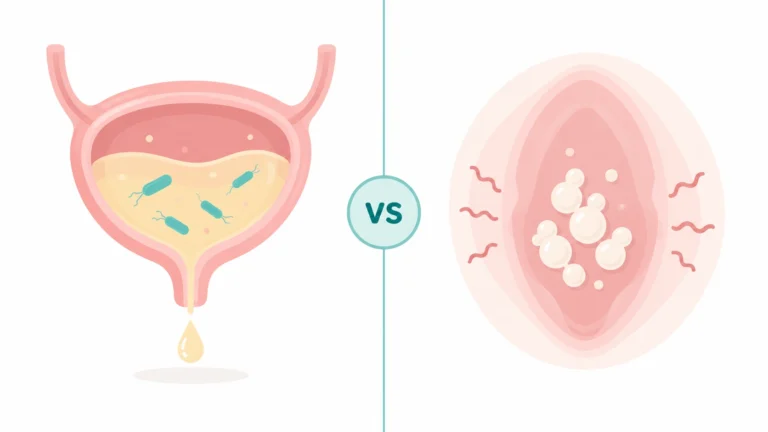
Mixed urogenital flora is not a diagnosis of bacterial vaginosis or a yeast infection. Those conditions are found with different tests, such as a vaginal swab.
How does a lab decide a urine culture is “mixed”?
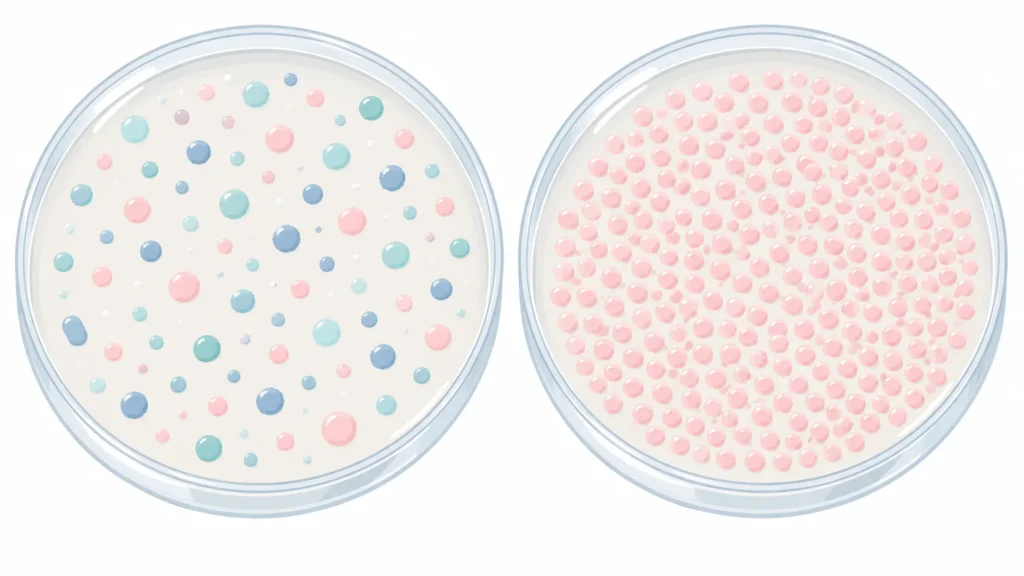
Labs follow written rules, and a widely used one comes from the American Society for Microbiology (ASM): when 3 or more types of bacteria grow and none reaches more than 100,000 colony-forming units per milliliter (CFU/mL), the result may be reported as mixed bacterial flora.
Not every lab uses the same cutoff. The microbiology lab at Duke University reports a urine culture as mixed when 2 or more organisms grow and none of them is a known cause of UTIs, according to a 2022 study from that center. That is why two labs can word the same result differently.
What do other lab wordings mean?
Labs print different words for the same finding, and nearly all of them mean the sample grew normal skin or genital bacteria. The table below covers the wordings people search for most.
| Report wording | What it means |
|---|---|
| Mixed urogenital flora | Several skin and genital bacteria grew; none stood out |
| Mixed genital flora isolated | Same meaning; “isolated” means the lab grew the bacteria on a plate |
| Urogenital flora present / normal urogenital flora present | Bacteria that normally live around the urethra and genitals were found |
| Commensal flora present | “Commensal” means bacteria that live on the body without causing disease |
| Commensal perineal flora | Commensal bacteria from the perineum, the skin between the genitals and anus |
| Mixed skin flora / mixed cutaneous flora | Bacteria from the skin surface |
| Mixed gram-positive flora | A mix of gram-positive bacteria, the group that includes most skin bacteria |
| Mixed bacterial flora with no predominating type | Several bacteria grew and none outnumbered the others |
| Probable contamination/colonization | The bacteria likely came from skin or genital tissue (contamination) or live in the urine without causing disease (colonization) |
| Mixed growth of one or more distal urethral contaminants | Bacteria from the outer end of the urethra, near the opening, got into the sample |
| Multiple bacterial morphotypes present | The lab saw bacteria of several shapes, which points to a mix rather than one cause |
Your report may add a colony count, or a comment asking for a new sample if you have symptoms. If your wording isn’t in this table, ask the lab or your provider what it means, since each lab writes its own comments.
Which bacteria make up urogenital flora?
Urogenital flora is the group of bacteria that normally live on the skin around the genitals, at the opening of the urethra and in the vagina. According to Medscape, it includes viridans streptococci and coagulase-negative staphylococci, with one exception: Staphylococcus saprophyticus, which can cause UTIs.
A 2025 review in Frontiers in Cellular and Infection Microbiology lists the most common skin bacteria found in urine samples as diphtheroids (Corynebacterium), Staphylococcus and Streptococcus species. The same review notes that lactobacilli dominate a healthy vaginal microbiome.
Most of these bacteria are gram-positive, a lab term based on how they hold a purple stain. That is why some reports say “mixed gram-positive flora.”
A few bacteria sit on both sides of the line. E. coli and Enterococcus live in the gut and on nearby skin, so they can show up as contaminants, but they are also leading causes of UTIs. When one of them grows in high numbers on its own, the lab names it instead of calling the result mixed.
What do the CFU numbers on my result mean?
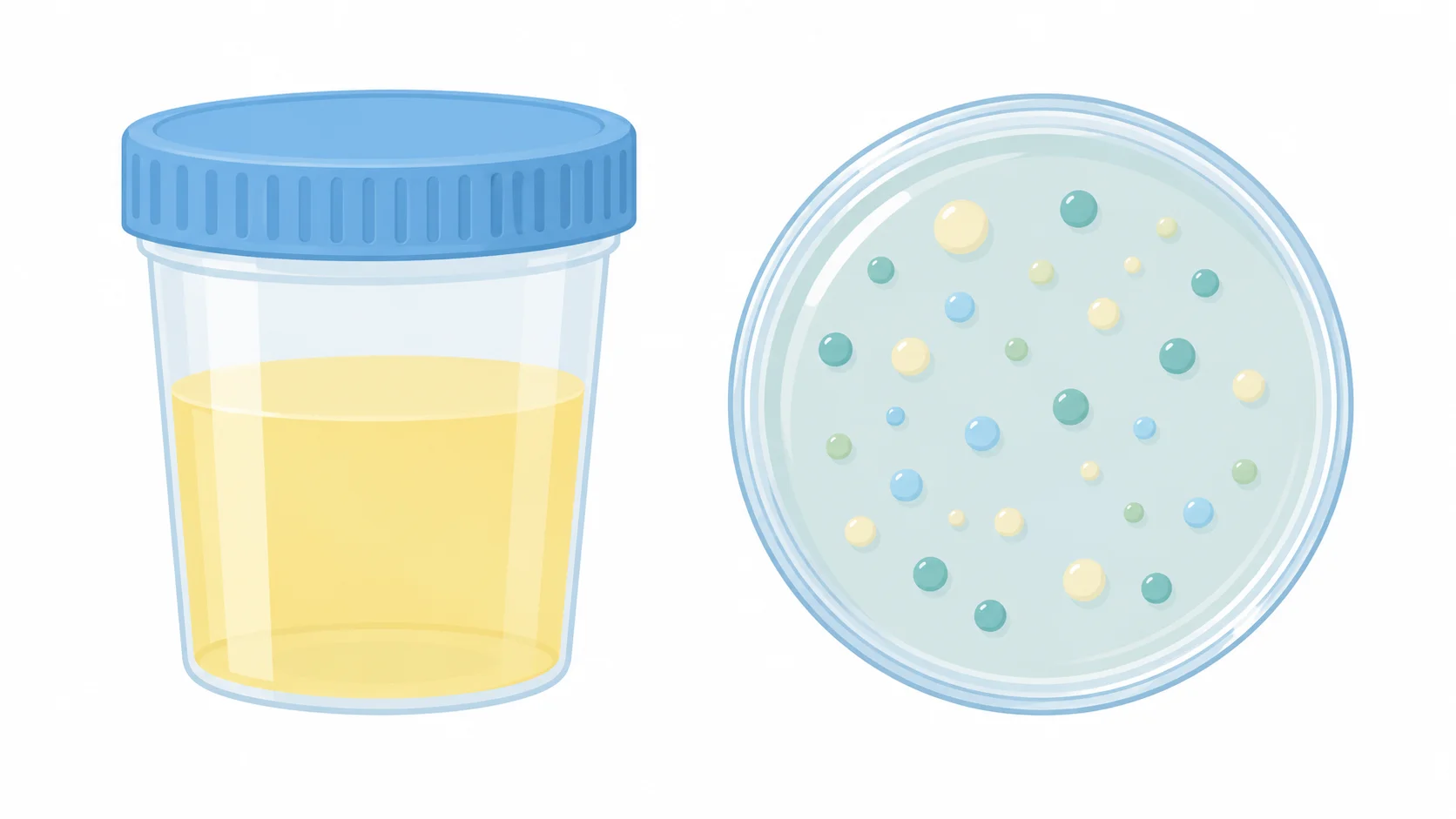
The number on a urine culture report is the estimated count of bacteria in each milliliter of urine, written as colony-forming units per milliliter (CFU/mL). ASM explains that labs spread a tiny measured drop of urine (1 or 10 microliters) on a plate, count the colonies that grow, and multiply by 1,000 or 100.
The infection cutoffs most people hear about apply to one type of bacteria at a time, not to a mix. Medscape lists these cutoffs for a clean-catch sample:
| Count of one type of bacteria | Usual meaning |
|---|---|
| Under 10,000 CFU/mL | Negative |
| 10,000 to 100,000 CFU/mL | Read together with symptoms |
| 100,000 CFU/mL or more | Positive; suggests a UTI |
A catheter sample is read differently. Medscape notes that counts as low as 100 CFU/mL of one organism can matter in a catheter sample, because the catheter skips the skin.
What does mixed flora under 10,000 CFU/mL mean?
A mixed result under 10,000 CFU/mL is about as reassuring as a urine culture gets. The count is low, and the bacteria are the kind that live on skin.
What does mixed flora at 10,000 to 100,000 CFU/mL mean?
A mixed result in this range, such as “mixed urogenital flora 10,000-25,000 CFU/mL,” still means several skin and genital bacteria grew without one standing out. On its own, the count does not show an early or developing infection. Your symptoms and urinalysis decide whether you need a new sample.
What does 100,000 CFU/mL or more mean?
A count of 100,000 CFU/mL or more of one type of bacteria, with symptoms, points to a UTI. A high total count spread across several skin bacteria is still read as a likely contaminated sample, and a repeat sample is the usual next step if you have symptoms.
Why does a urine sample pick up mixed flora?
Mixed flora gets into urine during collection, when urine passes over skin and genital tissue covered in bacteria. There are 6 common reasons it happens:
- Urine touches the skin of the vulva, the foreskin or the perineum on the way out.
- The first part of the stream, which carries the most bacteria from the urethra, goes into the cup.
- The cup or lid touches skin, fingers or clothing.
- Menstrual blood or vaginal discharge mixes into the sample.
- The sample sits too long at room temperature before testing, which lets bacteria multiply.
- A plastic bag is used to collect urine from a baby.
Mixed results are common everywhere. A UK lab study of 115,664 urine samples found mixed growth in 12.4% of them.
Who gets mixed results most often?
Women get mixed results far more often than men, and the odds rise with age. In a 2022 study of 838 urine cultures from an outpatient urology clinic at Duke University, 65.9% of women’s urine cultures were mixed, compared with 29.7% of men’s. After adjusting for other factors, women had about 16 times the odds of a mixed result, and each decade of age raised the odds by about 17%.
The researchers point to anatomy. Women have a shorter urethra that sits close to vaginal and perineal skin, and collecting a clean sample takes more effort. Higher body weight showed a link in the raw numbers, but not after the other factors were taken into account.
Is mixed urogenital flora serious?
For most people, no. A mixed result without symptoms rarely needs follow-up, because it describes bacteria from outside the urinary tract.
A mixed result deserves a closer look in 5 situations:
- You have a long-term urinary catheter. A 1994 review in Current Opinion in Nephrology and Hypertension notes that bacteria in people with long-term catheters is mostly a mix of several types, and these mixed infections can be real.
- The same mix of bacteria grows on repeat samples that were collected carefully.
- You are pregnant.
- You have a fever, chills or pain in your back or side.
- Your immune system is weakened by illness or medicine.
The same 1994 review argues that growth of several organisms in a properly collected sample can be a true mixed infection and should be fully worked up. Doctors weigh that possibility against the far more common explanation, contamination.
Could I still have a UTI?
Yes, a UTI is still possible with a mixed result, and your symptoms and urinalysis matter more than the wording on the urine culture. Skin bacteria can crowd the plate and hide the bacteria causing a real infection.
According to the National Institute of Diabetes and Digestive and Kidney Diseases (NIDDK), bladder infection symptoms may include:
- A burning feeling when you urinate
- Frequent or intense urges to urinate, even with little urine to pass
- Pain or pressure in the lower belly
- Cloudy, bloody or strong-smelling urine
Your urinalysis adds clues. ASM notes that 10 or more white blood cells per microliter, or more than 5 per high-power field, is almost always present in people with a UTI. To see what different white blood cell results mean, read our guide to leukocytes in urine.
The table below shows how doctors usually weigh these findings together. Only your provider can interpret your own results.
| Finding | Fits contamination | Points toward a UTI |
|---|---|---|
| Symptoms | None | Burning, urgency, lower belly pain |
| Urine culture | Several skin bacteria, none dominant | One type at 100,000 CFU/mL or more |
| Urinalysis | Few white blood cells, negative nitrite, many squamous epithelial cells | Many white blood cells, positive nitrite |
Do you need antibiotics for mixed urogenital flora?
Usually not. Antibiotics are chosen to work against an identified organism, and a mixed result doesn’t name one, so there is no “best antibiotic for mixed urogenital flora.”
If you have no symptoms, the US Preventive Services Task Force (USPSTF) recommends against screening non-pregnant adults for bacteria in the urine, because treating bacteria without symptoms brings no benefit and may cause harm. Antibiotic side effects and resistance are the main risks.
If you do have symptoms, your provider may start an antibiotic based on your symptoms and urinalysis while a repeat urine culture is pending, then change it once a single organism is identified. Don’t take leftover antibiotics on your own. They can blur the next test and leave a real infection partly treated.
What happens after a mixed urogenital flora result?
The next step depends on how you feel. There are 3 common paths:
- No symptoms: no treatment and, in most cases, no repeat test.
- Symptoms: a new clean-catch sample and a urinalysis, sometimes with treatment started the same day.
- Repeated mixed results with ongoing symptoms: a sample collected with a thin catheter, which skips the skin.
If your provider orders a new urinalysis, our guide to urinalysis results walks through each line of the report.
How do you give a clean-catch urine sample?
A clean-catch sample keeps the first part of the stream out of the cup. Follow your lab’s instructions if they differ; the usual steps are:
- Wash your hands with soap and water.
- Open the sterile cup without touching the inside of the cup or lid.
- Clean the genital area with the wipe provided. Women wipe the vulva from front to back; men clean the tip of the penis, pulling back the foreskin if present.
- Start urinating into the toilet for a few seconds.
- Move the cup into the stream and collect the amount marked on the cup, without letting it touch your skin.
- Finish in the toilet, close the lid tightly and hand the cup in as instructed.

Clean-catch is about skipping the first-void urine, the first few seconds of the stream. That is different from first-morning urine, the first time you urinate after waking up, which some tests ask for.
Why does my urine culture keep coming back contaminated?
Repeat mixed results are common, and they don’t always mean you collected the sample wrong. In the Duke study, posted instructions and a handout on clean-catch collection did not lower the rate of mixed urine cultures, because the main risk factors, female sex and older age, can’t be changed. ASM adds that recent evidence suggests cleaning and midstream collection may not reduce contamination at all.
In a US emergency department trial, about 30% of clean-catch urine cultures in the comparison group were contaminated.
When results keep coming back mixed and symptoms continue, the Duke authors suggest collecting urine with a straight catheter. A thin tube passes through the urethra into the bladder, drains a small amount of urine and comes straight out. It takes a few minutes and gives a sample that skin bacteria haven’t touched.
What does mixed urogenital flora mean during pregnancy?
During pregnancy, a mixed result is more likely to lead to a repeat test than to be set aside. The USPSTF recommends screening pregnant people with a urine culture at the first prenatal visit or at 12 to 16 weeks, whichever comes first, because bacteria in the urine can lead to a kidney infection during pregnancy.
Under USPSTF guidance, bacteria in pregnancy are treated when a urine culture shows more than 100,000 CFU/mL of one urinary pathogen, or more than 10,000 CFU/mL of group B streptococcus (GBS). A mixed result meets neither rule, so the usual step is a new sample. Tell your OB-GYN or midwife about any urinary symptoms right away.
What about men and children?
Mixed results show up in men and children too, but they are read a little differently.
Mixed urogenital flora in men
Men get mixed results less often than women: 29.7% compared with 65.9% in the Duke study. A man’s urethra is longer and farther from other skin bacteria. A man with urinary symptoms and a mixed result usually gives a repeat sample, and symptoms that keep coming back may lead to a check of the prostate and bladder.
Mixed urogenital flora in babies and young children
Babies who aren’t toilet trained often give urine through a plastic bag taped over the genitals, and bag samples come back mixed more often. The UK lab study found mixed growth in 33.6% of bag samples, compared with 10.4% of midstream samples. When a UTI is suspected in a young child, providers often collect a catheter sample instead.
A urine culture is rarely the only urine test on your report, so it helps to know how it fits with the others.
How is a urine culture different from a urinalysis?
A urinalysis checks the urine for signs of infection, such as white blood cells and nitrites; a urine culture grows the bacteria to find out which type is present, how many there are and which antibiotics work against them. Many labs run the urine culture only when the urinalysis suggests an infection, a setup called reflex urine culture testing.
The nitrite pad on a urinalysis turns positive when certain bacteria, such as E. coli, convert nitrate in urine to nitrite. For what a positive or negative result means, see our guide to nitrites in urine.
Are newer urine tests better at sorting out mixed results?
Newer tests that detect bacterial DNA, often called PCR urine panels, can identify many organisms at once, including some that a standard urine culture doesn’t grow well. Companies that sell these tests say they handle mixed infections better. They are not yet part of routine UTI care, and experts still debate when they help and when they find bacteria that don’t need treatment. Ask your provider whether one makes sense if your symptoms keep returning.
When should you see a doctor?
Talk to your provider about a mixed result if you have urinary symptoms, if you are pregnant, or if you use a urinary catheter.
Get care the same day for a fever of 100.4°F (38°C) or higher, chills, pain in your back or side, nausea or vomiting, or blood in your urine. NIDDK lists fever, back or side pain and nausea as signs of a kidney infection.
Call 911 or go to the nearest emergency room if you feel confused, have a racing heartbeat or trouble breathing, or can’t keep fluids down.
Frequently asked questions
Should I wait until my period ends to give a urine sample?
If the test isn't urgent, waiting until bleeding stops gives a cleaner result. If you need testing during your period, tell the clinic; they may suggest a tampon or a catheter sample.
Is mixed urogenital flora contagious?
No. Mixed urogenital flora describes bacteria that already live on your own skin and genitals. It is a lab finding, not an infection you can pass to a partner or family member.
Can drinking more water clear mixed flora?
No. Mixed flora comes from bacteria entering the sample, not from bacteria living in your bladder, so extra water won't change it. Drinking large amounts right before the test can dilute urine and hide other findings.
How long does a urine culture take?
Most urine culture results are ready in about 1 to 2 days. ASM notes bacteria need about a day to grow, and labs may keep a plate an extra day before calling it negative.
How long can a urine sample sit before it is tested?
Up to 2 hours at room temperature. ASM says a refrigerated sample, or one in a boric acid preservative tube, can wait up to 24 hours before the lab plates it.
Sources
- American Society for Microbiology. Urine Good Hands: Diagnosing UTIs With Urine Cultures
- Medscape. Urine Culture: Reference Range, Interpretation, Collection and Panels
- Whelan PS, et al. Investigating risk factors for urine culture contamination in outpatient clinics: A new avenue for diagnostic stewardship. Antimicrobial Stewardship & Healthcare Epidemiology, 2022
- Siegman-Igra Y. The significance of urine culture with mixed flora. Current Opinion in Nephrology and Hypertension, 1994
- Lough ME, et al. Contamination in Adult Midstream Clean-Catch Urine Cultures in the Emergency Department: A Randomized Controlled Trial. Journal of Emergency Nursing, 2019
- Clinical and microbiological investigation into mixed growth urine cultures. Journal of Medical Microbiology, 2022
- Moreland RB, et al. Polymicrobial urine cultures: reconciling contamination with the urobiome while recognizing the pathogens. Frontiers in Cellular and Infection Microbiology, 2025
- U.S. Preventive Services Task Force. Asymptomatic Bacteriuria in Adults: Screening
- National Institute of Diabetes and Digestive and Kidney Diseases. Symptoms & Causes of Bladder Infection (UTI) in Adults
Disclaimer
This blog is for informational and educational purposes only, and does not intend to substitute any professional medical advice or consultation. For any health related concerns, please consult with your physician, or call 911.