Mucus in Stool: What Jelly-Like Mucus Means and When to Worry
Mucus in stool is a jelly-like substance your intestines make to keep the colon moist and help stool pass. A small amount of clear mucus is normal. More mucus than usual often comes with constipation, irritable bowel syndrome (IBS), a stomach bug or hemorrhoids, and these usually settle. See a doctor if the mucus is bloody, yellowish or off-white, comes in large amounts, keeps coming back, or shows up with belly pain, fever, weight loss or a change in your bowel habits.
Spotting slime in the toilet or on the toilet paper can be unsettling. Most of the time it isn’t a sign of anything serious. Your gut makes mucus every day, and you only notice it when there’s more of it or it looks different.
This guide explains what mucus in stool is, what’s normal, what the colors mean, the common and less common causes, why you might feel the urge to go but pass only mucus, how doctors find the cause and when to get checked.
| Usually not a concern | Talk to a doctor |
|---|---|
| A small amount of clear or slightly white mucus | Mucus with blood, or red, pink or dark mucus |
| Mucus after a few days of constipation | Large amounts of mucus, or mucus every time you go |
| Mucus during a short stomach bug that’s getting better | Mucus with fever, belly pain, vomiting or weight loss |
| Mucus that comes and goes with known IBS | Mucus with a lasting change in your bowel habits |
Based on Mayo Clinic, Cleveland Clinic and GoodRx.
What is mucus in stool?
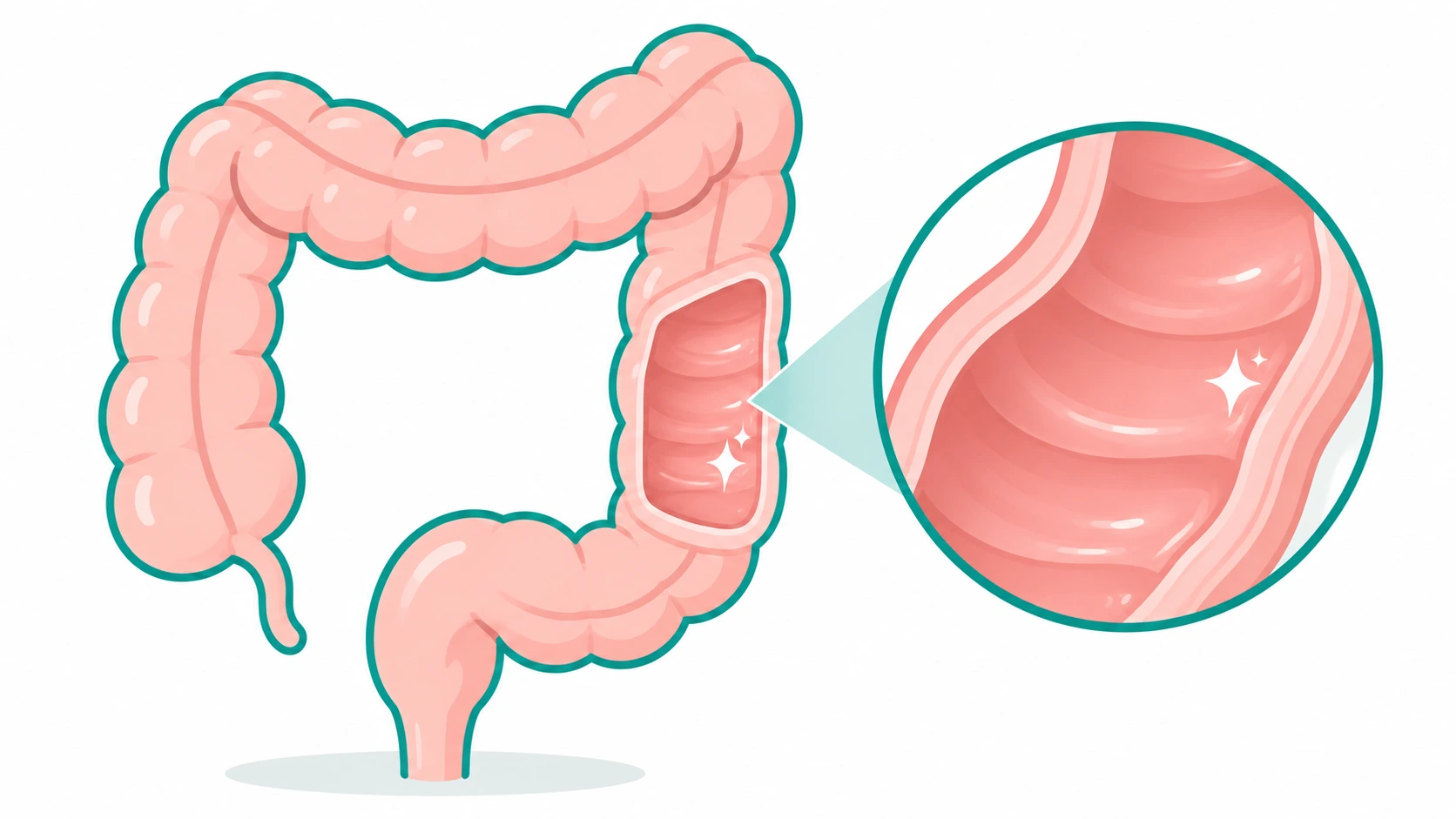
Mucus is a slippery, jelly-like substance made by the lining of your intestines. Mayo Clinic explains that it keeps the lining of the colon moist and lubricated. WebMD adds that it forms a protective layer against bacteria and helps waste move smoothly through the colon.
Cleveland Clinic describes how extra mucus ends up in the toilet. The top layer of the intestinal lining, called the mucosa, releases a thick gel. When something irritates that lining, it releases more mucus than usual. The extra mucus can end up in your poop, floating in the toilet water or on the toilet paper after you wipe.
What does mucus in stool look like?
Mucus in stool looks jelly-like and slippery, GoodRx says, a lot like mucus from your nose when you have a cold. Cleveland Clinic describes it as looking like snot in the toilet bowl.
It can show up in a few ways:
- A clear or whitish coating on the outside of the stool
- Strings or blobs swirling in the toilet water, separate from the stool
- Streaks mixed into the stool, which can be harder to see
- A smear on the toilet paper
Mucus can be clear, white, yellow, brown or red when it’s mixed with blood, according to GoodRx.
Is mucus in stool normal?
Yes, in small amounts. Mayo Clinic says stool often contains a small amount of mucus and that this is usually nothing to worry about. Cleveland Clinic agrees that some clear mucus is normal.
What changes the picture is the amount, the color and what comes with it. Mayo Clinic advises talking to a healthcare professional if you notice more mucus than usual, if it starts happening regularly, or if you also see bleeding or a change in bowel habits. Cleveland Clinic adds mucus that’s bloody, off-white or yellowish, or a “flood” of mucus.
What do the colors of mucus mean?
Color gives clues but can’t diagnose anything on its own. This table pulls together what Cleveland Clinic, GoodRx and the National Institute of Diabetes and Digestive and Kidney Diseases (NIDDK) say.

| Mucus color | What it can point to | What to do |
|---|---|---|
| Clear | Normal mucus; more of it with constipation | Usually nothing, if it’s a small amount |
| White | IBS, which NIDDK lists as a cause of whitish mucus; also Crohn’s disease or ulcerative colitis | See a doctor if it’s frequent or comes with pain or diarrhea |
| Yellow or off-white | Crohn’s disease or ulcerative colitis, per Cleveland Clinic; infections | See a doctor |
| Red, pink or blood-streaked | Bleeding from inflammatory bowel disease, proctitis, hemorrhoids or a tear | See a doctor promptly |
| Dark or black with blood | Bleeding higher up, or colorectal cancer, per Cleveland Clinic | Get checked right away |
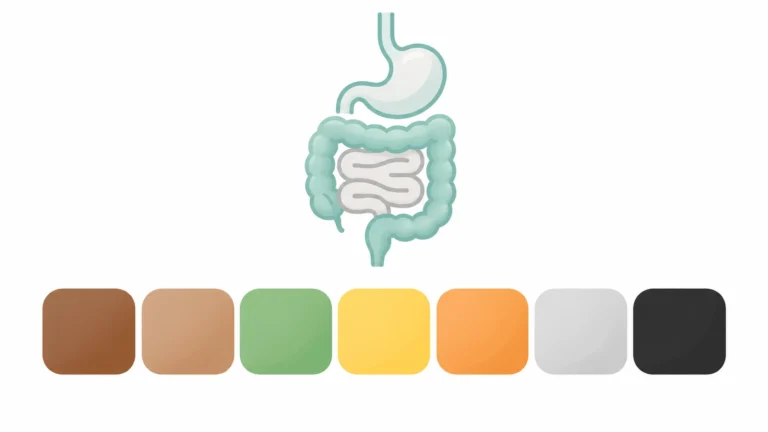
For brown, green or orange stool, our guide to stool colors explains what each shade of poop means.
What causes jelly-like mucus in stool?
Anything that irritates or inflames the lining of the bowel can make it release more mucus. Here are the causes doctors see most, from the most common to the less common.
Constipation
Constipation is one of the more common causes of mucus in stool, Cleveland Clinic says. GoodRx explains that straining and passing hard, dry stool can irritate the intestinal lining, and the bowel makes extra mucus to help move the stool along. The mucus usually eases once the constipation does.
Irritable bowel syndrome (IBS)
IBS is a common gut disorder that causes belly pain along with diarrhea, constipation or both. NIDDK lists whitish mucus in the stool among its symptoms, along with bloating and the feeling that you haven’t finished a bowel movement. WebMD reports that about half of people with the diarrhea type of IBS notice mucus in their stool.
IBS doesn’t damage the bowel, GoodRx notes, which is the key difference from inflammatory bowel disease (IBD). Mucus from IBS on its own isn’t a sign of damage. Blood is not part of IBS, so bloody mucus needs a different explanation.
Infections, food poisoning and parasites
A stomach bug (gastroenteritis) is most often caused by a virus, but bacteria and parasites can cause it too. When germs irritate the bowel lining, it releases more mucus. Mayo Clinic notes that larger amounts of mucus along with diarrhea can come from intestinal infections.
Germs linked to mucus in stool include:
- Salmonella, Shigella and Campylobacter, common causes of food poisoning, which often bring mucus with bloody diarrhea, cramps, fever and vomiting (GoodRx, WebMD)
- Certain strains of E. coli and Yersinia (GoodRx)
- C. diff (Clostridioides difficile), a bacterium that causes severe diarrhea, often after antibiotics, with foul-smelling stool and sometimes mucus (WebMD)
- Parasites, which can cause dysentery, a severe diarrhea with blood or mucus, plus nausea, fever, cramps and weight loss (WebMD)
WebMD notes that Campylobacter can come from undercooked poultry, raw milk or contaminated water, and Yersinia from undercooked pork.
Inflammatory bowel disease (Crohn’s and ulcerative colitis)
Inflammatory bowel disease (IBD) is a group of long-term conditions that inflame the digestive tract. The two main types are Crohn’s disease and ulcerative colitis (UC).
- Ulcerative colitis causes sores in the lining of the large intestine. NIDDK lists passing mucus or pus with stool, blood in the stool, diarrhea and an urgent need to go among its common symptoms. Mucus is more likely during a flare, WebMD says.
- Crohn’s disease can affect any part of the digestive tract. Cleveland Clinic says its mucus may look like white or yellow streaks on stool. GoodRx adds that Crohn’s can cause blood-tinged mucus and, at times, mucus passed without stool.
Mayo Clinic notes that bloody mucus, or mucus with belly pain, may signal Crohn’s disease or ulcerative colitis.
Proctitis
Proctitis is inflammation of the lining of the rectum, the last part of the large intestine. NIDDK lists passing mucus or pus with stool among its symptoms, along with rectal bleeding, pain in the rectum or left side of the belly, and a constant urge to go.
According to NIDDK, causes include IBD, sexually transmitted infections such as gonorrhea, chlamydia, genital herpes and syphilis, food-poisoning bacteria, C. diff, radiation therapy to the pelvis and some medicines such as NSAIDs. Our guide to UTI vs STD explains how STIs are tested for. NIDDK advises seeing a doctor right away if you pass blood, mucus or pus from the rectum.
Hemorrhoids, anal fissures and fistulas
Problems at the far end of the bowel are a common, mostly harmless source of mucus.
- Hemorrhoids are swollen veins in or around the anus. WebMD says they can leak mucus, which you may notice on your stool or on toilet paper. GoodRx adds that straining with hemorrhoids can irritate the lining.
- Anal fissures are small tears in the skin of the anus. Cleveland Clinic lists them among the causes of red, bloody stool.
- Anal fistulas are infected tunnels between the inside of the anus and the skin, often after an abscess. WebMD says they can drain mucus, pus and blood, and GoodRx notes that the pus can look like mucus. Fistulas are a known complication of Crohn’s disease.
Diverticulitis, bowel blockage and other causes
Less common causes include:
- Diverticulitis, an infection in small pouches in the colon wall, which Cleveland Clinic says can increase the amount of mucus in stool
- Bowel obstruction, a partial or full blockage; WebMD says a partial blockage may let only liquid or mucus pass
- Rectal ulcers, open sores inside the rectum that can cause mucus or blood (WebMD)
- Cystic fibrosis, an inherited disease that can cause foul-smelling, pale stool with mucus (WebMD)
Can mucus in stool be cancer?
It can be, but it’s rarely the cause. Cleveland Clinic lists colorectal cancer among the conditions that can cause mucus, which may be bloody or dark. WebMD explains that most colorectal cancers start in the mucosa, the mucus-making lining of the bowel, but that excess mucus is more likely due to something other than polyps or cancer.
The American Cancer Society lists the signs that matter more than mucus alone: a change in bowel habits, such as diarrhea, constipation or narrowing of the stool, that lasts more than a few days; rectal bleeding with bright red blood; dark stool; belly cramping; tiredness; and losing weight without trying. The US Preventive Services Task Force recommends colorectal cancer screening for adults ages 45 to 75, even with no symptoms.
Mucus with blood in stool
Blood changes the picture. Mucus streaked with red or pink blood can come from hemorrhoids or a small tear, but it can also come from IBD, proctitis, an infection such as Shigella or Campylobacter, or, less often, a polyp or cancer.
Mayo Clinic says bloody mucus in stool may signal a more serious condition. Cleveland Clinic advises contacting a healthcare provider if there’s blood in the mucus. Don’t assume hemorrhoids are the cause, mainly if you’re over 45, the bleeding is new or it keeps coming back.
Why do I feel like I need to poop but only mucus comes out?
That feeling has a name: tenesmus. NIDDK describes it as a constant urge to have a bowel movement even though your bowel may be empty. When you sit down, little or nothing comes out except some mucus, and sometimes blood.

Tenesmus usually means the rectum is inflamed or irritated. NIDDK lists it as a symptom of proctitis, which ulcerative colitis, Crohn’s disease, sexually transmitted infections and food-poisoning bacteria can all cause. IBS can bring a milder version: NIDDK lists the feeling that you haven’t finished a bowel movement among its symptoms.
Passing only mucus again and again, or with blood, pain or fever, needs a doctor’s visit.
Mucus with diarrhea vs mucus with constipation
Your stool type helps narrow the cause.
With diarrhea: Mayo Clinic links larger amounts of mucus with diarrhea to intestinal infections. IBS with diarrhea, ulcerative colitis, Crohn’s disease and C. diff also cause mucus with loose stools. Cleveland Clinic advises getting care for diarrhea that doesn’t go away within three days.
With constipation: mucus with hard, dry stool usually comes from the bowel lining reacting to straining and hard stool. It tends to clear once your stools soften. IBS with constipation and hemorrhoids are other common causes.
Our guide to the Bristol Stool Scale shows where your stool type falls between hard and watery.
Is it mucus or something else?
White strands or specks in stool aren’t always mucus. One cause worth knowing is pinworms, a common intestinal infection in children and the people who live with them.
The Centers for Disease Control and Prevention (CDC) describes pinworms as small, thin, white roundworms about the size of a staple. The main symptom is itching around the anus, worse at night, when female worms come out to lay eggs on the skin. If you see tiny white threads that move, or your child has night-time itching around the bottom, ask a doctor about a pinworm check.
Mucus doesn’t move. It looks like a jelly, coating or string rather than a thread with a definite shape.
Mucus in a baby’s or toddler’s stool
One cause of mucus in a baby’s stool is allergic colitis. WebMD explains that it affects breastfed babies who react to foods such as dairy or soy that pass to them through breast milk. It inflames the colon and can cause diarrhea with mucus.
Call your child’s doctor if mucus comes with blood in the stool, diarrhea, vomiting, fever, poor feeding, unusual fussiness or poor weight gain.
How doctors find the cause
Your doctor will start by asking about your symptoms and health history, WebMD says, and about your family history, since some conditions, including colorectal cancer, run in families. Expect questions about when the mucus started, what it looks like and whether you’ve seen blood.

Tests may include:
- Stool tests, including a stool culture to check for bacteria and parasites, and a test for C. diff
- Fecal calprotectin, a stool test for gut inflammation. Cleveland Clinic explains that high levels can point to IBD, while normal levels suggest inflammation isn’t the cause and may point to IBS
- Fecal immunochemical test (FIT), which looks for hidden blood in stool
- Blood tests for anemia, infection or inflammation
- Colonoscopy or sigmoidoscopy, which use a thin, flexible camera to look inside the colon, take tissue samples and find polyps, IBD or cancer (WebMD)
- Imaging, such as a CT scan, in some cases
How to get rid of mucus in stool
Mucus goes away when the cause is treated. Cleveland Clinic notes that once you know why there’s mucus in your stool, a provider may recommend drinking more water, eating more fiber or taking probiotics. Here’s how care differs by cause:
- Constipation: more fiber and enough fluids soften stool; the mucus usually stops when the constipation does
- IBS: diet changes that help you avoid trigger foods can ease symptoms, WebMD says, along with medicines your doctor may suggest
- Food poisoning: mild cases may need only extra fluids, according to WebMD
- C. diff and some other bacterial infections: prescription antibiotics
- Hemorrhoids and fissures: fiber and fluids to soften stool and ease straining, plus treatments your doctor suggests
- IBD and proctitis: prescription medicines that calm inflammation, managed by a gastroenterologist; Cleveland Clinic notes that severe diverticulitis may need surgery
If you already take medicine for a bowel condition, ask your provider before adding over-the-counter remedies or supplements, Cleveland Clinic advises.
When to see a doctor
See a doctor about mucus in your stool if any of these apply. The list comes from Cleveland Clinic, GoodRx, NIDDK and Mayo Clinic.
Get care right away for:
- Blood in your stool or mucus, or black or red stool
- Severe belly pain, or belly pain with fever or vomiting
- Signs of dehydration with diarrhea, such as dizziness or passing little urine
Make an appointment soon for:
- Mucus that’s yellowish or off-white, or a large amount of mucus
- Mucus that keeps happening, or no improvement within 3 weeks
- Diarrhea that doesn’t go away in three days
- A sudden change in your usual bowel habits
- Pain in your rectum or belly, or cramping
- Nausea or vomiting
- Weight loss you can’t explain
- A constant urge to go when little or nothing comes out
The bottom line
A small amount of clear mucus in stool is normal; it’s part of how your gut protects itself and moves stool along. More mucus than usual most often comes from constipation, IBS, a stomach bug or hemorrhoids, and it settles when the cause does. Mucus that’s bloody, yellowish or off-white, comes in large amounts, keeps coming back, or arrives with pain, fever, weight loss or a lasting change in bowel habits deserves a doctor’s visit. Simple stool tests and, when needed, a colonoscopy can find the cause.
Frequently asked questions
Can stress cause mucus in stool?
Stress doesn’t create mucus directly, but it’s tied to IBS. NIDDK links depression and anxiety to IBS, and WebMD notes some research finds mucus more likely in IBS when people also have anxiety or depression.
Why does clear jelly come out when I fart?
A little clear jelly with gas usually comes from the rectum’s own lining. Swollen hemorrhoids and an inflamed rectum can make more of it. If it happens often or has blood in it, get checked.
Do you need antibiotics for mucus in stool?
Only if testing finds an infection that needs them, such as C. diff. Most causes, including IBS, constipation, hemorrhoids and mild food poisoning, get better without antibiotics.
Does mucus in stool go away on its own?
Often, yes. GoodRx notes that mucus from constipation, hemorrhoids, stomach bugs and IBS usually improves as those conditions settle. Mucus that lingers or keeps returning needs a doctor to find the cause.
Sources
- Mayo Clinic. Mucus in stool: A concern? 2024
- Cleveland Clinic. Mucus in Stool (Poop): Causes and When To Be Concerned, 2025
- Cleveland Clinic. Fecal Calprotectin Test
- Jan J. What Causes Mucus in Stool? 8 Common Culprits. GoodRx, 2026
- McMillen M. What Does It Mean to Have Mucus in Your Stool? WebMD, 2026
- National Institute of Diabetes and Digestive and Kidney Diseases. Symptoms & Causes of Irritable Bowel Syndrome
- National Institute of Diabetes and Digestive and Kidney Diseases. Symptoms & Causes of Proctitis
- National Institute of Diabetes and Digestive and Kidney Diseases. Symptoms & Causes of Ulcerative Colitis
- Centers for Disease Control and Prevention. About Pinworm Infection
- American Cancer Society. Colorectal Cancer Signs and Symptoms
- US Preventive Services Task Force. Colorectal Cancer: Screening, 2021
Disclaimer
This blog is for informational and educational purposes only, and does not intend to substitute any professional medical advice or consultation. For any health related concerns, please consult with your physician, or call 911.