Lump on Head Hurts When Pressed? Common Causes and When to Worry
A lump on your head that hurts when you press it is most often a bump from a knock you may not remember, an inflamed cyst, an infected hair follicle or a swollen lymph node fighting an infection. Pain usually points to swelling or infection, not cancer, since cancerous head lumps tend to be hard and painless. Get emergency care after a head injury with repeated vomiting, confusion or a headache that keeps getting worse. See a doctor for a lump that grows, feels hard and fixed, or lasts more than a few weeks.
Finding a sore lump on your scalp is unsettling, mostly because you can’t see it well. The good news is that a tender lump is usually a sign your body is reacting to something, like a small injury or a blocked follicle.
This guide covers why lumps hurt, what a bump after an injury means, the common causes when there was no injury, painless lumps, what the location can tell you, the signs of cancer, and when to see a doctor.
| What you feel | Likely causes |
|---|---|
| Tender, swollen bump after a knock or fall | Scalp hematoma (bruise under the skin) |
| Small, round, movable bump with a tiny dark dot | Epidermoid cyst |
| Smooth, firm, skin-colored dome, often several | Pilar cyst |
| Red, pimple-like bumps around hairs | Folliculitis or ingrown hair |
| Hot, red, throbbing bump filling with pus | Boil or abscess |
| Pea-size, tender lump at the back of the head or behind the ear, during a cold | Swollen lymph node |
| Tender scalp or temple with a new headache, age 50+ | Giant cell arteritis (urgent) |
| Soft, rubbery lump that slides under your finger | Lipoma |
| Hard lump that feels like bone | Osteoma or other bony growth |
| Shiny bump or sore that bleeds and won’t heal | Possible skin cancer |
Based on Mayo Clinic, Cleveland Clinic, the American Academy of Dermatology (AAD), MedlinePlus and Healthline.
Why a lump on your head hurts when you press it
Most lumps on the head sit in or just under the skin, and they hurt for a handful of reasons:
- Swelling from an injury: blood and fluid collect under the skin and stretch it
- Inflammation: an epidermoid cyst can turn painful and swollen even when it isn’t infected, Mayo Clinic notes
- Infection: bacteria in a hair follicle or cyst cause a tender, warm, red bump
- Rupture: Cleveland Clinic says pilar cysts usually don’t hurt but can become painful if they burst, if you’ve tried to pop them, or if they press down on the skull
- An immune response: lymph nodes swell and turn tender while fighting an infection
After a bump or fall: scalp hematoma
If you hit your head, a lump that forms soon after is likely a scalp hematoma, sometimes called a goose egg. Moffitt Cancer Center explains that after a minor head injury, a small amount of blood pools under the skin and forms a lump. This kind of lump is not serious.
You may not remember the knock. A bump against a cabinet door, a car frame or a low shelf is easy to forget, and the lump can still be tender days later.
For a minor bump, MedlinePlus advises putting an ice pack on the swollen area, with the ice wrapped in a towel so it doesn’t touch the skin directly.
Signs of a more serious head injury
The lump itself is rarely the problem. What matters is what’s happening inside. The CDC says to call 911 or go to the emergency room right away after a blow to the head if you:
- Have a headache that gets worse and doesn’t go away
- Have weakness, numbness, poor coordination or seizures
- Vomit again and again
- Have slurred speech or act unusually
- Have one pupil larger than the other
- Can’t tell who people are or where they are, or become confused, restless or agitated
- Lose consciousness, seem unusually drowsy or can’t be woken up
Concussion symptoms don’t always show up right away. The CDC notes that some may not appear for hours or days after the injury, so keep watching for them.
Lump on head that hurts with no injury
When there’s no knock to explain it, a tender lump is usually a cyst, a hair follicle problem, a swollen lymph node or, in older adults, an inflamed artery.
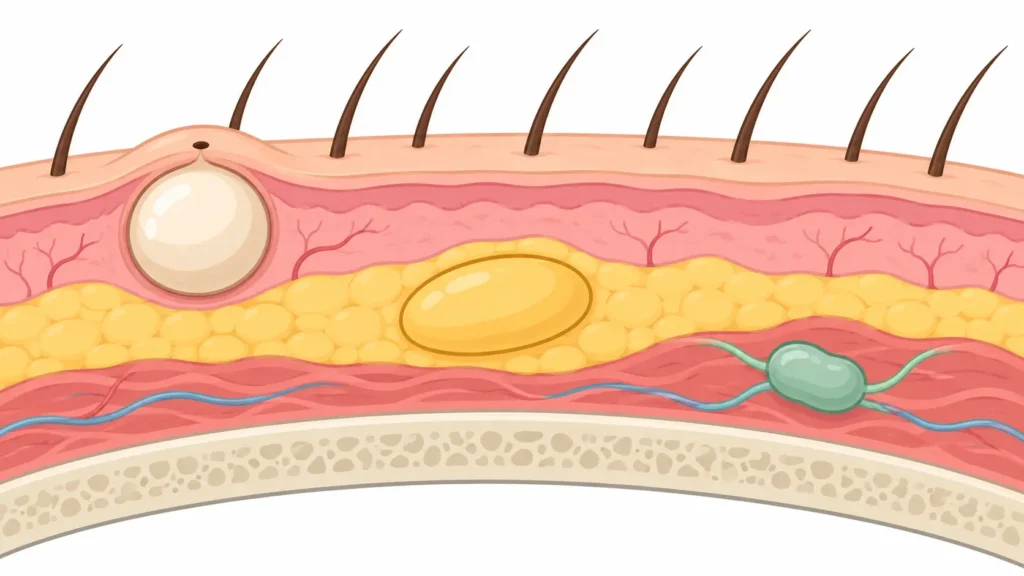
Epidermoid cyst
An epidermoid cyst is a small, round bump under the skin. Mayo Clinic says it may have a tiny blackhead plugging an opening in the center and can leak a thick, smelly, cheesy material, which is keratin.
These cysts are often harmless and painless, but they can become painful and swollen, even without infection. A cyst that bursts can lead to a boil-like infection that needs prompt care. In rare cases, Mayo Clinic notes, epidermoid cysts can lead to skin cancer.
Pilar cyst
Pilar cysts, also called trichilemmal cysts, grow from hair follicles, and most show up on the scalp. Cleveland Clinic describes a smooth, flesh-colored lump that people often first notice while washing or combing their hair. Moffitt adds that brushing or combing can easily irritate one.
According to Cleveland Clinic:
- About 10% of people get them, and women more often than men
- They tend to run in families, and if you have one, more may develop
- They grow slowly and can get as large as a baseball
- About 3% turn into fast-growing proliferating trichilemmal tumors, which are also removed
A pilar cyst that bursts, or one that turns red, hot and tender, needs medical care. Cleveland Clinic advises going to the emergency room for a ruptured cyst with signs of infection, such as a fever above 100.4°F (38°C).
Folliculitis and ingrown hairs
Folliculitis is an infected or inflamed hair follicle. The AAD says it usually looks like a sudden acne breakout, and each spot may have a red ring around it. It can itch and feel sore. Shaving, plucking, waxing, hot tubs and some medicines are common triggers.
An ingrown hair happens when a shaved hair grows back into the skin instead of out of it, Healthline explains, causing a small, red, solid bump that can become infected. Letting the hair grow out often clears it.
The AAD suggests a warm compress 3 to 4 times a day for 15 to 20 minutes, and stopping shaving, plucking or waxing for 30 days if that caused it.
Boil or abscess
A boil is a deeper hair follicle infection. Mayo Clinic describes a painful red bump that starts small, fills with pus over a few days and forms a yellow-white tip that eventually drains. The skin around it is red or purplish and swollen.
Mayo Clinic advises seeing a doctor if a boil comes with fever, worsens quickly or is severely painful, grows despite home care, hasn’t healed in two weeks, or keeps coming back.
Swollen lymph node
Lymph nodes sit in many places in the head and neck, including at the back of the head and behind the ears. When they swell, Mayo Clinic says they may feel tender and painful. The most common cause is a viral infection such as a cold. Strep throat, ear infections and infected teeth can also cause swelling.
A node that swells during an illness should shrink as you recover. Mayo Clinic advises a visit if swollen nodes:
- Have no clear reason
- Keep growing or have been swollen for 2 to 4 weeks
- Feel hard or rubbery, or don’t move when you push on them
- Come with fever, night sweats or weight loss
Giant cell arteritis: a tender scalp after age 50
Giant cell arteritis is inflammation of the arteries, most often those in the temples. It doesn’t always cause a lump, but it can make the scalp sore to touch. Mayo Clinic says the most common symptoms are headaches and tenderness in both temples or other parts of the scalp.
Other signs include jaw pain when chewing and vision loss or double vision. It affects adults, most often those older than 50, and women are about twice as likely to get it. Vision loss from it is often permanent, so Mayo Clinic advises seeing a doctor right away for a new, lasting headache with any of these symptoms.
Painless lumps on the head
Not every lump hurts. These are usually harmless, though any new lump is worth showing to a doctor. For bumps elsewhere on the body, see our guide to common skin bumps and lumps.
- Lipoma: a soft, rubbery lump of fat that moves when you press it. Healthline notes lipomas are the most common soft tissue tumor in adults but rarely form on the head.
- Pilomatricoma: a small, hard lump under the skin tied to hair follicles. MedlinePlus says it shows up most often on the head or neck, mostly in people younger than 20, and almost all are benign.
- Osteoma: a benign bone growth on the skull. Advocate Health says you may notice a hard lump on your head before any other symptoms. Many are left alone and watched.
- Seborrheic keratosis: a wart-like, noncancerous growth common on the head and neck of older adults, according to Healthline.
- Inion: most skulls have a natural bump at the back of the head where the skull meets the neck muscles, Healthline explains. It’s normal anatomy, not a lump.
Epidermoid and pilar cysts are also painless most of the time and only hurt when inflamed, infected or burst.
What the location can tell you
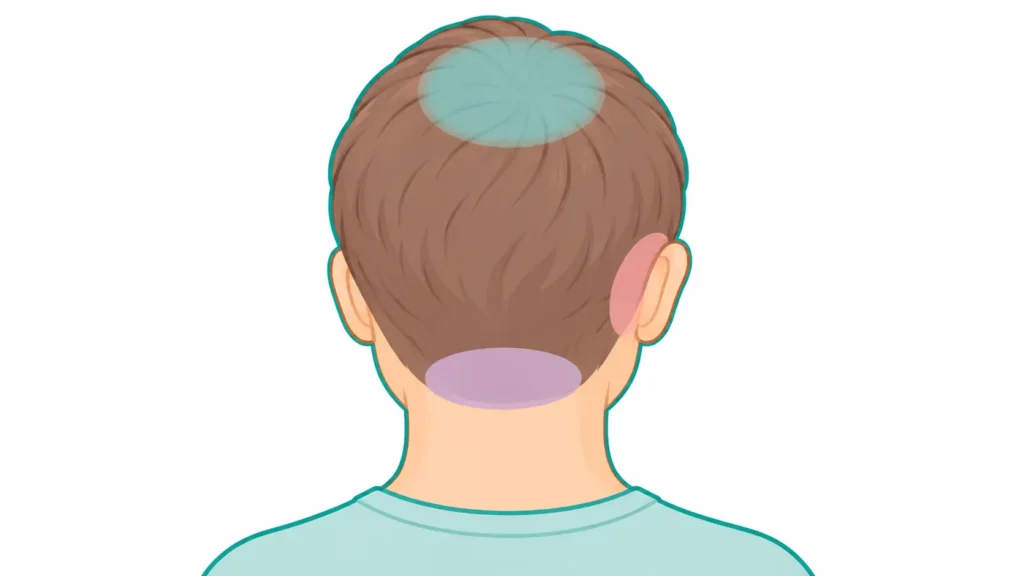
Back of the head and base of the skull: A tender, pea-size lump here during or after a cold or scalp infection is often a swollen lymph node. A hard, painless ridge in the middle is likely the inion. Pilar cysts and folliculitis also show up here. A painful bump at the base of the skull right after a fall is likely a hematoma.
Top of the head: Pilar cysts, epidermoid cysts and folliculitis are common on the crown. A hard lump that feels like bone may be an osteoma. On a bald or thinning scalp, a new bump or sore that bleeds could be skin cancer from years of sun.
Behind the ear: A tender lump here is often a lymph node reacting to an ear, throat or scalp infection.
Temple: A tender temple with a new headache in someone over 50 needs a same-day check for giant cell arteritis.
Can a lump on your head be cancer?
It can, but it’s not common. Moffitt notes that cancerous head lumps are usually hard and painless to the touch. A lump that hurts when pressed is more likely to be inflamed or infected than cancerous. Healthline adds that most head and neck cancers form around the jaw, mouth or nose rather than on the back of the head.
Skin cancers on the scalp
Skin cancer can form on any scalp, but bald heads and thinning hair get more sun.
- Basal cell carcinoma (BCC): the AAD says most BCCs develop on the head and neck, including the scalp. On lighter skin, BCC often looks like a firm, raised, round growth that is shiny and pink or red. On darker skin, it may be brown, black, bluish or gray. It can also be a sore that doesn’t heal, or heals and returns, and it may bleed and crust. Many people feel no pain at all.
- Squamous cell carcinoma (SCC): Healthline describes it as a growth that can look like a wart or mole, usually red or pink.
- Merkel cell carcinoma: a rare, aggressive tumor mostly seen in people over 70. Healthline says it looks like a red, pink or purple spot, sometimes like an insect bite, and grows noticeably within weeks.
Melanoma on the scalp
Nodular melanoma can form a raised, blue or black lump, according to Healthline. Scalp melanoma is worth catching early. A study in Archives of Dermatology using U.S. cancer registry data found that 5-year survival was 83.1% for melanoma of the scalp or neck, compared with 92.1% for melanoma elsewhere on the body.
Since the scalp is hard to see, ask a partner, family member or hairdresser to tell you about any new or changing spot.
Signs a lump needs a check
Dr. Nathan Mesko, an orthopedic oncologist at Cleveland Clinic, lists these signs that a lump should be checked:
- Pain, bleeding, redness, warmth, hardness or an open sore
- Fast growth or a change in how it looks
- A lump that lasts more than a few weeks
- A lump larger than 2 inches, about the size of a golf ball
How doctors find the cause
A doctor will look at and feel the lump, checking its size, texture and whether it moves, and ask when it appeared and whether you hit your head. Many causes, like cysts, folliculitis and lipomas, can be identified from the exam alone. If more is needed, tests may include:
- Ultrasound: to see whether a lump is solid or filled with fluid
- CT or MRI scan: Cleveland Clinic notes these can check whether a pilar cyst has grown into the bones of the head; they’re also used after a serious head injury
- Biopsy: a small sample checked in a lab, the only way to confirm skin cancer, according to Healthline
- Blood tests: to look for signs of infection or inflammation
What you can do at home
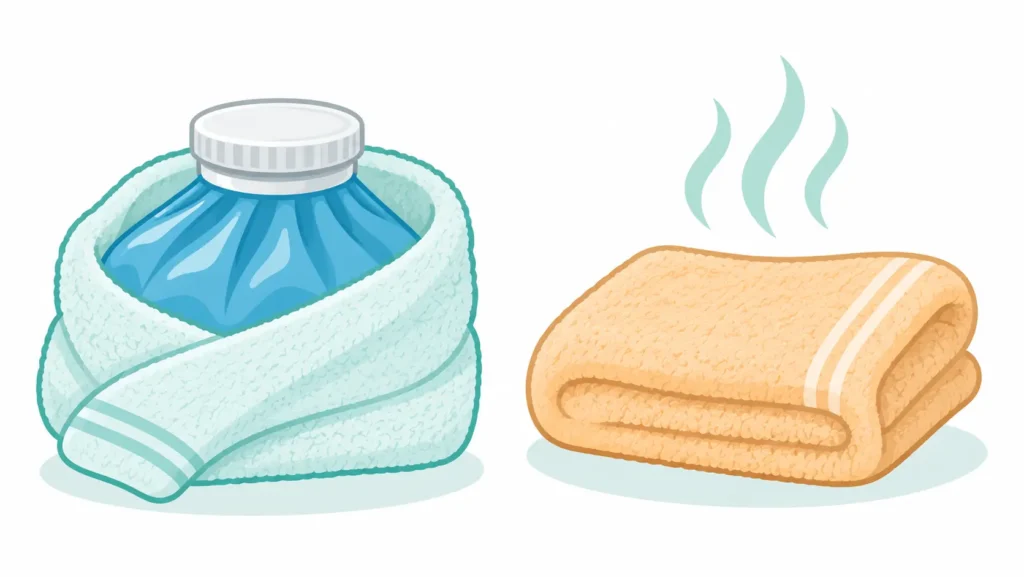
Home care depends on the cause:
- After a bump: use an ice pack wrapped in a towel, and watch for the danger signs above
- For an inflamed follicle or small boil: apply a warm compress a few times a day to ease soreness
- Don’t squeeze, pick or pop it: Mayo Clinic warns that squeezing a boil can spread the infection, and Cleveland Clinic says trying to pop a pilar cyst can cause an infection
- Be gentle when brushing: combing over a cyst can irritate it
- Pause shaving: if you shave your head and get bumps, stop for a while to let follicles heal
If a cyst bursts on its own, Cleveland Clinic advises covering it with a gauze pad and calling your provider.
When to see a doctor
Make an appointment if the lump:
- Keeps growing, changes shape or color, or bleeds
- Feels hard and doesn’t move when you push on it
- Is red, warm, severely painful or leaking pus
- Comes with fever, night sweats or weight loss
- Hasn’t gone away after a few weeks
- Comes back after being removed
Get emergency care for:
- Any of the CDC danger signs after a head injury, such as repeated vomiting, confusion, a worsening headache or trouble waking up
- A tender scalp or temple with jaw pain or vision changes, mainly after age 50
- A burst or infected cyst with fever above 100.4°F (38°C)
The bottom line
A lump on your head that hurts when pressed is usually a sign of swelling or infection: a bump from a knock, an inflamed epidermoid or pilar cyst, folliculitis, a boil or a swollen lymph node. Pain is a reassuring clue, since cancerous lumps are more often hard and painless. Ice helps after an injury, and a warm compress helps an inflamed follicle, but never squeeze a lump. Get emergency care after a head injury with vomiting, confusion or a worsening headache, and see a doctor soon for a tender scalp after age 50 or any lump that grows, hardens or lasts more than a few weeks.
Frequently asked questions
How long should a lump on the head last?
PlushCare says a small bump from a minor knock should last no more than a few days. A lump that appeared without an injury and is still there after two to four weeks should be checked by a doctor.
How quickly can a cancerous lump appear?
Cancerous lumps often start small and painless and then grow steadily over weeks or months, according to Cleveland Clinic. So a lump that keeps getting bigger week after week needs a check.
Would a cancerous lump grow and shrink?
Usually not. Moffitt Cancer Center says lumps that come and go are usually not cancerous, and a lump that gets smaller with rest and ice is most likely not cancer.
How can I get rid of a painless lump on my head?
Many painless lumps, like small cysts and lipomas, can be left alone. If one bothers you, a doctor can freeze, cut or shave it off, Healthline says. Draining a cyst doesn’t remove it, so it may come back.
Sources
- Centers for Disease Control and Prevention. Symptoms of Mild TBI and Concussion
- MedlinePlus. Head injury: first aid
- Moffitt Cancer Center. Can a Lump on Your Head Be Cancer? 2021
- Mayo Clinic. Epidermoid cysts: Symptoms and causes
- Cleveland Clinic. Pilar Cyst, 2022
- American Academy of Dermatology. Folliculitis
- Mayo Clinic. Boils and carbuncles: Symptoms and causes
- Mayo Clinic. Swollen lymph nodes: Symptoms and causes
- Mayo Clinic. Giant cell arteritis: Symptoms and causes
- MedlinePlus Genetics. Pilomatricoma
- Advocate Health. Osteoma
- American Academy of Dermatology. Basal cell carcinoma: Signs and symptoms
- Lachiewicz AM, Berwick M, Wiggins CL, Thomas NE. Survival differences between patients with scalp or neck melanoma and those with melanoma of other sites in the Surveillance, Epidemiology, and End Results (SEER) program. Archives of Dermatology, 2008
- Cleveland Clinic Health Essentials. Should You Worry About the Lump Under Your Skin? 2025
- Healthline. What Can Cause a Bump on the Head?
- PlushCare. Bump on the Head: When to See a Doctor and Causes, 2025
Disclaimer
This blog is for informational and educational purposes only, and does not intend to substitute any professional medical advice or consultation. For any health related concerns, please consult with your physician, or call 911.