Stages of Passing a Kidney Stone: How Long It Takes and What Each Stage Feels Like
A kidney stone passes in four stages: it breaks loose in the kidney, travels down the ureter (the most painful part), drops into the bladder and leaves through the urethra. In a review of 6,642 patients, stones that passed on their own took about 17 days on average. About 3 in 4 stones under 5 mm pass without treatment. Pain stopping doesn’t prove the stone is out, so keep straining your urine.
Once you know you have a kidney stone, the questions come fast. Where is it now? How much longer will this take? Will I know when it’s out? This guide walks through each stage of passing a kidney stone, what you’re likely to feel at each one, how long the whole process takes by stone size, what a passed stone looks like and what you can do to help it along.
The 4 stages of passing a kidney stone
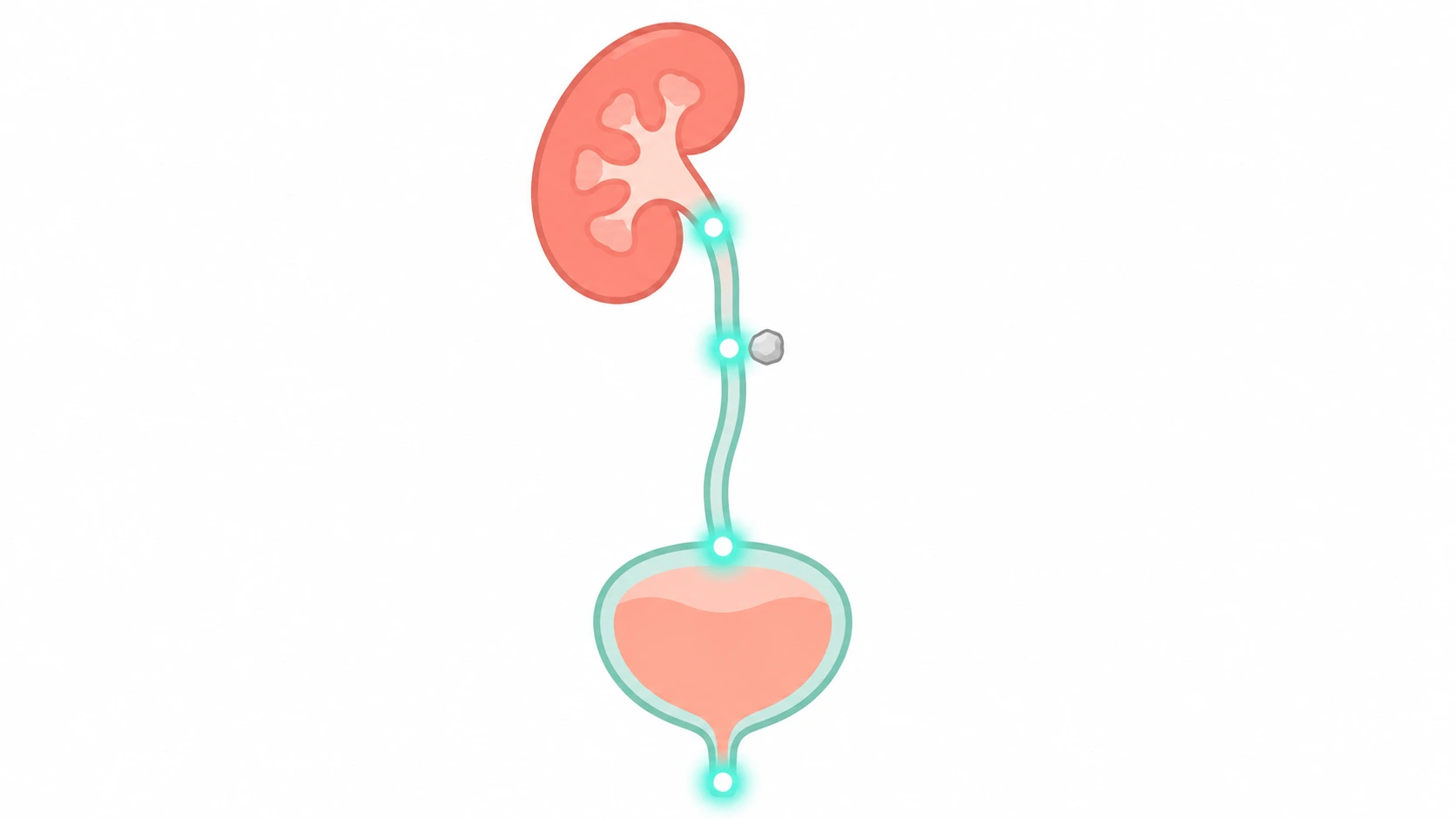
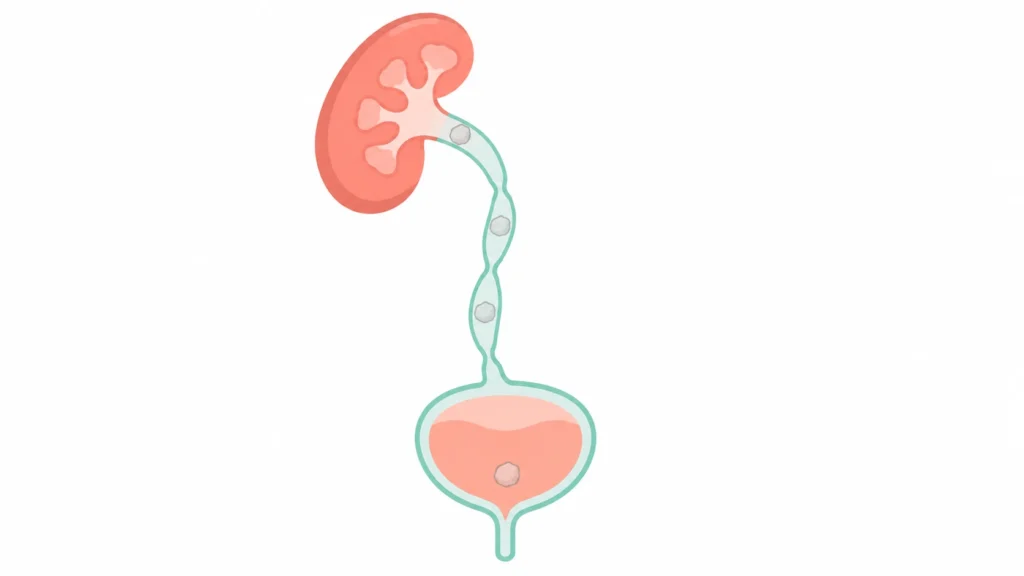
A stone has one way out. It travels from the kidney down the ureter, a thin tube that links the kidney to the bladder, into the bladder and then out through the urethra when you pee. Doctors don’t use official “stages,” but splitting the trip into four steps matches how the symptoms change.
| Stage | Where the stone is | What you may feel |
|---|---|---|
| 1 | Kidney | Nothing, or a dull ache once it shifts |
| 2 | Ureter | Sharp waves of pain in the side, back and groin; nausea; blood in urine |
| 3 | Bladder | Side pain eases; urgency, frequent peeing, burning |
| 4 | Urethra | A brief sting or nothing, then relief |
What does passing a kidney stone feel like from start to finish? For most people, the hard part is stage 2. Stages 3 and 4 feel more like a bad bladder infection that suddenly clears up.
Stage 1: The stone breaks loose in the kidney
Stones form when minerals in urine clump into crystals and slowly grow. While a stone sits still inside the kidney, it usually causes no symptoms at all, according to Mayo Clinic. Many people carry one for months or years without knowing.
Trouble starts when the stone shifts. It may move around inside the kidney or slip into the opening of the ureter. The first sign is often a dull ache or a sudden sharp pain in the side or back, below the ribs.
Stage 2: The stone moves down the ureter
This is the stage most people mean when they talk about passing a kidney stone, and it’s the most painful one. The ureter is narrow, and it narrows further in a few spots, with the tightest point where it enters the bladder. When a stone wedges in, urine backs up behind it and the ureter squeezes hard to push it along.
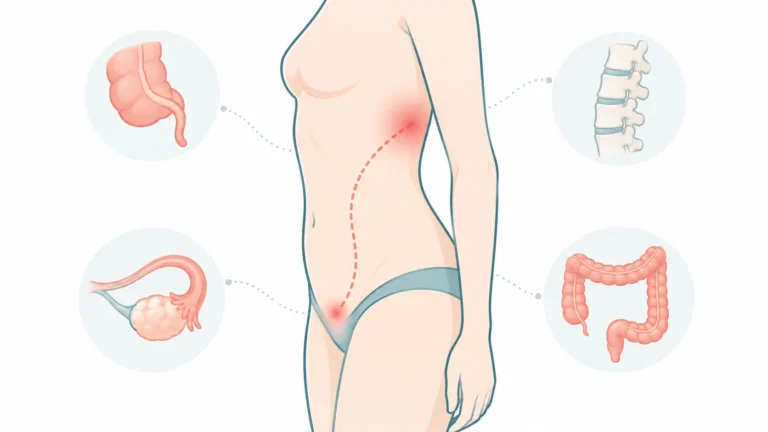
The result is renal colic: sharp pain in the side and back that spreads toward the lower belly and groin and comes in waves. Mayo Clinic notes that the pain can shift to a new spot or grow stronger as the stone moves. Nausea and vomiting are common, and the stone can scrape the lining and put blood in your urine, turning it pink, red or brown. Our guide to what kidney stone pain feels like explains how to tell it from back strain and other causes.
How bad the pain gets doesn’t tell you how big the stone is. A tiny stone that blocks the ureter can hurt as much as a larger one.
Stage 3: The stone reaches the bladder
As the stone nears the bladder, the pain usually drops lower, toward the groin. Once it slips into the bladder, the sharp side pain often eases a great deal, because urine can drain from the kidney again.
The bladder then takes over. You may feel:
- A strong, frequent urge to pee
- Pressure low in the belly
- Burning when you pee
- Passing only small amounts each time
These can feel a lot like a bladder infection. A stone that stays in the bladder can grow, mainly in men whose enlarged prostate keeps the bladder from emptying fully.
Stage 4: The stone leaves through the urethra
The urethra is wider than the ureter, so for most people this last step is easy. You may feel a quick sting or a scratchy feeling as you pee, or nothing at all. Many people only know the stone is out because they catch it in a strainer.
Now and then, a stone gets stuck in the urethra. This is rare. A 2024 review in the Asian Journal of Urology found that people with a stone stuck in the urethra most often had trouble peeing (41%), pain (40%) or a sudden inability to pee (33%).
If you can feel the stone near the tip:
- Drink water and try to pee with a full bladder, which pushes harder
- Don’t try to dig it out with tweezers, a cotton swab or any other object
- Go to the ER if you can’t pee at all
A urologist can push the stone back into the bladder and break it up, or remove it with a scope.
How long does it take to pass a kidney stone?
Most small stones pass within a few weeks. A 2018 analysis of 70 studies and 6,642 patients in the Journal of Endourology found that 64% passed their stones without a procedure, and the average time to passage was about 17 days.
An older study by Miller and Kane, published in the Journal of Urology in 1999, tracked stones that passed on their own. Of those, 95% came out within:
- 31 days for stones 2 mm or smaller
- 40 days for stones 2 to 4 mm
- 39 days for stones 4 to 6 mm
Two things decide the timeline: the stone’s size and how far down the ureter it already is. A stone low in the ureter, close to the bladder, has a shorter trip and a better chance of making it.
Passage rates by stone size and location
These numbers come from large reviews and are averages, not promises for one person:
| Stone | Chance it passes on its own | Source |
|---|---|---|
| 1 mm | About 87% | Coll, 2002 |
| 2 to 4 mm | About 76% | Coll, 2002 |
| 5 to 7 mm | About 60% | Coll, 2002 |
| 7 to 9 mm | About 48% | Coll, 2002 |
| Over 9 mm | About 25% | Coll, 2002 |
| Under 5 mm (any spot) | About 75% | Yallappa, 2018 |
| 5 mm or larger (any spot) | About 62% | Yallappa, 2018 |
| Upper ureter | About 49% | Yallappa, 2018 |
| Middle ureter | About 58% | Yallappa, 2018 |
| Lower ureter, near the bladder | About 68% | Yallappa, 2018 |
Coll figures as reported in The Journal of Family Practice.
So a 3mm kidney stone has a good chance of passing, often within a few weeks. A stone over 9 mm usually needs help.
How long does kidney stone pain last?
Stone pain comes in waves that rise and fall, according to Mayo Clinic. A spell eases off, then returns as the ureter squeezes again. Since the average stone takes a couple of weeks to pass, attacks can come back on and off for days while it works its way down.
The pain can also stop while the stone is still stuck. That’s why pain alone isn’t a good guide to where things stand, as the next section explains.
Signs a kidney stone is about to pass
These changes suggest the stone is moving down and getting close to the bladder:
- The pain moves lower, from your side or back toward the groin
- You feel a strong urge to pee, or you need to go much more often
- The sharp side pain eases, sometimes suddenly
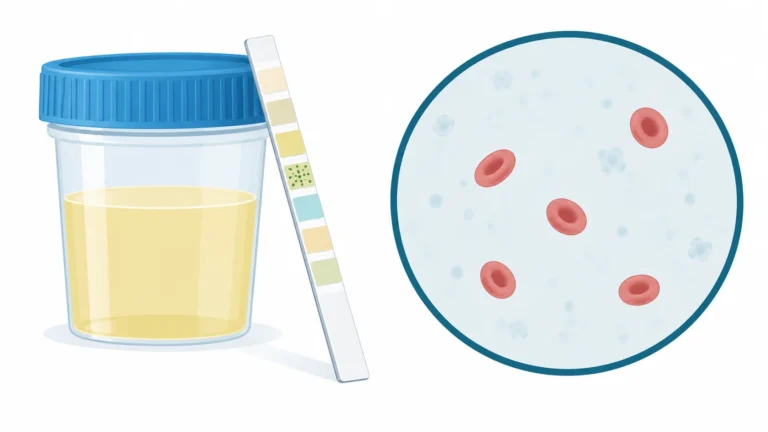
- You see blood in your urine, or tiny grains or specks
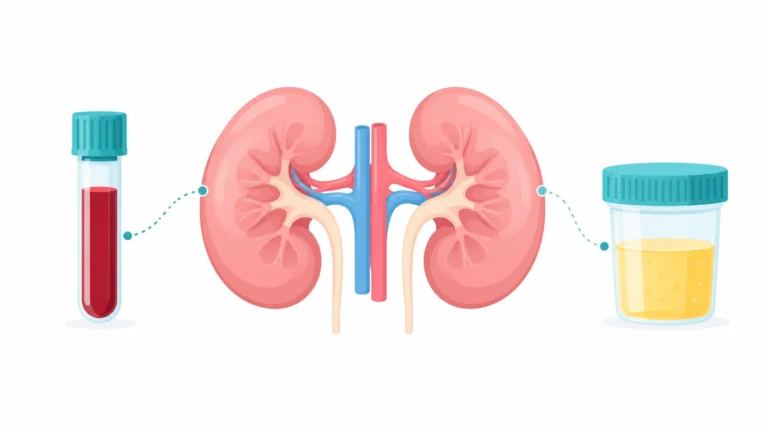
Don’t take sudden relief as proof the stone is gone. In a 2022 study in the journal Urology, 220 patients with stone pain had a follow-up CT scan. One in five still had a stone in the ureter, and 84% of those people had no pain at all. Pain going away didn’t predict that the stone had passed. What did predict it was the swelling in the kidney (hydronephrosis) clearing up on the scan.
A stone that sits in the ureter without pain can still block urine and harm the kidney. Keep your follow-up appointment even if you feel fine.
How to tell if you passed a kidney stone
There are three ways to know for sure:
- You catch it. Pee through a fine-mesh strainer every time until your doctor says you can stop. MedlinePlus advises straining all of your urine, since a stone can pass at any time.
- You see or feel it. Some people notice a small grain in the toilet or feel a brief scratch as it comes out. Small stones are easy to miss in the toilet bowl, so a strainer is more reliable.
- A scan shows it’s gone. Your doctor may order an ultrasound, an X-ray or a CT scan, mainly if you never caught the stone or if pain or blood continues.
Once the stone is out, any bleeding usually stops. Our guide to whether blood in urine goes away on its own explains what to watch for if it doesn’t.
What a passed kidney stone looks like
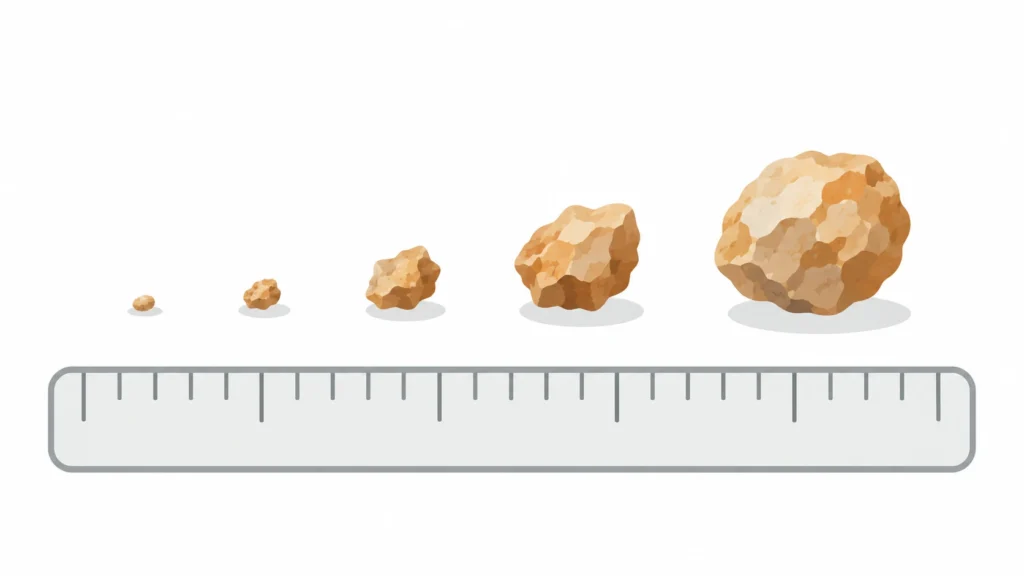
Most passed stones are small. MedlinePlus says stones range from the size of a grain of sand to a pea, and a hospital patient guide from WebMD Ignite notes that most are about the size of a grape seed. They can look like:
- Tiny grains or “sand”
- A small pebble that’s rough, jagged or smooth
- Specks that are brown, tan, gold or black
In the toilet, a stone often looks like a dark speck or a bit of gravel resting at the bottom of the bowl. That’s why catching it in a strainer works better than looking for it.
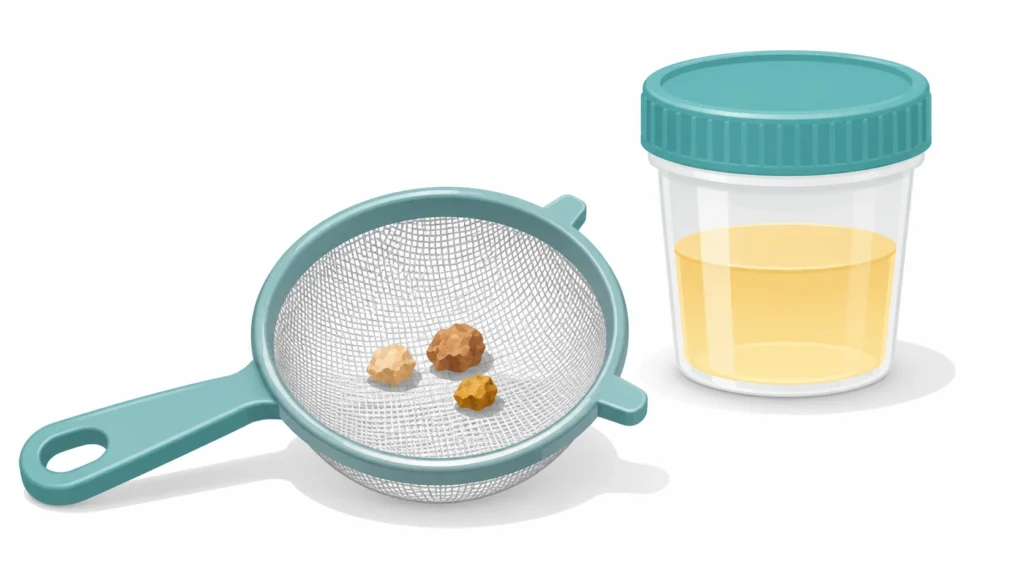
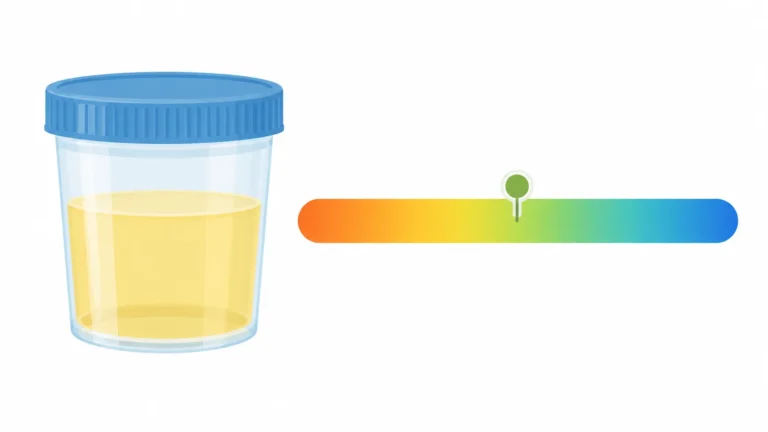
What to do with it: MedlinePlus advises putting the stone in a clean container with a lid and keeping it dry. Don’t add water, tape or tissue. Bring it to your doctor or the lab. A stone analysis shows what it’s made of, which guides the steps to prevent the next one. Some stone types depend on your urine pH, so the result also tells your doctor whether that needs changing.
How to help a kidney stone pass
Most stones pass with time, fluids and good pain control. These are the steps doctors use:
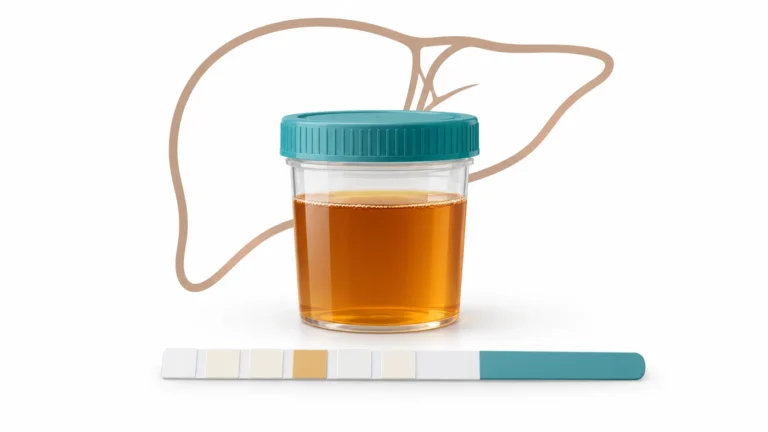
- Drink enough to make plenty of urine. MedlinePlus advises drinking enough to make at least 2 liters (about 2 quarts) of urine a day, with water as the best choice. Light yellow urine is the goal. The WebMD Ignite guide says you may be told to drink eight 12-ounce glasses of water a day.
- Use an anti-inflammatory pain reliever first. The European Association of Urology (EAU) and the UK’s National Institute for Health and Care Excellence (NICE) both name nonsteroidal anti-inflammatory drugs (NSAIDs), such as ibuprofen, as the first choice for stone pain. Check with your doctor first if you have kidney disease, stomach ulcers or take a blood thinner.
- Try heat. In a 2003 emergency room trial in The Journal of Urology, 74 people with stones had an electric heating blanket placed over the lower belly and lower back. Every person in the warmed group had their pain drop by at least half, and nausea and anxiety improved too. A heating pad on your side or back, or a warm bath, uses the same idea. Use a low setting and don’t fall asleep on it.
- Ask about a medicine to relax the ureter. Alpha-blockers such as tamsulosin relax the muscle at the bottom of the ureter. The EAU recommends them as one option for stones over 5 mm in the lower ureter, and NICE suggests considering them for lower ureter stones under 10 mm. This is an off-label use, so your doctor decides whether it fits your stone.
- Strain every time you pee, so you know when it’s out and can get it tested.
Is it better to rest or be active? Rest when the pain is bad. Between attacks, you can move around as you feel able. Home tricks such as jumping, running stairs or special teas haven’t been proven to push a stone out faster.
When a stone won’t pass on its own
Doctors usually watch stones under 10 mm and give them time. Guidance cited in The Journal of Family Practice suggests considering a procedure if the stone hasn’t passed in about 30 days. Stones over 10 mm usually need one.
Your doctor may step in sooner if you have:
- An infection with a blocked kidney
- A severe blockage or a kidney that’s losing function
- Pain or vomiting that medicine can’t control
- Only one working kidney, or a transplanted kidney
The common procedures are:
- Shock wave lithotripsy: sound waves from outside the body break the stone into pieces small enough to pass
- Ureteroscopy: a thin scope goes up through the urethra and bladder to grab the stone or break it with a laser
- Percutaneous nephrolithotomy: a surgeon removes a large stone through a small opening in the back
- A stent: a soft tube placed in the ureter to let urine drain past a blocked stone
When to go to the ER while passing a stone
Most stones can be passed at home, but some situations can’t wait. Go to the ER if you have:
- Fever or chills with stone pain
- Pain you can’t control with the medicine you were given
- Vomiting that stops you keeping down fluids or medicine
- Little or no urine
- Heavy bleeding or clots in your urine
Fever matters most. A stone that blocks a kidney with a kidney infection behind it is an emergency. The EAU advises urgent drainage of the kidney with a stent or a tube through the skin, because antibiotics alone can’t clear infected urine that can’t flow out. If you’re not sure your pain is a stone at all, our guide to other conditions that can feel like a stone lists the warning signs.
The bottom line
Passing a kidney stone has four stages: breaking loose in the kidney, the painful trip down the ureter, a few days of bladder urgency, and a quick exit through the urethra. Most small stones pass within a few weeks, about 17 days on average, and the smaller and lower the stone, the better the odds. Drink plenty, use an anti-inflammatory and heat for pain, and strain every time you pee. Don’t trust pain relief alone: catch the stone or get a follow-up scan, and go to the ER for fever, vomiting or no urine.
Frequently asked questions
Can you pass a kidney stone without knowing?
Yes. A tiny stone that never blocks the flow of urine can slip out with little or no pain. Many people only find out they passed one because they caught it while straining their urine.
What is the number one drink linked to kidney stones?
Sugar-sweetened cola and fruit punch. A 2013 study of over 194,000 people found one or more a day raised stone risk by 23%, while coffee, tea and orange juice were tied to lower risk.
What should you avoid after passing a kidney stone?
Avoid letting yourself get dehydrated and cut back on sugary sodas. Hold off on big diet changes until the stone analysis comes back, since the right changes depend on what your stone was made of.
Will I get another kidney stone?
It’s likely. MedlinePlus notes that once you’ve had a stone, you’re likely to get another. Your stone analysis and a urine test help your doctor pick the changes that lower your odds.
Sources
- Mayo Clinic. Kidney stones: Symptoms and causes
- National Institute of Diabetes and Digestive and Kidney Diseases. Symptoms & Causes of Kidney Stones
- Yallappa S, et al. Natural History of Conservatively Managed Ureteral Stones: Analysis of 6600 Patients. Journal of Endourology, 2018
- Taylor JC, Gauer R, Rideout S. Ureteral calculi: What should you consider before intervening? The Journal of Family Practice
- Jackman SV, et al. Resolution of Hydronephrosis and Pain to Predict Stone Passage for Patients With Acute Renal Colic. Urology, 2022
- European Association of Urology. EAU Pocket Guidelines on Urolithiasis, 2026
- National Institute for Health and Care Excellence. Renal and ureteric stones: assessment and management (NG118)
- Slawson D. Local Active Warming Decreases Renal Colic Pain (on Kober A, et al. J Urol 2003). American Family Physician, 2003
- MedlinePlus. Kidney stones: self-care
- MedlinePlus. Kidney Stone Analysis
- WebMD Ignite, via UMass Memorial Health. Treating Kidney Stones: Expectant Therapy
- Etiology and management of urethral calculi: A systematic review of contemporary series. Asian Journal of Urology, 2024
- Ferraro PM, et al. Sugar-sweetened beverages associated with increased kidney stone risk. Clinical Journal of the American Society of Nephrology, 2013 (news release)
Disclaimer
This blog is for informational and educational purposes only, and does not intend to substitute any professional medical advice or consultation. For any health related concerns, please consult with your physician, or call 911.