Belly Button Yeast Infection: Symptoms, Treatment and How to Stop It Coming Back
A belly button yeast infection is a skin infection caused by Candida, a yeast that overgrows in the warm, damp folds of the navel. It causes a bright red, itchy rash that may burn, scale or leak a white discharge. An over-the-counter antifungal cream such as clotrimazole or miconazole, used twice a day while you keep the area clean and dry, usually starts to clear it within two weeks. See a provider if it doesn’t improve, keeps coming back, or comes with pain, pus or fever.
Yes, you can get a yeast infection in your belly button. The same yeast that causes vaginal yeast infections and diaper rash lives on everyone’s skin, and an innie belly button gives it the dark, moist spot it likes.
This guide covers the symptoms of a belly button yeast infection, what causes it, conditions that look like it, which creams work and how to use them, how long it lasts, and how to keep it from coming back.
A belly button yeast infection is a form of candidiasis, a fungal infection caused by Candida yeast. Cleveland Clinic explains that Candida lives on healthy skin without causing harm. When it collects in damp, dark areas, it can dig under the surface of the skin and cause an infection. The navel is one of the places it’s found most often.
Doctors also call a yeast rash in a skin fold candidal intertrigo. Intertrigo is a rash caused by heat, moisture and skin rubbing on skin. When Candida grows in that irritated skin, the rash becomes a yeast infection.
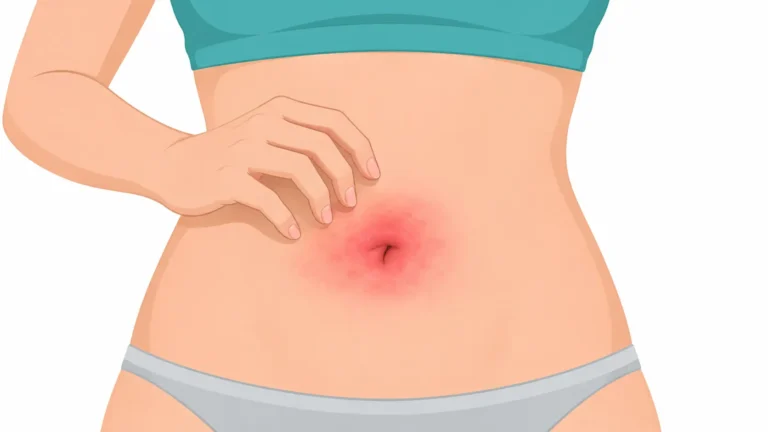
The main sign is a bright red rash in the skin folds of your navel. Common symptoms include:
- Itching, which MedlinePlus describes as intense
- Burning or soreness
- Scaling, flaking or peeling skin
- Swelling
- A white discharge
- Small red bumps or pus spots just outside the edge of the main rash
- A rash that grows past the navel
Sources: Cleveland Clinic, MedlinePlus, DermNet.
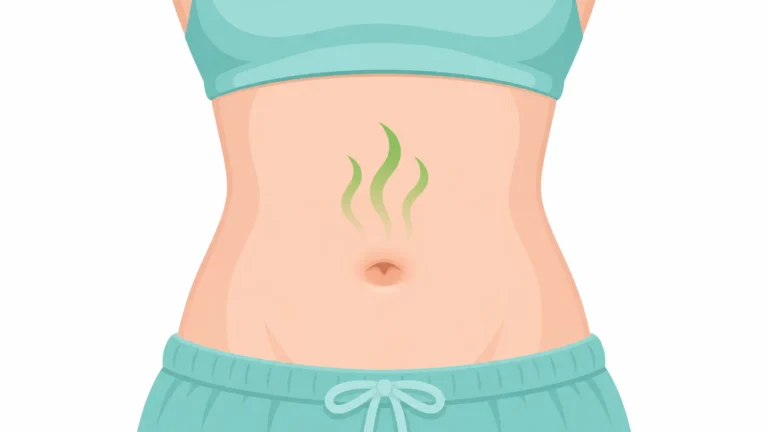
Cleveland Clinic says a belly button yeast infection doesn’t usually cause a smell, though a musty odor can happen when it starts in intertrigo. If smell is your main worry, our guide to why your belly button smells covers the other causes.
What it looks like
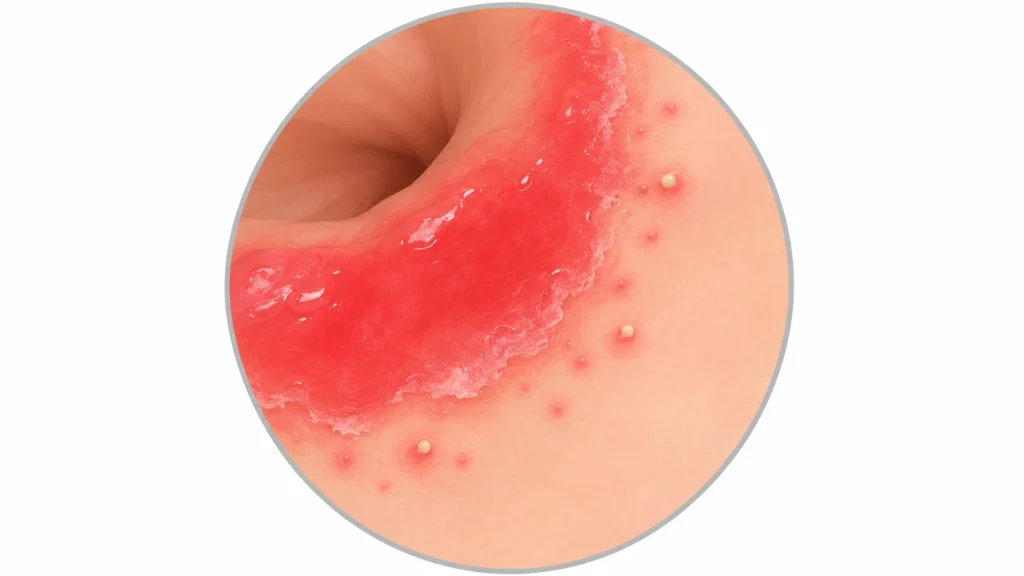
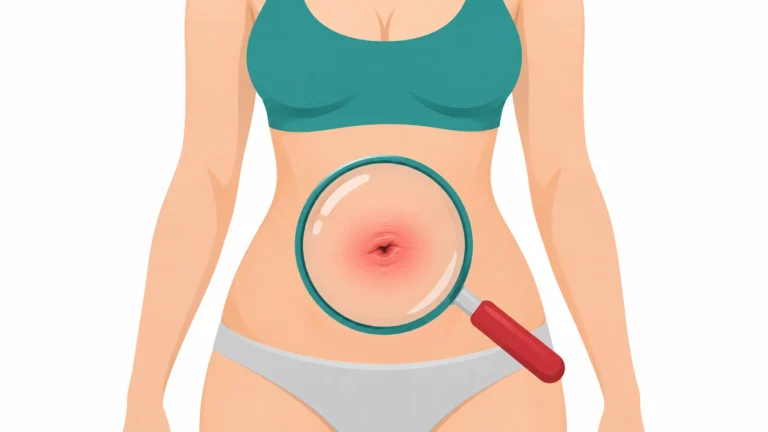
DermNet describes candidal rashes in skin folds as red, moist patches with a scaly edge, often with small separate bumps or pustules dotted around them. Doctors call these satellite lesions, and the American Academy of Family Physicians (AFP) says they’re the classic clue that a skin-fold rash is caused by Candida.
Yeast or bacterial infection?
Bacteria can infect the navel too, and they need a different medicine. These clues help:
| Yeast | Bacterial | |
|---|---|---|
| Main feeling | Itching, sometimes burning | Pain and tenderness |
| Look | Bright red rash with satellite spots | Red, swollen, warm bump or patch |
| Discharge | White | Pus or other drainage |
| Medicine | Antifungal | Antibiotic |
Sources: Cleveland Clinic, DermNet, CDC.
When the cause isn’t clear, a provider can lightly scrape some skin from your navel and check it under a microscope or grow it in a lab, Cleveland Clinic explains. A bacterial infection with pain, pus or fever needs prompt care, and our guide on whether a belly button infection can turn dangerous lists the warning signs.
Candida grows when your navel stays warm and damp. Cleveland Clinic lists these triggers:
- Wearing tight clothing
- Not changing clothes often
- Hot, humid weather
- Poor hygiene
- Skin conditions such as intertrigo and psoriasis
Who gets them more often
Some people are more likely to get a yeast infection in the navel:
- People with diabetes: Cleveland Clinic explains that high blood sugar feeds yeast and helps it grow
- People with overweight or obesity
- People taking antibiotics, which kill the skin bacteria that normally keep Candida in check
- People taking steroids or getting chemotherapy, which MedlinePlus lists as risks
- People with HIV or another condition that weakens the immune system
- Pregnant people
Sources: Cleveland Clinic, MedlinePlus.
Usually not. Cleveland Clinic says belly button yeast infections aren’t usually contagious, but people with weakened immune systems have a greater risk of catching one and should be more careful around someone who has an infection.
Several rashes in and around the navel look like yeast but won’t clear with an antifungal cream. If a yeast cream hasn’t helped, one of these may be the cause:
| Condition | Clues | What it needs |
|---|---|---|
| Nickel allergy | Itchy rash right where a metal jeans snap or belt buckle touches the skin | Avoiding the metal; a steroid cream from a provider |
| Inverse psoriasis | Smooth, shiny patch in a skin fold, red on lighter skin and purple or brown on darker skin, with little scale | Psoriasis treatment |
| Erythrasma | Rash in a fold that glows coral-red under a special lamp | A provider’s exam |
| Bacterial infection | Pain, warmth, swelling, pus | Antibiotics |
| Ringworm | Ring-shaped, slightly scaly patch that slowly spreads | Antifungal cream, often for longer |
Sources: American Family Physician (2005 and 2014), National Psoriasis Foundation, CDC, MedlinePlus.
Nickel allergy is a common mix-up. A 2005 AFP report notes that an itchy rash near the belly button almost always comes from nickel allergy, often from the metal snap on jeans. Putting tape over the inside of the snap can cut down contact.
The National Psoriasis Foundation says inverse psoriasis is often mistaken for intertrigo or a fungal infection. Ringworm, a different fungus, tends to form a ring with a clearer center; see our guide to a red circle on the skin. For every cause of a red navel, see our guide to a red, itchy belly button, and for rashes elsewhere, our guide to skin rashes and bumps.
Over-the-counter antifungal creams and powders

Cleveland Clinic says treatment is usually an antifungal cream, ointment or powder applied right on the skin of the belly button, and many are sold over the counter. Common choices:
- Clotrimazole, which DermNet lists as a first-line treatment for yeast in skin folds
- Miconazole
- Ketoconazole, oxiconazole or econazole, other options the AFP names
- Nystatin, which the AFP notes works only on Candida, not on other fungi
How to use the cream
- Wash and dry first. Clean the navel gently with soap and water and dry it fully. Cleveland Clinic says keeping the area clean and dry is part of treatment.
- Apply a thin layer twice a day, morning and night, as MedlinePlus advises for clotrimazole and miconazole.
- Keep going until the rash is gone. The AFP says topical antifungals are applied twice daily until the rash resolves.
- Let it air out when you can, which Cleveland Clinic says may help.
- Keep it on the skin only. MedlinePlus warns not to get these creams in your eyes or mouth.
Stop and call your provider if the cream causes burning, blistering, swelling or a new rash, or if your symptoms get worse, MedlinePlus advises.
Monistat products are made for vaginal yeast infections. Their active ingredient, miconazole, is also sold in creams labeled for the skin, and MedlinePlus describes topical miconazole as a skin medicine that’s applied twice a day. The safer choice is a cream labeled for skin use. If you’re not sure, ask a pharmacist before using a vaginal product on your navel. If you also have vaginal symptoms, our guide to UTI vs yeast infection can help you tell them apart.
Will Neosporin help?
No. Neosporin is a mix of three antibiotics, neomycin, polymyxin and bacitracin, and MedlinePlus says it’s used to keep minor cuts, scrapes and burns from getting infected. Antibiotics act on bacteria, not yeast, so it won’t clear a yeast rash. Cleveland Clinic adds that antibiotics can kill the skin’s normal bacteria and let Candida grow.
Home remedies: what the evidence says
Tea tree oil is the remedy suggested most often. Mayo Clinic says a tea tree oil cream may ease some symptoms of athlete’s foot, another fungal skin infection, but it doesn’t seem to work as well as antifungal medicines. It can also cause skin irritation and an allergic rash, Mayo Clinic says, so skip it if you have eczema or sensitive skin, and never swallow it.
The home steps with good support are the simple ones: keeping the navel clean, dry and open to the air.
Prescription treatment
If over-the-counter cream doesn’t work, a provider can prescribe a stronger cream or an antifungal pill such as fluconazole, Cleveland Clinic says. The AFP lists oral fluconazole for yeast rashes in skin folds that resist creams.
Cleveland Clinic says a belly button yeast infection should start to clear up within two weeks of starting an antifungal treatment. Mild ones often get better on their own when you keep the navel clean and dry.
If it isn’t improving within that time, or it’s getting worse, call your provider. The rash may need a stronger medicine, or it may not be yeast at all.
Why does it keep coming back?
Cleveland Clinic says belly button yeast infections often return, mainly when the navel isn’t kept dry. Common reasons for repeat infections:
- The navel stays damp from sweat, a deep fold or not drying after a shower
- Stopping the cream too early, before the rash is fully gone
- Diabetes that isn’t well controlled, since sugar feeds yeast
- A weak immune system, which makes repeat infections more likely
- Antibiotics or steroids, which MedlinePlus lists as risks
- The rash isn’t yeast, such as nickel allergy or inverse psoriasis

- Keep your navel clean and dry, and let it air out when you can (Cleveland Clinic, MedlinePlus)
- Use an absorbent powder in the fold; MedlinePlus says drying powders may help prevent fungal infections
- Change out of tight or sweaty clothes soon after exercise or hot weather
- Skip lotion inside the navel, which Cleveland Clinic says keeps the area moist
- Keep blood sugar in range if you have diabetes
- Lose weight if your provider advises it; both Cleveland Clinic and MedlinePlus list it as a way to prevent repeat infections
When to see a doctor
Cleveland Clinic advises calling your provider if you have symptoms of a belly button yeast infection, so they can confirm it. See a provider if:
- It’s your first rash in the navel and you’re not sure what it is
- The rash isn’t better after two weeks of antifungal cream, or it’s getting worse
- You have pain, warmth, swelling, pus or a fever
- It keeps coming back
- You have diabetes, HIV or another condition that weakens your immune system
- You’re pregnant and want to use a medicine
The bottom line
A belly button yeast infection happens when Candida overgrows in the warm, damp folds of the navel. It causes a bright red, itchy rash that may burn, scale or leak a white discharge, often with small red spots around the edge. An over-the-counter antifungal such as clotrimazole or miconazole, used twice a day until the rash is gone, along with keeping the navel clean and dry, usually starts to clear it within two weeks. Neosporin won’t help, since it’s an antibiotic. If the rash doesn’t improve, it may be nickel allergy, psoriasis or a bacterial infection, and a provider can sort it out.
Frequently asked questions
Yes. Cleveland Clinic notes yeast infections can show up almost anywhere on the body, not just the genitals, so anyone with a warm, damp navel can get one, whatever their sex.
It's not a recommended treatment. Mayo Clinic says hydrogen peroxide can irritate wounds, and the raw, cracked skin of a yeast rash heals better with an antifungal cream.
Can I use antifungal cream and powder together?
Yes, but not at the same moment. The AFP review advises leaving two to three hours between applying a drying powder and an antifungal cream, rather than putting both on together.
The rash can grow past the navel, and the same yeast causes rashes in other warm folds, such as the groin, armpits and under the breasts, according to MedlinePlus. Check and dry those areas too.
Sources
- Cleveland Clinic. Belly Button Yeast Infection, 2022
- MedlinePlus. Candida Infection of the Skin, 2024
- Kalra MG, Higgins KE, Kinney BS. Intertrigo and Secondary Skin Infections. American Family Physician, 2014
- DermNet. Candidiasis of Skin Folds
- Barankin B. Itchy Plaques on the Abdomen. American Family Physician, 2005
- National Psoriasis Foundation. Inverse Psoriasis
- MedlinePlus. Miconazole Topical
- MedlinePlus. Clotrimazole Topical
- MedlinePlus. Neomycin, Polymyxin, and Bacitracin Topical
- Mayo Clinic. Tea Tree Oil
- Cleveland Clinic Health Essentials. How To Clean Your Belly Button, 2025
- Centers for Disease Control and Prevention. About Methicillin-resistant Staphylococcus aureus (MRSA)
- Mayo Clinic. Cuts and Scrapes: First Aid
Disclaimer
This blog is for informational and educational purposes only, and does not intend to substitute any professional medical advice or consultation. For any health related concerns, please consult with your physician, or call 911.