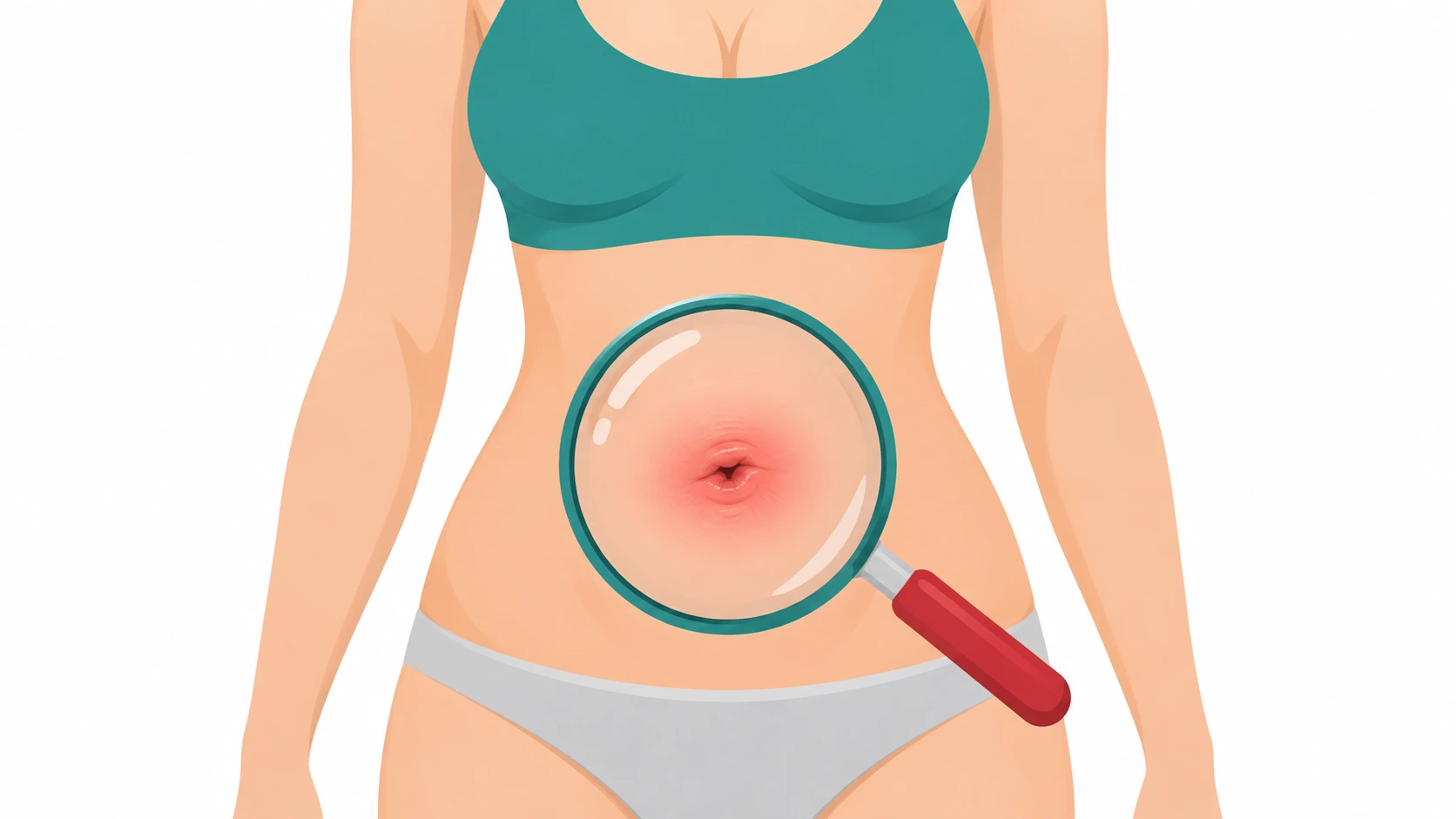
Can a Belly Button Infection Kill You? Warning Signs and Treatment
Yes, but it’s rare. Most belly button infections stay in the skin and clear with cleaning and the right cream. Left alone, a bacterial infection can spread into deeper tissue and the blood and cause sepsis, a medical emergency that can be fatal. Newborns and people with diabetes or a weak immune system face the highest risk. Get emergency care for a belly button infection with fever, chills, confusion, a racing heart or redness that spreads fast.
Your belly button is a small, deep fold of skin that stays warm and damp. That makes it an easy place for bacteria and yeast to grow. Most infections there are a nuisance, not a danger. The trouble starts when the warning signs get ignored.
This guide explains how a belly button infection can turn dangerous, who is most at risk, the symptoms to watch, which signs mean the ER, what to know about newborns, and how to treat and prevent an infection.
It can, though deaths are rare. A belly button infection becomes life-threatening when germs move past the skin into deeper tissue or the bloodstream.
The biggest danger is sepsis. The CDC defines sepsis as the body’s extreme response to an infection and calls it a life-threatening medical emergency. About 1.7 million U.S. adults develop sepsis each year, and at least 350,000 of them die in the hospital or are sent to hospice. The CDC lists the skin as one of the places where the infections behind sepsis most often start.
How a small infection turns dangerous

| Stage | What happens | Signs |
|---|---|---|
| Surface infection | Bacteria or yeast overgrow in the skin folds | Redness, itching or soreness, some discharge |
| Cellulitis | Bacteria spread into the middle layer of skin and the tissue below | Redness that grows, warm skin, fever and chills |
| Abscess | Pus collects in a pocket under the skin | A swollen, hard, tender lump that may drain |
| Sepsis | The body has an extreme reaction to the infection | Fever or shivering, confusion, fast heartbeat, short of breath |
| Necrotizing fasciitis | A rare, fast-moving infection that destroys tissue | Red, warm skin that spreads quickly, pain past the red area, fever |
Sources: MedlinePlus, CDC.
Necrotizing fasciitis, often called a flesh-eating infection, is rare but deadly. The CDC says that even with treatment, up to 1 in 5 people with it died. It usually starts when bacteria get in through a break in the skin, such as a cut or a surgical wound.
Who faces the highest risk
Some people are more likely to get a belly button infection, or to have one spread:
- Newborns, whose umbilical cord stump can become infected (more on this below)
- People with diabetes, who face a higher risk of yeast infections, according to Cleveland Clinic, and of necrotizing fasciitis, according to the CDC
- People with a weak immune system, including those with HIV, cancer, liver cirrhosis or kidney disease, or those on chemotherapy, steroids or other medicines that lower immunity
- People with obesity; StatPearls lists obesity and diabetes as risks for skin-fold rashes
- Anyone with a new navel piercing or a recent surgical wound near the belly button
Your navel holds heat, sweat and dead skin. StatPearls notes that skin-fold rashes are triggered by warmth, friction, moisture and poor airflow, and they’re more common in hot, humid places.
Your belly button is also crowded. When researchers at North Carolina State University swabbed the belly buttons of 66 people, they found 2,368 types of bacteria. Only eight types showed up in at least 70% of the people tested. Infection starts when these germs, or yeast, overgrow or get in through broken skin.
Bacterial infections, including staph
Staph bacteria are a common cause of skin infections. The CDC says most staph skin infections, including MRSA (methicillin-resistant Staphylococcus aureus), show up as a bump or infected area that’s red, swollen, painful and warm, sometimes with pus and fever. MRSA spreads through contact with infected people, wounds or things that have touched infected skin. Left untreated, the CDC warns, MRSA infections can cause sepsis or death.
Yeast infections
A belly button yeast infection is caused by Candida, a yeast that Cleveland Clinic says is most often found in warm, moist skin creases like the navel. It causes a bright red, itchy rash that may burn. You might also see scaling, swelling or a white discharge.
Cleveland Clinic lists tight clothing, hot and humid weather, poor hygiene, pregnancy, obesity, antibiotic use, chemotherapy, diabetes and HIV among the things that raise the risk.
Infected piercings
A new navel piercing is an open wound. Cleveland Clinic says it can take up to a year or longer to heal fully, and some tenderness, redness and crusting is normal for 12 to 18 months. Signs of infection include painful swelling, warmth, more redness than before, and ooze that smells bad.
Infected cysts and urachal remnants
Pus can also collect in a pocket under the skin. MedlinePlus describes a skin abscess as a buildup of pus with swelling, hard skin, redness, warmth and tenderness.
Less often, the source sits below the skin. A urachal remnant is a channel between the bladder and the belly button that didn’t close before birth. Cleveland Clinic estimates it affects about 1% of children and notes it can cause problems for some children and adults, including fever, lower belly pain and frequent urinary tract infections.
Common signs of an infected belly button include:
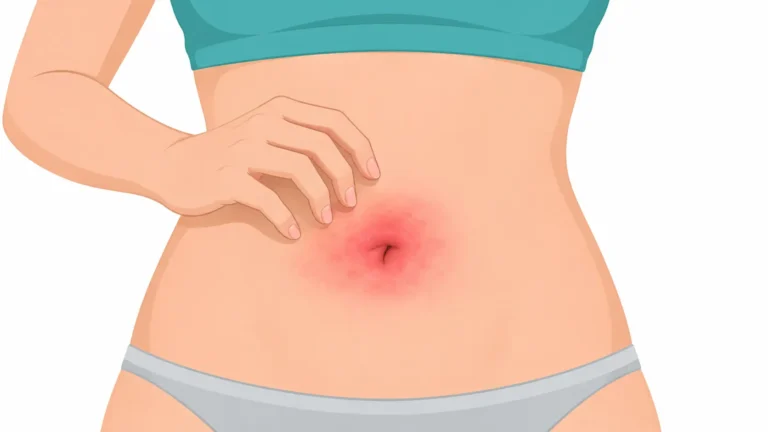
- Redness and swelling in or around the navel
- Pain or tenderness when you touch it
- Warm skin
- Pus or drainage, sometimes with a bad smell
- Itching or burning
- Scaling or a white discharge
- A tender lump
- Fever
Sources: CDC, Cleveland Clinic, MedlinePlus.
Bacterial or fungal: how to tell

| Bacterial | Yeast (Candida) | |
|---|---|---|
| Look | Red, swollen bump or patch, often with pus | Bright red rash in the skin folds, sometimes scaly; small red bumps or pus spots at the edges |
| Feel | Painful and warm | Itchy, may burn |
| Discharge | Pus or drainage | White discharge |
| Usual medicine | Antibiotics | Antifungal cream, ointment or powder |
Sources: CDC, Cleveland Clinic, StatPearls.
Looks can mislead. The CDC notes you can’t tell MRSA from other staph by looking, and it’s often mistaken for a spider bite. If the cause isn’t clear, a provider can scrape a little skin from the navel and check it under a microscope, Cleveland Clinic explains. For rashes in other places, see our guide to skin rashes and bumps.
A red belly button isn’t always infected. Redness deep inside the navel often comes from yeast or from intertrigo, a rash caused by moisture and rubbing in skin folds. Redness that spreads outward onto your belly, feels warm or comes with fever points to a bacterial infection such as cellulitis.
If the redness comes with a bad odor or a wet navel, our guide to why your belly button smells covers the causes.
Warning signs that need care now
A belly button infection needs prompt medical care when you notice:
- Redness that keeps spreading or red streaks moving away from the navel, which MedlinePlus lists as a reason to call your provider right away
- Fever, chills or sweats, a sign the infection may have spread
- A hard, swollen lump that hurts or drains pus
- Pain that seems worse than the skin looks, an early sign of necrotizing fasciitis, according to the CDC
- Blisters, black spots or changes in skin color around the infection
- Signs of sepsis: the CDC lists clammy or sweaty skin, confusion, extreme pain, fever or shivering, a high heart rate or weak pulse, and shortness of breath
Should you go to the ER?
| What you notice | What to do |
|---|---|
| Fever with confusion, a racing heart, clammy skin or trouble breathing | Call 911 or go to the ER |
| Red, warm skin spreading fast, or pain far past the red area | Go to the ER |
| A painful bulge at the navel that won’t push back in, with nausea or vomiting | Go to the ER |
| A baby with a fever, poor feeding or unusual sleepiness and a red cord area | Get care right away |
| Red streaks, growing redness or a tender lump full of pus | See a doctor the same day |
| A sore bump with fever, or one that isn’t better after 48 hours | Contact your provider |
| An itchy red rash inside the navel without fever | Book a visit; many antifungal creams are sold over the counter |
Sources: CDC, MedlinePlus, Merck Manual, StatPearls, Cleveland Clinic.
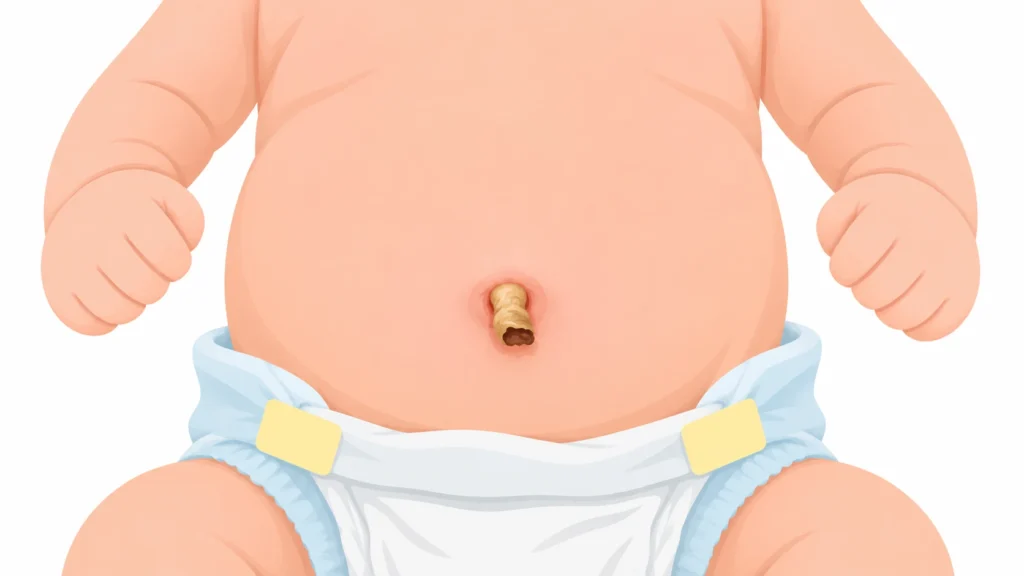
An infection of a newborn’s umbilical cord stump is called omphalitis. It’s the one belly button infection where the death risk is well measured.
StatPearls, a medical reference from the National Library of Medicine, reports that omphalitis affects about 0.7% of newborns in developed countries and has a death rate of 7% to 15%. Symptoms start at an average age of 3 days. When it leads to necrotizing fasciitis, death rates as high as 60% to 85% have been reported.
The American Academy of Pediatrics (AAP) lists these signs of a cord infection:
- Foul-smelling yellowish discharge from the cord
- Red skin around the base of the cord
- Crying when you touch the cord or the skin next to it
StatPearls adds that tiredness, poor feeding, fever and fussiness point to a more serious infection. Redness that spreads quickly across the belly is a warning sign of necrotizing fasciitis.
Babies with suspected omphalitis need a complete blood count and a lab test of any pus, StatPearls says. Treatment is antibiotics through a vein, usually for 10 days, followed by antibiotics by mouth.
To lower the risk, the AAP advises keeping the stump clean and dry and folding the diaper below it. There’s no need to put alcohol on it. The stump should dry and fall off by about 3 weeks of age; call your pediatrician if it’s still attached after that.
Umbilical granuloma: the look-alike
Sometimes the cord doesn’t dry completely and leaves a small red or brownish lump of scar tissue called an umbilical granuloma. The AAP says it can drain a light-yellowish fluid, which parents often mistake for infection. It usually goes away in about a week. If it doesn’t, your pediatrician can dry it out or treat it in the office.
Pain around the navel doesn’t always come from the skin. Two causes need emergency care:
- Appendicitis: Mayo Clinic says the pain often begins around the belly button and then moves to the lower right side of the belly. It gets worse with coughing or walking and can come with nausea, vomiting and fever. A burst appendix spreads infection through the belly, a condition called peritonitis.
- Strangulated umbilical hernia: a bulge at the navel that becomes trapped. The Merck Manual describes steady, growing pain, nausea, vomiting and a tender bulge that can’t be pushed back in, sometimes with red skin over it. The trapped bowel can start to die in as few as 6 hours, so surgery is done right away.
An infected urachal remnant can also cause lower belly pain with fever, as described above.
Home care for a mild infection
For mild redness or itching without fever, these steps help while you wait to see a provider:
- Keep it clean and dry. Cleveland Clinic advises keeping the navel clean and dry and leaving it open to the air when you can.
- Don’t squeeze or pick. MedlinePlus warns against pushing on an abscess, and the CDC says not to pop a sore bump.
- Use warm compresses on a lump. MedlinePlus says moist heat can help an abscess drain and heal faster.
- Cover an oozing sore with a clean, dry bandage, and wash your hands often, the CDC advises.
- Skip hydrogen peroxide and iodine. Mayo Clinic says both can irritate wounds.
Neosporin is an antibiotic ointment, so it targets bacteria, not yeast. Mayo Clinic suggests a thin layer of antibiotic ointment or petroleum jelly for minor cuts and scrapes, and stopping if a rash appears. For a yeast rash, Cleveland Clinic recommends an antifungal cream, ointment or powder instead. A deeper or spreading infection needs a doctor, not ointment.
Medical treatment
Your provider will choose treatment based on the cause:
- Yeast infections: antifungal creams, ointments or powders, many sold over the counter; StatPearls names clotrimazole, ketoconazole and nystatin. Cleveland Clinic says a provider may prescribe a stronger cream or a pill such as fluconazole.
- Cellulitis: antibiotics by mouth, according to MedlinePlus
- An abscess: your provider may numb the area, cut it open and drain the pus; some people also need antibiotics
- Necrotizing fasciitis: hospital care with IV antibiotics and surgery to remove dead tissue, the CDC says
- An infected urachal remnant: antibiotics, drainage or surgery, according to Cleveland Clinic
How long does it take to heal?
It depends on the cause:
| Infection | Usual time |
|---|---|
| Belly button yeast infection | Starts to clear within 2 weeks of antifungal treatment (Cleveland Clinic) |
| Cellulitis | Usually goes away after 7 to 10 days of antibiotics (MedlinePlus) |
| New navel piercing | Up to a year or longer to heal fully (Cleveland Clinic) |
Don’t wait for a bacterial infection to clear on its own. The CDC advises contacting your provider if a skin infection comes with a fever or isn’t better within 48 hours.
A belly button infection that keeps returning usually has a reason:
- The area stays damp. Cleveland Clinic notes yeast infections in the navel often come back when the skin stays moist, and more so in people with a weak immune system.
- The wrong medicine. An antibiotic ointment won’t clear yeast, and an antifungal cream won’t clear a bacterial infection.
- A resistant germ. MRSA resists some common antibiotics, so the first one you try may not work.
- Something under the skin. Draining a urachal cyst isn’t a permanent fix, Cleveland Clinic says, and symptoms may return until it’s removed.
If an infection keeps coming back, ask your provider about a skin scraping or a lab test of the discharge to find the cause.
- Wash your navel when you bathe and dry it fully afterward
- Change out of sweaty, tight clothes
- Keep blood sugar in range if you have diabetes, and lose weight if your provider advises it; Cleveland Clinic lists both as prevention steps
- For deep skin folds, StatPearls notes drying agents such as antiperspirants can cut down moisture
- Follow your piercer’s aftercare steps until a navel piercing heals
- Don’t share towels, and cover cuts until they heal
The bottom line
A belly button infection can kill you, but that’s rare. Most are mild bacterial or yeast infections that clear with cleaning and the right cream or antibiotic. The danger comes when bacteria spread into deeper tissue or the blood, causing cellulitis, an abscess, sepsis or, rarely, necrotizing fasciitis. Newborns, people with diabetes and anyone with a weak immune system face the highest risk. Fever, chills, confusion, a racing heart, fast-spreading redness or pain that seems out of proportion need emergency care. A painful bulge or pain that moves from the navel to the lower right belly also needs the ER.
Frequently asked questions
A yeast infection in the navel usually isn't, though people with weak immunity can catch one. Staph, including MRSA, can pass to others through contact with infected skin, wounds or shared items.
It can be a clue. Cleveland Clinic says that when a provider finds a yeast infection in the navel, they may recommend testing for diabetes, since people with diabetes have a greater chance of these infections.
No, not unless a doctor tells you to. Cleveland Clinic advises leaving the jewelry in, cleaning the piercing with a saltwater mix twice a day and seeing someone if the infection gets worse.
It's rare. Cleveland Clinic notes that in extreme cases, the body's response to an infected navel piercing can lead to sepsis, which needs urgent medical attention. Fever or redness that keeps growing around the piercing needs prompt care.
Sources
- Centers for Disease Control and Prevention. About Sepsis
- Centers for Disease Control and Prevention. Necrotizing Fasciitis: All You Need to Know
- Centers for Disease Control and Prevention. About Methicillin-resistant Staphylococcus aureus (MRSA)
- MedlinePlus. Cellulitis, 2025
- MedlinePlus. Skin Abscess, 2024
- Cleveland Clinic. Belly Button Yeast Infection, 2022
- Cleveland Clinic. Infected Belly Button Piercing, 2023
- Cleveland Clinic. Urachal Remnant, 2026
- Painter K, Anand S, Philip K. Omphalitis. StatPearls, National Library of Medicine
- StatPearls. Intertrigo. National Library of Medicine
- American Academy of Pediatrics, HealthyChildren.org. Umbilical Cord Care, 2025
- Ansari P. Abdominal Wall Hernias. Merck Manual Consumer Version, 2024
- Mayo Clinic. Appendicitis: Symptoms and Causes
- Mayo Clinic. Cuts and Scrapes: First Aid
- NC State University News. Belly Button Biodiversity, 2012
Disclaimer
This blog is for informational and educational purposes only, and does not intend to substitute any professional medical advice or consultation. For any health related concerns, please consult with your physician, or call 911.