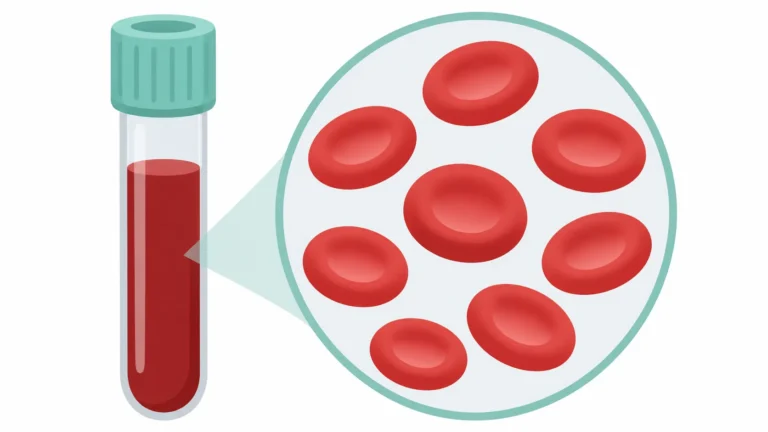
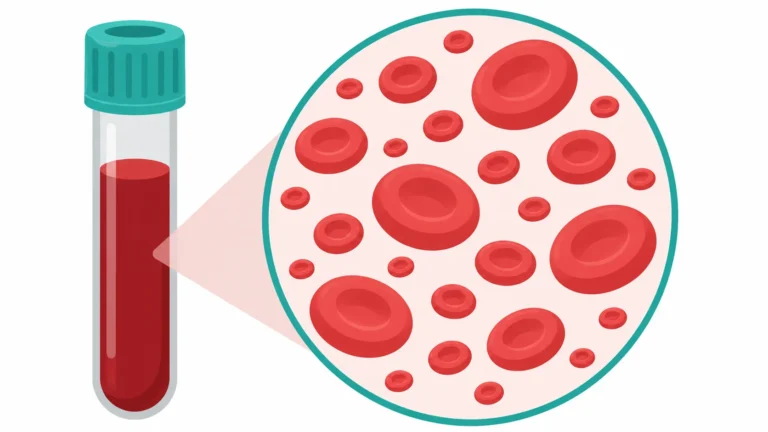
WBC Blood Test: What a High or Low White Blood Cell Count Means
A WBC blood test counts the white blood cells in your blood, usually as part of a complete blood count. A normal adult count is about 4,000 to 11,000 cells per microliter, though labs differ. A high count most often means your body is fighting an infection or inflammation, and stress, smoking and some medicines can raise it too. A low count can follow a viral illness, certain medicines, an autoimmune disease or a bone marrow problem. If your count is low and you get a fever over 100.4°F, call your doctor right away.
White blood cells are your body’s defense team. When you get sick, your body makes more of them, and your count goes up. Some illnesses and medicines do the opposite and pull the count down.
This guide explains what the WBC blood test measures, normal ranges by age, the causes of a high and a low white blood cell count, which numbers are dangerous, whether a WBC count can point to cancer, and what doctors do next.
What is a WBC blood test?
A WBC blood test, also called a white blood cell count, white count or leukocyte count, measures how many white blood cells you have. MedlinePlus explains that these cells are made in your bone marrow and travel through your blood and tissues to wherever they’re needed to fight infections and other diseases.
Cleveland Clinic notes that your body makes nearly 100 billion white blood cells a day, yet they make up only about 1% of your blood.
The WBC count is almost always part of a complete blood count (CBC), along with your red blood cell count, hemoglobin and platelets. It’s also different from the white cells a urine test picks up; for those, see our guide to white blood cells in urine.
The five types of white blood cells

| Type | Main job |
|---|---|
| Neutrophils | Kill bacteria, fungi and debris; mostly target bacterial infections |
| Lymphocytes | T cells, B cells and natural killer cells; fight viruses and make antibodies |
| Monocytes | Clean up damaged cells during an infection |
| Eosinophils | Destroy parasites and help with allergic responses |
| Basophils | Release chemicals behind allergy symptoms like sneezing and a runny nose |
Sources: Cleveland Clinic, MedlinePlus.
A basic WBC count gives only the total. A WBC differential, often ordered with it, counts each type. Testing.com notes the differential can show each type as a percentage and as an absolute number.
WBC normal range
UCSF Health gives a normal adult range of 4,500 to 11,000 white blood cells per microliter (mcL). Cleveland Clinic uses 4,000 to 11,000. Your lab’s range, printed on your report, is the one to go by.
You’ll often see the result written in thousands, so a WBC of 6.5 means 6,500 cells/mcL. Some reports use 10⁹/L, which gives the same number: 6.5 × 10⁹/L equals 6,500 cells/mcL.
Normal WBC count by age
Babies and young children have higher counts than adults. UMass Memorial Health lists these ranges:
| Age | Normal WBC (cells/mcL) |
|---|---|
| Newborns, 0 to 2 weeks | 9,000 to 30,000 |
| Babies, 2 to 8 weeks | 5,000 to 21,000 |
| 2 months to 6 years | 5,000 to 19,000 |
| 6 to 18 years | 4,800 to 10,800 |
| Adults | 4,500 to 10,500 |
Source: UMass Memorial Health.
Normal white blood cell count for women and in pregnancy
Most labs use one adult range for everyone. Ada, citing the Leukemia & Lymphoma Society, lists 4,500 to 11,000 for women and 5,000 to 10,000 for men.
Pregnancy raises the count. Ada reports a usual range of about 6,000 to 17,000 during pregnancy, and 9,000 to 25,000 during and right after delivery.
High white blood cell count (leukocytosis)
A WBC count above 11,000 cells/mcL is called leukocytosis, according to StatPearls, a medical reference from the National Library of Medicine.

Causes of a high WBC count
MedlinePlus, UCSF Health and StatPearls list these causes:
- Infections, most often bacterial, such as a kidney infection; viral infections like mono can raise it too
- Inflammatory and autoimmune diseases, such as rheumatoid arthritis
- Allergies, including asthma and hay fever
- Tissue damage from burns, injury or surgery
- Physical or emotional stress
- Smoking
- Pregnancy
- Obesity
- Hard exercise
- Medicines, including steroids (glucocorticoids)
- Spleen removal surgery
- Blood cancers, such as leukemia and Hodgkin lymphoma
Which type is high gives clues
A differential shows which white cells went up. MedlinePlus explains that neutrophils mostly target bacterial infections and lymphocytes mostly target viral infections. University of Colorado Anschutz Medical Campus (CU Anschutz) adds that a high eosinophil count is tied to allergies, parasitic infections or autoimmune disorders.
| Result | Name |
|---|---|
| High neutrophils | Neutrophilia |
| Low neutrophils | Neutropenia |
| High lymphocytes | Lymphocytosis |
| Low lymphocytes | Lymphopenia |
| High eosinophils | Eosinophilia |
Symptoms of a high white blood cell count
A high count often causes no symptoms of its own, CU Anschutz says. When symptoms show up, they come from the cause, such as fever, tiredness, pain, trouble breathing, night sweats, weight loss you can’t explain, a rash or easy bruising. In rare cases of a count that is far too high, blood flow can be affected and cause serious problems.
Low white blood cell count (leukopenia)
A low white blood cell count is called leukopenia. Cleveland Clinic defines it as fewer than 4,000 cells/mcL, and UCSF Health uses below 4,500.
Causes of a low WBC count
UCSF Health and Cleveland Clinic list these causes:
- Viral infections, such as mono, and HIV, which attacks white blood cells
- Severe bacterial infections
- Autoimmune diseases, such as lupus and rheumatoid arthritis
- Bone marrow problems, such as aplastic anemia, multiple myeloma or scarring
- Cancers that damage the bone marrow, including leukemia
- Chemotherapy and radiation for cancer
- Liver or spleen disease
- Low vitamin B12 or malnutrition
- An inherited trait that gives some people a lifelong lower count
Medicines that can lower your WBC count
UCSF Health lists these among the medicines that can lower white cells:
- Some antibiotics, including sulfonamides
- Anticonvulsants (seizure medicines)
- Antithyroid medicines
- Clozapine and chlorpromazine
- Diuretics (water pills)
- Histamine-2 blockers for acid reflux
- Captopril, quinidine, terbinafine and ticlopidine
Tell your provider about every medicine and supplement you take before the test. Don’t stop a prescribed medicine on your own.
A low count that’s normal for you
Some people have a lower neutrophil count all their lives without being sick. Cleveland Clinic calls this benign ethnic neutropenia and notes it is most common in people of African, Middle Eastern and West Indian descent. People with it don’t face a higher risk of infection.
Signs of infection to watch for
A low white blood cell count makes infections easier to catch and harder to fight. Cleveland Clinic lists these signs:
- Fever and chills
- Mouth sores
- Sore throat
- Diarrhea
- Cuts or sores that drain pus
What WBC count is dangerous?
There’s no single number for everyone, but these cut-offs help show when a count needs quick attention.
Dangerously low
For a low count, doctors look most closely at neutrophils, measured as the absolute neutrophil count (ANC). Cleveland Clinic grades neutropenia this way:
| ANC (cells/mcL) | Level |
|---|---|
| 1,000 to 1,500 | Mild |
| 500 to 1,000 | Moderate |
| Below 500 | Severe |
Source: Cleveland Clinic.
The American Cancer Society says to call your care team or get help right away if your count is low and you have a temperature over 100.4°F, chills or sweating, new confusion, chest pain or trouble breathing at rest.
Dangerously high
StatPearls describes these levels:
- Above 11,000: leukocytosis, which is common and usually due to infection, inflammation or stress
- Above 50,000 neutrophils without a bone marrow cancer: a leukemoid reaction
- Above 100,000: hyperleukocytosis, which can be a medical emergency when it causes symptoms, and needs prompt testing for leukemia
Is 4, 3.7, 3.5 or 2.7 too low?
Results are often written in thousands, so 3.5 means 3,500 cells/mcL. Here’s how each compares with UCSF Health’s lower limit of 4,500 and Cleveland Clinic’s lower limit of 4,000:
| Result | What it means |
|---|---|
| 4.0 (4,000) | Below UCSF’s range and right at Cleveland Clinic’s cut-off; often borderline |
| 3.7 (3,700) | Below both ranges |
| 3.5 (3,500) | Below both ranges |
| 2.7 (2,700) | Clearly below both ranges |
How much any of these matters depends on your neutrophil count, your symptoms and whether the count has always been low for you. At 2.7, your doctor will want to check your ANC.
Can a WBC count show cancer?
A WBC count can raise a flag, but it can’t diagnose cancer. MedlinePlus says a white blood count shows whether the number is too high or too low but can’t confirm a diagnosis, so it’s done with other tests.
Some cancers push the count up and others pull it down. MedlinePlus lists leukemia and Hodgkin disease among causes of a high count, and cancers that affect the bone marrow among causes of a low count. So not all cancers raise WBC.
Most high counts have a common cause. CU Anschutz points out that only 1.6% of people will be diagnosed with a blood cancer in their lifetime. StatPearls says a count near 100,000, or a high count with fever, night sweats, weight loss you can’t explain or easy bruising, needs a prompt check for leukemia or a related condition.
What doctors do next
Your provider will read your WBC count along with your symptoms, health history and other test results. UMass Memorial Health lists tests that may follow:
- WBC differential, to see which types are high or low
- Neutrophil count, to check for neutropenia
- Cultures of blood, urine or other samples to look for bacteria or viruses
- Imaging tests, such as CT or MRI, to find a hidden infection
- Biopsy, if a blood cancer is suspected; MedlinePlus adds that a blood smear or bone marrow test may also be done
Treatment for a high count
Treatment depends on the cause. CU Anschutz says it can include antibiotics for an infection, anti-inflammatory medicines or antihistamines for allergies.
Treatment for a low count
Cleveland Clinic and the American Cancer Society list these options:
- Treating the cause, such as an antiviral or antibiotic for an infection
- Growth factor medicines (G-CSFs), usually given as a shot, which help the bone marrow make more white cells
- Pausing, lowering or switching chemotherapy until counts recover
- Antibiotics, antivirals or antifungals for someone with a low count and a fever, sometimes before the cause is known
Can you raise a low white blood cell count?
There’s no shortcut. CU Anschutz says no single food, diet or supplement has been proven to raise a low white blood cell count in every person. Evidence that vitamins, minerals or herbal products raise WBC is limited, and some can interact with medicines.
What helps is supporting your immune system and avoiding infections while your count recovers.

Food safety: Cleveland Clinic advises washing fruits and vegetables, keeping raw meat away from other foods, preparing meals in a clean kitchen and cooking food to the proper temperature.
Infection prevention: The American Cancer Society suggests:
- Wash your hands often
- Stay away from crowds and people who are sick, and wear a mask when you go out
- Don’t share toothbrushes, forks, spoons, cups or straws
- Wash with soap and water if a pet licks your skin
- Ask your doctor which vaccines you need
Healthy habits: CU Anschutz recommends a balanced diet, staying hydrated, 7 to 9 hours of sleep, regular exercise, managing stress, limiting alcohol and not smoking.
How the WBC blood test is done
A health care professional takes a small blood sample from a vein in your arm or hand. MedlinePlus explains that babies usually have blood taken from the heel, and older children from a fingertip or arm. You may feel a quick sting and have slight pain or a bruise afterward, which goes away quickly. Testing.com says results usually come back within a few business days.
When to see a doctor
Talk to your doctor about your result if:
- Your WBC count is outside your lab’s range, mainly if you have symptoms or it stays abnormal on a repeat test, as CU Anschutz advises
- You keep getting infections
- You have fever, night sweats, weight loss you can’t explain or easy bruising
- You’re on chemotherapy or another medicine that lowers white cells
Get help right away if your count is low and you have a fever over 100.4°F, chills, confusion, chest pain or trouble breathing at rest.
The bottom line
A WBC blood test counts your white blood cells, your body’s infection fighters, and it’s usually part of a complete blood count. A normal adult count is about 4,000 to 11,000 cells/mcL, with higher ranges in babies and during pregnancy. A high count most often means infection, inflammation, stress, smoking or a medicine; less often, a blood cancer. A low count can come from viral illness, medicines, autoimmune disease, bone marrow problems or a harmless inherited trait. Doctors watch the neutrophil count most closely, and a fever over 100.4°F with a low count needs a call right away. No food or supplement is proven to raise WBC, so the fix depends on the cause.
Frequently asked questions
Do low white blood cells make you tired?
Not directly. Cleveland Clinic says leukopenia itself doesn’t cause symptoms. Tiredness more often comes from an infection that a low count lets in, or from the condition behind the low count.
Is it worse to have a high or low white blood cell count?
Neither is always worse. A low count raises your risk of infection, while most high counts come from short-term infections or stress. What matters is the cause and how far the number is from normal.
Do you need to fast before a WBC blood test?
No. MedlinePlus says no special preparation is needed, and you can eat and drink as usual. Some medicines can affect the result, so tell your provider everything you take.
How long does it take for a white blood cell count to return to normal?
It depends on the cause. Cleveland Clinic says counts should return to normal after you recover from a viral infection, and Ada notes pregnancy counts settle about four weeks after delivery.
Sources
- MedlinePlus. White Blood Count (WBC)
- Cleveland Clinic. White Blood Cells
- Cleveland Clinic. Low White Blood Cell Count (Leukopenia), 2022
- Cleveland Clinic. Neutropenia
- UCSF Health. WBC count, 2025
- UMass Memorial Health. White Blood Cell Count
- Mank V, Killeen RB. Leukocytosis. StatPearls, National Library of Medicine, 2026
- American Cancer Society. Low White Blood Cell Counts (Neutropenia)
- Behounek C. High or Low White Blood Cell Count? Understanding Your CBC Blood Test Results. CU Anschutz, 2026
- Ada. White Blood Cell Count, 2025
- Testing.com. White Blood Cell Count (WBC Blood Test), 2022
Disclaimer
This blog is for informational and educational purposes only, and does not intend to substitute any professional medical advice or consultation. For any health related concerns, please consult with your physician, or call 911.