How to Clean Your Belly Button the Right Way (Innie, Outie, Deep or Pierced)
To clean your belly button, wet a cotton swab or the corner of a washcloth with warm water and a mild, fragrance-free soap, gently wipe the folds inside, rinse, and dry it fully. Outies can be lathered and rinsed with your hand in the shower. Do it at least once a week, or daily if you’re gentle. Skip hydrogen peroxide, hard scrubbing and lotion inside the navel. Don’t dig out hard, dark plugs yourself; a doctor can remove them.
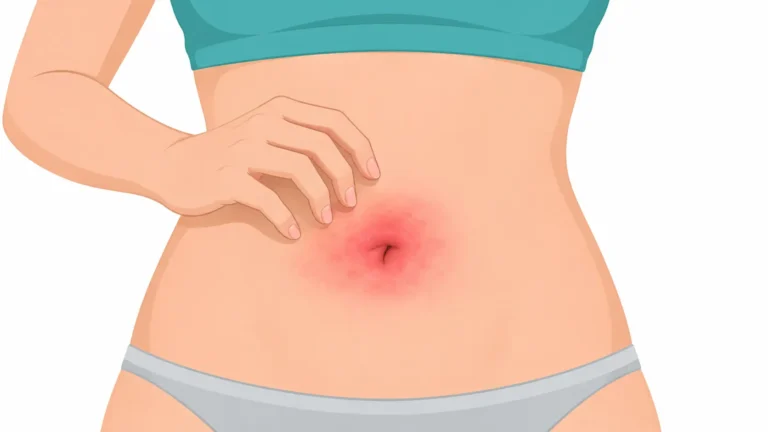
Your belly button is easy to miss in the shower, but it collects sweat, dead skin, oil and lint like any other skin fold, and maybe more. Left alone, that buildup can start to smell, irritate the skin or feed a yeast infection.
This guide covers how to clean an innie, an outie and a deep belly button, what to use and what to skip, how often to clean, what the gunk inside is, and how to care for a piercing or a newborn’s belly button.
Your navel holds more than lint. When researchers at North Carolina State University swabbed the belly buttons of 66 people, they found 2,368 types of bacteria. Eight types showed up in at least 70% of the people tested.
Cleveland Clinic internal medicine physician Dr. Manjaree Daw explains that an innie gets little air, so bacteria build up in its tiny folds. If dirt or dead skin sits there and dries out, it can form a hard ball of debris. Skipping cleaning can lead to:
- A bad smell from trapped sweat, dirt and dead skin
- A yeast infection, since Candida can overgrow in a moist, unclean navel and cause a red, itchy rash that may burn, swell or leak discharge
- Irritation and infection in the skin of the fold
Source: Cleveland Clinic.
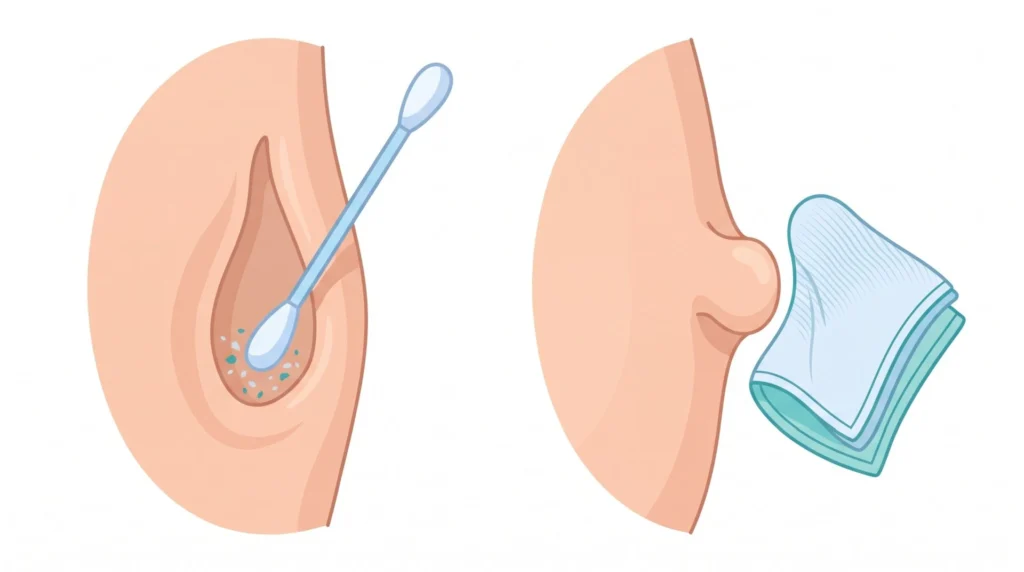
An innie (concave) belly button is a dark, damp pocket, so it needs the most care. Cleveland Clinic’s steps:
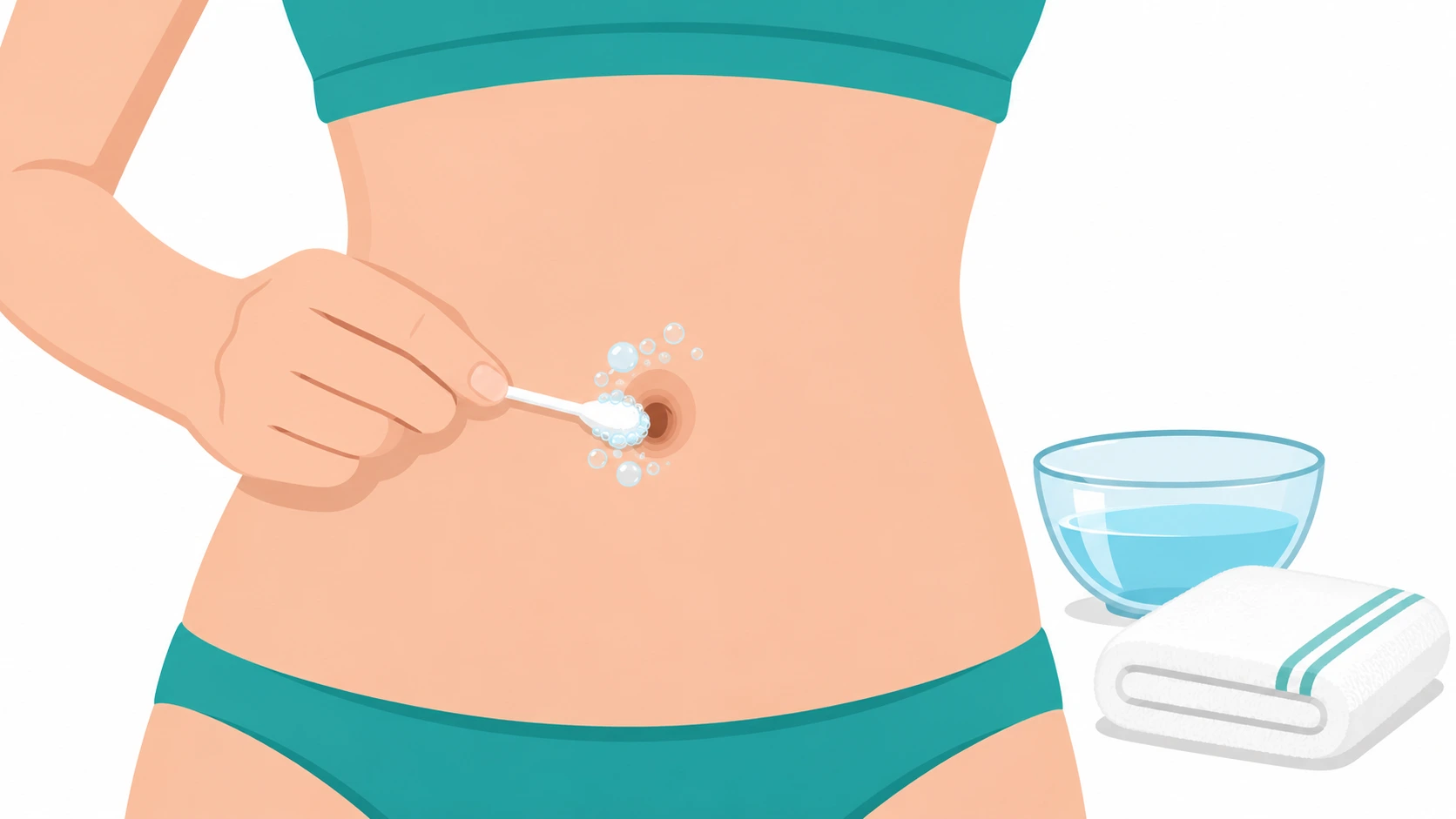
- Lather soapy water on a cotton swab or the corner of a washcloth. Use a mild, fragrance-free soap.
- Gently wipe the folds inside your belly button to lift out dirt and debris until the skin feels smooth. Switch to a fresh swab if the first one comes out dirty.
- Rinse with a clean swab or cloth dipped in plain water.
- Dry the inside fully with a clean, dry swab or the corner of a dry towel.
- Skip lotion inside. Your belly button is naturally moist, and Cleveland Clinic says lotion there can increase bacteria.
The key word is gentle. Dr. Daw warns that scrubbing hard can cause small tears in the thin skin, and bacteria can get in through them and cause an infection.
A deep navel traps more. In a 2023 study in Microbes and Environments, deep, narrow belly buttons had stronger odor than wide, shallow ones. A 2022 review in Clinical Case Reports adds that a deep, narrow navel, obesity and poor hygiene all raise the risk of navel stones.
For a deep belly button:
- Clean it a little more often, since daily cleaning is fine if you’re gentle
- Use a soapy cotton swab rather than a finger, and work around the folds slowly
- Stop where you can’t see. Don’t push a swab, nail or tool hard into the base
- Dry it fully, since Cleveland Clinic says a moist navel lets yeast overgrow
Pregnancy can change the shape too. Cleveland Clinic notes the belly button often pops out around 26 weeks, and an outie can then rub on clothing and get irritated. Clean it like an outie and cover it with a bandage or wear loose clothes if it rubs.
An outie (convex) belly button sticks out like a small knot, so it gets air and is easy to reach. Cleveland Clinic suggests:
- Lather it gently with mild soap and your hands or a washcloth.
- Rinse off the soap.
- Dry it well when you’re done.
What to use and what to skip
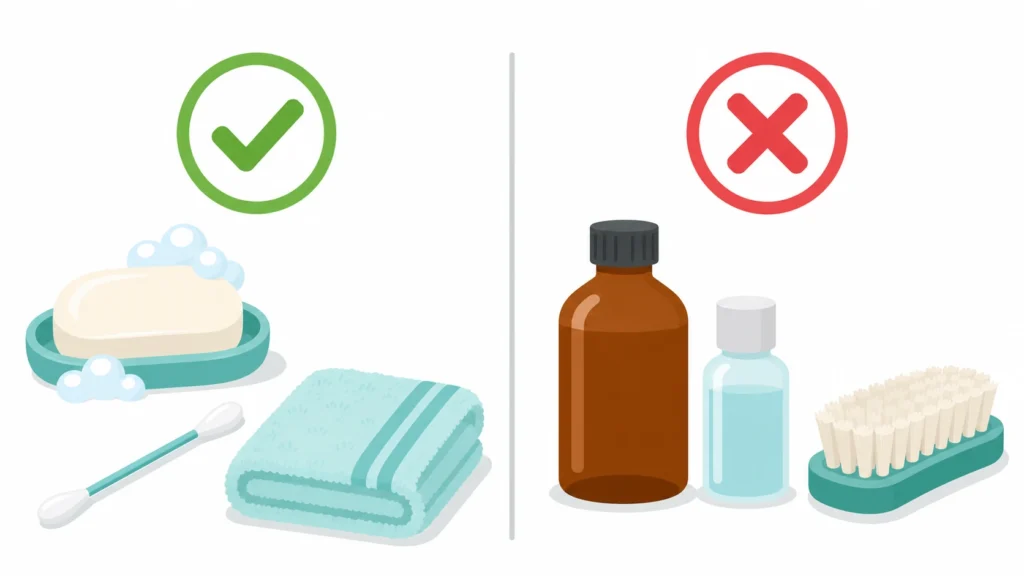
| Product | Use it? | Why |
|---|---|---|
| Mild, fragrance-free soap and water | Yes | Dr. Daw says she wouldn’t use anything else |
| Cotton swab or washcloth corner | Yes, gently | Reaches the folds of an innie |
| Rubbing alcohol | Not needed | Cleveland Clinic recommends soap and water only |
| Hydrogen peroxide or iodine | Skip | Mayo Clinic says both can irritate wounds |
| Scented body wash or lotion | Skip inside the navel | Cleveland Clinic advises fragrance-free products and no lotion inside |
| Rough scrubs, salt or brushes | Skip | Hard scrubbing can cause small tears |
| Olive oil, glycerin or petroleum jelly | Only to soften a navel stone | A doctor then removes the stone |
| Salt water (saline) | For a piercing | The NHS advises it for an infected piercing |
Sources: Cleveland Clinic, Mayo Clinic, Clinical Case Reports, NHS.
You don’t need to disinfect your belly button. Cleveland Clinic notes it holds bacteria just like every other part of your body, and Dr. Daw says soapy water works every time.
Cleveland Clinic recommends cleaning inside your belly button at least once a week. Dr. Daw says there’s no harm in cleaning it daily, as long as you don’t scrub too hard or use harsh products.
Regular cleaning seems to make a difference. In the 2023 Microbes and Environments study, cleaning habits went the opposite way from odor: the people who cleaned their belly buttons more often tended to have less smelly samples.
The gray or brown fluff and grime in most belly buttons is a mix of sweat, dead skin cells, skin oil, dirt and lint from clothing. It’s normal, and gentle cleaning removes it.
A hard, dark plug that won’t wipe away may be a navel stone, also called an omphalolith. The 2022 Clinical Case Reports review describes it as a firm, usually black mass made of skin oil (sebum) and keratin, a skin protein. The dark color comes from pigment and oils that oxidize. It can sit unnoticed for years and then cause irritation, sores, bleeding or infection.
The review notes that a navel stone can look like other dark lumps, including melanoma, so it’s worth having a doctor look at it. A doctor removes it gently with forceps, sometimes after softening it with glycerin, olive oil or petroleum jelly first. Good belly button hygiene afterward helps keep it from coming back.
Wiping out loose gunk with a soapy swab is fine. Picking or digging with fingernails, tweezers or other tools is a different story. The skin inside the navel is thin, and Cleveland Clinic warns that small tears let bacteria in. Picking can also make the navel bleed; our guide to belly button bleeding covers what to watch for.
A new navel piercing is an open wound, and Cleveland Clinic says it can take up to a year or longer to heal fully.
- New piercing: Follow the cleaning instructions your piercer gave you, and keep the area clean.
- Healed piercing: Cleveland Clinic says you can clean it like the rest of your belly button, with mild soap and a gentle touch.
- Infected piercing: The NHS advises cleaning it twice a day with warm, salty water and leaving the jewelry in unless a doctor says to take it out. Signs of infection include swelling, pain, heat, redness and blood or pus coming out.
Cleveland Clinic adds that ooze from a piercing that smells bad points toward infection.
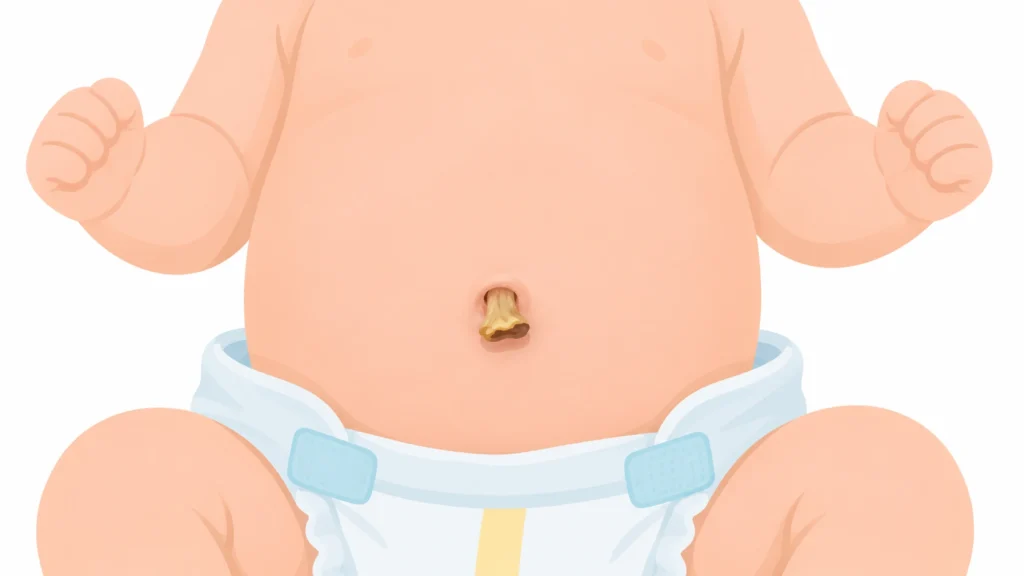
A newborn’s belly button needs different care until the cord stump falls off. The American Academy of Pediatrics (AAP) advises:
- Keep the stump clean and dry. There’s no need to put alcohol on it.
- Fold the diaper below the stump so urine doesn’t soak it.
- Expect it to fall off by about 3 weeks. See your pediatrician if it’s still attached after that.
A few drops of blood on the diaper around the time it falls off are normal. Call your baby’s doctor right away for active bleeding, foul-smelling yellowish discharge, red skin around the base of the cord, or crying when you touch the area.
For odor from buildup, a thorough clean with the innie or outie steps above is usually enough. Pay extra attention to drying, since moisture feeds both bacteria and yeast.
If the smell comes back quickly, or comes with discharge, pain or redness, cleaning alone won’t fix it. Our guide to why your belly button smells explains what each smell and type of discharge can mean.
When cleaning isn’t enough
Dr. Daw advises making an appointment with your primary care provider if your belly button is painful or has discharge and you don’t know why. Signs that something more than dirt is going on:
- A red, itchy rash that may burn, which can be yeast; see our guide to a belly button yeast infection
- Redness or irritation without a clear cause; our guide to a red, itchy belly button covers the other causes
- Pain, warmth, swelling, pus or fever, which can mean a bacterial infection; our guide on whether a belly button infection can turn dangerous lists the warning signs
- A hard, dark plug you can’t wipe out
- Bleeding that keeps coming back
The bottom line
Clean your belly button at least once a week with mild, fragrance-free soap and water. For an innie, use a soapy cotton swab or washcloth corner, wipe gently, rinse and dry it fully; for an outie, lather, rinse and dry. Skip hydrogen peroxide, iodine, scented products, hard scrubbing and lotion inside the navel. Deep belly buttons trap more and may need more frequent cleaning. Leave hard, dark plugs for a doctor to remove, follow your piercer’s steps for a new piercing, and keep a newborn’s cord stump clean and dry. See a provider for pain, discharge, a rash or a smell that keeps coming back.
Frequently asked questions
Wrap the corner of a soapy washcloth over a fingertip, or hold a swab dipped in soapy water, so your skin never touches the inside. Shower water running over a deep navel won't clean it on its own.
Yes, gently. Cleveland Clinic says keeping a navel yeast infection clean and dry is part of treatment. See a provider first if there's pain, pus or fever, since you may need medicine.
Yes, though they're easier. Cleveland Clinic notes outies are exposed to open air, so a quick wash with soapy hands in the shower, a rinse and a pat dry is usually enough.
Can I use cotton balls instead of a swab?
For an outie or a shallow navel, a soapy cotton ball or washcloth works fine. In a deep innie, a swab reaches the folds better. Either way, pat the area completely dry afterward.
Sources
- Cleveland Clinic Health Essentials. How To Clean Your Belly Button, 2025
- NC State University News. Belly Button Biodiversity, 2012
- Yano T, Okajima T, Tsuchiya S, Tsujimura H. Microbiota in Umbilical Dirt and Its Relationship with Odor. Microbes and Environments, 2023
- Jouini W, Litaiem N, Zaimi Y, Mouelhi L, Debbeche R, Zeglaoui F. Omphalolith: An Underdiagnosed Entity. Clinical Case Reports, 2022
- Cleveland Clinic Health Essentials. Why Some Belly Buttons Pop Out During Pregnancy, 2024
- Cleveland Clinic. Belly Button Yeast Infection, 2022
- Mayo Clinic. Cuts and Scrapes: First Aid
- Cleveland Clinic. Infected Belly Button Piercing, 2023
- NHS. Infected Piercings
- American Academy of Pediatrics, HealthyChildren.org. Umbilical Cord Care, 2025
Disclaimer
This blog is for informational and educational purposes only, and does not intend to substitute any professional medical advice or consultation. For any health related concerns, please consult with your physician, or call 911.